ON HAWAII'S DEFECTIVE CORONAVIRUS DICTATORSHIP
The State of Hawaii needs a truly constitutional provision for the selection by a select bipartisan legislative committee of competent and relatively independent temporary, public health emergency managers, preferably two persons who must agree to the issuance of proclamations and supplementary edicts subject to preview and approval by the select committee. That committee could move for the termination of emergency managers at any time by immediate reference to the popular assembly for an up and down vote.
by David Arthur Walters
17 July 2020
It is only natural that the deadly coronavirus pandemic has cowed almost everyone into obedience to the dictates of their political leaders. There is no time to engage in lengthy political debates in dire emergencies. A dictator must have absolute power to immediately address threats to the public welfare. The United States, like other nations fashioned by the Roman mold, has embedded in its constitution such a dictator, namely, its president. Roman dictators, nominated by the ruling consuls from their trusted, elite rank, and nominally, at least, confirmed by the popular assembly, purportedly presided as sovereign over the consuls themselves, according to the critical causes for which they were responsible, but for a limited term of only six months. Of course they had considerable flexibility, and could even execute people without trial. U.S. Presidents may not go that far, but they have considerable latitude as dictators, or at least imperious presidents and their attorney generals might think so.
An American dictator following the Roman practice would ideally address a particular crisis and then retire to his normal duties after the emergency. George Washington, the first American dictator, is often compared to the legendary statesman and general, Lucius Quinctius Cincinnatus, the curly-haired farmer who refused all rewards and returned to his farm after being appointed dictator a mere 15 days earlier to lead reinforcements to defeat the Aequi in 485 B.C. He was reputedly called up as dictator again to defeat an insurrection of the common people, resigning when that was completed 21 days later. .
We admit such stories may be pious frauds advanced to bolster historians' current political perspectives. Cincinnatus was in fact a wealthy patrician statesman. He took up farming after being impoverished by fine's imposed for the crimes of his son, who violently opposed the common people's efforts to adopt an equitable constitution checking the power of the nobility, presumably the wiser men in the senate. Thus is Cincinnatus the conservative republican model of virtue opposed to the democratical, intemperate mob.
Other Roman notables were “elected” dictator several times for cause in the normal course of government. “Dictator” was not a pejorative nomination as it is today. Scholars inform us that the number of dictators appointed by consuls, that is, the dual chief executives acting for the senate, were many, and none overstayed their terms that we know of but Sulla, known as brutal conservative, and Caesar, reputedly a generous populist with elite forebears. Sulla promised to resign when the job was done; he did step down, and he said the calumny he suffered thereafter should teach others not to do so. Caesar, whose dictatorship was established for life sometime after his traitorous crossing of the Rubicon with his army, refused to be crowned king, which would have rendered him free of restraint by the senate and assembly, and then he was assassinated; his refusal was a gesture: he would have gladly seen the monarchy restored with him as its king. Roman dictators were members of a tightly related, elite political group and were “elected” because they could be trusted by their peers for the convenience of unitary management of crises threatening public safety and their power, with the ultimate power remaining with the senate and its consuls.
Roman dictators were temporary, yet U.S. presidents preside as if the emergency were constant. They have virtually declared and waged wars, seeking approval of Congress after the fact, causing Congress to ostensibly restrain the President with its relatively inutile War Powers Resolution of 1973. And there is always the secret war of rich versus poor, privileged versus unprivileged. American “plebeians” are confronted with “imperial” presidencies, with the legalization of crimes of the elite, a constant stream of rules, regulations, edicts and decrees during what might be called a constant revolution within the “Revolution” that relocated governing power from England to the United States. The internal revolution against it now threatens to take advantage of the coronavirus pandemic and ensuing economic depression to overturn the currently antisocial government.
The main protections that the United States Constitution provides against the tyranny of particular dictators are impeachment and periodic elections. President Donald Trump, a populist said to be the “People's Fool,” was impeached by the people's house but not convicted by the “lords” in the Senate, historically the King's court of nobles, the trial being a political farce. He is presently opposed by candidate Joe Biden, who promises to save the nation from the presumably reckless behavior of Mr. Trump as well as the virus.
Mr. Biden, purposing to divide himself from Donald Trump, claims that the President, whom he accuses of divisiveness, advocates a dangerous “false choice,” that is, between prescribing measures to restore economic health and physical health, advancing his divisive prejudices in dire circumstances that appear to presage a Great-Great Depression and the death of over a million U.S. residents.
“The way you revive the economy is you defeat the disease,” Mr. Biden dictated, making a distinction like his opponent, except he put the coronavirus disease before the economic malady instead of vice versa. A good doctor, on the other hand, that is, one with a broader education than medicine, would consider the side effects of economic prescriptions, knowing that government interventions might kill the patient to cure the disease.
Mr. Biden, who very well may be America's new constitutional dictator, has good reason for deflecting blame for the economic emergency onto the killer virus, for it is to a large extent the direct result of the interventions of his own, “democratic” party, bolstered by defections of “republican” partisans in response to the pandemic panic. Indeed, it is rather amazing how quickly some republicans became faithful socialists when faced with death. And it is more than obvious that the main concern of both candidates is not the public health per se but is whether which man will win the imperial power of the presidency. Mr. Biden has already declared that he would force everyone in the United States to hide their face with a flimsy mask or else if he is elected, and his mask has become symbolic of his hypocrisy and prospective dictatorship or imperial presidency. Even his arch enemy Mr. Trump seems to have been cowed by public opinion or fear of the disease into masking himself of late, black being the favorite color because of its funereal character.
Now, then, the states within the federal system have their own constitutions, compatible with the Federal Constitution, within which are provisions for temporary dictatorships in case of emergencies. Take the island paradise of Hawaii, for example. Chapter 127-A of Hawaii's Statutes defines an emergency as any event or the threat thereof that has cause or might cause substantial harm to the public or substantial loss and damage to property. The law delegates absolute power upon the governor and mayors to declare state and local emergencies, issue edicts having the force of law and appropriate funds to effect their objectives, all in addition to any powers they might have under the laws of the United States. They shall be the sole judge of whether there an emergency or threat exists. In case of infections or the threat of disease, the governor may declare quarantines, enter and shut down businesses, shut down public utilities, restrict movement, order compulsory immunization, abate nuisances and the like if in his sole opinion a danger to the public exists. The governor presides over an emergency management team and is advised by his chosen experts. No court may issue injunctions of restraining orders unless the motion is heard by three circuit court judges. Everyone involved is immune from lawsuits for injury or damage. And so on.
In respect to the coronavirus threat, the governor is, in Roman terms, dictator for a specific religious cause or reason: clavi figendi causa; that is, to “drive a nail” into the wall of the temple Jupiter Optimus Maximus to protect Rome from plagues. It is said that pestilence and starvation plagued the Republic for two years after Julian the Apostate bled to death from an attack of a Christian soldier serving him in Iraq in 363 BC. Someone remembered that a plague had been mitigated by the driving of a nail into a wall. A ceremonial nailing was had every year at the Idea of September, and the nails were said to mark the time. The nail itself is an attribute of the goddess Necessitas, who presides over fate between chaos and time. Other Causa for temporary dictatorships in Rome other than the principal cause of war were elections and sports, and rioting and resurrections,. Just the sight of a dictator tended to quell civil unrest. Only his licters carried the fasces with the axe within Rome, meaning he had the power of death without appeal.
Governor David Ige, Hawaii's temporary emergency dictator, has done his damnedest to protect the islands from a devastating outbreak of the killer virus, severely weakening the patient as he shut down its economic lifeblood, treating tourists like pathogens, prohibiting travel to and between and within the islands, closing public and private facilities, and subjecting residents and visitors alike to virtual arrest. He points to the fact that Hawaii has one of the lowest death rates in the country so far as the justification for his dictatorship, while his detractors claim he has overreacted to the threat, and has effectually saved the rich and made the poor poorer.
Alas that Hawaii law does not require the appointment of a specially qualified dictator separate from the chief executive himself. The senate need not appoint and the popular assembly confirm his “election,” which is the it ideal process that the romantic historians of antiquity had in mind.
Ideal indeed, for what madness would possess a senate of supposedly wiser men to relinquish its power to an unruly mob? That kind of dictator was called a tyrant. Yet we do have the legend as a template for our modern republics, that the Roman senate would nominate a dictator to be confirmed by the popular assembly so that the dictator, the supposed vestige of the kings of old, would reign supreme over the two leading consuls for two months or less to address a crisis, then, like Cincinnatus, refuse all rewards offered and retire to a farm.
It is more likely that the dictator was a trusted weapon selected by the senate from among its intimates, and, in case of disagreement with the dictator, the senate could withdraw its funding from him and appoint a supreme consul or general or to defeat the dictator and his forces. Moreover, the custom was to appoint, along with the dictator, a person equal in power, a master of the horse, thus retaining the principle of dual consulship, that two heads are better than one.
Dionysius of Halicarnassus believed the senate created the myth of an elected dictator to deceive the plebians, given to rioting and rebellion now and then, into subjugating themselves to tyranny. The poor fools had in effected elected tyranny, tyrant being a word denoting popular dictatorship.
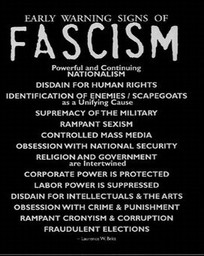
It is worth noting here, in the context of the weakness of Hawaii's emergency management law, that Article 48 of the German Weimar Constitution, whose leadership principles were influenced by previous Reichs based on Roman imperial precedents, provided that the popular assembly be immediately notified of a dictator's measures, which the assembly may repeal at will. But Article 48 was invoked so many times during economic crises that Germans became inured to government by decree and lost respect for the Reichstag. Hitler used the constitutional article after having the assembly building set afire to enable his dictatorship to confront the communist movement accused of his arson, in effect destroying the republican nature of go government without shredding its constitution.
Governor Ige's interventions were based on what he perceived as threats to his public from the outbreaks on the continent. The islands had not yet been plagued, and as of this writing there have been only 21 deaths out of 1,243 cases confirmed since March, whereas Flu/Pneumonia takes hundreds of lives in Hawaii every year; 50,000 cases are feared the coming season. Wherefore it appears to the many people harmed by the interventions that the governor and lesser dictators provided for by the Emergency Management statute, the mayors, panicked. Persons who can afford the measures call for further continuations of restrictions. Several harmed individuals have sued the governor, attorney general, and State of Hawaii, wisely asking for a jury trial in a federal civil rights action brought pursuant to 42 U.S.C. § 1983, challenging the constitutionality of the Hawaii Governor’s Proclamation Related to the Covid-19 Emergency and several supplemental proclamations and executive orders. The informal docket shows a conference is to be held in August.
The lawsuit brought by Attorneys for Freedom Law Firm in the U,S, District on behalf of For Our Rights, an association of residents who suffered unemployment, loss of savings, property, business and personal income, the threat of homelessness, severe emotional distress, suicidal thoughts, and loss of marital affection as the result of Governor Ige's dictations, which included shutdown, in-home detention, self-quarantine, closure of private enterprises, closure of public facilities and publicly-accessible property, and prohibitions and restrictions on travel. For example, Diana Lomma was subjected to physical pain, choking and vomiting caused when EMT forcefully pushed a mask onto her face, and ridicule for not wanting to wear mask; deprivation of outside physical therapy necessary for health conditions, anxiety, stress; deprivation of any visits from her daughter while in the hospital for surgery; deprivation of emotional and family support; fear of public humiliation and harassment; denial of freedom to travel to the other islands or on the mainland and move about due to fear of adverse consequences; and depression and strong feelings of hopelessness. Levana Lomma Keikaika suffered loss of employment, loss of income, depletion of savings just to survive; injury to physical and mental health, depression, social isolation, fear of public harassment, panic attacks; deprivation of visits with family outside of the island; the effects of other people’s fear, worry, anxiety and depression; fear of losing home and car; and severe anxiety, depression, hopelessness, and suicidal thoughts. She wrote to Governor Ige on June 4, presenting her intent to travel and not abide by the self-quarantine; the Office of the Governor responded within a day via an email emphasizing that criminal penalties would be applied to her if she violated the emergency orders.
Nevertheless, we witness on social media a crowd of evidently advantaged persons congratulating the temporary dictator on the wonderful job he is doing protecting people at the great expense of those suffering the consequences. Indeed, we witness on social media an overwhelming majority clamoring at this writing for further extensions and proclamations.
The plaintiff's aver that the governor's orders not only violate the constitutional right to due process, assembly, movement, but are inherently irrational. Further, they overlap and produce conflicts in meaning, understanding, interpretation, and are so vague that persons of common intelligence must necessarily guess at the meaning and may well differ as to their understanding of the applications of the provisions individually or taken as a whole. Moreover, the travel quarantine decree treats persons as “suspected” pathogens to be placed under house arrest.
That is arguably not their strong suit. Provisions for emergency dictatorships are incded in constitutions and statutes to set aside constitutional rights in emergencies in order to address abnormal threats to public safety, for what is the use of a constitution when its constituents would be doomed by its tedious processes? Medicine has its side effects; war has its casualties. That being said, it is up to the authority selecting the dictator that he be competent and reasonable. In this case, that person is selected in advance by an allegedly constitutional democratic-republican process. Whosoever is governor has virtually absolute supreme power to proclaim an emergency and issue decrees. He appoints himself dictator and acts according to his own will. In that we see a potential conflict between a current governor's partisan interest in the maintenance of political power and the public interest on the whole. The self-appointed supreme leader may be a complete fool elected by a foolish electorate. Ideally, an independent person with expertise and experience in emergency management would be appointed emergency dictator by a select committee of the legislature, and his edicts and decrees would be reviewed and subject to repeal.
The lawyers hang the plaintiffs' hat on the fact that Hawaii law limits emergency management orders to sixty days. The governor kept extending his original order with supplementary orders, so the lawyers pray that the court declare the supplementary orders null and void and enjoin the state from taking any further action on those orders.
That argument seems weak at best. No doubt the attorney general, who reviewed and approved the supplementary orders, has a strong argument in favor of simply extending the existing orders with supplements instead of issuing a new order incorporating the previous ones after each sixty-day period. On the other hand, the continuous extension of term of a constitutional dictator would contradict the very reason for the term limit; to wit, to forestall one person from becoming a permanent, unelected dictator, and, given his absolute power and flexibility as to the cause of his appointment, a tyrant capable of the arbitrary exercising his will in a manner averse to the public welfare. “Tyrant” was a Greek term for a single person leading an unconstitutional populist revolt. The safeguard against such a tyranny would be the power of the legislature to appoint and remove dictators pursuant to the state constitution, but it appears that in Hawaii the governor is pre-appointed by statute, and the legislature has no power to remove him during his tenure except to rewrite the law. The constitution itself, however, does not have a specific public health emergency management clause; it only provides that the state is responsible for the public health and welfare, and the governor is its chief executive officer responsible for executing the laws, and laws are legislated by the people or their legislature, not by the executive.
Machiavelli offered that republics can ruin themselves by obeying certain laws when those laws prevent measures to save the republic. Ruin may also occur when certain laws are broken to avoid non-existent disasters or maintained after a disaster has passed. Therefore, a constitution must be well designed to prevent unconstitutional rule.
Hawaii and other states would be better served with a parliamentary style of governing emergencies than the usual chief executive or presidential style. Hitler and Mussolini were not responsible to parliaments. Neither are the chief executives in Communist countries. U.S. presidents and cabinet officers are not subject to the will of Congress, may not speak during proceedings unless called to testify, and certainly may not vote.
Hawaii is familiar with dual monarchy and the struggle between the presidential and parliamentary forms of government during its Kingdom phase. What is presently needed in Hawaii is a truly constitutional provision for the selection by a select bipartisan legislative committee of competent and relatively independent, temporary public health emergency managers, preferably two persons who must agree to the issuance of proclamations and supplementary edicts subject to preview by the select committee. That committee could move for the termination of emergency dictators at any time by immediate reference to the popular assembly for an up and down vote.
xYx















Scientific virologists have yet to figure out exactly how this one propagates or even can be controlled except by the seemingly value of masks and social distancing much greater than the generally thought of 6 feet. The easiest way is not to engage in public activity at all, thereby not coming in contact with the nefarious virus in any way.
Since the economy of Hawaii is largely dependent upon tourism, and tourist activity and travel are one of the ways that the Coronavirus has been spread throughout the globe, it does seem wise to shut down tourism, at least for a while, until emergency facilities are able to take the onslaught of cases that can be expected if people go on doing what they normally do, socializing.
You have given us quite a lesson on dictatorships. With quite a history from the Romans. But the last paragraph seems to sum up the situation regarding Hawaii. It is nice to see that the numbers for Hawaii are quite low, but according to early predictions for the entire US, flu accounts for about 8000 deaths per year. So far the Coronavirus has accounted for 138,000 and probably reach the predicted amount of 220,000 deaths before it is effectively stopped by a vaccination.
You are right about the wealthy elite doing better than the lower echelons of the economy--wage earners and small business operators. While the stock market faltered originally, it has come back nicely because most corporations are considered essential and thereby continue to have most of the monies injected into the economy come to them. The pittance offered to those out of employment or finding their business failing, can do nothing but continue to slide further into poverty. Low-paid essential service workers are the most exposed to the public and therefore have the highest incidence of infection and death.
Until we have laws and taxation that is equitable, ordinary working people and ordinary small business people will never win in situations like this. Dictators may dictate, but the virus, like I said before, doesn't care. Probably we shouldn't, either. Just let the sick die early trying to find a hospital or a ventilating machine as a matter of course. Why delay the inevitable death of everyone?
Ron