My husband runs up the stairs to our second floor apartment and announces, “The Super is coming and he’s clearing everything out of the way.”
This sounds like a major threat to me. I’ve spent years happily gardening in the lawn around our apartment building, planting everything from annuals to perennials and a couple of pine trees, along with some azaleas and rhododendrons. Now are they all going to be uprooted and trashed?
I run outside only to find, yes, this is what the superintendent is intending to do. Last autumn, when everyone else was cleaning up the leaves, I was secretly gathering them, smashing them in a large black garbage bag and making my own mulch which I then sprinkled liberally around “my” flower beds. This, I believed would keep them moist during the last of summer’s dry heat and protect them from the harsh winter to come. The Super, a busy man in our apartment complex who can barely keep up with the leaking roofs, dripping faucets, clogged drains, pot-holed parking lots and broken windows, did not put any effort into cleaning the leaves around our building. Now, in early summer, he decides to take care of the grounds around the buildings. He’s got a crew, a leaf blower, rakes, shovels, a chain saw and the wickedness to slash and destroy. He’s “cleaning up” what he has neglected. He is also acting out of fear of the landlord who is about to face a building inspection.
Years ago, I would have been furious. I would have cried about how unfair it all was. But having gone through several droughts and the floods of Hurricane Sandy, I now sit back and wait. Nature has her way—even in dealing with the humans under her domain.
Like with everything else in life, gardening is the art of solving problems. We Americans often forget that we were only promised the “pursuit of happiness,” not happiness. We want life to be the ultimate in convenience and an immediate sense of accomplishment for ourselves. Decades of advertising on TV and radio have conditioned us to expect nothing less than total convenience. The near total destruction of my years of apartment gardening is just another problem to face. How can I do it?
First, I take time out for a little bit of reflection: I have lived in this apartment for 20 years. It is a garden apartment with space around the building for flowerbeds, shrubs and small trees. For years, renters have slowly occupied little corners, at first, then larger spaces, by planting annuals in pots, then annuals in the ground, then moving up to shrubs. This “biotic succession” soon took over areas that had once been the domain of the grounds keeper until he was terminated to increase the landlord’s profits. The property declined in value and appeal, but low-rent tenants knew what to do with it. We happily planted flowers. We had fun. We enjoyed gardening along with our homeowner friends.
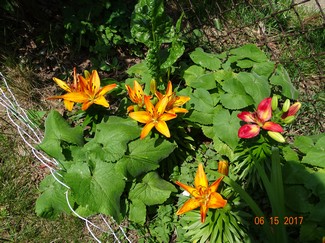
For myself, I had many victories. My first successful day lilies lit up the neighborhood. I received many compliment from neighbors. This emboldened me. I planted giant sunflowers which also got rave reviews until someone picked every one of them. My zinnias brought Tiger Swallowtails which introduced me to the world of butterflies. Then there were the strawberries and raspberries that I picked with delight and remembered my childhood of berry picking in Ohio. Let that Super try to put an end to raspberries! Once cut, they will spread like wildfire. And so will the honeysuckle, red for hummingbirds, but I guess not this year. Oh that Super will be sorry!
Meanwhile, I duck inside my apartment, grab the gardening catalogues and begin working on my next gardening strategy. Perhaps annuals in wheeled flower pots would be better. I can move them around, out of the way. Eventually the lawn mower and chain saw are silent. I go out and look around.
The lawn is nicely mowed. Unfortunately, the superintendent has taken his furry out on “my” classic lilac bush. After seven years of growth, it bloomed into sweet-smelling flowers this very spring. Now it is completely gone. Broken boards and flaking paint of the old wood fence are visible. The superintendent is standing there looking at it and shaking his head. He is wondering what to do about the eyesore.
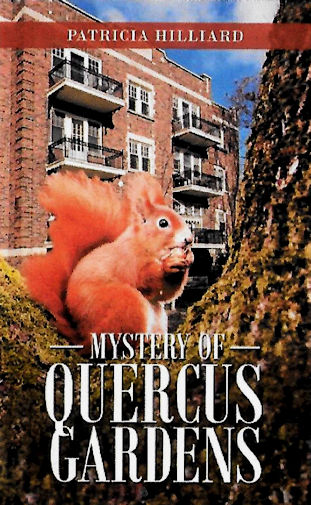
Mystery of Quercus Gardens is my novel about renters who fight for their rights, including the right to help beautify their complex with flower gardens. You can get it at the link below.
















I applaud you for your conservation efforts. It really bothers me that weedeaters are used to create foot-wide swathes of bare dirt around edges that turns to mud when it rains. Haul off all grass clippings, leaves mixed with paper, plastic and other litter in black plastic bags and then come back and lay down bark mulch instead.
We now have both a small garden with cherry tomatoes, cucumbers, chives, Vietnamese spinach and some varieties of pepper and mint, most growing as volunteers from seeds thrown out. We have a number of annuals and perennials around the house, with lantana for hummingbirds, bees and butterflies, jasmine, pansies, mums and yesterday, today and tomorrow. We have a cypress and sweetgum trees that I planted from tiny seedlings that are now 40 feet tall. It's good to own the land so that you can plant and grow what you want.
Ron