I live in New Jersey in a garden apartment. The apartment is in a complex of about 30 buildings with large lawns and trees surrounding them. Here and there, in the corners of the lawns, tenants have taken to planting a few flowers and protecting them from the lawn mowers with small white wire fences. The superintendent and the landlord have not resisted this expansion of tenant privilege, so we have all been living in peace with the beauty of flowers.
Until this week!
The Department of Environmental Protection has deemed it necessary to have all oil tanks removed from commercial rental properties. Our landlord had already converted most of the buildings to natural gas. But the oil tanks were left in the ground. The time of reckoning had come.
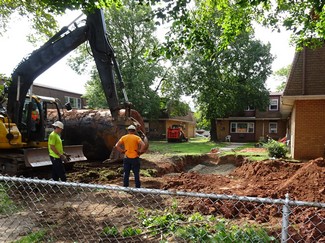
Suddenly, we tenants were surrounded by “bob cats” and “backhoes” that began digging huge holes around the complex wherever oil tanks had been buried. I had the horror of looking out my bedroom window at a bob cat and back hoe breaking down an old apple tree and tearing into the soil right next to the base of the building. I watched with deep sadness as my iris, peony bush, Japanese painted fern, New England Asters, butterfly bush and various other plants were broken, twisted, stomped and torn by the giant insects of modern machinery. “They will grow back next year,” my husband assured. But the apple tree was gone. I remembered how the squirrels used to love the apples.
After five hours of watching the back hoe reach down, scoop dirt and dump it, the monster machine reached down and grabbed the huge metal can. Thumping and banging, the back hoe wiggled the can loose and slowly lifted it out. The oil tank was a dinosaur, a relic of times past when humans burned oil to heat their homes. An engineer came with a test kit and tested the soil. Once it was found to be safe, the machine began pushing dirt back into the hole.
For twenty-four years we had enjoyed looking out the bedroom window at the apple blossoms in spring. Now we had a full view of the neighborhood, every building, window and doorway, street and parked car. The lawn was completely ravaged. The serenity of bird song and buzzing bee was obliterated.
I tried not to look out the window, tried to console myself that it was just this one space near our home. But the hole in the yard was a hole in my life.
Until I thought about gardening.
I like gardening because it gives you the ability to change your world. I have participated in many community vegetable gardens and the restoration of habitat though butterfly gardens. This assault to the lawn could be another opportunity to re-plan and restore the beauty of the lawn. I could pull out over-grown plants, like the yellow iris, and put in something better for the bees and birds. The apple tree could soon be replaced by dogwood and redbud trees which are native to the area. This thought of restoration and change for the better got me excited. I was soon looking through my books on bird gardening and my catalogues on native plants. In a pinch, I could put in more annuals to cover for the perennials that needed some time to catch on. It’s like they say, if life gives you a lemon, make lemonade. This is not always so easy, but for the loss of an oil tank, it was an opportunity to grow.










Now you have a project for the spring. To restore the small gardens of flowers and plant perhaps, two apple trees to replace the old one. I recall an apple tree that was quite young, perhaps only four or five years old, but was so laden with apples, that it fell down when heavy with rain in a storm. It was next door to my parents' place. Dad went out and got a winch and used it to straighten the tree back up again, apples and all. And then, raised it with posts and wire so that it would last a long time. The 95-year-old woman who owned the three, next door, was very grateful.
Ron