Looking back over my life, I marvel at the things that were going on in my world that affected me and made me what I eventually became. One of those things was the typewriter. (These days they refer to it as the keyboard.) With the invention of the typewriter, society deemed that females should do all the typing in the business world. Sure, there were a few defiant men who learned to type, but they were few in number. Every office had row upon row of women typing for hours on end.
As usual, the business world wanted us to type faster and faster so we would get more work done in less time. This high productivity would increase corporate profits! I tried my best to go faster and faster, hoping that somehow it would translate into a pay increase. It never did. But I did get to keep the job.
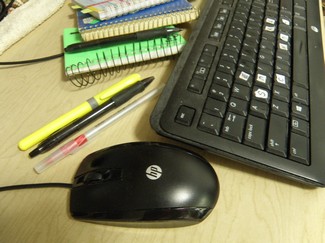
With my paycheck, I bought a book about the history of typewriters. That book explained to me why the letters on the keyboard, which had been challenging to learn, were arranged the way they were. The original typewriter had arms that went up to hit the ribbon and press the letter onto the paper. If the typist went too fast, the arms would get stuck together. I had this jamming of arms problem numerous times, even back when I was learning.
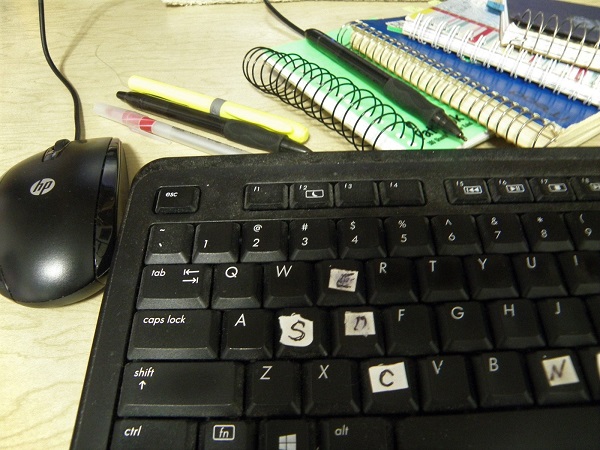
The book also explained that the letters were arranged so that most of the useful letters in English, such as “a” “e” “s” “r” and “c” were on the left side. Since most people were trained to be right-handed (necessary for factory workers who operated “right-handed” machines) the keyboard had the most useful letters on the left side to SLOW YOU DOWN so the machine would not jam. (In my research I learned that this is now considered an unproven theory—but as a typist it made complete sense to me.)
The sad irony is that the business world wanted us to type faster and faster, yet we were chained to a keyboard designed to keep us slow. This created doubt in me about the efficiency of the business world.
These days, I sit down to my computer keyboard and splash words across the screen at the speed of light. How old fashion of me! There’s voice activated typing! The skill that defined my working life is becoming useless. That’s how it goes when technology changes!


















I read that women first entered the work force in the 1880s when companies could not get men to use the newfangled typewriter. Most women in those days played piano in the home and it seemed natural that the keyboards would be more easily learned by women. I found that my typists were great at correcting my spelling, generally atrocious because I never use a dictionary. And I relied on typists until I got my first personal computer and found that I could turn out memos much faster by cutting out the middle woman. Fortunately, most of our secretaries were promoted to executive assistants and thereby gained more pay and prestige.
I took typing in the tenth grade with a lot of girls not yet developed enough to my liking. The girls excelled in speed and I never reached more than 65 words per minute. But I did learn to type correctly with all of my fingers and how to write most of the major business documents like letters and memos, contracts and such. Something that now is available as templates on most word processors.
At 20, my hands and arms were paralyzed. But I could still type with one finger and press the shift key with another… But only on an electric typewriter. When I added my hand splint in 1964 (I'm wearing it as I dictate this--for corrections) I was able to type a little faster and more accurately. My greatest achievement was typing my doctoral dissertation of 300 pages twice and another 100 pages that was word-processed by my hired typist for the final draft.
I started using dictation systems about 1993. They still don't understand me and give me wrong words all the time, but it's nice to keep up with those people whose fingers can fly all over the keyboard as they type in whirlwinds.
Ron