 A no-diet method to lose weight permanently is presented. It uses practical concepts of systems engineering in combination with ancient Huna techniques that engage the unconscious mind.
HOW TO LOSE WEIGHT THE NATURAL WAY
Sergio E. Serrano, Ph.D.
Using Practical Concepts of Systems Engineering to Lose Weight without a Diet in Combination with Ancient Huna Techniques that Engage the Unconscious Mind
The holidays are over. For the past few weeks, we spent time enjoying with family and friends. The company, the wine, and the many dishes we tried were all wonderful. It is time to think about the new year and decide about some changes to make. At the top of the list is to lose some weight. How many times in years past did we write this goal in the list of resolutions? How many times at the end of the year did we conclude we failed? It is not that we did not try. We devoted time, effort, and money to this elusive goal of losing and maintaining a healthy weight. This is the time of the year when we are bombarded by the media with an infinite array of ways to lose weight. The choices are enormous: Diets, exercise programs, memberships in special “health” clubs, pills, supplements, herbal treatments, methods to increase the metabolic rate, and invasive surgical procedures are among the list of options. Many ads promise fast results. Some of these approaches are unhealthy and some are dangerous. It is a profitable industry, which unfortunately fails to deliver on its promises, most of the time.
If you unsuccessfully tried the dietary, pharmaceutical, and medical approaches to weight control, perhaps it is time to try the systems engineering approach. If you truly want to lose weight, and keep it off, there are some facts you need to know. Let me give you an engineer’s perspective about human weight. The human body is a complex machine that takes energy –from food– process it, and spends it in various metabolic processes and movement. It is a biosystem with an input, storage, an output of energy. We do not need to be too technical about it. Your weight is the result of the long-term balance between energy input and output. If over a long period of time the energy intake from food exceeds its output, then the storage of mass, and thus energy, increases; you gain weight. On other hand, if over a long period of time the expenditure of energy exceeds that of the intake, you lose weight. There is a correspondence between mass (and its weight) and energy. The key concept here is “long term.” Thus, to lose weight you can decrease energy intake, increase energy expenditure, or both. It is as simple as that. Yes, one can increase metabolic rate in a number of ways –and research seems to be too focused on these–, but the fact remains that the body’s energy balance is what determines its weight. We can trick the body by eating the important meal at noon instead of at night, eat small meals through the day, take more water, eat supplements that increase metabolic rate, avoid foods that slowdown metabolism, or implement the many suggestions reported in the research literature. I suppose these would help, but the true measure of success in losing weight lies in your ability to reduce the body’s energy storage over a long time.
If you find that over the years you seem to gain weight no matter what you try, then it is time to change your body’s energy balance. Now, this is a simple concept to formulate, but not so easy to implement, because it implies changing of some of your habits, which may have some psychological roots. I offer below some practical steps to follow. The first two are intellectual; the third one is the most important since it requires the engagement of your unconscious mind; the fourth is the implementation step. These steps have helped me lose and maintain an ideal weight without any special diet and without depriving myself of the things I love to eat the most. I am a person who loves to cook and to eat, and yet I regard health as the most precious gift one must preserve. Controlling your weight should not be painful; it requires discipline, but not suffering.
(1) Recognize that no diet will help you lose weight, permanently. If you have tried some of the diets in fashion, you have found the following: (a) They constitute a torment for the mind and body; and (b) the weight you lose during the diet will be gained after you end it. Most of the weight you lose is water. According to research, diets that cause a fast weight loss may be unhealthy. Why should you endure the agony of a diet, if the weight will be regained afterwards? A diet, any diet, is doomed to fail, unless it is followed by a change in habits. Resolve to never again follow a diet, and instead to change the lifestyle that causes you to gain weight.
(2) Recognize that losing weight will take you a long time. Our weight is the result of years with a specific lifestyle. Your lifestyle is the result of long-term habits. The extra weight was gradually gained over many years; it did not happen overnight. Thus, changing our habits –admittedly a difficult thing to do– will result in gradually losing weight over months or years. On the other hand, research suggests that losing weight fast is usually followed by an equally fast gain in weight, which may be unhealthy. Therefore, the sensible approach would be to implement small gradual changes in our habits and drop the expectation that we must lose weight fast. This means that losing one pound per month is a reasonable goal. It may not seem like much, but one pound per month translates into twelve pounds per year, and within a year or so you may be losing about ten percent of your weight, which has proven to be very healthy for the heart, the circulatory system, and the joints, not to mention the body’s self image.
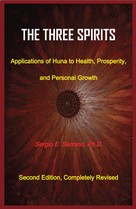
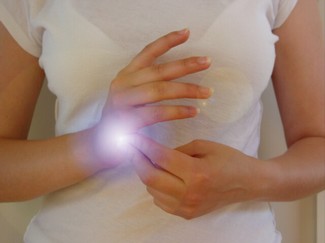
(3) To implement a change in habits, establish a dialog with your lower self. This is the most difficult part of the plan. All habits, good and bad, were at one point learned by your middle self –the conscious mind. After a few repetitions, your lower self –the unconscious mind– learned to do them automatically. Recognize that to change a habit of many years, pure will or positive thinking will not give good results. Thus, changing a habit such as eating too much sweets cannot be altered by merely will power. These habits, especially those created to compensate for some lack in our lives, are stored in the unconscious memory and trapped with large amounts of psychic energy. The most useful approach to change a habit is to take the time to sit down, address you lower self with the intention to listen to its needs, and discharge the psychic energy abnormally attached to a fixation in the unconscious memory. In my book The Three Spirits, I discuss practical exercises to learn how to communicate with your lower self, get its support, and effectively eliminate fixations attached to habits we wish to eliminate. Fifteen minutes a day in quiet solitude with yourself is all it takes.
(4) Change your body’s energy balance. Having done the intellectual planning and the emotional cleaning of the last three steps, it is time to implement a reduction in your body’s energy intake and simultaneously an increase in your body’s energy expenditures. Here we have a wealth of suggestions from nutritionists and exercise counselors. The fundamental philosophy here is not to deprive oneself of anything; just consume everything you want, but in moderation. I love pasta, cheese, ice cream, and heavily fatty foods such as Spanish chorizo and lamb, but I consume them in small quantities, and not every day. Remember that any change you implement will be done with the intention of becoming a permanent part of your lifestyle. Thus, plan carefully any change. Study which one you would like to act upon first and start applying it very gradually. For example if you think you eat too many sweets, you do not have to give up on them; just reduce the amount you consume, a little at a time. Instead of having three bars of chocolate a day, plan on having only one a day or less, but start by reducing the amount by one piece of a bar per week until you reach your target. The changes you implement are so subtle that your body will adjust quickly. Never implement a drastic change; your body will revolt and you will fail. Once you reach your target, all the changes will become new habits and you will never have to worry about weight again. The following are more specific suggestions for re-balancing your body’s energy system you may want to consider. There are many others you may implement. Be creative.
Reducing the body’s energy intake. There is a wealth of advice on this item, from reducing carbohydrates and fats to eliminating overly-processed foods and increasing fruits and vegetables. You may start by improving the quality of food you consume. Research has shown time and again that sugars and overly-processed, heavy-in-chemicals, foods have negative effects on the organism; they affect the balance of the intestinal flora and weaken the linen in the walls of the intestine, thus creating an immune system imbalance, which affects other systems, not just your weight. Overly-processed foods have also been found to interfere with cells’ mitochondria conversion of food into energy, thus resulting in excess accumulation of body fat. Resolve to gradually improve the quality of food: Increase the consumption of fruits, vegetables, fish, nuts, seeds, legumes (beans); spend more time cooking your own food, thus controlling its quality. Indeed, these are valuable suggestions. In the end, your diet is a personal decision which balances the nutritional demands with your personal preferences for enjoyment. Beyond these basic guidelines, my approach has been to maintain the basic makeup and variety of the foods we enjoy, while reducing the volume. You may want to start by slowly reducing the portion sizes. One of my bad past habits was to have seconds every day. I started by very gradually reducing portion sizes until I eliminated the urgency to get up and refill my plate. Thus, there is no need to deprive oneself of the things we love to eat. A friend of mine decided to have dinner in smaller dishes. The portion sizes in America are too large and since childhood we have been trained to eat all the food on the plate. A big challenge to our new lifestyle is when we are invited to eat or when we eat out. Here, then, you have the choice to order smaller plates. Did you ever wonder why the Spanish, the French and the Italians eat such heavily fatty foods, loaded with olive oil, and yet manage to have skinny waistlines? The answer is: small portions.
Increasing the body’s energy expenditures. Of course, the obvious approach is exercise. Here again the amount of advice is overwhelming. Once we create the habit to exercise daily it is an automatic thing to do. However, for many people starting and maintaining an active exercise program is painful. For others, exercise machines and weights are boring. The good news is that you do not necessarily have to engage in a formal aerobic class or spend money to join a health club in order to get the benefits of exercise. What I suggest is to re-examine your household and work activities and to see which ones could be modified to allow you to move. Exercise means body movement. It does not have to be aerobic or Pilates. You need to move your body in any way you like, for longer hours of the day, every day.
For example, start doing your own yard work, or change your self-propelled lawnmower for a push lawnmower. Yes, it will take two hours instead of one to finish the job, but remember you do this for your health as well as the yard. With the proper attitude you will find how enjoyable yard work is; you will receive instant gratification when you finish mowing; and you will save hundreds of dollars a year in landscaping expenses.
Start moving more at work. Modify your work routine to allow more frequent body movement. Stop for a break more often. Use the stairs instead of the elevator. Reduce the number of hours you spend looking at an electronic screen –a modern epidemic– and increase the number of hours you spend moving. A few years ago, I decided to park my car about one mile away from my office. This added several hours of walking per week. In the morning walk, I plan my workday and in the evening walk I mentally review the events of the day –a very healthy habit– so that I do not have to think about work when I get home. Walking is a most enjoyable activity. Depending on where you park, you can enjoy the urban or natural scenery. An additional benefit: you no longer have to pay for parking, which could amount to hundreds of dollars in certain cities.
If you have not done so, start doing your own home cleaning. It is one of the most intense forms of exercise. See what physical activities you can start doing. Anything that requires movement and that you can start doing regularly. With the right attitude, many menial chores may become enjoyable. How about playing again the sports you used to enjoy during childhood? Address your lower self and remember which activities you used to enjoy, but later abandoned for lack of time. Yes, you need to make the time for new activities. Losing weight, health, and enjoyment of life require time.
Spend a few minutes a day reviewing your habits that relate to eating and body moving. Your goal is to decrease the former and increase the latter in order to re-balance you body’s energy. Examine every single habit and see how you can modify it. Address your lower self and get its cooperation before implementing any change. Your lower self is your emotional self. It is part of you and it will help you if you consider its needs. Implement only one small change each week. Do not hurry; it will take you a long time to get where you want. One day you will discover you no longer have to worry about weight and you can enjoy every thing you like. Most of all, you have achieved an important step in personal growth, one that required the cooperation between your body and your mind. I wish you success.
_________________________________________________________________________
|