Since the 1970s, the ornithologists have been saying that male birds do little to help female birds and ducks raise the young. This is heralded by most birding publications, especially the ultimate resource of them all, The Cornell Lab of Ornithology. While Cornell Lab does give 85% of the males of the bird and duck species credit for “sticking around and helping” in parenting, they also state on their educational web site that “In the most extreme cases of sexual selection, the male’s only contribution to the next generation is his sperm.”
For females of the human kind, it may seem that nature prefers females to do all the work. We could draw the conclusion that men are just lazy sperm bags and to ask them to do anything goes against their genetic construction. But are the scientists really being scientific?
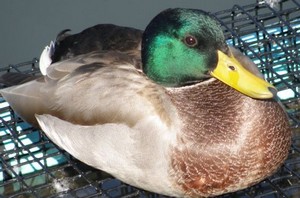
One day while watching Mallard ducks in Liberty State Park, I noticed some “unusual” activity. Nature protects female Mallards by dressing them in brown feathers that camouflage them to blend with the brown grass of the marsh. This blending protects them from being found by predators such as dogs, coyotes, foxes, even raccoons. On a sunny spring day, the female Mallards were sitting on their nests keeping the eggs warm and hidden. Overhead, the male Mallards were flying back and forth over the marsh, crisscrossing the areas where nests were located.
As I watched, a pack of stray dogs came off the road and ran down into the marsh. One of the dogs ran out from the pack and deeper into the grass. It soon came near a nesting female Mallard. A male Mallard, patrolling from above, saw the dog approaching the nest and came flying over, dangerously close to the dog. The dog looked up and saw the brightly colored, quick moving male Mallard and began to chase after it for a quick and easy meal. The male Mallard turned sharply and crossed back to the dog, catching its attention again and lured it further away from the nesting female. Soon other male Mallards saw the threat of the pack of dogs and began flying back and forth over the marsh. The dogs were going crazy now trying to chase what looked like an easy meal until finally they were led out of the marsh away from the nesting female ducks. A crafty male duck doing serious recognizance could lure the dogs, protect the nest and avoid becoming the meal they wanted.
Seeing this, I devised a theory. Could it be that the female birds and ducks pick males based on the brightness of their plumage so they can be the best distraction and protection against predators?
Another opportunity to observe male bird behavior occurred in my backyard. I watched two nesting Cardinals. The female had built the nest in a shrub, close to the ground. The male, bright red and very attractive, sat high in a tree nearby and looked down. From his perspective he could see any predator, cat, raccoon or skunk that might approach the nest. One day, I saw the male Cardinal investigate a stray cat that was coming near the nest. The male Cardinal jumped down near the cat and scrutinized it. The cat, seeing the fluttering bright bird, pursued it until the cat had been drawn safely away. The male Cardinal had used a passive mechanism of defense to assure the success of the nest.
Now every spring I look for nests and watch to see what the males are doing. It’s logical to believe that males have a reason to protect their genetic offspring. Scientists may have overlooked this important role of male birds and ducks simply because it is a gentle form of defense. Let me know if you have made any observations of this kind. I’d really like to know! Maybe we can help the scientists challenge the myth of the irresponsible male.




















Recently, scientists have learned that birds are more intelligent than originally thought. However, bears, much more intelligent than mallards, abandon mother bears immediately after the mating season and will kill any cubs they find so that they can mate with the mother again. Male bears are very irresponsible fathers.
Ron