Do all the good you can,
By all the means you can,
In all the ways you can,
At all the times you can,
To all the people you can,
As long as ever you can.
-John Wesley
O soul, curator of the spiritual code and answer to the fundamental questions; "What is it, in my heart, that I must do, be, and have?" and "What is it, after all, that I amount to, ultimately." And why?
The soul's Code serves as a path to personal development, combining bravery and gentleness, extending compassion to others, appropriating courage to defend both humanity and the earth and, above all else, embodying integrity which, unlike character, can only be good. Good results from right action, behavior that is rooted in and activated by morality.
C. S. Lewis, a renowned scholar, author and lay theologian, describes morality as it relates to behavior on three levels; (1) to ensure fair play and harmony between individuals; (2) to help make us good people in order to have a good society; and (3) to keep us in a good relationship with the power that created us.
Based on this definition, it s clear that our beliefs are crucial to our moral behavior. However, his description of morality is not universally accepted. Opposition to the third level is the strongest. "Is there a God?" can be answered by asking the question, "How did we get here...Creation?" The Big Bang theory or Thermodynamics theory does not provide an answer to the question. Both theories ignore or fail to account for the "First Cause." "In the beginning God."
Morality is also a matter of conscience. It is synonymous with "ethics." Ethics addresses questions about morality - that is, concepts such as good and bad, noble and ignoble, right and wrong, justice and virtue. Morality may be distinguished from etiquette, law and religion all of which are, or involve, codes of conduct put forward by society. Morality is a code of conduct. Morality may be based on prejudice, ignorance or even hatred. Moral standards are applied to determine what is right and what is wrong.
Whose morality? Culture, religion and tradition shape morality. But the individual has the ability to possess morality - that is, be transcendent of his heredity and environment. Ultimately, only morality that is directd by the Soul's Code can be trusted at all times and in every situation, even when situation ethics is applied. Potential living morality is rooted in and directed by love. Love is the only principle that is always good and right in every situation. "Give all to love."
Whose morality? Not mine or yours, not society's or the world's, not religion or politics. Whose morality? The Soul's Code has the answer.
This combined narrative dialogue and play is about the uncreated, unborn and undying transcendent Self of God-consciousness and Buddha-nature. It describes an odyssey of transcendent Consciousness Awakening and Remembrance.
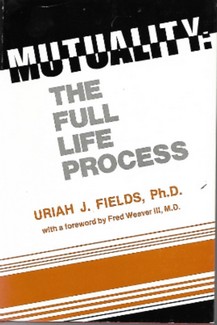
Explains the realizations that have given the author the views of living life fully. The life each person dreams about.
You must take a look at yourself before dreams can be reached.
Deciding what is the core of belief.
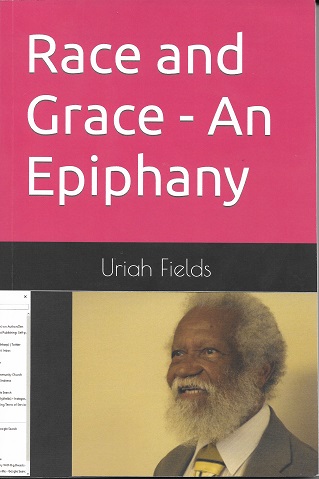
This book chronicles an infinite allegoric odyssey of Absolute Awakening in which a learned man, a mute man, and a recluse woman are the principal players. The mute and the recluse are the learned one's Teachers and Guides on his journey of Enlighten





 Share
Share Print
Print Save
Save Follow


-Jomo