Pregnant with dark clouds
The sky is laboring today
Making a terrible sound
Expanding along its edges
Shirinking within itself
Coming out from the blue
Releasing burden of stress
Opening up gates of hope
Wishing a sudden relief
Birthing Rain
A soul-comforting baby
what a relax!
This is a beautiful write. Thanks for posting. Rain symbolizes prosperity and peace for us.
By the way, read this story about Mogadishu. I found it on YAHOO!
Somalia descends into Africa's worst crisis By Shashank Bengali, McClatchy Newspapers
Thu Dec 13, 6:00 AM ET
AFGOYE, Somalia — A year after the U.S.-backed Ethiopian army toppled a hard-line Islamist regime in Somalia , the country has become Africa's worst humanitarian catastrophe.
Some 200,000 refugees, mostly women and children, have fled from a pro-government offensive to makeshift camps along a 10-mile stretch of sun-baked asphalt that leads from the seaside capital of Mogadishu toward the inland town of Afgoye.
The crisis is brutal on young people.
One night last month, Fatima Sheikh Ali awoke to the deafening crash of mortar rounds on her neighbor's roof. Shrapnel blasted through Ali's tin-walled home in Mogadishu , and sent her 13-year-old daughter, Muna, into her arms, quaking.
Sometime in the chaos of that night, Muna stopped speaking. In an overcrowded encampment of sand and scrub a few miles from the capital, where the family now lives among thousands made homeless by the war, Muna silently collects firewood and looks after her siblings, a worried gaze fixed in her almond eyes.
"She is traumatized," her mother said, and a warren of women who'd gathered around her murmured sympathetically. A nurse with the Somali Red Crescent Society said, "There is nothing to be done. It is a very sad story."
The conflicts in Sudan's Darfur region and in eastern Congo may have displaced more people, but international relief efforts in Somalia have faltered in the face of violence that's emptied entire neighborhoods in Mogadishu .
Most displaced Somalis, such as Muna's family, live in dome-shaped huts fashioned out of spindly tree branches and covered with tattered swatches of fabric or plastic. They sprout from the sand like multicolored mushrooms along the road from the capital.
The United Nations Children's Fund said last week that one-quarter of the refugees around Afgoye were younger than 5. Both sides are using older boys as combatants, and girls who venture out of the camps risk being raped by freelance militias, the agency said.
"Things are now getting absolutely worse," said Christian Balslev-Olesen, the UNICEF representative for Somalia . "There is a dirtiness to this war. Children are a real target."
Fewer than 1 in 10 Mogadishu children attends school now. Muna and her siblings aren't among the lucky ones. Their southern neighborhood of Hodan has seen near-daily fighting as Somali government troops and their Ethiopian allies hunt for insurgents amid the low, whitewashed storefronts.
The restaurant where Muna's father worked as a waiter has been closed since March, when its owners fled the city. Most of their neighbors also have left.
"There is no movement in the streets, no work, hardly any food," said Ali, Muna's mother, who has six other children. "The only sound is the whistling one," she said, a term that Somalis sometimes use to describe the rockets that whiz over their rooftops at night.
Local groups estimate that 6,000 people have died in the fighting this year.
Traveling Somalia's roads is fraught with danger once again. Aid groups and former residents say that Somali government forces, far from ending militia rule, are starting to behave like militias themselves.
Checkpoints have popped up throughout southern Somalia , with government soldiers and allied militiamen demanding payments and harassing civilians and relief workers. According to UNICEF , sick children and pregnant women often are turned away at checkpoints. In some areas, trucks carrying food and other humanitarian aid have to pay tolls of $500 each, U.N. officials said.
Last week, Somalia's internal security chief closed airstrips and ports outside Mogadishu for several hours, leaving nearly 4,000 tons of emergency food aid stuck aboard U.N.-chartered ships floating in the sea.
"There is complete chaos and lack of coordination," said Eric Laroche , the head of the U.N. relief effort.
By making the payments, Laroche acknowledged, "we are creating rich people who are going to be warlords in the future. But that is the tradeoff." Amid one of the poorest harvests in southern Somalia in years, he said, the influx of food aid over the past month seems to have forestalled widespread malnutrition in the camps.
For ordinary Somalis, the government checkpoints are often scenes of terror.
Shukri Mohammed , a weary-faced woman who walked three days on bare, swollen feet to reach the safety of a camp last week, said she was stopped as she left Mogadishu with her seven children.
The poor widow had nothing in her pockets, not even a cell phone. That seemed to annoy the uniformed men at the roadblock.
"Because they didn't get any money from me, they hit me," she said, her 2-year-old son cradled in a ratty blanket tied around her neck. "They used the backs of their guns. They used sticks." She pulled back her pink shawl to show bruises on her arm.
On her first night in the camp named Mustahil, she stored the few items of clothing she'd brought in another family's hut. Then she and her children fell asleep on the sand under an acacia tree.
Mustahil is one of the newer camps outside Afgoye, but in just over three months some 6,000 people have gathered here. One of the elders, Kahiye Yusuf Ali, a lean man whose henna-stained beard glowed a deep orange, said they hadn't received any U.N. food rations yet.
"The children are growing skinnier," he said, pointing at a gaggle of boys, all elbows and knees.
A few hundred yards away, in the Jimcaale settlement, Muna's mother complained that the rations weren't enough for a family of nine.
She sighed. Blasted by rains, their hut was starting to wilt, and her husband was out in the midday heat looking for more wood. She ripped a strip from an empty sack of grain and tied some loose branches tighter. A few feet away, Muna hid her face behind a pale green shawl and kept watch over her young brothers.
"The fighting is different now," her mother said, talking as she worked. "Now it is everywhere. The shelling comes from all sides."
Here, she went on, they felt safe. Maybe in a few weeks they could return home. "If the Ethiopian troops leave Mogadishu , things will be fine," she said.
Muna, standing beside her, didn't utter a word.
A slide show on Somali refugees: http://www.mcclatchydc.com/216/gallery/22979.html
Abdi-Noor,
It may take you a couple winters to get used to the cold in Sweden. Till then you are probably going to freeze your butt off. Remember to layer. I am happy you are safe.
Walt
Reviewed by Chantilly Lace (Reader)
Reviewed on December 13, 2007
Beautiful writing,enjoyed...stay safe and well...HUgs




 Share
Share Print
Print Save
Save Follow


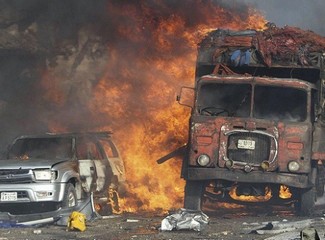





By the way, read this story about Mogadishu. I found it on YAHOO!
Somalia descends into Africa's worst crisis By Shashank Bengali, McClatchy Newspapers
Thu Dec 13, 6:00 AM ET
AFGOYE, Somalia — A year after the U.S.-backed Ethiopian army toppled a hard-line Islamist regime in Somalia , the country has become Africa's worst humanitarian catastrophe.
Some 200,000 refugees, mostly women and children, have fled from a pro-government offensive to makeshift camps along a 10-mile stretch of sun-baked asphalt that leads from the seaside capital of Mogadishu toward the inland town of Afgoye.
The crisis is brutal on young people.
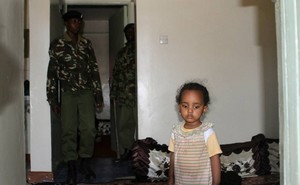
One night last month, Fatima Sheikh Ali awoke to the deafening crash of mortar rounds on her neighbor's roof. Shrapnel blasted through Ali's tin-walled home in Mogadishu , and sent her 13-year-old daughter, Muna, into her arms, quaking.
Sometime in the chaos of that night, Muna stopped speaking. In an overcrowded encampment of sand and scrub a few miles from the capital, where the family now lives among thousands made homeless by the war, Muna silently collects firewood and looks after her siblings, a worried gaze fixed in her almond eyes.
"She is traumatized," her mother said, and a warren of women who'd gathered around her murmured sympathetically. A nurse with the Somali Red Crescent Society said, "There is nothing to be done. It is a very sad story."
The conflicts in Sudan's Darfur region and in eastern Congo may have displaced more people, but international relief efforts in Somalia have faltered in the face of violence that's emptied entire neighborhoods in Mogadishu .
Most displaced Somalis, such as Muna's family, live in dome-shaped huts fashioned out of spindly tree branches and covered with tattered swatches of fabric or plastic. They sprout from the sand like multicolored mushrooms along the road from the capital.
The United Nations Children's Fund said last week that one-quarter of the refugees around Afgoye were younger than 5. Both sides are using older boys as combatants, and girls who venture out of the camps risk being raped by freelance militias, the agency said.
"Things are now getting absolutely worse," said Christian Balslev-Olesen, the UNICEF representative for Somalia . "There is a dirtiness to this war. Children are a real target."
Fewer than 1 in 10 Mogadishu children attends school now. Muna and her siblings aren't among the lucky ones. Their southern neighborhood of Hodan has seen near-daily fighting as Somali government troops and their Ethiopian allies hunt for insurgents amid the low, whitewashed storefronts.
The restaurant where Muna's father worked as a waiter has been closed since March, when its owners fled the city. Most of their neighbors also have left.
"There is no movement in the streets, no work, hardly any food," said Ali, Muna's mother, who has six other children. "The only sound is the whistling one," she said, a term that Somalis sometimes use to describe the rockets that whiz over their rooftops at night.
Local groups estimate that 6,000 people have died in the fighting this year.
Traveling Somalia's roads is fraught with danger once again. Aid groups and former residents say that Somali government forces, far from ending militia rule, are starting to behave like militias themselves.
Checkpoints have popped up throughout southern Somalia , with government soldiers and allied militiamen demanding payments and harassing civilians and relief workers. According to UNICEF , sick children and pregnant women often are turned away at checkpoints. In some areas, trucks carrying food and other humanitarian aid have to pay tolls of $500 each, U.N. officials said.
Last week, Somalia's internal security chief closed airstrips and ports outside Mogadishu for several hours, leaving nearly 4,000 tons of emergency food aid stuck aboard U.N.-chartered ships floating in the sea.
"There is complete chaos and lack of coordination," said Eric Laroche , the head of the U.N. relief effort.
By making the payments, Laroche acknowledged, "we are creating rich people who are going to be warlords in the future. But that is the tradeoff." Amid one of the poorest harvests in southern Somalia in years, he said, the influx of food aid over the past month seems to have forestalled widespread malnutrition in the camps.
For ordinary Somalis, the government checkpoints are often scenes of terror.
Shukri Mohammed , a weary-faced woman who walked three days on bare, swollen feet to reach the safety of a camp last week, said she was stopped as she left Mogadishu with her seven children.
The poor widow had nothing in her pockets, not even a cell phone. That seemed to annoy the uniformed men at the roadblock.
"Because they didn't get any money from me, they hit me," she said, her 2-year-old son cradled in a ratty blanket tied around her neck. "They used the backs of their guns. They used sticks." She pulled back her pink shawl to show bruises on her arm.
On her first night in the camp named Mustahil, she stored the few items of clothing she'd brought in another family's hut. Then she and her children fell asleep on the sand under an acacia tree.
Mustahil is one of the newer camps outside Afgoye, but in just over three months some 6,000 people have gathered here. One of the elders, Kahiye Yusuf Ali, a lean man whose henna-stained beard glowed a deep orange, said they hadn't received any U.N. food rations yet.
"The children are growing skinnier," he said, pointing at a gaggle of boys, all elbows and knees.
A few hundred yards away, in the Jimcaale settlement, Muna's mother complained that the rations weren't enough for a family of nine.
She sighed. Blasted by rains, their hut was starting to wilt, and her husband was out in the midday heat looking for more wood. She ripped a strip from an empty sack of grain and tied some loose branches tighter. A few feet away, Muna hid her face behind a pale green shawl and kept watch over her young brothers.
"The fighting is different now," her mother said, talking as she worked. "Now it is everywhere. The shelling comes from all sides."
Here, she went on, they felt safe. Maybe in a few weeks they could return home. "If the Ethiopian troops leave Mogadishu , things will be fine," she said.
Muna, standing beside her, didn't utter a word.
A slide show on Somali refugees: http://www.mcclatchydc.com/216/gallery/22979.html
It may take you a couple winters to get used to the cold in Sweden. Till then you are probably going to freeze your butt off. Remember to layer. I am happy you are safe.
Walt
A StormSpinner kind of write. Wish I'd written this. :) Well done!
(((HUGS))) and love, Karla. *prayers*
Sometimes, it truly is.