To be a famously known is great,
But how great is the famed price?
I’ve heard they say the first impression
Of a really great piece of art is always
Unnerving to the point of painfulness.
Another query which occurs to me is:
Is it the lot of all the great people
To be now and then misunderstood?
And so, is it such sort of people’s lot?
These people have been magnificently
Misunderstood, I dare to think it loudly.
Greatness is often the term we confer
On what we do not understand
And wish to have done with.
Between being well understood,
However, and being called great,
These people would have preferred
The former and evade the latter,
And it would have been better for all.
But how are they to be understood?
Who will be their interpreters?
There is that long history of them,
Covering a multitude of kings
And messiahs and sages and poets
And wise scholars and brave mothers
And talented leaders. There’re their arts
And practical teachings, their literature
And their theatres that provide people
With all the moral of good and evil,
And that tremendous mass of folklore,
Dances and songs. Their language alone
Constitutes an almost hopeless barrier.
Can they be understood merely through
The Biblical parlance? Could the world
Pick up an understanding of their soul
Thru the decoded Scrolls of the Dead Sea?
Or shall it be through the disclosed truth
Of the Epistle of Jude or the Book of Enoch?
Or shall it be through their comprador
Or by reading at least correspondence
In the Jerusalem Post? —The proposition
Is manifestly unfair if you’re unaware of that.
The business of trying to understand
A foreign soul with a foreign culture,
Especially one so different from one's own
As these people’s soul, is usually not
For the ordinary man’s lot. For this work
There is need for broad, brotherly feeling,
For the feeling of the common bond
Of humanity, the cheer of good fellowship.
One must feel with the pulse of the heart,
As well as see with the eyes of the mind.
There must be a certain detachment,
Not from the people under examination,
For that is always so, but from oneself
And one's subconscious notions
And from the deeply imbedded notions
Of one's childhood and the equally
Tyrannous ideas of one's adult nowadays,
From those big words with capital letters,
Such as Democracy, Prosperity, Success,
Faith, Honesty, Liberty and Dividends.
One needs a little detachment
And a little simplicity of mind, too,
That simplicity of mind so well typified
By Robert Burns, one of the most Scottish
And yet the most universal of all poets,
Who strips our souls bare and reveals
Our common humanity and the loves
And sorrows and the joys and delights
That common humanity is heir to.
Only with that detachment and that
Simplicity of mind can one understand
A foreign soul as it is, without prejudice.
So, who will then be their interpreters?
The problem is an almost insoluble one.
Certainly, that will not be the experts
Like Orientalists and librarians abroad
Who see these people’s soul only through
The reflection of the Biblical Classics, but
Thru their own experience of conglomeration
Also known as “the unity of diversity.”


 Share
Share Print
Print Save
Save Follow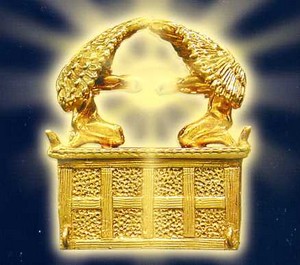






My father once asked me, "Ron, do you have any friends from this country?" I was fortunate while in graduate school, to befriend people from all over the world, and then be able to travel to those countries and stay in homes very much like my father's. Even when I couldn't speak the language, I found the people that I met from very diverse cultures all had the same humanity as I did. It makes me wonder why we have to fight wars so much when we are all, so much alike.
Perhaps we should not focus so much on the hatred the Bible teaches us and focus more on what we like to be. Your poem is a wake-up call for all those who hate, to take a look at the root of their hatefulness.
Ron