'I parked up outside Sandford Manor and let my meter run. The Cheshire red brick and leaded windows gave the residential care home an air of elegance the way old buildings can. The grounds, mostly mown grass, wrapped themselves around the manor like a bandage. In slow motion, I could see two residents moving around a vegetable patch, between lines of cabbages and string. Progress was so slow they could be mistaken for scarecrows.'
By downloading this free short-story you will automatically subscribe to Louise Worthington's newsletter. You can unsubscribe anytime.
There are regular customers that I don’t click with. For some time, Caroline was one of them. It wasn’t the fact that she was silent that got under my skin: I enjoy quiet as much as the next person. At first, I thought it because of the androgynous clothing: a tweed jacket and thick green cords. The cords were so long she’d tucked them into a pair of walking socks stuffed into a pair of pumps. She was a petite woman with hands and feet that moved all the while like blue tits around a bird table. Carrying all that old man tweed and cord around must have taken some effort. It was plain odd.
The first time, she nursed a curler set on her knee in the back of my cab. I hadn’t seen one of those sets in years. My mother had one. The next week, it was a homemade trifle in a cut-glass bowl. I found hundreds and thousands on the back seat like lost worry beads. The next, a framed painting of a seaside and a pier. Brighton, I thought, but could be wrong. I never much liked the sea. It was the week after that we got talking: she asked if she could carry a plant in the backseat with her.
“What kind, duck?” I asked, more being nosy than worrying about my upholstery. I like plants.
“Lavender. It’s in a pot. In a plastic bag.” From the grey pavement, beside my open car window, she held it up so I could see it. Her tiny hands were wrapped carefully around the middle of the pink pot like it was a baby. Her own cherry front door framed her. I could see in her eyes she was desperate for it to get in the car with her. So, I said,
“No problem,” and closed my window. I couldn’t prolong the agony.
Caroline nursed the plant on her knee like it might wriggle away from her. Each time I glanced in the rearview mirror, she had her face in it, her little beak of a nose buried in its scent. She and that plant seemed to whisper to one another all the way there. We all have our secrets. Hers was in the plant that day. She donned a tweed cap to go with the ensemble that week, despite the warm Spring weather. After the drop, the smell of lavender travelled around with me like a joyrider.
I didn’t used to collect her. The fare was drop off only for weeks. A twenty-minute trip from her village, Bomere, through to the outskirts of Nantwich. A scenic route along country lanes in the main. It would have kept things even if it had stayed like that, but you know how things go.
“I’ll only be an hour. I’ll pay, of course, if you’d wait. Please.”
So, I did. I parked up outside Sandford Manor and let my meter run. The Cheshire red brick and leaded windows gave the residential care home an air of elegance the way old buildings can. The grounds, mostly mown grass, wrapped themselves around the manor like a bandage. In slow motion, I could see two residents moving around a vegetable patch, between lines of cabbages and string. Progress was so slow they could be mistaken for scarecrows.
I wished I parked somewhere else: I was parked right in front of a large bay window, a day room of sorts, in which Caroline and presumably her mother was sat, side by side. Floodlit with white light, they were two mannequins in a shop window. It was uncomfortable viewing: I felt like I was gate-crashing something private but with the sound turned down. I stopped not liking Caroline at the moment. It was the moment I understood why she was wearing men’s clothes. The moment I saw the old lady beside her was dressed the same way.
Caroline had wilted by the time she got in the back of my cab. Her head drooped all the way back to her terraced house on St John’s Hill, like a snowdrop. It was like she needed watering. She was all dried up.
When I collected her the following week, she was perky again. We had to stop on route in town. I said it wasn’t a problem, but my meter would be running. At Superdrug, she spent nearly fifteen minutes choosing makeup. We were minutes away from Sandford Manor when she said,
“Shoot!”
In the rearview, her beady-bird eyes were all bright and darty.
“I’ve forgotten to buy the brushes. We’ll have to go back.”
She was twitching on the back seat, rustling the plastic bag, glancing out of the window like her gaze might turn the car around.
“I have some in my handbag you can use. Okay, love?” I waited for the panic to go out of her eyes. It seemed to take a while for the words to take effect. I wanted to see the panic go, but it was still swirling around and resisting.
“Yes! I mean, thank you. That’s very kind of you.” Then she settled into the back seat again, like she’d been given a lollipop.
Once I’d parked up at Sandford Manor, Caroline surprised me by hopping in beside me in the passenger seat. As I rooted in my tote bag, she nervously rubbed her hands up and down the thick corduroy trousers. She must have been hot in those cords. It was a ridiculous big handbag making it impossible to find anything quickly.
“My mum was a beauty Queen. Miss Cheshire 1973-1975.” She spoke in short sentences like she was breathless. Each sentence seemed to come from some secret place. “She might remember, I thought, if I do her makeup, her hair. I’ve got a photo of her to go on.” She produced it from her bag and held it up like a piece of treasure for me to see. The young woman at the centre of a crowd, wearing a meringue dress and a tiara, was quite beautiful.
“She’s very pretty.” I handed her my blusher brush and eye-shadows, complete with a small brush. Despite the cab being a roomy saloon, it suddenly felt cramped. I waited for her to get out so I could breathe more easily.
“I’m Caroline,” she said, like she’d given me something precious to hold.
“Sheila.”
“Thank you, Shelia.”
I took a stroll around the grounds to pass the time, to avoid the makeup demonstration and memory treasure hunt inside the bay window. I walked the acres of mown green grass and counted nine benches, all empty and expectant, despite the warm weather. The promise of daffodils nestled under the single oak tree, so I sat there. There was a vacancy to the place, wherever you went. Time seemed to be snagged here, a splinter in each fingertip. After a while, I got a cramp, so I chose a wooden bench to sit on close to the front door. Sometimes it was uncomfortable having time to think, to be reminded. Suddenly, Caroline came running out, flapping and screeching.
“Sheila”, she said, like her life depended on it, “do you have a lipstick?”
I wasn’t too keen to share my lipstick with someone else’s lips, but I figured I could buy a new one for a few quid. Caroline was paying me more than enough to cover the expense, so I delved into my bag and luckily laid my hands on it pretty quickly. The cosmetic vision soothed Caroline.
“Why don’t you come with me? Mum likes to meet new people. Please.”
Parched, I figured there might be a cup of tea on offer, so I went inside. The manor wasn’t quite so grand on the inside as the outside: like its residents, it had aged and caught a few colds over the years. The bright sunlight and warm day were shut out, banished: there wasn’t a breeze or a hint of Spring inside. The tropical temperature was purely from the central heating that emitted a low wheezing sound. Inside the day room, the bay window let in a magical wish of light exposing the glitter of dust particles, the wand of a walking stick propped by a wing back chair, and an enormous TV screen. A silent grand piano watched our arrival from the corner of the room wondering if anyone could remember how to play it.
Caroline’s mum, planted in the generous wing-back, had had quite a makeover. With her long, slim neck and vibrant makeup, she looked like an amaryllis.
“So nice of you to come. How is Derek?” she said like she’d been expecting me all along. I smiled and hovered, looking for signs of tea.
“Derek?” I looked at Caroline for guidance but found none. “He’s well. Sends his regards.”
Caroline’s bird-like hand moved the plum lipstick unsteadily across her mother’s thin lips like a crayon. The cerise circles of blusher on top of a multitude of age spots seemed indecent to me. Her eyeballs blankly peered out from under a rainbow of eye shadow. Draped in her cords and cable knit cardigan, six brown wobbly buttons, she looked more drag queen than beauty queen. Caroline seemed to be enjoying pampering her mum. She had her very own Girl’s World.
“Am I ready yet?” she said impatiently, like she was in the wings of a theatre, with an audience waiting for her entrance.
Caroline meticulously dabbed at the lipstick she’d smudged on her mother’s false teeth. In her enthusiasm of the makeover, the sleeves of her oversized jumper, previously rolled up, had fallen down and now trailed and flapped around. She looked like she was pulling a rabbit out of a hat as she so proudly presented her mum with an oval mirror.
“Ta-da!”
“Have I won?” she said. “I won last year.” She took a good look at herself in the mirror. A frail hand reached up to touch her head. Patted it. Frowned. “Where’s my tiara? Did someone steal my tiara?”
The hot pink nails pointed viciously at Caroline, her bony elbow knocking her walking stick to the ground with a muffled thump. A sheepskin slipper flew off one of her feet across the room and landed on a coffee table, narrowly missing an elderly gentleman asleep on a recliner. The swollen joints in her pointed fingers snarled and growled.
“You! You took it, didn’t you? You, what are you doing here? Thief! Get away! Get away!”
I looked at my cab on the other side of the bay window and wished I was inside it. A wink of sunlight on the bonnet caught my eye.
“Get out!” Screeched the fuchsia mouth. “Get out thief!”
“Mum! Mum! Please, it’s me. Caroline. Mum!” Caroline pleaded and begged, knelt on her knees before her mum, but it made no difference. “I didn’t steal your tiara, mum,” she sobbed.
One of the carers eventually heard the commotion and made soothing sounds that did the trick. There still wasn’t any tea on offer. And Caroline didn’t bother to retrieve the makeup, or my brushes strewn on the hectic olive and copper carpet, but I didn’t care. We closed the front door behind us quickly, so to keep in the heat. Outside, it surprised me to see a lady on the bench I’d sat on. The gentle slope of her shoulders and the crème sun hat perched on the back of her skull reminded me of my own mother, long gone now. She sat so still: she was a serene painting.
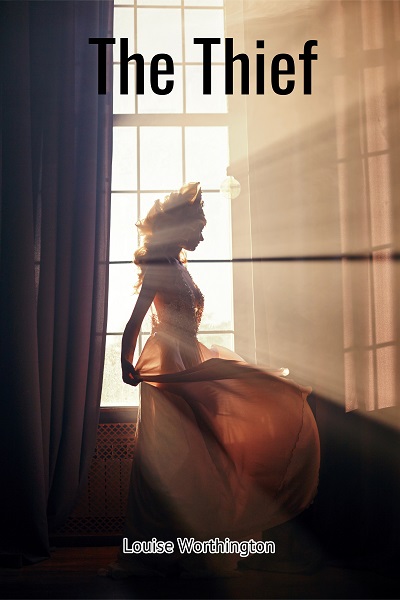
Caroline never spoke on the way home. As I drove, I wound down my window and felt the vivid breeze tussle my silver hair. The fresh air at speed slapped my face and brought me round. I hung my head out of the window a little, opened my mouth wide and drew in big gulps, swallowed them whole. If she noticed, she never said. I could not be hijacked by the putrid silence or the memory of the fetid air or Caroline’s desperate pleas for her mum to know her. Time is a thief. She is lawless. Any taxi driver knows that.
Parked up outside Caroline’s terraced house, she spoke for the first time. The sky was an expectant blue.
“I should have remembered the tiara,” she sobbed. The mop of her mousy hair flopped over her face muffling the sounds of loss. She was younger than me. Perhaps only 40 or so.
“The meter is running,” I said, like I was someone else.
To read the rest of the story click on the website URL below.
A very well written story that initially seemed to be some kind of woman on woman encounter, but turned out to be a surprise villain… Not Caroline… Time!
Reminds me of the many times I visited my elderly relatives and they were so happy to see me until they were either drugged or demented and didn't recognize me anymore. Yes, time is a thief.
Sarah Thompson has ten days on Maui to find her lifetime after lifetime soulmate. She is certain he is waiting for her there on one of the last remaining land masses of Mu still above water.
Determined to confront the hazy memories of his troubled youth, Oliver Matthews, a retired detective and confirmed bachelor, returns to the picturesque town of Henley-on-Thames for the first time in years.
Soldier's Gap is a non-traditional mystery with literary elements. The high school principal is brutally murdered, but Deputy Sheriff Dave Jenkins's search for meaning and love is a much more significant theme.
"Murder isn't usually this fun








 There are regular customers that I don’t click with. For some time, Caroline was one of them. It wasn’t the fact that she was silent that got under my skin: I enjoy quiet as much as the next person. At first, I thought it because of the androgynous clothing: a tweed jacket and thick green cords. The cords were so long she’d tucked them into a pair of walking socks stuffed into a pair of pumps. She was a petite woman with hands and feet that moved all the while like blue tits around a bird table. Carrying all that old man tweed and cord around must have taken some effort. It was plain odd.