Hard Hat Riots of 1970’s
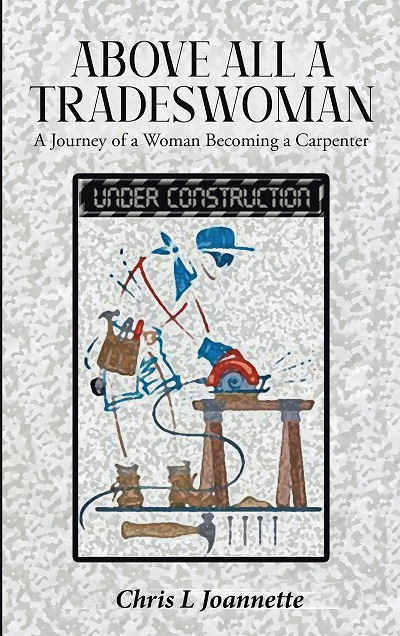
Written by Chris L. Joanet, Retired Union Carpenter, Women & Human Rights Activist since 1970
The late 1960’s and early 1970’s was a period of social growth and change, a time when American citizens searched for their own identity. The “Hard Hat Riot” of May, 1970, clearly showed the new divisions that had emerged in American culture. The middle class labor force, dubbed the “blue-collared” workers, were in opposition to so many of their fathers and sons going to war in Vietnam, while many college students were excluded from the draft. This brought about obvious tensions between the two groups, which were embodied in a riot of construction workers and their confrontation with protestors on the steps of Wall Street in New York City. The “Hard Hat Riot” not only left multiple people injured and arrested, but provided proof of the ever-growing divisions within America. On May 9, 1970, construction workers from all over New York City converged on a peaceful antiwar demonstration taking place on Wall Street. The workers, still wearing their construction helmets, attacked the group of protestors, leaving nearly 70 people in need of medical attention. The mob reached Wall Street at about noon, where students had been calling for the withdrawal of military presence from Cambodia and Vietnam, among other things…
In my opinion this was the start of the hatred by 99.99% white middle class male and construction workers of America for people other than what they perceived as American Patriots and the Republicans pandered to this intellect to win most of the Presidencies in the United States for the next thirty years. It was mostly hidden and not talked about in the North, but the South continued to be outspoken on their dislike/hatred for Black Americans. And women, well they too had only one place in this America, to marry, have babies and allow the men to rule. They not only spoke out loud about this, but the Republican administrations continued to pass legislation that would only pacify the minorities…knowing all along that not too many Republicans and some Democrats would enforce the legislation passed for equal or human rights in their States or this Country.
I have lived through the slow conditioning and pandering to the white America of unaware, uneducated and uncaring Americans throughout my lifetime. I could never understand why minorities and women did not want the power to change things for themselves and their families. Until it hit me, it was a lack of education of the American people as to what the plan really was! The Republican’s continued to reduce the funds given to educate the children, the schools had to continue to reduce the classes offered and the children came out of their education years only learning what their parents, religious counselors, and the white/male ideals they were conditioned throughout their lives to teach.
……………………………………………………………………………………………………………………………
The Hard Hat Riot occurred on May 8, 1970 in Lower Manhattan. The riot started about noon when about 200 construction workers mobilized by the New York State AFL-CIO attacked about 1,000 high school and college students and others protesting the Kent State shootings, the American invasion of Cambodia and the Vietnam War near the intersection of Wall Street and Broad Street. The riot, which spread to New York City Hall, lasted little more than two hours. More than 70 people were injured, including four policemen. Six people were arrested.
On May 4, 1970, thirteen students were shot, four fatally, at Kent State University in Ohio during a protest of the Vietnam War and the incursion into Cambodia. As a show of sympathy for the dead students, then Republican Mayor of New York John Lindsay ordered all flags at New York City Hall to be flown at half-staff the same day.[1]
The American labor movement was deeply divided over support for President Richard Nixon’s Vietnam policies. AFL-CIO President George Meany and most labor leaders in the United States were vehemently anti-communist and strongly supported American military involvement in Southeast Asia. But by 1970, union members were divided in their support for the war.[2]
One of the strongest supporters of the president's war policy was Peter J. Brennan. Brennan was president of the Building and Construction Trades Council of Greater New York, an alliance of building and construction unions in the New York City area. He was also president of the Building and Construction Trades Council of New York, the statewide umbrella group for construction unions. Additionally, he served as the vice president of the New York City Central Labor Council and the New York State AFL-CIO, umbrella groups for all labor unions in these respective areas.[3][4] Brennan was a registered Democrat who had lobbied strongly for Democrats through the 1950s and 1960s, but increasingly supported Republican candidates as support for skilled labor unions decreased.[3] The building and construction unions were overwhelmingly blue-collar and male, and large majorities of these union members supported Nixon's Vietnam policy.[2]
Shortly after the Kent State shootings, anti-war protesters announced they would hold a rally near City Hall to memorialize the four dead students. Brennan decided to organize a counter-rally of construction workers to show support for the Nixon administration.[3]
At 7:30 a.m. on May 8, several hundred anti-war protesters[5] (most of them high school and college students) began holding a memorial at Broad and Wall Streets for the four dead students at Kent State. By late morning, the protesters—now numbering more than a thousand—had moved to the steps of Federal Hall, gathering in front of the statue of George Washington which tops the steps. The protesters demanded an end to the war in Vietnam and Cambodia, the release of "political prisoners" in the United States, and an end to military-related research on all university campuses.[2][6][7]
At five minutes to noon, about 200 construction workers converged on the student rally at Federal Hall from four directions. Nearly all the construction workers carried American flags and signs that read "All the way, USA," and "America, Love it or Leave it."[8] Their numbers may have been doubled by others who had joined them as they marched toward Federal Hall. A thin line of police formed to separate the construction workers from the anti-war protesters. At first, the construction workers only pushed but did not break through the police line. After two minutes, however, the workers broke through the police line and began chasing students through the streets. The workers chose those with the longest hair and beat them with their hard hats and otherwise.[6] Attorneys, bankers and investment analysts from nearby Wall Street investment firms tried to protect many of the students but were themselves attacked. Onlookers reported that the police stood by and did nothing.[2][6][7]
Some of the construction workers and counter-protesters moved across City Hall Park toward New York City Hall. They mounted the steps, planted their flags at the top of the steps, then attempted to gain entrance to City Hall. Police on duty at City Hall initially barred them, but soon the mob pushed past these guards. A few workers entered the building. A postal worker rushed onto the roof of City Hall and raised the American flag there to full mast. When city workers lowered the flag back down to half-mast, a large number of construction workers stormed past the police. Deputy Mayor Richard Aurelio, fearing the building would be overrun by the mob, ordered city workers to raise the flag back to full mast.[2][6][7]
Rioting construction workers also attacked buildings near City Hall. They ripped the Red Cross and Episcopal Church flags down from a flag pole at nearby Trinity Church. One group invaded a nearby Pace University building, smashing lobby windows with clubs and crowbars and beating up students.[2][6][7]
More than 70 people were injured, including four policemen. Most of the injured required hospital treatment. Only six people were arrested.[2][6][7]
Aftermath
During a press conference that evening, President Nixon tried to defuse the situation before tens of thousands of students arrived in Washington, D.C. for a scheduled protest rally the next day. Nixon said he agreed with everything the protesters were trying to accomplish, and defended the recent U.S. troop movements into Cambodia as aiding their goal of peace.[2][7][9]
Mayor Lindsay severely criticized the police for their lack of action.[10] Police Department organization leaders later accused Lindsay of "undermining the confidence of the public in its Police Department" by his statements,[11] and blamed the inaction on inadequate preparations and "inconsistent directives" in the past from the Mayor's office.[12]
On May 11, Brennan and officials of other unions said that the confrontation had been a spontaneous reaction by union workers "fed up" with violence and flag desecration by antiwar demonstrators, and denied that anything except fists had been used against the demonstrators. Brennan said that telephone calls and letters to the unions were 20 to 1 in favor of the workers.[13] It was generally believed that the action by construction workers was not premeditated,[6] though an individual claimed to have observed that the riot appeared directed.[14]
Several thousand construction workers, longshoremen and white-collar workers protested against the mayor on May 11, holding signs reading "impeach the Red Mayor"[5] and chanting "Lindsay is a bum".[15] They held another rally May 16, carrying signs calling the mayor a "rat", "Commy rat", "faggot" and "traitor".[16] Lindsay described the mood of the city as "taut".[15] The rallies culminated in a large rally on May 20 in which an estimated 150,000 construction and other workers peacefully marched through the streets of downtown New York City.[5][17] Workers in the surrounding buildings showed their support by showering the marchers with ticker tape.[17]
On May 26, Brennan led a delegation of 22 union leaders to meet with President Nixon at the White House and presented him with a hard hat. Nixon general counsel Charles Colson, in charge of developing a strategy to win union support for Nixon in the 1972 presidential election, identified Brennan as a friendly labor leader due to his role in organizing the counter-protests of May 8 and May 20.[2][3][7][18] Brennan later met privately with Nixon on Labor Day.[2]
Brennan later organized significant labor union political support for Nixon in the 1972 election. Nixon appointed Brennan as his Labor Secretary after the election as a reward for his support.[19]
Footnotes
1. Kifner, "4 Kent State Students Killed by Troops," New York Times, May 5, 1970.
2. Foner, U.S. Labor and the Vietnam War, 1989.
3. McFadden, "Peter Brennan, 78, Union Head and Nixon's Labor Chief", New York Times, October 4, 1996.
4. Fink, Biographical Dictionary of American Labor, 1984.
5. "150,000 New York workers join in pro-Nixon parade". The Vancouver Sun. Associated Press (New York): p. 3. 20 May 1970.
6. Bigart, "War Foes Here Attacked By Construction Workers", New York Times, May 9, 1970.
7. Freeman, "Hardhats: Construction Workers, Manliness, and the 1970 Pro-War Demonstrations," Journal of Social History, Summer 1993.
8. http://www.upi.com/Audio/Year_in_Review/Events-of-1970/Apollo-13/12303235577467-2/#title "Protesting: 1970 Year in Review, UPI.com"
9. Frankel, "NIXON DEFENDS CAMBODIA DRIVE AS AIDING STUDENTS' PEACE AIM; SAYS PULLOUT WILL BEGIN SOON", New York Times, May 9, 1970
10. MAURICE CARROLL Police Assailed by Mayor On Laxity at Peace Rally NY Times, May 10, 1970, Page 1
11. DAVID BURNHAM, 5 Police Groups Rebut Critical Mayor, NY Times, May 12, 1970, Page 18
12. MICHAEL T. KAUFMAN P.B.A BLAMES CITY IN REPLY TO MAYOR ON LAXITY CHARGE; City Hall Directive Called 'Inconsistent' as Guide in Attack by Workers May 11, 1970, Page 1
13. Perlmutter, "Head of Building Trades Unions Here Says Response Favors Friday's Action; 20-1 Endorsement Cited In Phone Calls and Mail" New York Times, May 12, 1970.
14. "Edward Shufro, of the brokerage firm Rose and Ehrman, watched through binoculars two men in grey suits who, he said, seemed to be directing the workers". See Bigart, "War Foes Here Attacked By Construction Workers," New York Times, May 9, 1970.
15. HOMER BIGART Thousands Assail Lindsay In 2d Protest by Workers NY Times, May 12, 1970, Page 1
16. HOMER BIGART Thousands in City March To Assail Lindsay on War NY Times, May 16, 1970, Page 11
17. Bigart, Homer Huge City Hall Rally Backs Nixon's Indochina Policies New York Times, May 21, 1970.
18. Semple, "Nixon Meets Heads Of 2 City Unions," New York Times, May 27, 1970.
19. Stetson, "Brennan Reports Labor Leaders Favoring Nixon Are Organizing," New York Times, September 9, 1972; Stetson, "200 Labor Chiefs in City Form Nixon Committee," New York Times, September 28, 1972; Naughton, "Construction Union Chief in New York Is Chosen to Succeed Hodgson," New York Times, November 30, 1972; Shabecoff, "Brennan Choice Called Political Move," New York Times, December 1, 1972.