jesse s. hanson's Blog
Category:
Literary Fiction
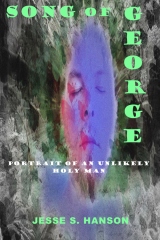
Publisher: All Things That Matter Press
Type: Fiction
The novel is about a tortured soul, suffering with a severe mental illness as well as an addictive personality, who, for no reason he can comprehend, is, at a certain juncture in his life, elevated to a very high spiritual status. Consequently, he is saddled with the responsibility for numerous other souls who suffer similarly. The story has him incarcerated in a Federal prison mental ward, where he has a uniquely profound impact on his fellow inmates/patients.
about: Song of George/Portrait of an Unlikely Holy Man
Perhaps the best way I can explain the focus of the book is with the following, which is taken from an “author’s note” and which is intended to be used as a short introductory piece to the novel:
“Out of empathy for the many unfortunate souls, incarcerated with long sentences in prisons, for behavior they are incapable of amending, and who are in need of thoughtful and careful treatment, in more appropriate institutions, I have chosen to imagine the character of George. My beloved Master, Ajaib Singh used to say, “God comes as a man. If he came as an animal we would not be able to understand his language. If he came as a ghost we could not see him.”
The imprisoned characters in this story are men. There are those who would call some of them less than men, or perhaps even call a few of them other than men. But men they are. Men who for one reason or the other cannot understand or cannot conform to mainstream society, and therefore cannot survive in any mainstream society. If God came to them as a man of any mainstream society, it is possible that they would not be able to understand him. If he came as a ghost, some of them may be able to see him, but the understanding issue would likely still exist.”
Thus the novel is somewhat of an allegory, with the prison representing the greater prison of the material world, which we all inhabit. The “thoughtful and careful treatment” that I mentioned above would, of course, benefit such people, but could never be a total remedy for their suffering.
Some of the story unfolds through a series of interviews of the inmates who are incarcerated with the character, George. The interviews are conducted by a small team of paranormal psychology students. From an excerpt that I adapted to stand alone as a short story, the character, Ozwald is speaking:
“I was very fortunate, in the first year of my graduate work, undertaken en route to my future as a paranormal psychologist, to be part of a research team on a project that was implemented within the mental unit of the prison. A particular facility, which is located in the east-central area of the country.
There were three of us involved with the project. We were investigating, if I can use that term loosely, the reports of a guru, known simply as George, who was purported to be a truly remarkable personality, having both the qualities of a charismatic and mystic sage on the one hand and those of a mentally disturbed patient/inmate on the other. The relationship of George with the other inmates, and the effect that he had upon them, turned out to be a phenomenon of no small circumstance.”
But the story is larger than the interviews, and the scenes are not confined to the prison only. At times, the narrative takes the reader “outside” and backward in time for scenes that contribute in defining the various characters. George appears within the prison and without, throughout the story, both in suchlike character defining scenes, as well as in present time. That he is capable of doing so is due to the nature of his character. Also, as the interviewers become increasingly involved with the inmates, and as they are affected by George’s character, they, themselves, become important to the story’s development, each in his own right. The Song of George is ultimately more character driven than plot driven, with a cast of unusual characters, as one might expect from a setting in such an institution, though I believe they are not only unusual, but also quite unique. There is Horatio, a somewhat simple minded gentle giant who is no criminal at all, but only a victim of fate and circumstances ¾ Fyodor, who killed two homeless people in an act that he saw as a type of empathetic mercy killing ¾ the very intelligent Raja Santhanam (goes by the name Milton). Milton commits suicide out of his despair when George is paroled. ¾ Stephen, whose entire life is an open pathway between the horrors of an inner hell and an outer hell, but who is deeply devoted to George ¾ dead man, who despises George and his followers and who understands himself as a dead man¾ and Toby who has many other names, most of which refer to his nature as a carrion eater. Toby claims to have to have been living on earth since 3112 BC. In George’s company he becomes a vegetarian, and his life takes on a new purpose: “I have the desire do en my creepin upon the earth.”
These are only a few examples of the many characters who inhabit the world of George. George is ultimately their rescuer, certainly not in any worldly way, but rather in a spiritual sense. George sees himself as only the bearer of a gift that he was given by his benefactor, a man who found him in a city park, beaten and only semi-conscious, and rescued him when he would have perished from hypothermia.
In time George is released from the prison, which proves to be a devastating event to his “disciples” who are left behind. Following his release, there is Part 2 of the book, which deals with the doings or “pastimes” of George and other characters on the “outside”. At one point, one of the psych students is able to return to the prison to do a follow up, concerning the condition of the inmates after George’s parole. Although extreme in concept and manifistation, I feel that George's character is in keeping with the nature of the great spiritual figures throughout history, in that they have taken on the suffering of the child, humanity.
In a few places throughout the manuscript, I have included, as interludes, selections of both my original poetry and song lyrics, which work with the novel in a similar way that a soundtrack works in a motion picture. Chapters are headed with a variety of short quotes, attributable to renowned spiritual figures from a variety of the world’s spiritual traditions, as well as poets, songwriters, novelists, etc.
Excerpt
the man on the street
He doesn’t recognize the street that he wakes up on. The light of the day didn’t wake him. Neither did the sirens or the roaring and horn blaring stream of traffic or the jazz band that set up no more than fifty feet from him. The people step over him on the sidewalk. The police haven’t found him worth the effort. What has woken him is that someone is repeating a word, or some sound, “Is it a name, or what is it?”, repeating it over and over. It grows loud and insistent. Somehow, it’s infusing his lifelessness with some life. In his still muddled waking, it is his experience that he sees the sound of it, and he sees it as a many colored sound. The color of it is sweet and beautiful in timbre. “Oh, it’s a dream.” he says regretfully, and his head screams in pain from the sound of his voice. But the word is repeated, and his pain is quieted as it is repeated.
The man sits up. His body again cries out in pain but he ignores it, captivated as he is. Looking around he can find no source of the word that is being repeated. The concrete rises up two feet from the lake side of the sidewalk, forming an edging upon which there is a hand rail of stainless steel tubing against the drop off to the tunnel below. He reaches for the railing and pulls himself upright as the foot traffic detours around him carefully avoiding the hectic traffic of the street. Out on the lake the ferries are coming and going and on the dock, the mob waiting with some sufficient decorum for a turn, for a portion of the island’s afternoon promises. But for him the lifeline is now fading. No one is there. The street, the walk, the dock, teeming with people. Who is it? No one is there.
He walks. He doesn’t know where to walk to. He doesn’t talk to anyone. His head begins to throb. It’s gone. It was such a beautiful dream. How could it be a dream? No, now he’s fallen into the dream, into the nightmare, where noise and confusion and pain rule the world of the dream. As he walks, he is so clumsy. He stumbles against the buildings, into people. They push him off, some of them carefully, some cursing and rough. After three blocks or so he’s moved out of the tourist traffic, but not out of the traffic. The sun is not allowed here for most of the day. The tall buildings guard the street jealously and coldly. The people crowd the walks in the business of their city. In the business of their city lives. A drunken bum is an obstacle in a world of obstacles.
His head is reeling. His mind in a stupor. The backs of his hands, cut and bruised. Someone’s missteps. “Oh, sorry buddy” But it didn’t wake him. He’s gradually tumbling and bumbling his way down the fourth block, just going. He knows he has to go somewhere. Where? When he falls into the street, people gasp. Some cars screeching to a stop. One car swerves, narrowly avoids tragedy with the next lane traffic. But his arm goes out to break his fall. When the braking front wheel goes over his forearm he cries out so, but as the rear wheel goes over a moment later twisting his already broken limb, his cry is drowned out by the shrieking brakes and the honking horns.
He opens his eyes but no light comes into them. There is no sound whatsoever, save his own breathing. His arm does not respond to the message from his brain so he sends the same message to the other arm and he touches his face to determine if it is there— to learn if the arm and the hand are there as well, puts out his tongue and touches it to a finger. These tactile sensations give him some little aspect of physical dimension in the complete darkness, the complete silence.
There is no other sensory input coming to him. No pressure anywhere on his back or either side as if he were lying down, on his feet, were he standing, or anywhere else, were he somehow suspended. His face and one arm only. And neither his arm or his hair seem to fall one way or the other to give him any knowledge of his position.
Suddenly he surprises himself by calling out. “Aaaah…” He told himself to call out, yet he was surprised by the sound of it, when he did. Clear and loud the voice left him but it did not return. He tries it again, “George…”, listening carefully, noting that there is no reverberation, the sound manifests and then it is gone.
“Am I vertical or horizontal?” and then he thinks, “compared to what?”
He assumes he is alive because he is breathing. “Is that the test? Does one who is dead not breathe?
Does one who is dead think?
Like this?
Is there no wisdom in death?”
He exists now in the darkness. He is aware of himself existing. He has the odd thought that maybe God existed like this, without dimension or form or company, and so decided to create.
“If I were God, what would I create first? What would I create at all?”, he is toying with the idea, existing in the darkness. In the void.
He becomes aware that he is not alone. His face burns in sudden panic. There is now such an ominous presence. All too familiar, yet utterly unknown. Surrounded by fear, he becomes absorbed in fear. He feels the hot breath of fear— the cold chill of fear. He remembers with increasing alarm that there is no dimension in fear. There is no relation to anything known in fear. There is no help.
With nowhere to go, fear is the substance of a boy’s creation. All of the horrors of the hells exist and live. The light does not make them go away or show them to be only phantoms of the imagination. Horrors committed to the mother, committed to the son. Those protectors of children, they are the horrors of the children. With demands and curses and sharp instruments and dull instruments, and ugly parts of themselves and ugly parts of you. And the horrible tooth and the horrible claw. And the preaching of God and the rules so hard and the punishment, regardless of the obeying or not obeying. Oh God, you horror! You beast! You murderer.
The tears are running down his cheeks and they bring some little softness to him in his fear. And he realizes, the tears are running down his face to his neck. And he thinks of perspective… of relation. The tears run down his face. He must be vertical… in relation to something.
Hope. He knows how fickle is this thing called hope. He mistrusts it. Very much mistrusts it. But just like the slave who is driven here and then driven there at the will of his cruel master, he acts. Just as he must react hopelessly to the fear, he must also react helplessly to the hope. Even if, especially if, it is only a tool, an instrument, of the fear, only so slightly abated.
And he imagines that in the distance, provided there is a distance, that in the distance he sees a light, and it is soft and white and very faint. But it is something, real or imagined, to look at in the utter darkness.
After a time the light strengthens a little. Or the imagination strengthens a little. How does it matter, suspended here? And he hears the faint rhythm of a drum as if from miles in the distance. He puts his attention on that light and looks and he listens and as he does, the horrors of his mind begin to gradually diminish, and his fear is slowly subdued. He is long in his looking and his listening, though he has no consciousness of how long.
When the light draws nearer he sees, somehow, that it was perhaps never far off after all. Out of the light and out of the sound of the drum come the deep and pure strains of some ethereal cello in expression of utter melancholy. And as that comes forth he begins to imagine that the light is looking at him, even as he is looking at the light. After awhile he begins to see what appears to be the white beard of a man and after a little while longer, he comes to recognize that beard, that face, as the source of the light. Gazing at that self-luminescent face, though it is not entirely clear, and listening to the most sweet sadness from the strings, he becomes conscious of a compassion. It is as if he is aware of the suffering of all existence at that moment. He can see the face more clearly now and in the eyes of the face, he is witness to an empathy with all things.
But after a time incalculable the light begins to fade until he can no longer make out the face or the beard of light and the sound retreats to, once again, a distant drum and in that state of loss and anxiety, his heart breaks.
When he again awakes he finds himself lying in a bed, his upper body elevated, in some kind of small and noisy room, instruments beeping, people talking and laughing, which he soon recognizes as coming from a television program, the recognition of which comes just before he realizes he’s in a hospital room. What has awakened him is physical pain.
When the nurse comes in he is informed about his having had heart surgery. When he asks about his arm, she tells him that he was hit by a car.
“Where was I when all of this happened?”
“Only you can answer that, I guess,” she tells him, smiling, changing the bag of fluids containing his pain medication, electrolytes, etc.
When he wakes again he is being arrested. There are several people in the room standing around his bed, talking loudly. Most of them seem to be men but there is also a woman who seems to be arguing with the men. She is telling them that they cannot just barge in and disturb her patient like this, but they seem to be ignoring her as they speak roughly to him. He concludes that it is nighttime. Then it seems as if one of the men is reading him his rights and he is informed that his room will be under federal occupation and that he is under house arrest.
It is within the same week when he is released by the hospital and received by the Hennington County Jail, where he is to be held until his trial. That turns out to be a period of eleven months. He learns from his court appointed lawyer that he apparently broke through the glass doors of a Federal Building and vandalized an office there, miraculously avoiding the law enforcement units that arrived within five minutes of the building’s alarm call. To top that off, when he fell into the street the morning following the break in, there was a four-car collision directly related to his fall. Fortunately, no one was seriously injured, other than George, himself. During the first two weeks of his stay at the jail, he is examined daily by the medical staff and given what treatment and medication as is determined by that staff as appropriate for his recovery. He is allowed a cell with only one cellmate. At the end of those two weeks, his medical attention is reduced to once per week and he is put in a cell with three other men.
At his trial the judge makes it clear to him that, although he has been diagnosed with paranoid schizophrenia that is further complicated with symptoms of severe manic depression, aka bipolar disease, (all of which is surprising news to him, as he was not aware of having undergone any psychiatric evaluation) he, being a danger to society as well as to himself, and for the multiple and habitual crime of reckless endangerment as well as destruction of federal property, will be confined to the Wade Federal Correctional Institute and specifically to the mental ward of that institution for a period of five years, the sentence to be evaluated annually after the completion of the first two years.
|