"When we lose our physical health, it can seem like we've lost our life. Toni Bernhard--with unflinching realness and deep insight-- shows us how the fires of loss can clear the way for a new and profound capacity for appreciation, love and understanding. Infused with the wisdom and practices of the Buddhist tradition, this book can bring you more fully alive by healing your spirit." —Tara Brach, author of Radical Acceptance
"Toni Bernhard has written a beautiful and heartfelt account of chronic illness and inner transformation. Her immense courage is present on every page. Truly worth reading." —Sharon Salzberg, author of Lovingkindness: The Revolutionary Art of Happiness
"A immensely wise book. Health psychology has been poisoned by the view that the best way to approach illness is through a muscular, militant resistance. This books shows otherwise. Bernhard reveals how letting go, surrendering, and putting the ego aside yield insights and fulfillment even in the presence of illness. This is a major contribution."
—Larry Dossey, MD, author of Healing Words
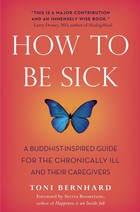
How To Be Sick: A Buddhist-Inspired Guide for the Chronically Ill and Their Caregivers is about living skillfully with the challenges of chronic illness. I wrote it for the chronically ill and their caregivers (the latter includes people involved in hospice, chaplaincy, and elder care); for people interested in chronic illness (health professionals, family and friends of the chronically ill); and for people interested in Buddhism (illness can function as a metaphor for suffering which, along with the cessation of suffering, is at the heart of the Buddha’s teaching).
Chronic illnesses or conditions – such as arthritis, heart disease, and diabetes (three among dozens) – while not immediately life-threatening, are life-disrupting and stressful. The book is unique in that each chapter contains easy-to-learn tools and practices to help the chronically ill and their caregivers live skillfully, maintain equanimity, and even find joy despite the profound changes in their lives. A recurring theme in the book is that, although one’s body may be sick, one’s mind can be at peace.
Some of the practices presented are traditionally Buddhist. Others I devised after becoming ill. Two are from the work of Byron Katie. Each practice is illustrated with examples from my own experience, so the book is also highly personal.
The practices are intended to help with the following types of challenges:
Suffering due to the relentlessness of physical symptoms;
Blaming oneself for being sick;
Cursory or dismissive treatment by doctors and medical professionals;
The inability to visit with friends, participate in family gatherings, and take part in other social events;
Feeling ignored by family or friends;
Suffering due to uncertainty about the future;
Coping with the disappointment of failed treatments;
Caretaker burnout.
The appendix is a handy reference guide, summarizing the specific tools and practices from the book that can help with each of the above challenges.