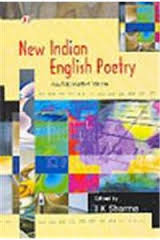
Category: Literary Criticism Publisher: Book Enclave, Jain Bhavan, Opp.NEI, Shanti Nagar, Jaipur-302006 India,
ISBN-10: 8181520858
Type: Non-Fiction
Pages: 370
Copyright: July 2004
The three-layered book presents a new face in the supermarket of poetry in English in India. About fifteen scholars, young, middle-aged, and nenerable examine from diverse angles the mystique of R.K.Singh's oetry. The poet himself unveils certain secrets of his art and heart. Foreign readers take strong postion largely at variance with each other and argue their case with utmost sharpness. Such explosive comments find their rightful place in this all-inclusive book.
At the same time, the book clarifies certain issues regarding the creative use of English in India and modern poetry.
In addition, it challenges critics who see nothing but 'chaos' in the world of poetry.
Though the book centres round a single poet, R.K.Singh, it, on the whole, advances a cause which should be dear to every reader of poetry in English in India.
Excerpt
Commenting upon the current state of health of Indian Poetry in English, Professor Niranjan Mohanty (Shanti Niketan) builds an arguement in his article "Sirs/Madams, This is the Indian Poetry in English for You!" (published in The Jouranl of Indian Writing in English, Jan. 2003), in favour of Indian English poery. He asks its detractors not to hold the view that poetry in English in India has ceased to exist. Opposed to their point of view, he suggests that 'a tradition, once formed, only knows how to flow, like water, downward, carrying all, embracing all, encapsulating all into its living, warm, animating and ennobling fold.' 'The show is on,' he avers.
Taking a long range viesw of the subject, the professor goes on to say that a new line of literary comunication opened by Henry Vivian Derozio, strengthened further by Toru Dutt, Sarojini Naidu and Sri Aurobindo, and enriched later by Nissim Ezekiel, A.K. Ramanujan, R. Parthasarathy, Jayanta Mahapatra and others, spanning a period of two hundred years, cannot altogether wither away like seasonal flowers. It has come tos tay whatever be its shape at the present moment of hisytory. The subaltern voices that have burst upon the scene of poetry cannot be shooed away. In support of his argument, the poet-professor provides a long list of names of active poets who often contribute poems to literary magazines and journals in India. These poetic voices will surely find a place, he hopes, in the history of Indian English poetry, if written say, after fifty years.
In that galaxy of poets figures the name of R.K. Singh, who for more than two decades has been writing poetry and literalry criticism. I, then, felt tempted to find out whether any serious literary appreciation had been attempted on his poetry. Information that pured in from diverse sources includidng the poet's made me look at it with a certain degree of disbelief. It was a sort of discovery. My exercise, thank God, did not go unrewarded. The material thus pooled has led me to the making of this book. For help that came in plenty at different stages of its organization puts me under immense gratitude of the editors of the following journals: Creative Forum, University news, Poetcrit, English Assoication Journal, Language Forum, Canopy, The Quest, The Mawaheb International, SlugFest Ltd., BAFA Newslewtter, Tirra Lirra, World Literature Today, Small Press Review, Kavita India, Poet, Cyber Literature, The Critical Endeavour, Points of View, Indian Book Chronicle, National Herald, etc.
...I hope this volume of available criticism on R.K.Singh's poetry will benefit researchers and interested students of contemporary Indian English poetry, here and elsewhere. Also, it may correct some visions that do not feel drawn to it.
From: 'Preface' to the book by I.K.Sharma, editor
Professional Reviews
New Indian English Poetry: An Alternative Voice
BOOK REVIEW : DR. RAMADHAR SINGH
NEW INDIAN ENGLISH POETRY : AN LATERNATIVE VOICE edited by I.K. Sharma. Published by Book Enclave, Jaipur. 2004. pp. 370, Price Rs.850/-, ISBN 81-8152-085-8.
New Indian English Poetry: An Alternative Voice is a significant publication in light of the fact that the larger Indian English literary space has been occupied by a few flourishing academic and bureaucratic authors, including the Diaspora or expatriate authors, and most of the India-based authors and poets, despite their quality, have remained virtually beyond the pale. Both the important print and visual media and influential academic and critics have been less than lukewarm about exploring or examining ‘new’ poets who feel marginalized because no renowned person talks about them at national or international forums.
Aware of the reality that the “subaltern voices that have burst upon the scene of poetry cannot be shooed away” (preface), poet-professor-critic I. K. Sharma chooses to present a comprehensive book on one of the noted new poets, R. K. Singh, who has already published ten collections of poems and has been active as critic, reviewer and ELT practitioner for more than 25 years.
In fact, I. K. Sharma seeks to challenge all those critics who see nothing but ‘chaos’ in the world of poetry by collecting 22 critical articles, 14 review essays/comments and six interviews published in India and abroad. Over 25 scholars, venerable, middle aged, and young, examine from diverse angles the mystique of Singh’s poetry and prove “creative efflorescence” that scores of new, marginalized, poets epitomize.
In his learned Introductory, I. K. Sharma takes a broader long-term view of Indian English poetry as a genre, criticizing discourses of discrimination and exclusion, and advocating alternative and creative discourse of the new generation of poets. It’s appreciation requires “tough minds, cooperative, collaborative and critical” and not the ‘snob net’ that has vested interest in indifference, hostility and obscurity (pp.203), he cautions.
Sharma examines R. K. Singh as a test case and discovers that the poet brings in “novelty and freshness in his way of communicating his ideas and feelings…with skill and insight” (p.8). As the critic points out: certain key aspects of R. K. Singh’s poetry – manipulation of language to a special effect, lack of punctuation marks, practice of giving no titles, use of erotic metaphors, and depiction of the painful realities of the Indian society — have already drawn readers’ attention, but he is “essentially a poet of dark imagination” (p.10) and “self-conscious artist” who knows “the value of concealment in art” (p11).
No doubt, as a poet, R. K. Singh is remarkable for his vitality, variety and quality. He is not esoteric, negative or westernized, yet he appeals nationally and internationally, with his vision and impulses, depth of feelings, sense of self, and richness of language. He explores and reinvigorates traditional forms and styles with eclectic understanding of creativity.
Those already familiar with his work, as the essays in this volume, too, testify, acknowledge R. K. Singh’s competence as a poet and accord him a high position, even if he is not a ‘metro’ poet and/or he has not yet been viewed as a poet in the center. I. K. Sharma recognizes him as a poet with great potential and future promise and puts together some selected articles, review essays, comments, and interviews published in various journals since the late 1980s not only to motivate scholars and researchers’ further studies on R. K. Singh as an Indian English poet, but also “to beat the ghost of ‘chaos’ that has become an all-time alibi for inaction.”
All the contributors -- practicing poets academics and professionals – look at R. K. Singh the poet with a sense of discovery, openness to artistic innovation, and appreciation for recent Indian English poetry. They reflect on his work with empathy, recognition and equality. With faith in the poet’s discourse, they negotiate differences and communicate poetry’s human dimension; their criticism strengthens Indian English creativity.
R. S. Tiwary’s three essays analyse R. K. Singh’s poetry – imagery, diction, style, and erotic contents – a la Sanskrit poetics and view the poet’s relevance in a wider perspective of literary communication. Mitali De Sarkar’s two essays complement Tiwary’s approach, though she concentrates on the poet’s social consciousness. The two essays by G. D. Barche look more closely, presenting a stylistic assessment and comments on Singh’s use of sex imagery. While the articles by Satish Kumar, R. A. Singh and Ravi Nandan Sinha seek to provide a general view on the contents of the poet’s collections published till then, Krishna Srinivas’s ‘Foreword’ to My Silence, R. K. Singh’s maiden collection, has a historical value.
Different from them, Michael Paul Hogan’s article seeks or relate to the poet’s actual life and living in Dhanbad while Chhote Lal Khatri’s article is an attempt to project R. K. Singh as the best known Indian English poet from Bihar/Jharkhand. P. C. K. Perm’s article seeks to highlight the recurring themes of Nature, Beauty and Woman in R. K. Singh’s creative discourse vis-à-vis the poet’s concern about man’s existence and identity in a multilingual, multicultural and multireligious society today.
I. K. Sharma’s essay deals with the poet’s Music Must Sound as a “carefully crafted” epic. Tejinder Kaur’s essay highlights the “seven major strands sounding like the seven notes of music” in the collection.
While the insightful essays by D. S. Maini, Stephen Gill, and I.H. Rizvi deal with various aspects of My Silence and Other Selected Poems, the essays by Patricia Prime, D. C. Chambial, and Asha Viswas review Above the Earth’s Green. The essays by S. L. Peeran and Abdul Rashid Bijapure take into account all the volumes published so far and concentrate on the poet’s evolution in terms of his thematic preferences and pursuit of higher reality.
R. K. Singh is best in his lyric poems and haiku and tanka are the shortest of lyric poems. The articles and comments on his haiku and tanka by Patrticia Prime, Urmila Kaul, D. C. Chambial, I. H. Rizvi, Ann Davis, Ruth Wildes Schuler, Ben Torbieu-Newland and Lyle Glazier point to the changes in R. K. Singh’s literary growth. His haiku and tanka poems are important in that here he enlarges himself to the universal sameness of human feelings and experiences in an international form. The reviews of R. K. Singh’s haiku and tanka poems point to the critic’s strengths and weaknesses in intercultural and intercultural mediation.
Patricia Prime also effectively responds to Joseph John’s much labored comments on R. K. Singh’s poetry in World Literature Today besides presenting, along side Tejinder Kaur, a comparative picture of R. K. Singh and U. S. Bahri’s poetry.
The second section of the volume comprises six interviews R. K. Singh gave to Patricia Prime, Jaswinder Singh, Kanwar Dinesh Singh, Sonja Van Kerkhoff, Atma Ram, and a group of students. This reveals the poet’s own background, biographical details, his opinion, mind, and attitude. It is rounded up with Uncle River’s reflection, pointing to the “tension inherent in the synthesis of cultural traditions” in R. K. Singh’s poetry.
Thus, the variety of critical articles, reviews essays and comments, though not as perfect as one would like them to be, proves that R. K. Singh is a poet to reckon with, deserving wider critical and academic attention at home and abroad. It is I. K. Sharma’s large-heartedness that he chose to make a book on a fellow-poet. The book should encourage new researches and deeper studies on recent Indian English poetry in general and R. K. Singh’s poetry in particular. M/s Book Enclave deserves kudos for publishing New Indian English Poetry: An Alternative Voice : R. K. Singh which strengthens the cause of Indian poetry in English in the 21st century.
- DR RAMADHAR SINGH, Department of English,Bihar Institute of Technology. P.O. BIT, SINDRI –828123, Dist . DHANBAD .
Dr Ramadhar Singh, till recently Professor of English at Bihar Institute of technology, Sindri, has been teaching language through literature, ELT, and EST for over three decades. He is known for his book Virginia Woolf: A Study of Her Tragic Vision (1994).