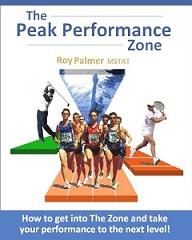
Have you ever achieved the performance of your life while experiencing the feeling that it was effortless? Everything you tried worked to perfection. If you have experienced this, you were in The Zone. This practical book will show you how to get into The Zone at will.
No doubt you’ve experienced times in your sport when you feel ‘in the moment’ or ‘in the Zone’. Achieving peak performance seems easy. But when we lose that state we once again find ourselves putting in a lot of effort for little gain. This book shows us how we can rediscover the elusive Zone whenever we choose – by using our mind as well as our body.
We build up bad habits based on what feels ‘right’ to us, even if we’re not consciously aware of it. But it is these habits that hold us back and lead to inconsistent performance and repetitive injury. By pausing to notice what we’re doing, before we do it, we can enter the Zone at will, achieving previously unattainable levels of performance.
Roy Palmer takes us into the unknown, past what has always felt comfortable for us. He helps us define the Zone, examines what stops us reaching it and describes techniques for turning things around when they go ‘wrong’. He then translates the latest scientific research into practical and easy steps for overcoming poor performance, frustration and disillusionment.
Sharing his first-hand experiences, he shows how we can leave injury behind for good, develop greater self-awareness and focus, and apply the same techniques in many other areas of our lives, too.
Roy is a qualified teacher of the Alexander Technique. He is also a runner, cricket coach and martial artist, and currently lives in Bedfordshire, UK, with his wife and two young children.
Excerpt
I believe conventional methods of sports training and exercise, in which we have placed our trust entirely, could be preventing the essential balanced state necessary for entering The Zone. I propose it is time to move on from the view that performance can be improved by simply trying harder or spending a high proportion of valuable training time on exercise drills. Instead, we need to develop a more creative, mindful approach to our training. Ask most athletes how they entered The Zone and you will get a shrug of the shoulders. Is this not evidence that, even at the top level, there is still an element of the unknown in relation to human activity? Perhaps the way to The Zone lies in developing our skills of self-awareness above and beyond our current ability. A departure from current ideas may allow us to discover new areas of previously untapped resources that would enable more control over our performance and leaving less to chance or circumstances beyond our current understanding
Professional Reviews
Palmer Gets Top Marks For An Excellent in-depth and useful workbook with practical procedures.
Until I read Roy Palmer's Peak Performance Zone, I was clueless as to what athletes mean when they describe their performances as being in The Zone. What is this unique and mystical place where their performances are exceptional and consistent and furthermore how do we go about reaching it? To answer these questions I turned to Palmer's book and I was not disappointed in what he had to share with his readers.
Palmer in his introduction states that the methods he uses to reach The Zone are based on The Alexander Technique. This is a technique that basically teaches us to make a new choice in spite of established patterns, by studying the kinesthetic sense. Palmer refers to it as the world-renowned system for developing what he calls intelligence in action. Palmer has drawn upon his ten years of experimenting, observing and applying the Alexander principles to his own sports of martial arts and running as well as working with sports people in other fields. It should be noted that the technique's applicability is not only used in sports but also in other activities. In fact, my musician son indicated to me that he was very familiar with the Alexander Technique and has used it to enhance his singing performances.
Palmer strikes just the right tone: direct and upbeat without sounding too preachy as he creates for his readers a map that will lead to The Zone. His probing analysis is very convincing as he divides his book into nine sections beginning with a definition of the elusive zone and ending with living in The Zone.
According to Palmer, there are seven characteristics that comprise The Zone and these are: you are totally absorbed and focused on your activity: you experience an inner clarity and understanding of what exactly is required as well as the skills that are matched to the task: there is a sense of ecstasy or being outside everyday reality: you are `being in the moment' or focusing completely on the present and you are unaware of time passing-a sense of time slowing down: you have a deep passion for the activity that leads to a higher level of performance: there is a sense of serenity where there is no anxiety and no ego, thus there are no worries about the outcome of the action: there is no sense of effort and where the activity becomes easy, as well as getting out of the way. All of these will permit us to attain the level of mind/body harmony that will aid us in achieving our goals. All are crucial if we wish to consistently and successfully perform. According to Palmer, The Zone is a primitive ability and thus it is an "automatic function triggered by circumstances."
After defining and elaborating on these seven principles, Palmer elucidates why we are prevented from reaching The Zone. Readers are given the key to creating their own matrix or as he states, "a set of rules that ultimately establishes the limits of performance." From here we learn about the procedures that will help us in identifying some common causes that make are movements more difficult than it needs to be by adding unnecessary actions of our own.
Once we are in The Zone, Palmer shows the way as to how to become a regular `zoner.' Other topics explored and that are necessary in reaching and staying in The Zone are concentration, dealing with anxiety and prevention of panic, the technique of enjoying the present, using emotions constructively, and consistency.
Palmer's book will no doubt prove to be a valuable contribution in helping us reach the performance of our life at a time where there is no shortage of self-help books devoted to enhancing performance.
Moreover, he gets top marks as the book is an excellent in-depth and useful workbook with practical procedures to follow for the novice as well as those who are familiar with The Alexander Technique and The Zone. He has done a great job in laying out facts and details that are clear and concise with examples, images, activities and exercises that permit his readers to apply what they have learned and perhaps even serve as guides for further research. Readers will certainly emerge better informed and perhaps even changed and that is a keen accomplishment for a book that contains 167 pages.
Norm Goldman, Publisher & Editor Bookpleasures
A unique examination of the link between thought and movement.
Roy Palmer’s, Peak Performance Zone presents a unique examination of the link between thought and movement. Written with the casual and the competitive athlete in mind, Palmer demonstrates that working harder is not working smarter when it comes to training. In clear, concise language, Palmer's instructs how to find “The Zone” of peak athletic performance purposefully rather than by haphazard accident. Based on the most current research and years of practical experience in the field with world class athletes, Palmer has created a work that presents his self-awareness techniques in a manner that is easy to read and even easier to implement.
Beginning with basic exercise theory and quickly moving past the fundamental training philosophies of old, the author captures the reader with vignettes of famous athletes and their accomplishments while in “The Zone”. Most exercise physiology books feel like treks through a college anatomy and physiology course, it is not often that a book comes along that is free of technical terms yet still communicates to the reader the science and theory like this book does. Palmer does an excellent job of analyzing what is “The Zone” and how the average athlete strives to get in it. Through observation, experimentation, and practice, Palmer’s techniques will help you reach “The Zone” more often. His time proven techniques are a boon for those who have reached a training plateau or are plagued by poor form, lack of confidence, and lack of motivation. The Peak Performance Zone provides the reader with a method to reflect on motives, attitudes, and techniques so you can get out of whatever training slump you are currently in and move on to a more confident level of performance.
This book promotes taking responsibility for your training and developing abilities through your own deliberate efforts. Palmer believes that training is part of your personal development and as such should be approached with the same calculated efforts one puts into training for one’s intellectual pursuits. Similar to cognitive skills development, athletic skills development requires both confidence and a performance consistency based on continued improvement and learning. According to Palmer, “through mindful practice and attention to detail anyone can reach the Zone”. Useful, interesting, and instructive, this is a practical and complete how-to manual to develop focus and self-awareness.
This book tells the story of the 1999 Providence College Friars baseball team, the last season that the sport was played at the institution. Baseball was set to be eliminated after that season in order for the school to comply with Title IX regulatio
This book tells the story of the 1999 Providence College Friars baseball team, the last season that the sport was played at the institution. Baseball was set to be eliminated after that season in order for the school to comply with Title IX regulatio
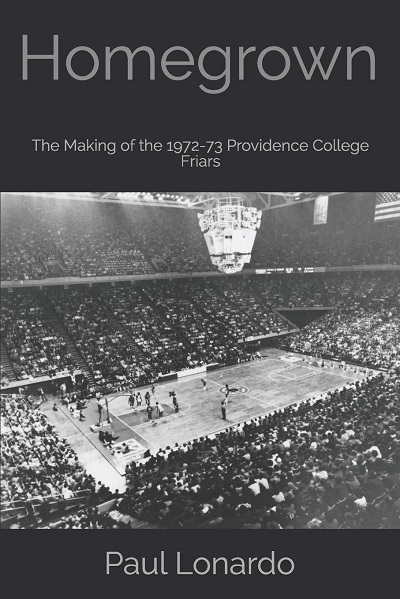
"HOMEGROWN: The Making of the 1972-73 Providence College Friars" is a retrospective of that remarkable season as well as a history of the school's basketball program, which was responsible for drawing the local talent that propelled that team to succ