THE TANGLED-WEB PROBLEM
By
Bill Cottringer
“It is not the things in life that bother us, but rather our opinions about these things.” –Epictetus
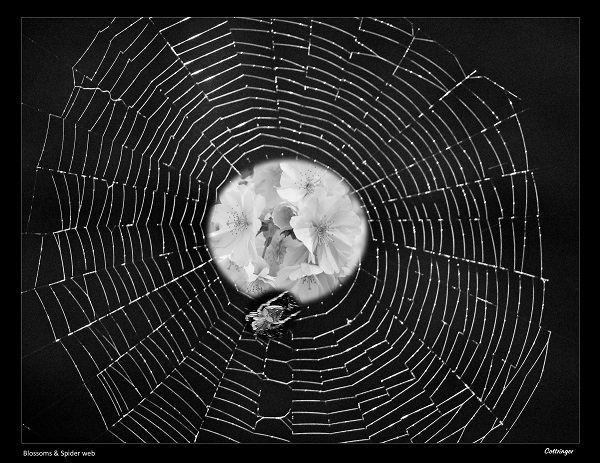
The root cause of most unproductive behavior and interpersonal failures is the tangled-web between our thinking, feeling and behaving in reaction to the things that happen or the words that are said to us. An event or interaction occurs, such as a supervisor saying something to us that makes us feel either smart, competent, appreciated, comfortable or superior; or dumb, incompetent, unappreciated, uncomfortable or inferior—depending upon what was actually said, how it might have been said, and our own interpretation of the whole communication in reference to our past experience. What a tangled-web to try and untangle.
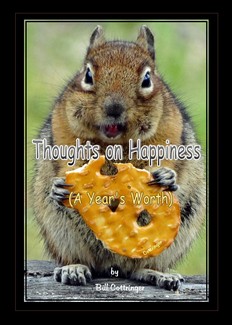
No one knows for sure exactly how thoughts, feelings and behaviors interact with each other, i.e., where one stops and the other starts, or which causes and effects which first and how. The best way to look at this situation is to compare it to a pretzel, where there is no clear beginning or end—it’s just one big knot. But like most difficult problems—and this is definitely one of the most difficult ones—it is necessary to step outside the situation to understand the solution well enough to be able to apply it to solve the problem.
When anything happens to you or someone does or says something to you, you are likely to have feelings about it. And there’s were the problem starts. You feel something and then somehow decide whether the feeling is good, bad or neutral. Then you go on to think about that interpretation, which prompts further analysis (mostly incorrect or incomplete) and a reaction of some kind—aggression, passivity or ignoring it. And that either gets varying degrees of positive, productive results or negative, unproductive ones. Then the outcome of this event leads you to anticipate similar outcomes in similar situations that occur later. By this time you develop an attitude of expectation that has a powerful influence on helping to determine the next outcome in the next situation. This is the vicious circle of the tangled-web problem in a nut shell.
The real problem is that you really can’t understand your non-verbal raw feelings well enough to talk about them to yourself verbally, with any degree of meaningful comprehension Plus such non-verbal and verbal communication is really exclusive, playing by much different rules that prevent accurate and complete translation. But never-the-less, you try anyway and wonder why it doesn’t work out, making you feel worse all the while.
It is helpful to simplify the complicated chaos of such a tangled web. One thing most people can agree upon is that some feelings we have come with positive flavors while others definitely come with negative flavors. Think about how you usually feel when someone compliments you or criticizes you. Trying to use words to understand, think about and communicate this basic distinction any further, only seems to end in frustration, failure, misunderstanding and more unproductive reactions.
Perhaps the untangling of this web can only occur by understanding the purpose of the basic distinction of positive and negative emotions. The best evidence is that positive emotions serve the purpose of encouraging you to move forward and letting you know you are headed in the right direction of opportunity. Whereas negative emotions are trying to warn you of potential danger—something isn’t right here and you may need to slow down and learn something that can help you grow, improve and feel more positive to become more successful.
Once you figure out this web-untangling process, you begin to understand what we are all doing and what we all want. That is what makes it so important to get right. What we are all doing is trying to sift the 5% of useful, valuable “gold” from the 95% useless, worthless sand...or truth from the BS fiction. What we want is the truth and information we need to be more successful in what we are doing.
Most interactions with other people contain a lot of feeling, thinking and reacting that we take entirely too personal, and we end up losing the precious 5% of what we really want and need from the situation. We have thrown away the baby and kept the dirty bath water. All because of feelings we don’t even understand that we allow to lead us in the wrong direction and rob us of success and feeling good.
Here is an idea that can be life-changing. The next interaction you have with another person, just pay attention to whether you are feeling positive or negative from what is being done or said. If you feel positive, let go more, share more, trust and be open to where the conversation is going. Allow yourself to take full advantage of this opportunity.
If on the other hand, if you feel negative from what is going on, separate your personal mental interpretations of the feelings you are having (that you really don’t understand anyway), and just ask questions and listen to see what you can learn and improve to feel more positive. Distance yourself from the raw emotions you are experiencing and make an effort to turn an imagined negative situation with unnecessary negative thoughts and negative feelings into a positive opportunity to feel more positive and be more successful. When you do you will, guaranteed, because that is the way life operates. Life is a huge opportunity to either feel as positive as you would like and be as successful as you desire or to feel as negative as you want and fail as often as you would like. The choice is yours.
William Cottringer, Ph.D. is President of Puget Sound Security in Bellevue, WA. He is author of You Can Have Your Cheese & Eat It Too and The Bow-Wow Secrets: Why Dogs Live a Simple Life & People Don’t. He can be reached at (425) 454-5011 or bcottringer.pssp.net