A letter to Melina Costello from the Groundhog Chronicles
September 20, 2003
Dear Madame Me:
Reality is the death of me and I can't stand realism for long. I have taken your letters under consideration, and I'm afraid you have left me with the impression that literary Realism has become dog food because of the decadent reality that realists really represent because they live in the animal shelter. The hounds bark hysterically before meals and think they sing ever so beautifully.
Of course I do not speak of the reality of idealism but of the technological materialism that has turned writers into mechanical street-sweeper drivers. They resort to cumbersome formulas at public expense. The public thinks the street-sweepers are doing a lovely job, but once they have passed by, it becomes obvious to refined sophisticates that the dirt, trash and leaves have just been shuffled around to the sides of a broad wet streak in the gutter, thus the process is really a waste of time and money albeit only a few lucid people know it. Whereas the realists of old could not help making a mysterious romance out of reality while actually playing in the mud with humankind.
But I am no critic, Madame Me. I thank you for considering me as such even though I find critics personally revolting. However, I am a reviewer from time to time: I will be glad to give a friend's book a glowing review at Amazon. And I will honor your request for a critique of the brief excerpts you sent over from Alexander Theroux's book, limiting myself to same since they do not inspire me to look further.
After I received your first communication about this literary gift to the world, it occured to me that I lack critical criteria for critiques, that I have no standard for praise and blame except my own gut feelings, which depend on the frequency and quality of my meals. I had just eaten a good dinner, and I was not in a mood to do what so-called 'good' critics seem to do best, something that makes of the word, 'critic', a perjorative expression. Now most of the critics you just cited seemed to be flatterers, and therefore bad critics. I found myself in a quandry, and heartburn was setting in.
It suddenly struck me that I might avoid putting your author down or raising him up, and instead provide a criticism that might flatter me! I remembered Niccolo Tucci's paper, 'On Constructive Criticism' - it appeared in the November 1949 issue of Partisan Review. It so impressed me that I kept a copy. The best way, I thought, to provide you with the critique you want, would be to simply write a superlative paraphrase of the first paragraph you submitted to me - a better paragraph on the same subject!
I retrieved Niccolo's article for better guidance - from under the bathroom sink - it was behind the hardened can of Ajax and the cockroaches, and was still in relatively good shape although stained brown. I sat down on the toilet and read this:
"I wonder if the 'constructivists' have ever paused long enough to consider what would happen in the other fields of criticism if their principles were suddely accepted. For example, music. Now, when a serious musical critic dismisses as symphony as bad, and gives only the reasons why it does not hold together musically, that is rightly called 'criticism.'
"If the same musical critic announced the next day that he has composed a symphony of his own, that would be rightly referred to as a symphony of his own. But if upon presenting his own composition to the public, he said: 'This music here is a constructive criticism of the symphony criticised by me yesterday,' he would righly be sent to the unholiest places and criticized, not once but twice: first as a critic who does not keep his place; secondly as a composer who pretends to be exempt from criticism because, until yesterday, he was a critic too."
Niccolo proposed that art museums allow space for critics' paintings next to the paintings they criticize. That is a great idea! I thought, and should be applied to libraries. As it is, we have a few volumes of an author's work on the shelf, followed by volumes of praise and blame. Why not rid the shelves of praise and blame, in favor of volumes of constructive criticism? War and Peace, for example, will be followed by the critics' versions of the masterpiece!
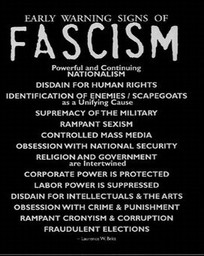
Niccolo pointed out that 'Constructive criticism' was a relative new phenomenon, most popular in the U.S., for it was purportedly 'democratic.' In his opinion, so-called constructive criticism is an attempt to tone down genuine criticism. It is equivalent to a happy ending in the movies. And to demand that a critic, who criticises a work based on common sense, should be expert enough to do it better, is childishly arrogant and demonstrative of the prejudice that one must be a specialized to be qualified to know the difference between good and bad work. That concept is sheer nonsense and often dishonest - common-sense criticism is so embarassing to political leaders, for example, that they insist on diplomatic and military secrecy in the "interest of national (their own) security.".
Furthermore, the objection that negative as opposed to constructive criticism is destructive hence worthless is cry-baby talk. The negative critic has no duty except to except to negate, and has no obligation to come up with a workable solution.
"It's like advertising," Niccoli wrote, referring to the constructive criticism of the trains going to the death camps. "The world goes to the dogs, everything is dark, but we here at the factory have a new toothpaste that will brighten your smile."
He thinks that constructive criticism is not really democratic but is a despotic attempt at getting critics to show respect for the people and theories they criticize. It was borrowed from masters of that technique: Hitler and Mussolini. It was called "criticism within the system" because it was not "criticism of the system." It got to comic proportions in Italy. He gives this dialogue in Russia:
Critic: We, the Russian people do not want these chains.
Stalin: You are prefectly right. I will give you better ones.
Critic: We don't want better ones, we want none at all.
Stalin: You are a pessimist, a negativist, a destructive critic. You do not believe that I am here to help you. If you tell me your grievances concretely, I may help you, but if you insist on asking for the impossible, I will have to eliminate you.
Well, Madame Me, Niccolo Tucci certainly made some excellent points, and I was glad I reviewed them. Nevertheless, when I got off the throne, I knew that the best way to criticize the paragraph you sent over was to write a better one. And that I shall do as soon as possible. As you may have noticed, I have been quite busy lately because the world is going to the dogs and something must be done.
Yours,
Mr. Two Emmas
Madame Me is Melina Costello at:
http://authorsden.com/visit/author.asp?authorid=3336
|