Interview granted to Tiempo Magazine (Spain), August 2009
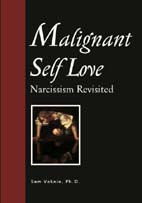
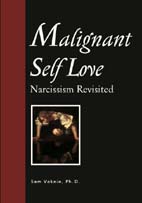
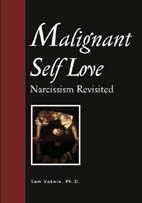
Sam Vaknin, author of "Malignant Self-love: Narcissism Revisited" and Associate Editor of "Global Politician"
Q: A recent thesis published by a Spanish university states that the Wikipedia is changing some patterns and developing certain ways to increase the quality of the articles, mostly by enforcing discussion and organizational aspects… Do you still think that the Wikipedia is not an encyclopaedia?
A: The Wikipedia is the massive, structured blog of an online cult. The cult is dedicated to the agglomeration of information and disinformation (i.e. data) and its classification (in the form of articles). It also revolves around the personality of Jimmy Wales and his "disciples" and, in this sense, it is a personality cult and a pseudo-religion. The only thing the Wikipedia is not is an encyclopedia.
Encyclopedias are authored by people who are authorities in their respective fields; whose credentials are transparent and vetted by their peers; and who subject themselves to review by equally qualified people. The Wikipedia is authored and edited by faceless, anonymous writers and editors. The fact that they are registered means nothing as the vast majority of them still hide behind aliases and handles. Some of them have been proven to have confabulated biographies and fictitious self-imputed academic credentials.
Most Wikipedia articles sport references. But references to which material? Only experts know which books, articles, and essays are worth citing from! The truth is that the Wikipedians - many of them teenagers - cannot do the referencing and research that are the prerequisite to serious scholarship (unless you stretch these words to an absurd limit).
Research is not about hoarding facts. It is about identifying and applying context and about possessing a synoptic view of ostensibly unrelated data. The Wikipedians can't tell hype from fact and fad from fixture. Many of them lack the perspectives that life, experience, exposure, and learning -structured, frontal, hierarchical learning - bring with them. Knowledge is not another democratic institution, it cannot be crowdsourced. It is hierarchical for good reason and the hierarchy is built on merit and the merit is founded on learning.
There is nothing new about the collaborative model that is the Wikipedia. The Oxford English Dictionary (OED), first published in 1928, was the outcome of seventy years of combined efforts of 2,000 zealous and industrious volunteers. The difference between the Wikipedia and the OED, though, is that the latter appointed editors to oversee and tutor these teeming hordes of wannabe scholars. The Encyclopedia Britannica (and online encyclopedias such as Citizendium) are going this route.
Q: Your article ‘The Six Sins of the Wikipedia’ really became a reference since it was published 3 years ago. Anarchy was one of the sins you described in it. In fact, although the Wikipedia was called in the beginning a free and democratic project, after your report –and some other studies and books- Jimmy Wales and the directors stopped talking about democracy. Now they talk about the anarchy involved in all the process. Do you feel responsible for some of these changes?
A. My article has been read by hundreds of thousands of people and quoted widely in many online and offline media. Yet, it is not mentioned in the very long Wikipedia article which deals with criticisms of the Wikipedia. This shows you the true nature of the Wikipedia: censorship, petty grievances, bias, and one-upmanship are rife. Not exactly the hallmarks of an encyclopedia.
The Wikipedia is a veritable battlefield: many topics and personages are blacklisted and activist editors delete within minutes any mention of them. Another example: the Birther movement in the USA (people who challenge Barack Obama's eligibility to become President based on his alleged birth place in Kenya). Though a fringe group, it is sufficiently prominent to have warranted repeated references in White House press conferences. Only the Wikipedia keeps ignoring it and deleting references to it in the Barack Obama article.
I do not believe that my article had any influence on the culture of the Wikipedia. Procedural matters are decided by a cabal headed by Jimmy Wales, whose grandiose cosmic-messianic vision of the Wikipedia shapes it. Wales reacts to criticism by tweaking and facelifting, not by offering fundamental changes of the model. This is because he truly adheres to the notions of creative anarchy, crowd wisdom, and emergent knowledge and because he doesn't know the differences between data (raw material, some of it relevant) and knowledge (the finished product).
Q. There have been reported many errors in Wikipedia’s coverage of current news, mostly due to anonymous editors, partly fixed through the flagged edition system. Where’s the border between an encyclopedia and a website? Shouldn’t an encyclopaedia take some time to compile facts of events with some time to think and cool down the issue rather than “cover” an event?
A. Most print encyclopedias publish yearbooks. Perspective is important, but so are timeliness and coverage. The difference between the Wikipedia and other encyclopedias is that the cumulative knowledge base and authoritative authorship of the Britannica, for instance, endow even its yearbook with a modicum of timelessness. Wikipedia's coverage, by comparison, is ephemeral and often misleading because the people who put it together are ignorant or prejudiced or both.
Q. How would you describe the Wikipedia in relation with other encyclopaedias?
A. I am an encyclopedia junkie. I collect work of reference, old and new. As far as I can judge, the Wikipedia's coverage of the natural and exact sciences is pretty good. Its humanities articles are an unmitigated disaster, though: they are replete with nonsense, plagiarism, falsities, and propaganda. I know a bit about psychology, economics, philosophy, and the history of certain parts of the world. Articles dealing with these fields are utterly and sometimes dangerously unreliable.
Q. How is your relation with *Wikipedians*? Are you still one of their enemies?
A. I was invited to write a few articles for the Nupedia, the Wikipedia's predecessor. When Larry Sanger, the Wikipedia's true originator, started the Wikipedia, I was among the first to contribute to it and kept on contributing to it until 2003. I have never been an enemy of the Wikipedia. I am, however, against the cult that has developed around it and the fact that it misrepresents itself as an encyclopedia.
Q. Do you agree with your own points of view after three years?
A. Things have improved a lot since I have written the article. The Wikipedia is less chaotic; less anonymous; the articles more rigorously referenced. But these are cosmetic changes. In the essence, the six "sins" I identified way back still stand: (1) The Wikipedia is opaque and encourages recklessness; (2) The Wikipedia is anarchic and definitely not democratic; (3) The Might is Right Editorial Principle (quantity of edits is valued over quality and relationships with other editors count more than knowledge); (4) Wikipedia is against real knowledge because it is against experts and academic "elites"; (5) The Wikipedia is not an encyclopedia and misrepresents itself as such; (6) The Wikipedia is rife with libel and violations of copyrights.
Q. Do you regret of any of the six sins now that some things are changing in the Wikipedia, like the prohibition for anonymous users to edit?
A. There is no prohibition on anonymous users to edit. All the Wikipedia users are anonymous to this very day. The prohibition is on unregistered users to edit. Users need to have an account and to wait three days before they can contribute new articles or make major edits. User identities are still unknown as all of them hide behind aliases and handles.
I am sorry that Wales didn't have the guts to go all the way and implement a model similar to the Citizendium and the Britannica: qualified editors to review the contributions and edits of the teeming masses and make sure that the Wikipedia is not the bloody and confusing mess that it is now.