AuthorsDen.com   Join | Login    
Where Authors and Readers come together!

SIGNED BOOKS    AUTHORS    BOOKS    SAMPLE CHAPTERS    AUDIOBOOKS    eBOOKS    STORIES    ARTICLES    POETRY    BLOGS    NEWS    VIDEOS    SUCCESS    TESTIMONIALS

Featured Authors:  Michael Charles Messineo, iCharlene Proctor, iD.E.Z. Butler, iSam Vaknin, iLeanne Bright Cloudman, iMargaret Evans, iMargot Dillard, iTichaona Chinyelu, iJ. Allen Wilson, iErin Kelly-Moen, i

  Home > Cooking/Food/Wine > Articles Popular: Books, Stories, Articles, Poetry      Authors: A B C D E F G H I J K L M N O P Q R S T U V W X Y Z     
Andrew F Smith

 Follow Me  

· Contact Me
· Books
· Articles
· 9 Titles
· 1 Reviews
· Save to My Library
· Share with Friends!
·
Member Since: Before 2003

Andrew F Smith, click here to update your pages on AuthorsDen.


History of Soup
by Andrew F Smith   
     
Recent articles by
Andrew F Smith

• The Most Popular 19th Century American Cookbook
• Cooking with Popcorn
• An Interview with Andrew F. Smith -- Author of Scope
           >> View all

This summarizes the history of soup, taken from "Souper Tomatoes: The Story of America's Favorite Food."

While our early ancestors may have employed hot water to heat foods in natural containers, the cooking technique of boiling was not commonly-used until the invention of waterproof and heatproof containers about five thousand years ago. Boiling was advantageous as a cooking technique. Water turns to steam at a constant temperature that does not exceed F. 212 at sea level. Compared to heating with hot air over a fire, boiling water is more dense and comes more fully in contact with the entire surface of submersed foods. Hot water easily and quickly imparts its energy to the food. In addition to consistency, boiling provides a lower cooking temperature than does frying, roasting, or baking. Before the invention of thermometers, this was particularly significant. Boiling also permitted the fuller use of animal and plant products, and expanded the range of foods that our ancestors consumed. Many animal parts, such as bones, could not be eaten even if roasted. Boiling extracted whatever nutritional value these unused parts possessed. Likewise, some plant parts were inedible in their natural state, but became consumable after boiling. For instance, acorns are edible only after the tannin has been removed by boiling.

For the complete article, go to: http://www.cheftalk.com/HTML/Education/past_articles/soups.html


Want to review or comment on this article?


Need a FREE Reader Membership?
Popular Cooking/Food/Wine Articles
  1.  Ghirardelli Chocolate Supreme Brownie
  2.  Hot Sauce - How Hot is Hot?
  3.  Hot Sauce - Gag Gift?
  4.  Hot Sauce – The Misunderstood Flavor E
  5.  The Taste Of Being Irish
  6.  Pink Lemonade Macarons & Lemon [Curd]
  7.  Digital Diet
  8.  Buttery Chocolate Brownie Recipe
  9.  Holly Clegg A Legacy of Cooking Up Eve
  10.  Blond Ale With a Jack Daniel’s Bump, D
  11.  Free Grill for Dads
  12.  Tea factors

Free Book Review Program
Select a book to read and review today!

Mad Cow’s Disease—Did Margaret Thatcher Die of Mad Cow’s Disease? by Dr. Patrick ODougherty

Mad Cow’s Disease is a food feeding consumption disease issue. What food is fed cows. Is if remains of cows? Does this feeding pattern create a Disease?  
Member BookAds

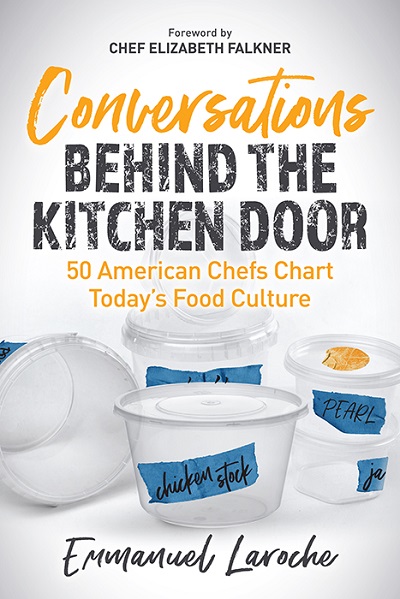
Conversations Behind The Kitchen Door by Emmanuel Laroche

My book is a collection of dialogues with award-winning chefs from various backgrounds and cultures, sharing their personal experiences of where and why food culture is where it is today.  
Member BookAds

Mad Cow’s Disease—Did Margaret Thatcher Die of Mad Cow’s Disease? by Dr. Patrick ODougherty

Mad Cow’s Disease is a food feeding consumption disease issue. What food is fed cows. Is if remains of cows? Does this feeding pattern create a Disease?  
Member BookAds