“Madoc am I,
The son of Owain Gwynedd
With stature large and comply grace adorned
No land at home, nor store of wealth
My mind was whole to search the sea.”
An Ancient Welsh Ode
A long, long time ago
A legend arose about blond blue-eyed river Indians
Although this story has never been fully authenticated
It’s been told through the centuries again and again
This mystifying tale begins in the year 1170
In the state of Alabama off the coast of Mobile
And it ends centuries later and many miles away
On the Missouri River in North Dakota in 1833
It’s said that 10 strange sailing ships
Arrived off the shores of Mobile one day
Its crew was a hardy lot of intrepid explorers
Who were led by a Prince Madoc of Wales
As Madoc and his men bravely trekked northward
They eventually built a stone fortification in Tennessee
But one epic and fateful day in a very fierce bloody battle
They were forced to leave by natives called the Cherokee
Chief Oconostota of the ancient Cherokee tribe
Told the story of a great war with strange white men
Finally their leader 'Modok' signed an epic peace treaty
These whites vowing never to return to Cherokee land again
And so these Europeans kept venturing ever northward
And they soon began shedding their old European ways
They also soon began to mingle with and marry native women
With their offspring becoming blond blue-eyed Indians one day
Many early French explorers along the vast Missouri River
Began telling tales of strange ‘natives’ with blue eyes and beards
And one of them, The Sieur de la Verendrye, kept a detailed journal
Depicting his fascinating encounter with them - 1738 was the year
On January 13, 1804, President Thomas Jefferson
Dispatched a message to Explorers Lewis and Clark
On their epic and historic journey up the Missouri River
“Be on the lookout for natives who are light-skinned not dark”
And in the year 1830 famous American painter and writer George Catlin
Arrived among the Mandan Indians of North Dakota staying with them 3 years
Painting wonderful pictures of their villages and of their European like canoes
And writing about their remarkable Welsh words their blue eyes and their beards
In the year 1837 these extremely peaceful native people known as the Mandan Nation
Were decimated by a very severe smallpox epidemic and most of them tragically died
So modern mankind will never really know the truth or fiction of this centuries old tale
About Welshmen in America long before Columbus becoming ‘natives’ with blue eyes
©2005, Ed Kostro
Could this incredible tale be true ? Did a group of Welsh sailors arrive in North America 300 years before Columbus? And did they and their offspring travel an incredible 1,800 miles from Alabama to North Dakota, assimilating with native peoples along the way, and one day, actually becoming the Mandan Tribe?
You decide.
Prince Madoc’s journey has been told for centuries, and many stories and poems have been written about him, including the one above.
He is believed to be Madog ap Owain Gwynedd, a son of Owain Gwynedd, King of North Wales, and it is likely that he was born at Dolwyddelan Castle in Wales in the twelfth century.
According to his legend, he first arrived in North America off the shores of Florida and was so impressed with the land he found, he quickly returned to Wales and convinced 10 shiploads of his countrymen to journey back with him. Supposedly they did, landing this time in Mobile, Alabama, and eventually disappearing into the wilds of Tennessee – never to be seen again.
Historical evidence reveals that a series of pre-Columbian stone forts were built in the southeast United States, and Cherokee Indian legends say that strange white men built them. One of these ancient forts is said to be nearly identical in setting, layout, and method of construction to Dolwyddelan Castle in Gwynedd, the birthplace of Prince Madoc.
Finally, renowned American artist George Catlin spent several years living with, studying, and painting various Native American tribes. In 1841, he published his classic work: Letters and Notes on the Manners, Customs, and Condition of the North American Indians.
In his remarks concerning the Mandan people, Catlin wrote:
“I have dwelt longer on the history and customs of these people than I have or shall on any other tribe because I found them to be a very peculiar people. From the striking peculiarities in their personal appearance, in their customs, traditions, and language. I have been led conclusively to believe that they are a people of a decidedly different origin from that of any other tribe.”
Catlin’s book contains several pages about the Mandans, including a detailed vocabulary comparing the many similarities between Mandan and Welsh words.
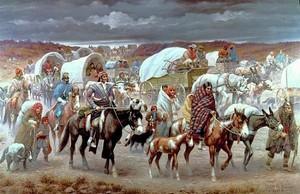
His painting depicted above shows Mandan Indians in their very strange looking canoes – which many say remarkably resemble ancient Welsh vessels called coracles.
The Last of My Native American Poems For Awhile,
I now journey to majestic Utah,
On an assignment to help our furry friends,
And to search for more intriguing ancient tales.
See You All on My Return


 Share
Share Print
Print Save
Save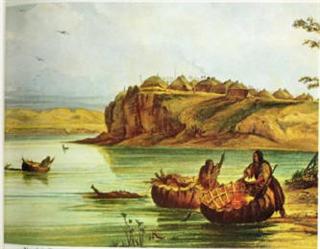















Spaceyxoox 42 (c :)
Enjoy your stay in fabolous Utah , Moab and the Arches are must sees there ! I can vouch for their splendour and magnificence !
Peter
Reindeer
This was an amazing tale, that I've forwarded (the URL) to a fine Welsh poet and gentleman; maybe he can validate on the Welsh-end what info we have here in U.S. about Madoc, the son of Owain Gwynedd.
Enjoy yourself, but hurry back to us...
Micke
Best,
Carolyn
I'm not a bit surprised, though learning this piece of history was fascinating and I ate it up, word for word, as usual. My ancestors were here long before Columbus, too. It appears that ole Chris was bringin' up the rear on the Americas thingy. Brendan the Navigator also beat him by a long shot.
You go down sooooo easy, compared to the history teacher in school. Ick... did you miss your calling? I love learning about Native Americans... emphasis on NATIVE! Ahem... don't get me started. katy xox
Paul;-}
Peace and love, Carole
Jennifer
love Tinky
(((HUGS))) adn mcuh love, your friend in tx., karen lynn. :D
Though I'm glad you are going on an assignment you love to do, you will be sorely missed!Take care, I look forward to all the great stories you'll have for us on your return!;-) Vaya con Dios!
Eileen
Hence don't - pay the welsh ferry man- other proof is the indians love of sheep.
Have a great time in Utah--wish I were going with you. :) Give the furry friends my best.
I've heard this legend, too, and have no doubt that the white man twisted it to his advantage. Thank you for opening uneducated eyes with your marvelous tales!
(((HUGS))) and love, Karla. :)