Each and Every Year at the Holidays
As I Begin Decorating My Own Home
My Thoughts Always Return to My Childhood
These Memories of My Past Etched into My Soul
˜
My childhood home was an old brick three story apartment building in the heart of the big city, and I loved living there with my parents, siblings, grandparents, and our many marvelous pets.
I especially loved Christmas time, with our family’s centuries’ old traditions, and marvelous ethnic food.
And I can still hear the voices of our many relatives who gathered at our home every Christmas Eve, joyously shouting out to one another:
“Zycze zdrowia, szczescia i fortuny, a po smierci niebieskiej korony!”
”May you be blessed with health, good fortune, and happiness
Which do not tarnish over the years,
And may you receive a crown in paradise!”
And as a young child, in my old ethnic neighborhood, I was fascinated watching my grandparents meticulously prepare for this most sacred event.
The major Christmas celebration in our large household took place on Christmas Eve, which is known as the ‘Wigilia,’ or ‘The Vigil.’ Traditionally, Wigilia was a time for forgiveness and a fresh start. It was always bolstered by sayings such as, "As goes Christmas Eve, goes the year.”
And ever hopeful for a good 12 months to come, everyone in our extended family was polite and generous to one another at Christmas time, and each person forgave past grievances.
The Christmas Eve Dinner was also known as ‘The Star Supper’ since the first star seen on Christmas Eve commemorated the birth of Christ and represented the Star of Bethlehem.
My grandfather always let me watch for that Christmas star, and I would excitedly race up to the musty old attic with one of the family dogs, eagerly searching the darkening big city heavens for that very first star of the evening.
And my grandparents always dutifully adhered to the following steps on Christmas Eve:
Christmas decorating according to Polish folklore: Hanging mistletoe over the front door to ward off evil; placing wheat in the dining room corners and under the tablecloth to chase away misery.
Setting the dinner table with a fresh white tablecloth and their finest cherished china. And carefully setting one extra place to remember absent family members, or to accommodate an unexpected guest.
Preparing the traditional 12-course Christmas Eve Meatless Meal.
Dishes they customarily served included barshch - a vegetable stew; fish soup; herring; fish in aspic; carp; stewed cabbage, and sauerkraut.
Sweets included dried fruit - kutia, a treat made from wheat, poppy seed, honey and almonds; poppy seed and honey cakes; ginger cookies; strudel; rolls; bread; coffee; tea; and cold drinks.
According to Polish custom, the Christmas Eve dinner began with a devout prayer led by my grandfather, and the breaking and sharing of the blessed Oplatek bread to represent Communion.
These sacred white Oplatek wafers, much like those used for Holy Communion, were shared with each person present at the meal. During this exchange, good wishes were fondly expressed by everyone.
And this was the most emotional time of the holiday for the traditional Polish family since beloved family members who were no longer alive were particularly remembered at this time. I remember many tears being shed around the table by adult relatives as these Oplateks were ceremoniously passed around.
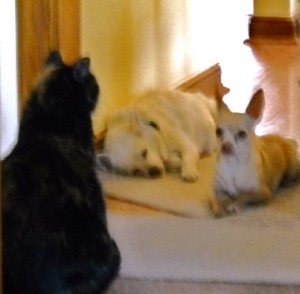
But to me, the most fascinating part of this ritual was that a pink Oplatek wafer was also shared with our many household animals who, according to Polish tradition, were the first to greet the Baby Jesus, and who are miraculously able to speak on Christmas Eve.
Exchanging Christmas gifts after the Vigil Dinner was finished.
Giving the family pets a special treat after dinner. In Poland, the head of the household would also take a special treat of leftovers out to the animals in the barn. Polish folklore explains that even the barn animals can speak in human voices on Christmas Eve.
Singing ancient Polish Christmas carols all night long. Carolers often visited households from Christmas Eve all through the end of the holiday season on January 6, the Feast of the Three Kings. Most of these Polish Christmas Carols were based on songs and hymns composed in the 14th Century.
˜
My Cherished Childhood Memories
Of a Joyous Ethnic Christmas Past
Are Fondly Etched Forever in My Soul
I Will Never Forget the Many Lessons I Learned
About The True Meaning and Spirit of Christmas
Taught By My Grandparents So Very Long Ago
©2006, Mr. Ed
The music playing is ‘Lulajze Jezuniu,’ ‘Lullaby to Jesus.’ This traditional and well-known Polish Christmas Carol (Koleda) was used by Chopin.


 Share
Share Print
Print Save
Save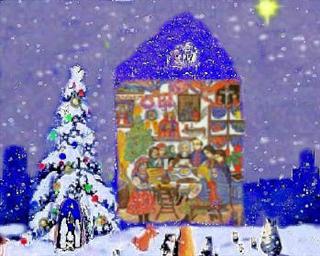






Love, B&R
My own childhood memories of Christmas, being, in many ways, different - a different country, a different culture with different traditions - are, in many more ways - "the Many Lessons I Learned About The True Meaning and Spirit of Christmas Taught By My Grandparents..." - very similar to your own... and, like you, I fell very blessed for them, indeed.
Thank you for sharing this beauty with us all.
Love,
Alexandra*
Wszystkiego najlepszego
Paul;-)
Thank you Ed for this wonderful offering
and shring with us, your Christmas family values
Peace be with you
William
Many THANKS for sharing your memories and traditions of childhood!
Micke
Thanks for sharing!!
Love Tinky
I find it delightful that america still is strong on the christmas truth, from my experiance. England, Chrismas, wots that?
Love,
CJ
I could not hear any music, but I never knew that Polish Christmas is so interesting and so meaningful. You have brought this reader there with you by this write, and I'm glad I had visited. What an eye-opener this is!!!
Thank you for the offering!!!!!
Sandie May Angel a.k.a. Sandie Angel :o)