“If the day ever comes that we can communicate intelligently with whales,
They may introduce us to the concept of survival without aggression,
And the true joy of living - which at present - still eludes mankind.”
Horace Dobbs
I have journeyed to Cook Inlet
And I have seen their kind up close
I’ve been lucky enough to touch them
Gazing into their eyes nearly nose to nose
And I wish that I could understand
The many songs these sea canaries sing
For today they must be extremely sad ones
Because death to them modern man does bring
These are the Alaskan Beluga Whales
Once numbering around fifteen hundred
Today only about 250 of them still remain
Their songs must surely be filled with dread
Even here in one of the last remaining wild places
Mankind is polluting and decimating their sea home
And I truly hope that we act soon to start saving them
Or one day soon, we’ll be penning their memorial poem
The name ‘beluga’ comes from the Russian word beilo, meaning ‘white.’ Because they require open water to breathe, these beluga whales winter in areas known to have open water year round, like Cook Inlet in Alaska.
On their bulbous white forehead protrudes what is referred to as their ‘melon.’ This fatty protrusion on the top of their face is responsible for the many captivating noises that they make, which include chirps, whistles, clicks, and moos. And because of this, they have been affectionately nicknamed the ‘sea canary.’
These Belugas are cetacean whales, meaning they have teeth, and although they are true whales, in many ways they resemble a huge white dolphin. They will often swim right up to small boats, and occasionally, they even allow boat passengers to reach out and touch them. I’ll never forget the day that I touched one – it was spectacular.
And these magnificent sea canaries have been a Cook Inlet icon for a long time now, delighting thousands of children and adults each year. Yet, despite having a ‘depleted’ listing under The Marine Mammal Protection Act of 2000, they have not been listed as an ‘endangered species.’
The Cook Inlet off Anchorage once teemed with up to 1,500 of these sea canaries - a genetically distinct population of white whale. But very sadly, their numbers have now dropped to around 250, and they could vanish forever within our lifetime unless we act very soon to save them.
Cook Inlet Belugas rear their young and feed just off the shore of Alaska’s most populated and fastest growing modern day area. And because of this, more and more pollution, sewage discharges, seismic blasting, toxic dumping from oil platforms, dredging, and modern day construction projects have adversely affected their numbers.
Listing these Cook Inlet Belugas as ‘endangered’ would provide needed critical protection for both the whale and the inlet itself, giving these whales the chance they deserve to recover.
The international community has already spoken out. Last year, the highly respected International Union for the Conservation of Nature (IUCN) listed the Cook Inlet Beluga as ‘critically endangered’ - the last category before ‘extinct’ - on its Red List of Threatened Species.
I believe that it’s way past time for our government to also step in to help save these whales before it’s too late.
Federal officials are currently debating whether to list them as a ‘protected. endangered species.’ But they need to hear from all of us – as they usually do in any animal welfare issue these very sad days – before they take any action at all.
Please urge the National Marine Fisheries Service to list the Cook Inlet Beluga Whale as ‘endangered,’ to help protect these fellow earth mammals for future generations of nature loving Americans to come.
And I truly believe that Earth will be an even sadder place than it already is without this wondrous Sea Canary’s Ancient Songs.
The Government is Accepting Public Comment Until June 19th.
If You Would Like to Help Save Them, Please Write To:
.
Bill Hogarth, Director
National Marine Fisheries Service
1315 East West Highway
Silver Spring, MD 20910
And:
Kaja Brix, Assistant Regional Administrator
Protected Resources Division, Alaska Region, NMFS,
P. O Box 21668
Juneau, AK 99802


 Share
Share Print
Print Save
Save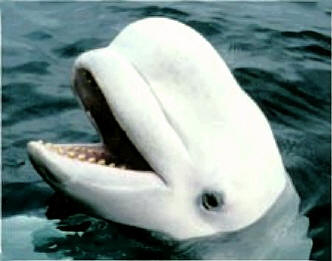







~Butch
Peace,
Josie
Be safe,
Karen
Love,
tiger lily
and thank you once again
for the added excellent information
On these lovely creatures
Peace
William
keep it leafy!
Bom Bhole!
Roshan
I cannot help but feeliong BLUE reading this!!
Love Tinky
Love,
Taylor
Thank you for this beautifully stirring.....almost dirge-like, expose`.
Always the Teacher and the Advocate, you are deeply appreciated.
Big Hugz, Granny&Eddie
Poetic task accomplished in "Sea Canary Blues".
Thank You for giving The BELUGAS the VOICE of JUSTICE.
In gratitude and admiration,
Andre Emmanuel Bendavi ben-YEHU
(((HUGS))) and much love, your friend in Tx., Karen Lynn. :(
America had aover a million buffaloes not so long ago.
Man is up on the branch tree that he's sawing off.
Well done friend, but...will anybody out there listen?
Georg
Ever the champion for those who succumb to mankind's greed...keep writing, keep speaking out!
(((HUGS))) and love, Karla.