"This rapidly vanishing species is telling us,
Just like the proverbial canary in a coal mine,
That we have very serious environmental problems.”
Eric Holle,
President of Lynn Canal Conservation,
Haines, Alaska
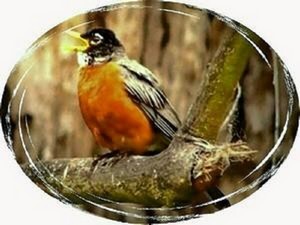
These are one of the earth’s least known birds
About the size of a robin, they live in the Arctic region
They once numbered in the 100,000 range back in the 1970s
Today, they number about 2,000 – Modern Mankind the reason
They’ve been named Kittlitz’s Murrelet, after a German zoologist
Who first observed and studied this tiny bird in the Great Northland
Their main habitat is Prince William Sound and the Kenai Peninsula
For centuries, their association with Earth’s glaciers was very grand
They nest in the alpine areas of glaciers, amidst the frigid snow and ice
And forage almost exclusively near the outlets of chilled glacier streams
Today, as more and more of the Arctic glaciers are melting and receding
Earth may soon sadly lose this intriguing winged creature, forever it seems
Their ancient lifestyle was first threatened by the Exxon Valdez disaster
When it’s estimated that nearly 15 percent of them were killed by the oil
And now, our leaders want to destroy one of their few remaining habitats
The Arctic National Wildlife Region, will very soon be plundered and spoiled
Climate change, oil spills, increased vessel traffic, and new oil pipelines
May soon bring an end to this intriguing bird that had lived for centuries
And we haven’t even placed this creature on The Endangered Species List
Yet, we hardly even knew this tiny bird – yet one more modern day tragedy
This little known arctic bird’s ancient habitat is rapidly disappearing today as Alaska's tidewater glaciers now retreat further and further in the face of modern day climate change. And global warming is happening even faster in Alaska than in our temperate regions. Average temperatures in the range of the Kittlitz's Murrelet have risen 5° F (3° C) since the 1960s, and 8° F (4.5° C) in the winter months.
Our government’s renunciation of the Kyoto protocol, as well as other pro-industry goals such as opening up the Arctic National Wildlife Refuge to oil drilling, will also ensure that our planet heats up faster than ever. And it’s estimated that the very small amount of oil in the Arctic region won’t even put a dent in our massive dependence on foreign supplies.
"The Bush Administration's energy policy will increase the rate of global warming and virtually ensure the extinction of the Kittlitz's Murrelet," said Kassie Siegel. "To protect this species in the long term, a reduction in greenhouse gas emissions must be achieved – and very soon."
And the Kittlitz's Murrelet is likely the most vulnerable of any bird species to future oil spills. It suffered a larger proportionate loss of its population than any other animal in the massive Exxon Valdez oil spill.
"Since the Exxon Valdez crisis, there have been several more close calls. The oil industry and the regulatory community have failed to significantly reduce the risk of future spills, nor are they developing an effective spill response program. As long as oil is shipped through Prince William Sound, the Kittlitz's Murrelet and other species living there are in extreme jeopardy," says David Grimes of the Coastal Coalition, based in Cordova, Alaska.
Disturbance from increased human activity may also cause these birds to abandon the areas where they normally breed. And increased vessel traffic will further scatter the Kittlitz's Murrelet's forage fish prey, making it difficult or impossible for these birds to continue to feed.
These tiny, intriguing, ancient Arctic birds may very soon disappear from the face of the Earth, before we ever really knew them.
"It's very sad," said Don Muller of the Sitka Conservation Society, "The Kittlitz's Murrelet is yet another species that is now disappearing as the result of modern man's activities, and the Bush Administration is very busy trying to repeal all or part of the Endangered Species Act.
“If anything, this Act should be strengthened – right now – not abolished."
And I, for one, very sadly, couldn’t agree more.
þ2007, Mr. Ed


 Share
Share Print
Print Save
Save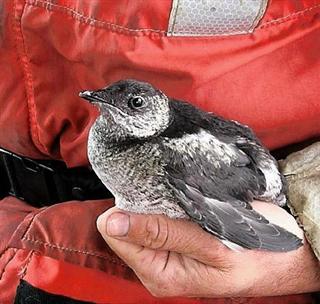














The word is, and it's true, there is more oil off the coast of Florida than under Saudi Arabia. However, a long ago governor of Florida said there will never be drilling off my coast. and that law is still being adhered to. There is one other problem the reserves are all Sub-Bassalt, menaing they are extremly deep. So the oil companies find it cheaper to drill shallow and ruin our truly last natural wilderness refuge, because..."aw hell" nobody wants to live there anyway.
We now have the technology to get at the deep oil. but they won't.
And another thing America's "strategic reserves" is stored in undersea caverns, also off the Gulf coast. Enough, it's said to supply the entire country's needs for 25 years. Little known for sure.
But why? in these times of nuclear powered vessels does the govt need so much oil just sitting there?
and If "we the people" don't own it and need it..Who does?
Walt
America is in dire need of another Lincon...
Thanks for sharing my friend!!
Love Tinky
and Bush is the #1 criminal...there must be a way to
stop this? What? I'm not sure?
(((HUGS))) and much love, your friend in tx., karen lynn. :( >tears! <
(((HUGS))) and love, Karla.
like your poem/etc. shows!
This is a gem I will treasure, you covered so many important sad details!
Too much self gain in this world, and less on what is REALLY Important, animals, home, Ppl! the list can go on/etc.
Thank you for covering this with a wisdom filled heart, with kindness!
I like your writing style and flow ED, I really do, I found many inscects to write about, that spark my interest and I'm not sure how to approach it with words, YOU do it so clear!
Warm Hugs and Warm Love, Warrior Purple Lady Sheeeoox
STay Positive!!!!
STAy SAFE!
LOve our Planet!!!
~ Namaste ~ FOREVER!
WE must Pray more and stronger!
Blessings,
Joyce B.