“There is nothing in which birds differ more from man
Than the way in which they can build,
And yet leave a landscape as it was before.”
Robert Lynd
Music: Last of The Mohicans
They are true masters of long distance aviation
As they wing their way almost 20,000 miles a year
They are truly one of Earth’s most remarkable creatures
And for these endangered birds, we should all shed a tear
On their annual migrations between South America
And their summering grounds in the Arctic northland
They must stop to rest and to eat horseshoe crab eggs
In Delaware Bay, located off New Jersey’s coastland
But the once plentiful horseshoe crab is now woefully in decline
Because of massive over fishing, it may never come back again
And many marine biologists on the eastern seaboard now predict
That the once abundant Red Knot may be extinct as early as 2010
Yet another nonhuman earth resident,
That is truly in dire jeopardy today;
And I sadly wonder how many more,
For our modern human greed – will pay
The Red Knot is the largest of the sandpipers in North America, and one of the most colorful. And it makes one of the longest yearly migrations of any bird, traveling from its Arctic breeding grounds to Tierra del Fuego in southern South America.
These Red Knots concentrate in huge numbers at traditional staging grounds during their annual migrations, and Delaware Bay is an extremely important area for them since these birds have fed on the eggs of spawning horseshoe crabs here for countless centuries.
It is estimated that nearly 90 percent of the entire Red Knot population can be present on the bay in a single day, and both a drastic reduction in food available to them and water pollution, are responsible for a drastic decline in Red Knot numbers today.
These birds "have gone from an undeniably majestic display of nature to a tragic remnant," says the head of the New Jersey Department of Environmental Protection's Endangered and Nongame Species Program.
Once, over 100,000 Red Knots flocked to Delaware Bay each and every Spring. Last year, the count was only about 12,000.
And many predict that this coming Spring, it will be far less.
If this magnificent winged creature soon does become extinct, the Red Knot will very sadly join the Carrier Pigeon and 10 other U.S. bird species that have already tragically vanished from the face of the Earth since John James Audubon first painted North America’s majestic birds in the 1800s.
©2008, Mr. Ed


 Share
Share Print
Print Save
Save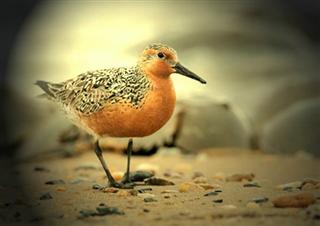








Love Tinka
Congrats on your new book!
Cheers,
Dan
God Bless us.... we need it.
Lew
DESTROYED BY MAN -
THE STEWARD!
Be always safe,
Karen
Fee
feel guilty of neglect. We must care
about these tragic losses and try to
do something, what I'm not sure? but for
one there are organizations in which we
can contribute and sign petitions.
Yes we are destroying our precious gifts from God, truly sad.
Christine
Georg
I liked Robert Lynd's statement. Too bad we can't learn from birds and thus keep the purity of our landscape.
(((HUGS))) and much love, your friend in Tx., Karen Lynn. :(
Blessings from Ky.
Joyce B.
(((HUGS))) and love, Karla.