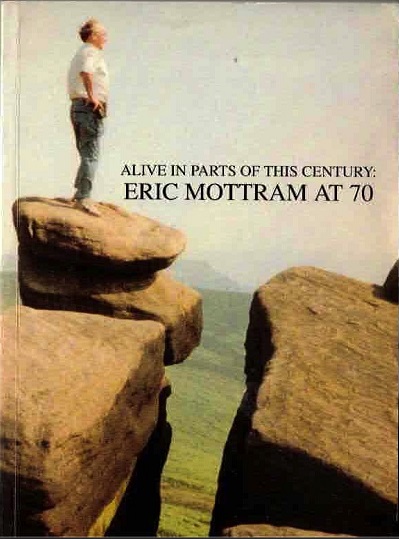
Eric Mottram's extraordinary perceptions of the cultural and literary scenes in the States during his 1965-66 sojourn outre-Atlantique.
Translation of Eric Mottram's Courbet: Elegy 8 by T Wignesan, together with excerpts from his letters...
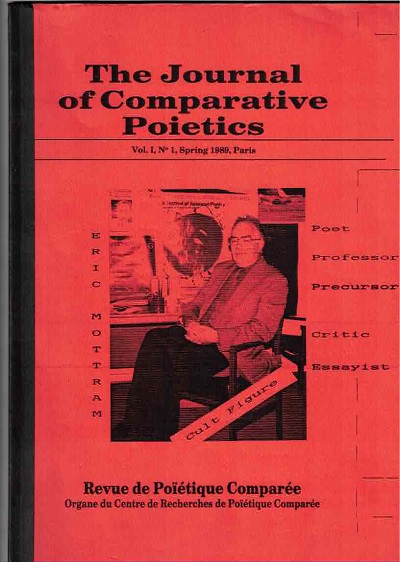
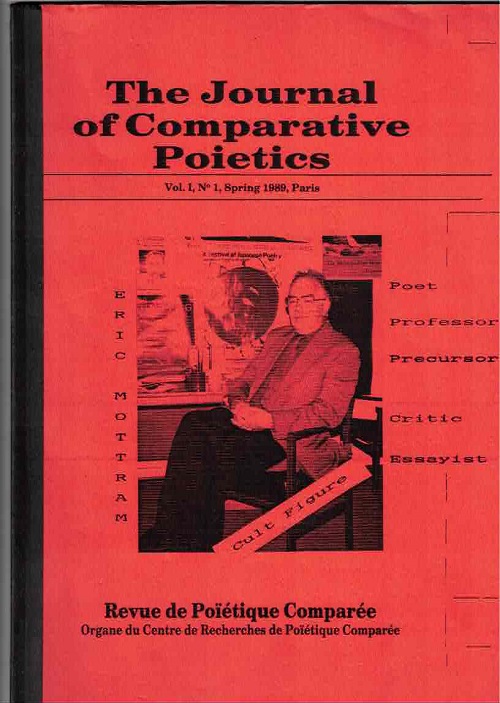
(from A Faithful Private, 1976, includes “Statements by the artist on his work.” This poem became Elegy 30 of ELEGIES, 1981) Pub. in The Journal of Comparative Poletics, Vol. I, n° 1 (Paris), p. 55. Edited by T. Wignesan
Blanches oeuvres ouvertes
résident dans les jours
la surface du banc de travail est noire
les géraniums-lierres
les fougères et les adragans
accumulent leurs oeuvres et jours:
La toile noire de Courbet
un endroit où la lumière
puisse-être enfoncée
avec un couteau
pour créer une crête
cassée figée
la crête s’alourdie:
la nature sans soleil
est aussi sombre et noire:
Je fais comme la lumière -
Illumine les endroits qui projette
en toute connaissance de la tradition
découvrir une raisonnée et indépendante
conscience de ma propre individualité
Je place un vase blanc sur une toile blanche
toutes les difficultés
blanc sur blanc et à la cinquantième fois
Je l’ai eu ............regardes l’ombre sur la neige
comme elle est bleue
Je vois trop clairement
Je dois éteindre mes yeux
en ce siècle socialiste
les hommes voient sans apercevoir
leurs esprits occupés de commerce
vos mères ne vous cachaient pas
sous la maison à l’abri des soldats
des cochons essayèrent de dévorer l’art démocratique
il les dévorera
en dépit des renégats des troupeaux déments
afin que les muscles forcent la colonne vertébrale
courber l’esprit peinant
glaner des écritures adroites
devant des niveaux de l’horizon
Note: In this and successive posts, I shall include extracts from Eric Mottram’s letters to me during 1965-66 when he was the invitee of the American Council of Learned Societies, for his perceptions and comments on the American literary and cultural scene reveal nooks and corners of his own make-up and make for much intelligent perspectivising of the “outre-Atlantic". The fact that some comments refer to our own relationship cannot be helped - I cannot defer to some detractors “outre-Channel". Eric had urged me to publish all our correspondence during his last two visits to Paris, but literary publishing being what it is and has been in the hands of a favoured few, I have no choice but to…
October 31, 1965: « Dear Wignesan,
[...12 lines suppressed] I look forward to your NLR rebuttal but I have to admit I didn’t see the cause: must have missed it among all the other magazines piled up and left behind unread. I think of the empty base [15, Vicarage Gate, High Street Kensington, London W.8] basement and [sic] few regrets, except that I miss all my friends, students, even you, quite a lot, even though the combination of university people and local writers here is beginning to surge in on me. The main problem is to take it easy. I do not have lectures to give, so that is fine, but leisure is a curious burden at first: the routine has to be worked out again based on learning how to sit in the square in the sun, take in a movie without guilt in the afternoon, or go to an exhibition, or read something not remotely connected with any work in hand. And not to have the near future mapped out ready to move into. Choice is strange when you are not used to it so totally. So I too - and not because of your absence - am beginning to write poems again, weird things but decently done. Perhaps I’m no scholar after all - long suspected, and on good evidence. I am still working on the Negro piece; masses of materials only part of which will go into the TLS article - the rest will be ready for anything further, apart from sheer interest of the thing. My Tribune article attacking American assumed innocences appeared and they liked it. Future thing on Frost in Spectator, etc. etc. But once this is through I’m not going to bother about writing these bits for a while. There’s only one book I feel like recommending you, and that is not yet out in England - Ralph Ellison’s Shadow and Act, a highly literate and penetrating collection of essays by the author of Invisible Man ( you’ve read this novel? Penguin if not - it’s tremendous and no Negro novel has approached it yet, although Leroi Jones’s new The System of Dante’s Hell is interesting in another way. Most of the stuff I’ve been going through has been sociologically fascinating but artistically humdrum to downright bad. Kitschy stuff for the market only. Watch out for Selby’s Last Exit to Brooklyn (and my broadcast with him) - it is mostly brilliant if entirely disturbing. Calder have asked me to defend it if necessary, since they apparently anticipate a court case. It does deal with violence and brutal sexuality but with a cool analytical sympathy which is new and necessary.
..........What else.... Oh yes: a good film called To Die in Madrid, compiled from the newreels[sic] etc. of the Spanish Civil war: the feeling I had of the futility of ideological warfare but its necessity was painful. Members of the audience openly cheered the Franco-RC priests combinations and there were one or two counter cheers but no fight. The film is generally too subduing. And the present context - the NY elections and the anti-war demonstrations too clearly part of a similar process of authoritarian government, backed by an ignorant and brutalized populace........Incidentally, films here are a superb opportunity - this week, for instance, one nearby cinema is showing in one programme three major Renoir films. Double bills of important films are a commonplace. Slowly I’m catching up on what I have missed. Have I been living wrongly these past ten years, all bound up in work rut and imaginary self-importance? Certainly, shifting here is perspectivizing.
..........Write more of you[r] good news. When you have a moment’s pause for breath.
Yours, Eric. »
[ From Department of English, New York University, Washington Square, New York, New York 10003. Letter addressed to 28, Cheniston Gardens, London W. 8 and re-directed to c/o Howard Hotel, Friargate, Derby]
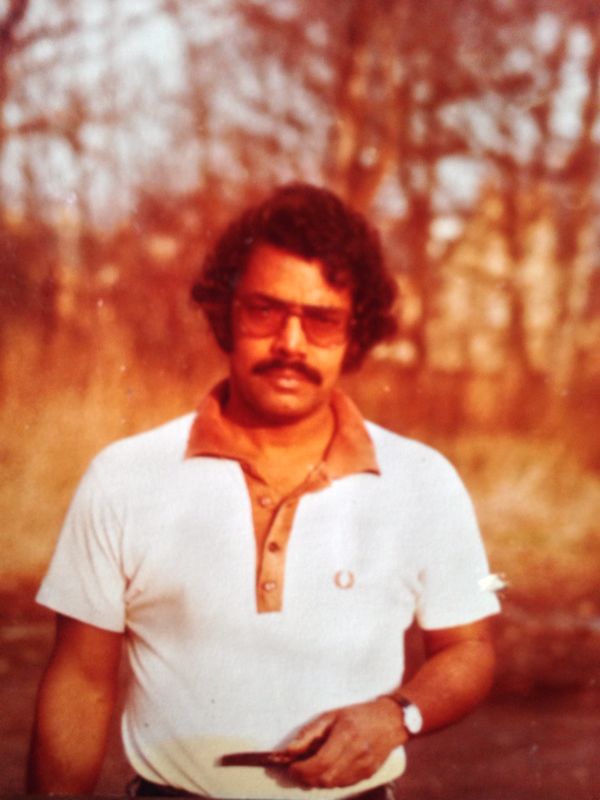
Bonjour Ron ! No, I was never a student of Eric's nor have I ever "studied" literatures in English. That's the point I was trying to make. You don't need to be taught literature. Your case is the best illustration of this premise. Yes, I did have some less-than two years of intense drilling into Hispanic Studies in Madrid, and I'm grateful for it. I had the best teachers Spain could offer. Lucky me ! Just for the record, I met Eric Mottram when I was 23, and without doubt he was the very first searing intellectual I had ever met, and the correspondence proves his interest in my own work, and thankfully, in me as an "equal" (he was nine years my senior) interlocutor, an attitude only a person of extreme good faith and humility could adopt. Unfortunately, our ways parted for 22 years, and in the meantime he underwent "memory erasures" and had no clue as to who I was when we met again in 1989, some five years before his final departure. I do hope this sets the record straight. Many thanks and every good wish.
While I can't read your translation into French, I certainly enjoyed the letter from Eric Mottram. Apparently you were one of his students. I was in engineering at the time and my only touch of culture was a special group of students at my technical university, the Undergraduate Fellows. Some professors in the arts and sciences gave us an update on the state of the world in a series of seminars.
At that time, I attended many films of foreign origin and read the great French philosophers, Sartre, Camus, and many others. Maybe I'm in a cultural vacuum here in Houston, but that kind of access through coffeehouses and underground theaters doesn't seem to be available anymore. Starbucks is not a place of poetic or philosophical discussion.
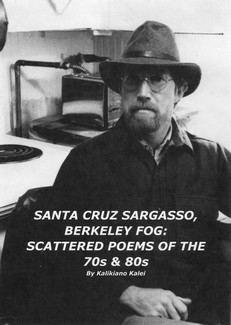
A further collection of poems, many from years in the Middle East, but also the California San Francisco and Central Coast areas (Santa Cruz, Carmel, Big Sur, Berkeley, etc.).


 Share
Share Print
Print Save
Save Follow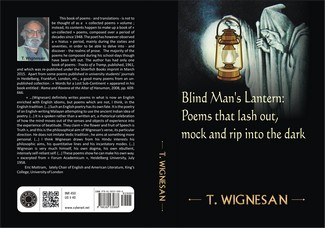



At that time, I attended many films of foreign origin and read the great French philosophers, Sartre, Camus, and many others. Maybe I'm in a cultural vacuum here in Houston, but that kind of access through coffeehouses and underground theaters doesn't seem to be available anymore. Starbucks is not a place of poetic or philosophical discussion.
Ron