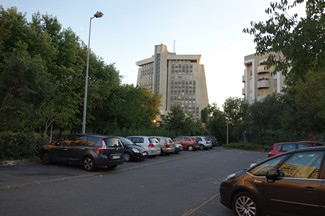
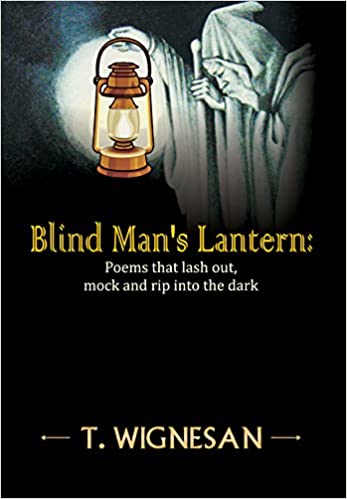
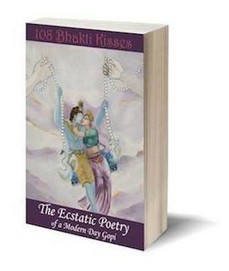
Clive Bush rails at the "immediately comprehensible...pseudo-lyrical confessions of poets...whose intelligence has been undermined by an autocratic State paranoid about criticism" . (PIC locates police brutality at the faculty parking lot, with the High Court in the background. See previous poem.)
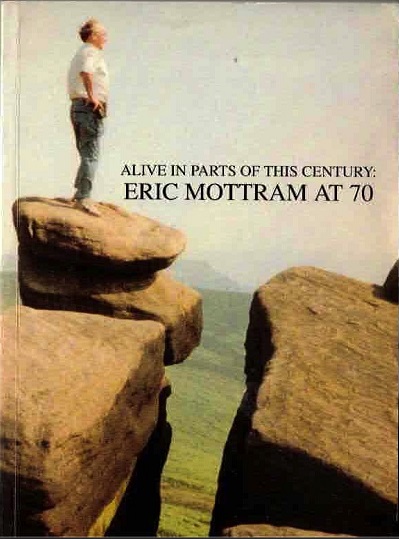
Translation of Eric Mottram's The Nerves of Proust and Sitting Bull by T Wignesan
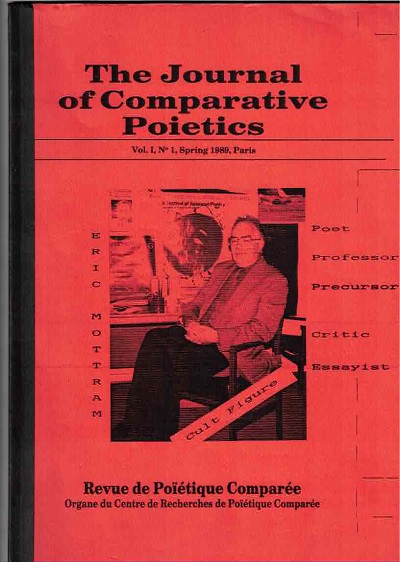
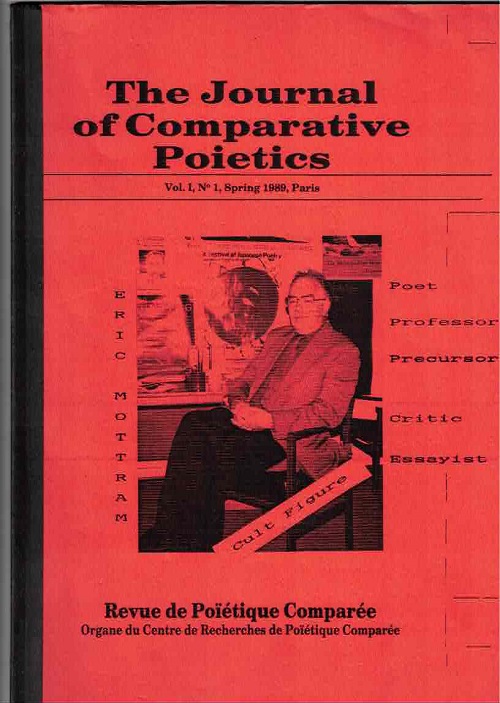
Excerpts from an article, "From space to caves in the heart recreating the collective world in Eric Mottram's poetry" by Clive Bush, Director of American Studies, King's College, University of London in The Journal of Comparative Poietics, Vol. I, Nos. 2 & 3 (Paris), 1990/1991, pp. 48-49. Editor: T. Wignesan:
"In Mottram's work there is no illusion that poetry will save us. Nonetheless a commitment to a poetry of intelligence with its necessarily radical and varied forms, to a clear-eyed and non-moralistic politics, to celebration of non-dogmatic forms of life, and to creativity and its happiness, at least rehearses the possibility of choice rather than submission. It is as necessary a task for Mottram as it was for Shelley in the era of the Peterloo massacre, or Swinburne observing Disraeli's absurd antics in relation to the Ottoman Empire. Certainly the difficulty is all the greater for Mottram in the sense that there is no "good place" for committed creative intelligence. (…) Mottram expands his frame of reference far beyond officially-recognised English poetic practice in order paradoxically to recover the actual and multiple richnesses of English cultural traditions currently betrayed by the know-nothing, pseudo-lyrical confessions of poets who mistakenly think their personal lives interesting enough to record in immediately comprehensible invariably tear-stained and melancholy mediocrity. The "immediately comprehensible" flatters a populace whose intelligence has been undermined by an autocratic State paranoid about criticism…"
Les nerfs de Proust et de Sitting Bull
…………comme une guérison pour l'original
………………………………tissu fin
…………qu'il a mis des bouchons d'ivoire
………………………………dans ses oreilles
……………….avalait presque n'importe quoi
………………………………créa sa
…………scène inoffensive et l'appela la mémoire
………….pour honorer la divinité une centaines
……………………………….de pièces de
….peau lesquelles furent presque arrachées de ses bras
……………………………….qu'il gagne
…………..le triple farce de désobéissance
……………………………….qu'il donne quelque chose
………….pour le reporter de Tribune de New York afin qu'il perde
………….la mémoire pèse pour réaliser un massacre
……………………………….sur les nerfs qui
se sentaient une guerre Franco-Prussienne et commençaient à périr
……………………………….dès le début
ainsi le passé d'une détaille urbaine voyageait comme le culte d'une cargaison
……………………………….les Sioux donnèrent nos
…………..jeunes américains qui rêvent d'un dernier bastion
(from Eric Mottram. the he expression. London: Aloes Books, 1973, p. 49)
The songs and art in this book are about our collective emergence after the pandemic and trauma of the last few years - comprised of 5 collections: World as Refuge, Where We Live, In Our Hands, Rhythms of Change and What We See & Sow.
David Hightower’s lyrically expansive meditation on the whims of fate and the unpredictability of the human condition fill the pages of THE HANGING MAN DREAMS with thrilling music and mesmerizing imagery. Hightower’s richly infused voice echoes the e


 Share
Share Print
Print Save
Save Follow