Villanelle : Never political but spiritual the ancient Indo-Chinese pilgrim ties
In Memory of the late pathologist (and amateur Astronomer)
Associate Professor CHONG Siew Meng, National University of Singapore*
Never political but spiritual the ancient Indo-Chinese pilgrim ties
Which pierce through skin and bone and the cryptic genetic code
Friends hatched from the same mould needn’t rely on vice nor lies
Wu Ch’eng-en’s « Monkey » didn’t waft down Monsoon winds for spice
But to imbibe Siddhartha* Truth : the Golden Mean* at Nalanda* abode
Never political but spiritual the ancient Indo-Chinese pilgrim ties
And took back to the Middle Kingdom « Eight-Fold Path* » wise
That neither « ancestral worship » nor Taoist logic sought to exclude
Friends hatched from the same mould needn’t rely on vice nor lies
Then the fierce Boddhidharma* stared down the Emperor Chinese
And from « Four Noble Truths* » sprang Chan/Zen in enigmatic mode
Never political but spiritual the ancient Indo-Chinese pilgrim ties
Whilst in deserts iconoclast prophets tore down the sacred edifice
The Essenic Tribe traced the descent from Tusita Heaven to Mary mode
Friends hatched from the same mould needn’t rely on vice nor lies
The Dead Sea Scrolls lie buried in some hidden vault full of lice and mice
While Crusaders drive Saracens from the Holy Land onto the migrant road
Never political but spiritual the ancient Indo-Chinese pilgrim ties
Friends hatched from the same mould needn’t rely on vice nor lies
Notes
• An ex-Victoria Institution pupil from Kuala Lumpur. In Malaysia and Singapore, it is not uncommon to find many Chinese and Tamils forming quite close relationships, the most renowned of such friendships thrived between the late Prime Minister LEE KUAN YEW and the late Senior Vice-Premier S. RAJARATNAM, the latter born and raised in Malay(si)a. Lee Kuan Yew shed tears in public at Rajaratnam’s funeral.
• Siddhartha : « he who achieves his aim »
• Golden Mean (the Middle Way) : « away from all self-indulgence and self-mortification »
• Nalanda : ancient university (in the present-day State of Bihar) to which several Chinese pilgrims like the renowned Yi-jing or I-tsing (635-713 CE) made their way to learn Sanskrit and Pali in order to translate Buddhist works to take back home. On the way, they stopped at SriVijaya in Sumatra for the very same reason.
• Eight-Fold Path : right view ; right intention ; right speech ; right action ; right livelihood ; right effort ; right mindfulness ; right concentration.
• Bhodhidharma : a Tamil « Brahmin » who took the Buddha’s teaching to China and there meditated for years facing a wall in a cave until followers sought his knowledge which gave birth to Chan in China and Zen in Japan. It is also said that he initiated the martial arts at Shao-lin.
• Four Noble Truths : « Suffering as part and parcel of Life » ; « Sensual craving as the cause of suffering » ; « Acquisition of identity » ; « Suffering can be eradicated by following the Eight-Fold Path »
Hello Madame "m" and "Ron". Thanks a lot for both your comments. Let me add, even if you both say or don't say a "mouthful", I'd be thankful, but I'd like to add an anecdote which might be of some interest to those who care about what really takes place and which doesn't quite get noticed, but, before I do so, please let me point out that the fixed form of the Villanelle (from the Italian: "villanella") is not mere "repetition" which Ron objects to specifically: in my view (and it would take pages to explain), the villanelle is the most precious contribution by the French poet Jean Passerat (in 1606) to the art of poetry, itself.
Second, Ron is right in pointing out that spirituality operates on another imperceptible level and transcends all other forms of diversity among human beings. The poem itself tries to encapsulate some 2500 years of spiritual history with Buddhism, on the one hand, and principally Christianity, on the other, and thus the Gautama par rapport à Christ, so here goes for the anecdote.
During some months in 1963/64, I was researching certain documents at the British Museum Library on commission. One morning I walked right into a blown-up display of the Dead Sea Scrolls (translated into English) with the Bible and the Dhammapada, juxtaposed to reveal the similarity between both "teachings" y compris the subsequent myth-making endeavour by the disciples on both sides. I'm sure the Museum authorities intentionally wished to shock the viewer into realizing the uselessness of interfering with the business of God: that is exactly what the Buddha wished his followers to understand by his metaphor of "the arrow in the bleeding body" being the veritable description of the human condition - a truth quite simply revealed to me by the first Buddhist monk of the London Vihara, the same monk who later became the Mahathero of Sri Lanka. Thank you for reading. T. Wignesan
I am unfamiliar with Eastern religion, so I thank you for those explanations.
Since it is repeated, I believe that the gist of your poem is that spirituality, regardless of its source, always tends towards the right thing. That is avoiding vice and lies, unlike politics, and seeking the truth instead.
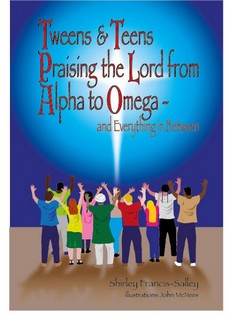
Want to get your kids praising more than just their favorite sports stars and celebrities?
Gather a group of praise-minded youths, add 26 beautifully illustrated praise affirmations, couple them with 26 appropriate Bible verses, stir in short Bible
Finally! Understand and learn from the New Testament Book of Mark.
Try James first for free
Now there is a Bible translation that is easy to read, understand, and study.
This translation is unique in that it is arranged


 Share
Share Print
Print Save
Save Follow

Second, Ron is right in pointing out that spirituality operates on another imperceptible level and transcends all other forms of diversity among human beings. The poem itself tries to encapsulate some 2500 years of spiritual history with Buddhism, on the one hand, and principally Christianity, on the other, and thus the Gautama par rapport à Christ, so here goes for the anecdote.
During some months in 1963/64, I was researching certain documents at the British Museum Library on commission. One morning I walked right into a blown-up display of the Dead Sea Scrolls (translated into English) with the Bible and the Dhammapada, juxtaposed to reveal the similarity between both "teachings" y compris the subsequent myth-making endeavour by the disciples on both sides. I'm sure the Museum authorities intentionally wished to shock the viewer into realizing the uselessness of interfering with the business of God: that is exactly what the Buddha wished his followers to understand by his metaphor of "the arrow in the bleeding body" being the veritable description of the human condition - a truth quite simply revealed to me by the first Buddhist monk of the London Vihara, the same monk who later became the Mahathero of Sri Lanka. Thank you for reading. T. Wignesan
Since it is repeated, I believe that the gist of your poem is that spirituality, regardless of its source, always tends towards the right thing. That is avoiding vice and lies, unlike politics, and seeking the truth instead.
Ron
as always, a compelling read meant to edify
never stop writing
m