“Classic tragedy and comedy spurred me into performance…creative and historical writing yielded to today’s mysteries sprinkled with history and the paranormal.” – Jeanne Burrows-Johnson
Which research methods do you use to weave authentic pan-Pacific history into your plots without overwhelming the reader?
With a Bachelor of Arts Degree in History from the University of Hawai`i, I pursued Asian and American studies working as a teaching assistant in world civilizations. Leaving academia did not end my research, for personal interests and freelance writing assignments continued my absorption with: books, newspapers, and magazines; library and museum archives; films and broadcast programing; plus interviewing scholars! The plethora of notes led to revelation of interwoven patterns, for projects current, as well as road maps to mysteries. Regardless of the project, the result must be relevant to publishers and the public. The secret to restraining a desire to include historical data without restraint became routine…editing, repeatedly!
Could you share an example of a vision scene that required multiple drafts before it felt psychologically and visually accurate?
Repeated editing is how I produce a cohesive book…or article. In Yen for Murder, I sought a challenging childhood scene to explain the complex relationship of two Japanese brothers. Articles in The Stars and Stripes presented storms hitting Japan during its post-WWII Allied Occupation. While a typhoon’s detailed account seemed appropriate, analysis revealed that the men’s ages (and those of other characters) forced reference to an earlier tragic event. Also, expansion of researching Japanese Buddhist sects eventually produced an appropriate prayer for the boy with deep religious beliefs. This philosophical sharing occurs as one boy is trapped in rubble as his brother strives to save him.
“Perform due diligence in research and editing but always remain true to your inner direction.” – Jeanne Burrows-Johnson
How has residing in both Oregon and Hawai‘i influenced the cultural textures of your settings and characters?
There are many similarities between Portland and Honolulu: Abundant natural beauty; diversity of race, cultural activity, and cuisine; collegiate environments; and mixtures of beliefs and ages. With a father in Asia during and after WWII, I received ideal preparation for Island life as most family dinners featured rice and restaurant meals were Chinese. One difference was the coloration of nature, with dark greens prominent in the northwest, and lighter greens in Hawai`i. My living in both cities was embedded in varied aspects of the performing arts and education, with friends of varying race, faith, and age. Likewise, my mysteries reflect the same mixtures.
In what ways does Miss Una’s feline perspective allow you to explore themes of intuition versus empirical evidence?
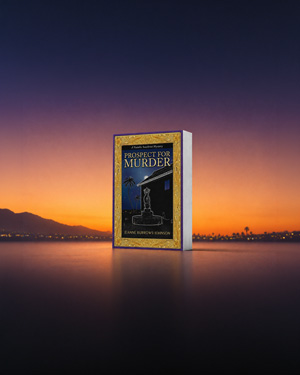
The feline star of my mysteries is Miss Una, a tortoiseshell kitty (despite being drawn as a near shadow). Unless clamoring for sumptuous sustenance as reward for her queenly presence, she remains a silent though loving companion to Natalie Seachrist, my visionary protagonist. When Natalie experiences her dreamworld of immersion in things murderous, Miss Una is usually seen watching over her. And when Natalie inadvertently leaves something in her path, or even out of sight, our little star intuitively knows when there is a treasure awaiting her attention. And whenever her little paws engage with such findings, Natalie is challenged to investigate further…clearly helping to bring the criminality to an end!
What drew you to select cold cases and a stolen artefact as motifs in two of the books in the series?
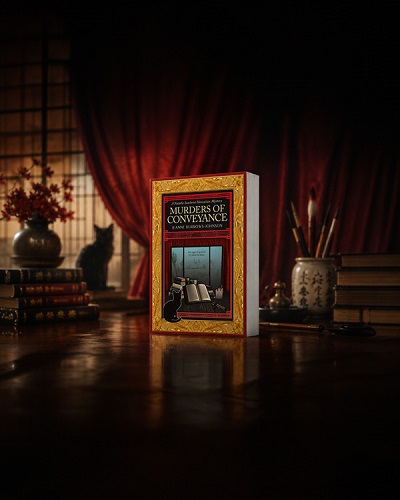
Each book commences with a sense of the adventures Natalie and Ke`oni and company will encounter, but not the exact elements. In Murders of Conveyance, Natalie’s vision introduces the criminality…two murders separated by sixty years that will occupy the time and talents of Natalie and Ke`oni, despite plans to romp through a scavenger hunt. In Yen for Murder, a cold case of homicide at an altar and the reappearance of a stolen statue of the Shākyamuni Buddha compel the duo to enter the realm of international artifact auctions. I was nearly through the latter book when a colleague cited the coincidental components. I had not even thought of the similarity. Perhaps I should review previous books before embarking on new ones! Oh, well…
When collaborating on Under Sonoran Skies, how did you balance the roles of art director, indexer, and co-author without compromising cohesion?
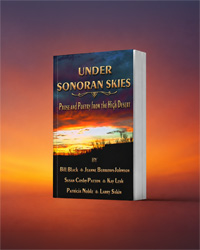
This printed and audio anthology was a collaboration of professional authors from a weekly writers’ salon, working harmoniously through each aspect of publication. With our varied fiction and non-fiction, we were grateful to have a suggestion for juxtaposition between the beginning and ending of our table of contents from Rev. Patricia Noble. Initial choices in art were shared. Larry Sakin gathered images from several artists. Greatly respected were the poetic talents of Susan Cosby-Patton and Bill Black Jr. (whose sketches accompanied his writing). Handling cover art, pagination folio art, and some layout, it seemed appropriate for me to index the book. For the audio edition, each author recorded their compositions, with Dr. Kay Lesh recording front and back material.
What practical guidance would you offer fellow authors who wish to blend meticulous historical detail with page-turning suspense?
Weaving history into fiction can be challenging. Some authors attempt exact historical reproduction, which may result in multiple errors, including images in cover art! While many writers sidestep this option, others (like myself) will imbed historic facts without complexities of setting, mechanics, or costume. With a degree in history, and having been a graduate teaching assistant in world civilizations, my research experience has aided the selection of appropriate information to include in my suspense-filled mysteries. Additionally, my protagonist’s dreams and visions allow me to veer away from complex description. My primary advice to all authors is to perform due diligence in your research and editing, but remain true to your inner direction, despite what others may say!






Ron