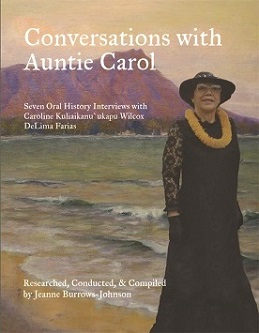
JB-J: This afternoon is August the 5th, 1993. We’re in the home of Mrs. Caroline Farias for another conversation on life on Maui in the earlier part of the century. Today Caroline, we’re going to be talking about life in your home in ʻUlupalakua. And, your mother [Frances ʻUlualoha Wilcox DeLima] as the center of the home, the center of the heart. And last time we were just gearing up, talking about some of her soups and you were mentioning her bread making and other things.
I thought that today, we would pick a special day in your memory, that signifies the idea of pāʻina, of celebration. You might want to think about a Christmas, or a special birthday that was yours. And let’s start off with what would happen in the morning of a special day. What time would you get up in the morning?
CF: We children used to [pause] about two or three of us would get up about five o’clock in the morning. And, like my brother Manuel [Piʻianaiʻa DeLima] and I would have to call, to get the cows. Bring them home. Mother would get her hair tied back with, towels. Get her, water bucket, water ready to wash all the nipples from the bag of the, milk, milking cows. And she would, we would bring the cows home. And our cows were with names.
And I remember very well my Matilda and Baby. And we would call their names and they would, answer by, wherever they at, far and out in the pasture, they would say, “Moo.”
And they would come on home. They know it’s, they know it’s time to come home. And they would come home with their bags just full of milk, just hanging there. And Mother would come out and tie their legs in the back of the, tree that we have. And she would, wash all the nipples. And, get the bucket ready, put it underneath. And, she start milking, the cow.
We would have neighbors,
[Clock chimes]
come over with their little containers. Our farmers, all the Japanese farmers. A few of them would come, and pick up the milk to take home for breakfast. What they gonna have with their cereal, or whatever the Japanese do. But we, we, would fill the buckets up and take them home.
And it would just, and Grandmother [Cecelia Alexandria Alania Kalilioku Piʻianaiʻa Wilcox] would put it on the, wood stove. We had a cast-iron wood, wood stove. A huge, and, in the kitchen. And that would, be all heated up. Moth, Grandmother would sterilize the milk. But, for. And, then, Grandmother, makes butter, and, we had our homemade butter, homemade, fresh milk. We had everything lovely.
JB-J: How many cows did you have?
CF: Had about six, but three milking cows. You know, when,
JB-J: How long did it take your mother to milk the three cows every morning?
CF: Gee, I don’t know, about 25 to half an hour I think. You know.
JB-J: So by the time you got up, got the cows, back to the house, got them milked. Your grandmother boiled the milk. What time did you all sit down to breakfast?
CF: Well, roughly about seven-thirty, we all have breakfast, clean up the kitchen. The kitchen has to be immaculate before we leave home. Beds are made, pajamas are hung up. And before we leave the house, everything is in order. And then we walk a mile to school.
B-J: Well now, let’s not talk about a school day. Let’s pick one of those special celebration days. Maybe on a weekend, maybe at Christmas. If you have a, if you have a special memory of a certain age, when, you just really remember that one day in a special way.
CF: We have, I remember very well of all, every year, Easter, Thanksgiving, and Christmas is what, and New Year, is what we really, children really look forward. And, we celebrate back home those days, about a week from Christmas. All the family have guests over the house. And they stay with us for about one week for Christmas to New Year’s, and they go on home after New Year’s. That’s how long we celebrate with the family. And, ah, close-by neighbors.
And, and I mean they, have all their homemade wine, Papa [John DeLima] would make. Papa was great in making wine. He was very, very good at that. And, also, his very special was ʻōkolehao. But he never, I can never remember him making it in our, in my mother’s property. He would go to his own property. He had his own piece of land. And he makes it there. And he makes the best ʻōkolehao. And people, secretly buy it from him.
JB-J: Well now, if we were looking at, say a Christmas, can you remember one Christmas in particular, that just, somehow you were old enough to really appreciate it, participate in it? Get involved.
CF: Well, you see, we, we children, don’t know what is candy. And, apples from the mainland. And drinking soda. Christmas candies. That’s the only year, that’s why we, I feel that Christmas is so special to us. We, we have our, apples from the mainland. We have oranges, Christmas candy. We have, our Christmas tree. Pine tree, so beautiful. The fragrance.
We didn’t have electricity. We had wood stove. And, we would have to put all the ornaments on the ah, Christmas tree, whatever we have. And we used to light candles around, you know. Only on Christmas Eve, we’d light candles. But it’s so beautiful to hear, to have our sisters sit together and sing Christmas carols.
And, we enjoyed it so much in our home, Christmas. Papa, I remember, Papa very well. My father. He would sneak up and put things in our, our stockings. And I never will forget, because there’s, there’s so much good in Papa. His hands were good, strong hands. How he, good worker.
JB-J: Did he make some of these little gifts for you children?
CF: Just, ah, surprises in our stockings, that’s all I re,
JB-J: Do you know what any of the surprises,
CF: Remember. Not every
[Pause]
CF: Christmas (he, her father) is home. But whenever, this particular Christmas, I remember, I seen him, actually sticking things in our stockings.
B-J: How old were you that year?
CF: About 12 years old.
B-J: About 12. Well, let’s talk about that Christmas.
CF: Must have been 12. (Maybe 10 years old)
JB-J: [Clearing throat] Whether it was that year or another year, how long before Christmas, did you start making preparations for the holiday time?
CF: Oh, we do it about three days before. Mother would get all our breads made. And, she makes about 15 loaves out of scratch. From Irish potatoes that we have to scrape, and, and mix it with, mix it with the old potatoes. And, ah, old potato yeast, and that’s how she ferment her yeast. And when it’s rise, she makes 15, sifters of flour. I remember her well. And all her ingredients is big container and she just knead and knead and knead. and all the pans we have to grease and get it all prepared and she puts it all in there and rise. And she puts it all in the oven. About 15 loaves every time she bakes, and that’s twice a week.
And Mother was very good in, also we prepare for dinner. Our Christmas dinner is either roast duck, turkey. All the trimmings that go with it. And, lovely salad. Beautiful pumpkin pies. And, cakes. All, all homemade. All homemade. And, for Christmas is everything, ‘cause we can drink soda, eat our Christmas candy. And it’s, something we really, really look forward to is Christmas.
New Year’s is a time we have pāʻinas and friends. The, friends, family would come and they would stay with their two, three children, we all stayed this home. It’s a big home, big yard. Large lānai where we can all sleep out on the lānais, or in the house, on the floor. And we enjoyed that so much.
We don’t use our bed when we have guests, you know. We like to, be togetherness. And sing together, and talk stories together. Sometimes, stories that, just like menehunes cares us. You know? Fairy tale stories, and, and, ah, it’s so beautiful to be together. And that’s the way we celebrate about a week…Christmas together, all week with the family till New Year’s.
But New Year’s is something big. And that’s when we prepare the sweet potatoes, and the, get the porks ready from the [ʻUlupalakua] Ranch. Edward Baldwin have his ranching butchery gives my mother so many pound of meat, so many pounds of pork. And we give the ti leaves, and we, Mother would…you see, the Maui people, don’t believe like Honolulu, put all these butter fish, salt salmon with their lau laus, and ti leaves.
They don’t. The Maui people are famous in making plain meat and pork. little bit pork with their meat, their beef. And they wrap it in a ti leaf, get it all prepared in a big pan first. Put it in a pan, they put their Hawaiian salt and then they, wrap it in the ti leaf, prepare them on the side.
And Mother would teach my brothers how to make the imu. And we put everything in the imu. And while that's, lau laus are in the imu, Mother is preparing the desserts and whatever goes for New Year’s. And, sweet potatoes also go in the imu. And, and when the time for feast, we have in the Eve, we don’t eat, celebrate on the Eve, we just, sit quietly and have simple dinner, maybe a big pot of, Mother would make chicken soup for our dinner.
And she, everything she makes in that pot is so good. Lots of, ah, beautiful natural ingredients. Fresh vegetables, her spice that she put in. Mother was so good with her cooking. And everything she puts on the table, it’s good. And, then we get, take a, we get dressed, and we wait for the people who drop in.
And in Maui, where I come from, ʻUlupalakua, they don’t have cars to go around and the serenaders would come on a horse. They bring their violin, one fellow with a violin, one with a guitar, ʻukulele, mandolin. And they come to our door, sometimes by the time they reached our home it’s 10 o’clock. And they serenading. It’s so beautiful. You don’t see that today. In Honolulu it’s so different from Maui. And they look forward for the serenaders. Then Mother would invite them in and they sit down and they have their pūpūs and coffee and talk stories and sing more songs. Then they have to go on to another home. Travel on the horse. That’s they way they do it, back home...






When I was born in 1941, we soon moved into an old farmhouse on the edge of town in North Central Wisconsin with a large woodstove. Our Thanksgivings, Christmases and Easters were much like Caroline’s on Maui. So surprised that they were not very Hawaiian. Rob why she kept referring to Honolulu.
Our grandparents had a farm and milked more than three of six cows with a milking machine. I remember loving the milk still warm from the cow. No one came over to get some milk from grandma, but it went to the dairy to make butter, cheese, drinking milk for townspeople and ice cream. My dad worked in an ice cream factory.
Mom was an excellent homemade bread maker and many people came to sample what she baked along with many dishes, Christmas candy and desserts, starting with that wood stove that heated the kitchen in cold winters. Electricity had come to that part of Wisconsin only about 10 years before. One of my uncle farmers became an expert winemaker when he grew older. But the staple around holidays was Jewish, Mogen David Wine, a concord grape wine from New York.
My younger brother took his new bride to Maui on their honeymoon. My parents vacationed in Hawaii to celebrate their 50th wedding anniversary.
Ron