The Dalai Lama's appearance in Florida during the worst hurricane season (2004) in a century created a small stir in the press. First of all, the Dalai Lama said that he had nothing to say, that his mission was simply to appear, to smile and show his teeth. Several persons who revere him for simply being there agreed and their prostrations demonstrated that they were duly awed by his presence as well as by their understanding of it. The grand lama spoke at great length thereafter, but he had alluded to the original truth in the very beginning - his reflections that followed were merely incidental.
Who is the Dalai? The Dalai Lama, at least as I view the press reflections from afar, is a symbol of the perfect medium for the absolute truth, which is refracted by the medium's facets into relative truths. Although he might remain compassionately silent on many points, he would not deliberately lie to us. In fact, one of the Five Precepts followed by Buddhist leaders enjoins him from abusing speech - such abuse includes lying. Furthermore, one fold of the Eightfold Path prescribes Right Speech for all Buddhists.
When asked what the purpose of human life is, the Dalai Lama said, "I don't know." We might be glad that he did not have one and only one answer for everyone; glad that he did not make of the part a whole and insist that everyone take a single path to a single goal or else be damned; glad that he left the possibilities of life open for realization by every individual according to their potential.
Miami Herald reporter Evan S. Benn did not report a specific answer to the question, "How we can each of us stop the war in Iraq?" If the Dalai Lama answered, he probably paraphrased the first precept of the Five Precepts - it proscribes the taking of life. At another gathering, Silva Beato, contributing writer to the Sun Post, quoted the Dalai Lama as saying, "Peace is a dialogue. The answer for peace cannot come from the sky, prayer, or meditation. We must deal with the causes of violence with an open mind. There will never be a clear-cut person or thing to blame."
Of course many people throughout the world hold President George W. Bush directly to blame for waging the pre-emptive war that destroyed the sovereign state of Iraq, and for lying to the world about his reasons for rushing to war. Should all the blame accrue to him? He claims that his underlying motives are pure and are sanctioned by his god. Has his god deceived him? Or does he lie?
Lying has become so habitual in our society that it is no longer considered pathological, but is believed to be the way to get things done in a democracy; indeed, the neoconservative doctrine prescribes lying as a necessary instrument to accomplish objectives. Almost every political and economic organization has departments of hypocrisy staffed by professional deceivers, or has outsourced the task. The chief executive officer of the organization is often the head deceiver in the most crucial matters.
The law of the jungle and reasons of state are professed by professors to justify lying as a necessary strategy given the mutual hostility fostered by the currently popular doctrine of competition. Michael Porter, a popular Harvard professor, advises us not to forge alliances in order to cooperate, but to find a formidable enemy with whom we are to pick a fight for our continuous improvement. That reminds us of the doctrine of a German father of the American neoconservative movement: politics is for finding out who your friends and enemies are so you can band together with your friends and eliminate your enemies.
No wonder paranoia runs rampant under delusions of grandeur and persecution. Professional lying in the interest of public relations has gone to such absurd lengths that lies are told when the truth would better serve the purpose. In fact, truth is man's best friend. In the long run the truth will be told, so it behooves us not to intentionally vary from it in the beginning.
However that may be, the president and his colleagues suffer life along with the rest of us, hence they are as entitled to Buddha's compassion as anyone else. Still, they are leaders of a "democracy," hence they are responsible to The People. No doubt they will be held accountable in this life and the next for their good deeds and misdeeds. Yet all the credit and blame does not go them for good and ill. Indeed, my answer to those who say, "The President is really scary, a danger to the world," is this: "The President in particular does not frighten me very much, but the people who elected him and went along with him do - they present a far greater danger to peace than the president does."
In truth we are all partially responsible for the war in Iraq and for other miseries. Fundamental Buddhism is a moral doctrine, which states that desire causes our miseries, and that it is possible to ameliorate our suffering with righteous mental and physical conduct. First of all, we should aspire to the truth, the right views, then conduct ourselves accordingly. Consequently the Dalai Lama spoke of a general solution available to all individuals: he recommended that each and every one of us engage, figuratively speaking, in internal disarmament. After all, if we would all rid ourselves of the destructive emotions that drive us to violence, external disarmament would follow. The key word is all. All will not go along. The rush to war, the sheer popular joy expressed at the outset of many wars, demonstrates that pacifists are a small minority whenever the love for bloodshed is at stake.
The Dalai Lama's compassion may seem far too conservative or passive for the party of war that would defend the community, with pre-emptive strikes on suspected enemies if need be. After all, they say, a life not worth killing for is not worth living. He who sits cross-legged, to just be instead of to do, is a selfish person who is only interested only in saving himself. He ignores evil by doing nothing about it except talk, and he who ignores evil is good for nothing. His fine words about peaceful means to peace serve the injustice of the status quo by opiating credulous, fearful people who would be much better off risking their lives and fighting for justice. Therefore the Dalai Lama, Tibet's exiled theocrat, should lead his people to war against China. Since he does not have a uniformed standing army, he should call upon his freedom fighters to take up arms and terrorize the Chinese forthwith.
But the Dalai Lama has a conflict of interest in his capacity as the theocratic monarch of his country. He is Tibet's high Buddhist priest, and he must do no harm, he must take no life. In Florida, he said, "Tibet is a dying nation. If we look at the situation locally, it can be bad. But if we look at it from a global level, essentially a transformation is taking place." The transformation constitutes happiness or a deep satisfaction underlying suffering. "Sometimes we feel pain, sometimes mental or physical. Sometimes we deliberately take in suffering, but beneath all that there should be a deep satisfaction, and that is true happiness," he declared.
The Dalai Lama's critics scoff at his happy declarations of deep satisfaction, as if that were the sole purpose of life, and they call for revolution and war, for forms of mass terrorism; they are reluctant to confess that violence and suffering makes them happy, gives them a feeling of deep satisfaction. The noble ('arab') warring nomads are notorious for being deeply satisfied with their suffering.
But the Dalai Lama's worst critics speak unfairly. The Dalai Lama must, as a spiritual leader or superior guru, rightly focus on the inner war, which, when won, brings permanent peace, and not on the outer wars, which are continuations of the cycle of violence interrupted by peace from time to time. Before all, the Dalai Lama re-presents Avalokitesvara, the all-seeing, most merciful and compassionate bodhisattva or enlightened being; the buddha-to-be; the messiah of Mahayana; the Great Vehicle of Buddhism; et cetera.
The bodhisattva is the 'Marine' of the inner struggle for peace; no Marine shall be left behind in the inner struggle for universal salvation. The bodhisattva will not, like the aristocratic arhat - he who deserves the Nirvana of the Hinayana or Little Vehicle of Buddhism - go directly to Nirvana. The arhat has reason to believe that salvation must be worked for, and that not everyone is capable of salvation at the same time. On the other hand, the bodhisattva will stick around and make sure that everyone goes to a preliminary, blissful realm, where all may reside until dispatched to Nirvana. The bodhisattva has waited patiently for so long that he has accumulated enormous credit for his meritorious deeds, some of which he may compassionately distribute to otherwise undeserving people. Thus, like other messiahs, including Jesus the Christ, he practices magic - or if you prefer, performs legitimate miracles - inasmuch as he can give people who are otherwise undeserving a break by breaking the law of cause and effect. After all, what good is a messiah who is not free to save us from the conditions that enslave us?
In any event, our labor is divided in this world. Not everyone is a warrior. If peace is wanted by some other means than violent war - warring for peace is inherently absurd - someone will have to wish for peace and preach the peaceful means. The Dalai Lama is, figuratively speaking, a magic diamond, man's best friend, upon which we can make such a wish and have a chance of it coming true . Indeed, the simple fact that the Dalai Lama shows up is enough to bring peace of mind to those who venerate him as the manifestation of the buddha-to-be, of the Avalokitesvara who looks everywhere - the 'Chanrazi' who pities all Tibetans. The Dalai Lama, by the way, is also the incarnation of Songtsen Gampo, Tibet's most popular and powerful king, who was himself the incarnation of the Compassionate Spirit of the Mountains - no doubt Avalokitesvara - who turned himself into a monkey and fed Tibetan monkeys the magic food that transformed them into human beings. Many people have literally impoverished themselves to get a single look at a Dalai Lama. And if they are at peace of mind, if they are happy even in their suffering, the causes of violence are lessened somewhat.
Furthermore, the Dalai Lama has much to say after he shows his face and teeth. He engages us in dialogue; he says that dialogue is necessary for peace. Even if he said nothing at all, we know that we should not rush to war on pretexts. We should engage in truthful dialogue and not the usual lying of professional hypocrites. We should be true to ourselves first of all, and to that end we should realize that we are not the fictitious "souls" and "selves" and "persons" which we create to rationalize our emotions.
Of course we cannot make people love one another. And we laymen will defend ourselves. Buddha would not harm a fly. Jesus Christ would rather die than to kill someone in self-defense, and would forgive his murderers in the process. Their pacifism would be not be good reason for defaming them as useless and immoral. For in such examples, through the truth reflected by their being, the truth that we all to some extent feel and know is real, we recognize the possibility of universal love and peace. In my opinion, as a layman, the loving cup they present to us must be forcefully defended by warriors on this plane, that all may eventually bring themselves to drink of it. Yes, I think the core value, the potential for solidarity in peace, must be defended against the pre-emptive attacks of evil forces.
The Dalai Lama, then, is a symbol of the core value, of the possibility, the potential, the power inherent in each of us. That core potential is the very being we hear about from the Tibetan Buddhists of the Vajrayana tradition if not from the press reports. Each individual presents a value by virtue of that indestructible, indivisible being. The hypothetical self or soul or person, whether microcosmic or macrocosmic, may be a convenient rationalization, but it is ephemeral at best, and all too often it is an excuse for all sorts of crimes against humanity. The core being of which we speak provides us with the opportunity to live our possibilities, that our lives may be true , right, and beautiful.
That core may be called vajra, meaning 'diamond' and/or 'lightning bolt.' We would do well to look for the qualities of vajra in ourselves, and especially in our leaders, that we might have good examples when we stray from the right folds. The crystal of steadfast love and perfect wisdom is a powerful jewel, an indivisible, indestructible diamond. It is not a black diamond but is a perfectly clear diamond. Manifest diamonds, the large diamond-lattice structures known as precious gems, have the highest heat conductivity of any known substance, much better than iron and steel. Diamonds also enjoy a higher sound velocity than most other materials. When properly cut, in crystallographic directions, they possess a power of refraction superior to all other gems, providing us with the most brilliant display of light. The light is highly dispersed, from white into the various colors, giving the diamond its fiery quality. Diamonds crystallize grossly in a cubic system, but rarely take the form of cubes; they most commonly appear as octahedrons, and less commonly as tetrahedrons. The atomic layout underlying the forms is a tetrahedron, or triangular pyramid - a pyramid with four faces. Each atom in the covalent bond has four neighbors, which are the corners of a tetrahedron. Logically, the triangle is the first plane, while the tetrahedron is the first solid. Plato identified the tetrahedron with the element, Fire.
Western visitors called ancient Bharata, 'India' (in-god), because so many "god-men" or gurus lived in its pluralistic culture. India was the world's primary source of material diamonds until the nineteenth century. India's oldest diamonds, forged in the melt a hundred miles or so underground, are about three-fourths the age of the planet. And India's spiritual diamonds have had an enormous influence on the world from time immemorial. No self-respecting deity worthy of great public note would be caught without his diamond scepter, the abode of his power, his sound and light. The diamond was in the lotus navel of Vishnu. The jewel was held by Vajradhara, "holder of the thunderbolt", the primordial deity of the Dalai Lama's 'Yellow Hats' order. Vajrasattva, "thunderbolt-being", is the beatific form. Vajrapani, "thunderbolt in hand" is occasionally referred to by Buddhists as an enlightened being, a bodhisattva. Buddha sits on a throne of diamonds. We recall that Indra used his vajra, or diamond-thunderbolt, to destroy Vrtra, the demon who was obstructing the water supply. Life depends on water. From water emerged the original lotus, the sun's abode, regenerative seat of light. Yes, the diamond-lotus appeared in the primordial waters.
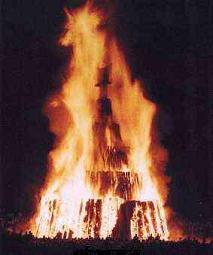
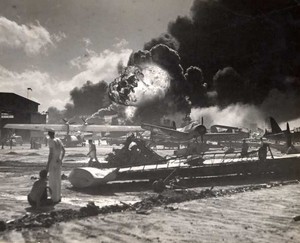
We heard the hurricanes roar, we heard the glass break and the buildings tumble, we heard the resounding crack of thunderbolts as lighting bolts flashed across the sky. The Dalai Lama descended from the sky and said, Peace does not fall out of the sky. The next thing we know he'll be telling us that money doesn't grow on trees.
Yes! Jewel-Lotus. Amen!















Dalai Lamas and Popes love diamonds, as long as they don't have to pay for them.
Back to "The Diamond is Man's Best Friend"... It is a political literary grandiose that made me admire the writing gifts of its author. I have enjoyed to learn from reading this magnificent article.
I thank the author for sharing this literary shining JEWEL.
Andre Emmanuel Bendavi ben-YEHU
Though I bit my own cheek through much of your beginning, David, I was also uneasy. Your 'kernels' of truth, however humorously presented, niggled in my mind, you dragged me into your mind... I've stopped here, at this quote, to admire a thought you so deliciously presented and of which we all know will never be; 'All' will never cooperate as one. Never. In your next paragraph, you terrorize me with your 'logic'...
""Sometimes we feel pain, sometimes mental or physical. Sometimes we deliberately take in suffering, but beneath all that there should be a deep satisfaction, and that is true happiness," he declared."
Okay, that is relatable, but, that is what the 'freedom of America' has been doing since it declared itself a freed nation... We, as a democratic nation, felt satisfaction when we conquered communistic, repressive, terroristic countries ... didn't we, don't we? Isn't that the goal? 'Good' versus 'Evil'? And that is the crux. That is the crusade of humaned flesh. Their perception of Evil.
"warring for peace is inherently absurd" - I wonder on this statement, not for its oblique truth, but for its conundrum-effect on already sterilized minds. Will it shatter them, fragment id, as in generations before?
"The bodhisattva is the 'Marine' of the inner struggle for peace; no Marine shall be left behind in the inner struggle for universal salvation. The bodhisattva will not, like the aristocratic arhat - he who deserves the Nirvana of the Hinayana or Little Vehicle of Buddhism - go directly to Nirvana. The arhat has reason to believe that salvation must be worked for, and that not everyone is capable of salvation at the same time. On the other hand, the bodhisattva will stick around and make sure that everyone goes to a preliminary, blissful realm, where all may reside until despatched to Nirvana. The bodhisattva has waited patiently for so long that he has accumulated enormous credit for his meritorious deeds, some of which he may compassionately distribute to otherwise undeserving people. Thus, like other messiahs, including Jesus the Christ, he practices magic - or if you prefer, performs legitimate miracles - inasmuch as he can give people who are otherwise undeserving a break by breaking the law of cause and effect. After all, what good is a messiah who is not free to save us from the conditions that enslave us?"
"We should be true to ourselves first of all, and to that end we should realize that we are not the fictitious "souls" and "selves" and "persons" which we create to rationalize our emotions."
I have not read your work before, David. You write beautifully, convincingly, eloquently with humor and grace. You've given me much to think upon, I wasn't looking forward to 'deconstructionism' as the topic of the next few days, I prefer your mind expansion dissertation to 'deconstructionism's' destruction of all I've thought throughout my life. And you've given more life and perspective to thoughts and ideas mentored towards me of late, of which I am still struggling with, in their immensity of space and time. Thank you for this intriguing essay.
Erin