It's a good thing that deans of journalism are focusing on the important things of the trade
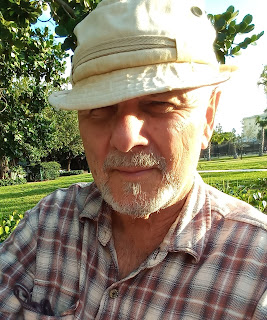
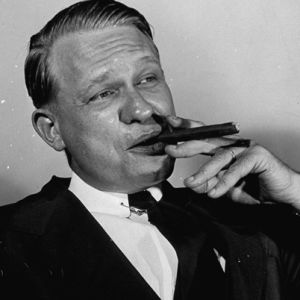
Photo by Theresa F Jodray-Koch
Lillian Lodge Kopenhaver, dean of journalism at the Florida International University, is focusing on important tools of the journalism trade such as story structure, grammar, and AP style. Since those conventions are arbitrary and often illogically contrived, I trust she encourages journalism students to be creative as well as reasonable.
Although I have not been processed by a school of journalism, it might interest journalism students and their professors to know that I have had occasion to ask for amendments to AP style. For instance, I noticed several editors abusing heavenly bodies in the year 2000. When I protested, an editor of a major daily newspaper referred me to the AP Stylebook Editor. I presented my case to him in 7,500 words, and concluded with the statement:
"Of course I understand one might use the names of our local heavenly bodies metaphorically, as in, "There are many suns, moons, and earths in the universe," but strictly speaking, the lower case is improper and is in fact a corruption of modern English and good sense. Wherefore I ask you to amend the AP Stylebook in order to bring it into accord with a consistent principle of grammar supported by the best rhetoric, dialectic, and philosophy presently available. No matter how many Goldsteins and Joneses, Topekas and Atlantas, Suns and Moons, Earths and Gods there might be in our unique Universe, I believe that you, in your capacity as Stylebook Editor, will understand that my protest is worthy of your immediate regard and response."
I proceeded by observing that the Sun is capital in the sense that our central star is the highly important "head" of our solar system as well as the principal sustainer and destroyer of life on Earth. Yet the Sun is frequently abused in Associated Press articles all over the United States of America. For instance, in an article entitled, 'Near-star planet discovery exciting' - the proper name, Sun, had not been capitalized:
"A Jupiter-sized planet orbiting a young star in Earth's 'back yard' could help reveal whether Earth, with its variety of life forms, is a unique jewel in the universe. William Cochran of University of Texas' McDonald Observatory said that finding a planet orbiting Epsilon Eridani, 'a star very similar to our sun (sic) ...is like finding a planet in our own back yard - relatively speaking."
I objected at length to the irrational and irregular AP method of capitalization in respect to the Earth, Sun, and Moon. The method does capitalize the proper name of our beloved planet, 'Earth', but does not allow for the capitalization of the name of our satellite, 'Moon', nor the name of our central star, 'Sun', not even in astronomical articles, as is recommended by Webster's International Dictionary and the Chicago Manual of Style. I refused to accept AP's standard explanation that AP merely follows the conventional standard. That specious claim is an insult to the American intelligence: the British publication of the same article appeared with the names of the heavenly bodies properly capitalized. In fact, AP sets the standard it wrongly attributes to the American public, as if the Establishment's free press were a democracy.
The AP guideline does mention the standard set forth in Webster's International and the Chicago Manual. The reference aroused my curiosity as to why Associated Press does not capitalize all heavenly bodies including the Earth, Sun and Moon as a matter of course, at least in astronomical articles. That procedure would be logical and would afford all due respect to scientists who are often misquoted when editors debase the upper case to the lower, thus erring against good grammar and abusing the dignity of the heavenly bodies.
We find many examples of the proper treatment of our capital Sun in good literature:
The astrophysicist Jean-Claude Pecker penned a fascinating little book on the heavenly subject, entitled The Future of the Sun. It's future of course is extinction, an event of little or no emotional consequence to cold, calculating science. In any case, the death of one thing is prelude to the birth of another, and vice versa, ad infinitum if you believe in indestructibility.
Now callous science is no cause to abstain from waxing eloquently on the pricks of time. Dominique Lecourt drafted a fascinating introduction to Pecker's book, pointing out that Diderot's and d'Alembert's Encyclopedie described the Sun as "the first object of idolatry." Mr. Lecourt writes:
"The Sun: symbol of power and omniscience, dispenser of life, agent of death too, a being of flesh and blood... The Sun thus holds us with untold subconscious bonds. And the poets have constantly been drawn toward this being associated with such violent symbols, though with infinite precautions. It takes the boldness of Victor Hugo to dream of its extinction:
The Sun was there dying in the abyss.
The star hidden by the mist, without air to revive it,
Was growing cold, bleak and slowly fading away.
And witness the fanciful verse of Andre Verdet:
Every star captures in reverie
A Sun in its essence.
We must note well the capitalization of the name 'Sun' in good poetry, and observe that another common editorial offense is an editor's failure, even against the poet's wishes, to capitalize 'Sun' when the name so appears in original verse. Of course artistic license provides the poet with the privilege of resorting to the degrading lower case. Wherefore, given the frequency of editorial abuse, we never know the artist's intentions in respect to the Sun and other heavenly bodies. For instance, did the poet wish to insult the Moon when we see 'moon'? And why is the Earth always capitalized? Because of the gravity of the subject? Or because humankind once clung ardently to the notion that our home planet is a unique object deserving a name of its own? After all, it is the center of the Universe simply because we reside upon it. Yet, despite that prejudice favoring our dignity, some statisticians have rational cause to believe that intelligent life exists on other planets. Even common sense recognizes the possibility of human or humanoid existence on many other planets, which would have, then, their own proper names, as would the stars about which they would orbit. Let the aliens do their own naming; and until we know what those names are, we may use the names of our own local heavenly bodies, figuratively speaking. of course, and properly capitalized.
Mr. Pecker unequivocally states:
Once it was accepted that the Sun is a star (a star whose proper name is Sun), it became necessary to resolve the question of the origin of its radiation.
He cannot resist the use of romantic metaphors:
Learning about the burning heart of the Sun, the layers of its atmosphere and the wind that perpetually snatches matter from it means opening a window of knowledge of the other stars.
The AP Stylebook Editor was apparently not impressed by my appreciation of the heavenly bodies so oft abused in America, as I never heard back from him. To whom could I appeal? Since Ms. Kopenhaver and hopefully other deans of journalism are focusing on the important aspects of the journalism trade, perhaps they will ride to the rescue.
|