From Socrates to fascism and corporate capitalism.
"When I applied my mind to know wisdom, and to see the business that is done on earth, how one's eyes are sleep neither day nor night, then I saw all the work of God, that no one can find out what is happening under the sun. However much they may toil in seeking, they will not find it out; even those who are wise claim to know, they cannot find it out." Solomon
Modern science was inspired by faithful men who believed that Nature was God's book wherein divine law could be ascertained without the help of Roman authority. Socrates, like Solomon six centuries before him, was disappointed by the natural book. The ultimate meaning of life was not to be found in the observation of external nature, so Socrates, heeding the Delphic maxim, Know Thyself, turned his gaze within. He was moved to ascertain the nature of the self, the psyche, the soul of man. He presumed the soul to be the essence or divine being of man. The human soul is man's highest good or god, a sort of microcosm of God. Since God is omniscient, a man might know all things worth knowing in the universe by knowing the self. It would seem, then, that Socrates believed in the native goodness of human beings. Still, the self must be cultivated to Good, "making it like God", the font of virtue. People who do not know themselves do not know what Good is, therefore they tend to evil. Once they truly know what is good for them, they will tend to act accordingly. Or so Socrates presumed for the sake of argument.
Plato, not Socrates, is supposedly responsible for rationalizing the 'Ideal Theory' that abstracts universals such as Good from their instantiation in sensible bodies. The followers of Hermes Trismegistus inherited the divorce, associating the One with Good and the many with evil. Hermetism is a fusion of Platonic, Stoic, and Pythagorian philosophy with aspects of Eastern religion. It's fundamental morality is dualistic despite its famed One in Many, its profession of philosophical correspondence between Heaven and Earth, and the practical intention of its magical and quasi-scientific operations. The following Either/Or statements handed down from the 2nd or 3rd century A.D. survive in the Corpus Hermeticum, and lead us to conclude that wisdom can only be had by divine revelation and not by the rationalism of Socrates and other rational Greeks.
"Wherever there is perturbation, there the Good cannot be, and wherever the Good is, there no perturbation at all can be, and wherever day is, night cannot be. Hence the Good cannot be in things that come into being, but only in that which is without being.... In this world Good becomes evil. The Good then is god alone.... (The designs of evil against you) makes senseless what me deem to be organs of sense, stuffing them up with the gross mass of matter, and cramming them with loathly pleasures, so that you may neither hear of the things you ought to hear of, nor see the things you ought to see." (Hermetica, Walter Scott, 1985)
Despite the tendencies of Platonism, Socrates was not an ascetic: he practiced Temperance, one of his cardinal virtues. Of course if a person is wise temperance should follow like night follows day. Temperance for Socrates was purportedly a sort of indifference to pleasure and pain: the leading example is his walking on icy ground in his bare feet as well as the warm floor of his home. Yet he was wise not to deem himself wise, for he did in fact have to struggle with his passions in hopes of subjecting them to strict controls; for example, before preaching Temperance, he mentioned that he was "inflamed" by the sight of a "faun" (boy) and had to curb the "lion" in himself.
The mental divorce of the unity of consciousness and the disparate senses has been convenient for our progress, for nobody is perfect: in our conduct we all fall somewhat short of our ideals. Hence it is said, "If you do not succeed, try and try again."
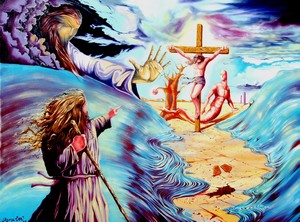
According to Christians, only one man was God - scholars have noted that "Jesus Christ was the last god to die". The body of Christ is the concrete universal - the One in many. Therefore everyone else, sinners that they are having fallen into particularity, are not entirely culpable for their mistakes as individuals: born into sin by no fault of their own, they merit forgiveness; providing, if you will, that they truly repent and mend their ways to the best of their abilities. On the other hand, puritanical idealists can be terrible taskmasters who try to force every one into a simplistic notion of the good life. Total obedience, of course, is necessary if Good is to be realized in Totalitaria.
One frequently noted philosopher, Karl Popper, hated fascism so much that he insisted Socrates was democratically inclined but his follower Plato was in effect a fascist who distorted the master's virtues to correspond with a totalitarian conception of utopia - Plato's famous Republic. But Socrates, who was hated by democrats and put to death by them, was certainly not a democrat. We can hardly blame Plato for going a few steps farther than the master, to separate and idolize ideas, archetypes, and the like, and to imagine the highest ideals realized in a utopia.
Socrates in effect had abstracted the soul as the unity of a man and idealized it apart from its particular body. Of course we are reluctant to think that Socrates himself would get down on his knees for an idle idea, or that he would have faith in the existence of, say, Tree, without the series of particular trees from which the name is derived. Absent the qualities by which we perceive them, objects would be nothing as far as we are concerned, just as "Being" is "Nothing" when stripped of its particulars - all those things with various qualities that do exist. We think Socrates' good man is an existing man, one who does good without rewards and who has no expectations of life after death but would not deny the possibility.
Socrates did say, after searching for someone wiser than he, that "Those who had the highest reputation seemed to me nearly the most wanting, but others who were thought inferior seemed to be more capable men as to common sense." He did not imply that any person with common sense is qualified to hold the high offices held by the most reputable persons presently seated in those offices. Skilled divisions of labor are necessary to maintain a relatively large population. A gladiator, for instance, might have a great deal of common sense, but he does not have the training and experience to be a competent governor of an ideal republic at least.
|
Socrates observed that craftsmen were wise in their limited spheres to the requirements of their respective trades, but they knew very little of their own limits as human beings. He appreciated and admired skilled artisans, craftsmen and other workers. His family's tutelary god was Daedelus; his father was a sculptor; Socrates probably practiced the art as well. We know he was an accomplished soldier. We are not surprised to hear that he often used examples from the practical arts to induce propositions to see if they might be generally applied as deductions. Of course he was preoccupied in the main with the general definitions of universal qualities, particularly the ethical ideal we call Good, that he might lead a virtuous life. He did not presume to press his ideas on others: he believed that anyone who made the same inquiry would find the universal good in the final analysis. Wisdom on that count is the ultimate goal of philosophy. Once a person wises up, all virtues would automatically follow. In fine, the good soul is wise hence virtuous.
The problem with Good, it we really want to get down to brass tacks instead of feeling good about ourselves for our own good, is in the particular cases - the devil is in the details because they all have the defect of being details in the first place. That is why "g-d" must be "ineffable" as far as some wise men are concerned: descriptions, qualities, predicates, aspects - all would limit, defile, and ruin the unlimited, so the unlimited must be unknown except to mystics. Good is a quality of something and is not something standing alone or by itself. Qualities such as red and blue, salty and sweet, are common to many particular things; wherefore I posit that a particular is a unique coincidence of universal qualities: the particular itself is a concrete universal. Good and evil are moral qualities of qualities, or rather names for pleasurable or unpleasant experiences associated with concrete and abstract objects of thought.
We play the Name Game: we really don't know the thing in itself. A thing is named and we call the name a noun. If it moves we name its action and call that name a verb. We could call the verb an adjective since the motion of the thing is a quality of the thing, but we like to keep verbs separate from other adjectives that are the names of qualities. Adverbs are names for the qualities of actions - adjectival verbs, and so on and so forth. Since we are not professional philosophers, we may boldly risk of being called mediocre thinkers, and say that Good is a name for the goodness of all goods; and that without those goods, Good would be nothing at all if not a pleasant feeling of uncertain cause.
The perceptions of qualities vary from person to person, and even the more so when the object described is abstract. Socrates thought virtues such as courage and temperance are qualities of a singular wisdom. But what is that wisdom besides another good quality of Good? Many of us are not inclined to accept someone else's good hence oversimplified definition of the good life. The majority of 'civilized' people might agree on a few "Thou shalt not or else" commandments; even so, lying, cheating, stealing, and murder have been and still are considered an honorable way of life in one culture or another - the ruling classes tend to legalize their crimes. Yet even those who accept the definition of good and all the virtues that follow, might not, as Socrates believed, do what is good for them. Indeed, man's infamous propensity to evil blows the lid off the main premise of Socrates ethics, that evil is simply the result of ignorance, that, if he only knew what Good was, he would do good. In fine, Good is a social concept, and individuals seldom fully agree.
Men and women in all cultures can do a great deal of relative, practical good in the sense of being useful and accomplishing their objectives. The political problem of the day, as Socrates saw it, was that democrats at the time believed that a common man, say, a carpenter by trade, was expert enough in moral affairs or had a moral sense of justice and righteousness sufficient enough to govern himself. After all, as is stated in Plato's Protagoras, Zeus himself had once declared that nearly every person has the native sense of justice required to get along in society; antisocial people who do not possess it deserve to be put to death or exiled. Plato's Protagoras was, by the way, a fictitious: the real Protagoras was not the ethical relativist Plato made him out to be - the absurd antithesis to Plato's absolutism.
Now a good and pious carpenter might very well believe that his expertise extends from carpentry to morality and politics. Not so, insisted Socrates. He might be intelligent and relatively well informed, but his carpentry does not leave him sufficient time to become an expert in another occupation. Intellectuals of other ancient cultures agreed on that point: we find this in the Apocrypha of King James Bible:
"All these (workers) trust to their hands: and everyone is wise in his work. Without these cannot a city be inhabited: and they shall not dwell where they will, nor go up and down.: They shall not be sought for in publick counsel, nor sit high in the congregation: they shall not sit high on the judge's seat, nor understand the sentence of judgment: they cannot declare justice and judgment; and they shall not be found where parables are spoken. But they will maintain the state of the world, and all their desire is in the work of their craft." (Ecclesiasticus 38)
As we can see for ourselves, the most accomplished statesmen are made and not born, and are few and far between. They are at the same time self-made and made by others. Socrates believed only fools would choose rulers by lot instead of skill, and he dared to say so to those so chosen. Overturning the tables at the political temple, he said the Assembly was an assembly of "dunces and weaklings, fullers, cobblers, joiners, smiths, farmers, merchants, traffickers in the market whose minds are on buying cheap and selling dear ... men who have never given a thought to public affairs."
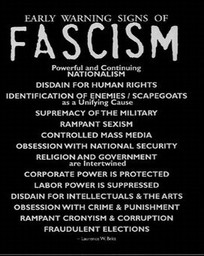
No, Socrates was not a democrat. Nor was he a tyrant. He was a rational spiritualist, an aristocrat of the mind who believed it was fitting and proper to side with the truth wherever it might be found. He was, in a manner of speaking, a frustrated intellectual. Socrates fathered Platonic thought: Mr. Popper made some fine points about the dangers of absolutism, which took the form called 'Total' with the rise of fascism and Nazism. Mr. Popper was mistaken only in acquitting Socrates of being the father of the line of Western thought that led to corporatism and fascism, which is of course a phase of modern development - critics used to call fascism the perfection of capitalism. "Fascists" have donned modern garb; there are many killings but in a much nicer manner and with noble purposes such as saving the world for corporate capitalism. Their atrocities are cloaked by legality and generally accepted as the wise thing to do by most of the "brainwashed" populace, which has been totalized by individualism.
Frustrated intellectuals may side with ordinary people when the status quo is shaken, but their love of rational order usually compels them to take up a more or less dictatorial habit once they have their way. Placing the scribes or the bookkeepers and book writers in the highest seats of power can be a prescription for tyranny over multiplying bureaucracies. As a matter of fact, Socrates did not want to be a politician or to hold high offices. Yet he was an associate of politicians, some of whom turned out to be murderous, much to his later discredit with the democratic majority that sentenced him to death; he preferred a righteous death to hypocrisy and exile from his beloved Athens. We admire him accordingly but we would worry greatly if a statesman fanatically applied such firm convictions to others in order to make them good; that is the duty of the Socratic statesman, to craft citizens.
To Be Continued
|