‘Find out what a man's made of. A person's character means more than his financial statement." William Thornton Kemper
Serious allegations were made about the conduct of the top officers of one of the banks controlled by Kansas City's Kemper family dynasty, allegations that raised questions about their character as men and bankers, and, since the Kempers have a reputation for stellar integrity, give us present cause to wonder if we can trust the Trust Department anywhere.
The Kansas City Star, in an article dated March 12, 2004, revealed that a fired UMB bank auditor by the name of Jeff Whitman alleged in a lawsuit that he was fired because he reported the improper sale by UMB - as trustee for the estate of artist Thomas Hart Benton - of three of Benton's lithographs to a UMB director, Richard F. Jones - also the CEO and president of Fidelity Security Life Insurance Co. - for less than half to one-third of the lithographs' market value.
It is alleged that Rufus Crosby Kemper, Jr., UMB board chairman, grandson of W.T. Kemper - patriarch of Kansas City's Kemper family dynasty - approved of the transaction. The plaintiff alleged that senior UMB managers informed his audit group that reporting the transaction "could be detrimental to the careers of those who participated in the report." When the plaintiff went ahead and approved the report, which was forwarded to banking regulators, he was given the choice of resigning or taking an entry level position - he took the entry level position and was fired sixteen months later. His lawyer Scott C. Long says that his client has been unemployed two years since he was fired, unable to get a job.
R. Crosby Kemper III, board member, president, chief executive officer of UMB, son of Crosby Kemper, Jr., dismissed the less than fair market value sale to a fellow director as a "technical violation of banking regulations," but said that Whitman's firing had nothing to do with that "issue" (problem).
Benton's lithographs are often displayed by the United Missouri Bank as a prestigious form of advertisement; for instance, several of Benton's lithograph's appear in UMB's vanity book about the rise of the Kemper family's fortune. The book points out that William Allen White extolled the virtues of the family's patriarch, William Thornton Kemper, after Kemper's death in 1938, holding him up as the model of the successful American businessman: "In the last 300 years in this country there have been 10,000 Kempers.... Thank heaven, nothing has happened to America to keep her from repeating the pattern," quoth White. As a matter of fact, the Kempers, who control banks with more than $22 billion in assets, are credited with establishing "sound banking" in the region, and said "sound banking" was defined by them in part by the following of certain banking principles and regulations.
Now it does appear that the admission of the sale amounts to something more than a confession of a mere "technical" violation of banking regulations, especially if those sales were for half or less of their fair market value; for what person in sound mind would trust a bank with its assets if the controlling interest in that bank were disposed to sell them to friends and insiders at much less than their worth?
Indeed, it appears that R. Crosby Kemper III has admitted to an offense that would be much more grievous than dismissing someone for insubordination if that disobedience had not been for refusing to conspire with bank officers and directors to violate federal law. The revelation of a minor infraction in that respect might give regulators due cause to wonder how often orders to omit or to conceal might have been obeyed in the past because subordinates feared for their jobs.
As for ruining someone's career no matter what the provocation, the immediately available records do reveal a slight pattern of that sort of conduct. Harry S. Truman complained of something similar in an unsent letter dated September 5,1962 to Crosby Kemper, Sr.
"I have been reliably informed that you have been putting pressure on and making threats to some of my good friends, regarding the campaigns in the state of Missouri, particularly the one for the Senate. Now Crosby, I don't like that sort of thing. In one instance you have ruined the political prospects of one of our good young Democrats, by threatening to take his living away from him. You got him working for a "Republican Kemper."
Senior's son Crosby Kemper Jr. had broken away from Kemper family's Democratic tradition because he was "very disappointed by our national trend toward Fabian and Marxian socialism." This political break was allegedly not appreciated by Crosby Kemper, Sr. In any case, he wanted his son in banking. Bitter arguments ensued; however, Truman suspected Senior of backing his son for Republican office. In 1962, Crosby Kemper Jr. ran for the U.S.Senate as a right-wing Republican and was defeated.
His son, R. Crosby Kemper III, a right wing Republican, followed in his father's footsteps: he ran for the state senate in 1980 as Republican nominee - he was defeated. The Kansas City Star (3/15/01), quoted Crosby Kemper III as scoffing at the popular notion of a "nefarious right wing conspiracy." He was a member of the business advisory board of the neoconservative Federalist Society for Law and Public Policy Studies, a right-wing organization of extremely strong ideologues who stood for a rollback of gains in civil rights, protection of the environment and privacy; members of the group took pivotal positions in the Bush Administration.
As for Truman's allegation to Crosby Kemper III's dad, that his friends had been threatened by the Kempers, the vanity book published by Crosby Kemper's United Missouri Bank claims that Truman was "misinformed." Moreover, "It had angered Truman that a Kemper was seeking a major public office on a Republican ticket. Truman had become furious when he erroneously believed that the Kemper family and the bank were putting pressure on a Democratic lawyer to work in Kemper's campaign. Truman, acting on the incorrect information, penned a letter dated September 5, 1962, to Crosby (Kemper) Sr. Unfortunately the author of the book provides no evidence or references to support the claim of innocence - see Building a First Class Bank - The Story of United Missouri Bank, by Brent Schondelmeyer, Kansas City: UMB Bancshares 1986.
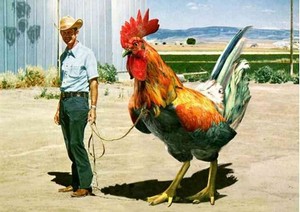
It does appear that Senior's son Crosby Kemper, Jr. has a long-standing reputation for family disputes, disagreement with his peers, displeasure with local government, and the like. He described himself as "an exhausted rooster" in a Kansas City Business Journal article (July 17, 1989). His success in banking was attributed to "consistent vision," concentration of fee income, minimal real estate lending, no foreign lending, and trust operations. Unnamed Sources said that he was arrogant and irrational, that he flew into rages and was untouched by his peer's criticism. A former employee said one must "say something nice or nothing at all" to him. Furthermore he was described as monarchical, a sort of control freak who insisted on approving every loan no matter how small. And he had a reputation ruining people's careers with little provocation.
Kevin Collison, star business reporter for the Kansas City Star was so glad to see Crosby Kemper III at a recent meeting of the Economic Development Corporation that he "applauded" him in his report (12/2/2003) for even showing up, and wrote, "Too often, major players prefer to work behind the scenes rather than take a public stand a speak out." We certainly hope that the free press in whom we place our trust to look into what really goes on behind the scenes is doing its job fully by conducting independent investigations into the conduct of the power elite, for we are standing by for more useful information on this case and others.