How could a queen be an average woman?
The title of Stefan Zweig's bestselling biography Marie Antoinette, The Portrait of an Average Woman, gave bookshop browsers cause to wonder: How could a queen be an average woman? We turn to Zweig's postface for an answer:
"Not to idolize, not to deify, but to humanize, is the supreme task of creative psychological study; not to excuse with a wealth of farfetched arguments, but to explain, is its true mission," Zweig explained. "That is what I have attempted in the case of a woman of average character, who owes her long-lasting influence to an incomparable fate, and whose inward greatness was but the outcome of unprecedented misfortunes. My hope that, in default of all exaggeration, this character will arouse the sympathy and enjoy the understanding of the present because she was of one flesh with ourselves."
Marie Antoinette, an average woman, a human being. Stefan Zweig the humanist was of course keenly interested in humanism: for instance, he wrote an excellent biography of the great pioneer of humanism, Desiderius Erasmus, whom we might describe as Zweig's adopted spiritual master. The following lines from his Erasmus provide us with considerable insight into Zweig's personality:
"Erasmus was a master of the gentle art of turning aside from everything that might be unpleasantness to him, and he could keep his personal free intact no matter what garb he wore or what discipline he was compelled to obey." Moreover, "(W)henever an issue became serious he slipped away out of the danger zone... (he) could remain faithful to no one but himself. Instinctively he avoided making any decision because by doing so he would be bound."
"(It was) not for (Erasmus) to carry his independence, his 'nulli concede', like a monstrance before him, but to hide it as a thief's dark-lantern beneath his cloak. He crept away into corners and on to devious paths during the wildest outbursts of popular madness; but - and this is what proves of greatest importance - he kept his spiritual treasure, his belief in mankind, intact and brought it safely out of the terrible storm of hate which rages around him; and it was from this tiny flame that Spinoza, Lessing, and Voltaire, not to mention all the 'good Europeans', who trod the same road, were able to kindle their lamps."
Stefan Zweig, a staunch pacifist while other pacifists like Bertrand Russell were advocating war, avoided confronting the Nazis. He set up his final camp in Petropolis, Brazil, where he eventually despaired and committed suicide with his wife; wherefore his legacy has been obscured by criticism of his pacifism and his unseemly end. It seemed that the war proved that his ideal, of European unity, would never be achieved by pacific means, just as Erasmus' cosmopolitan argument had been disproved centuries prior, and that he had lost faith in the coming dawn.
Zweig was an Austrian Jew, and as such he was duly alarmed by the Italian fascists and German Nazis as they rose to power, yet he laid relatively low when pressed by Jews to lend his powerful voice to the resistance. His rationale: the ceaseless verbal attacks on the Third Reich had begun to lose their effect because people were bored by the repetition. Furthermore, the constant focus on the Jewish question did not attract the attention of potential allies in other countries where the question was not so pressing. And, he felt that more could be accomplished by addressing the general causes of the fascist plague than by addressing its particular symptoms. He later regretted his silence in regards to Russia, but he upheld his overall strategy.
"So much has changed," Zweig wrote to Rene Schickele in 1940. "I see that I was too indulgent towards Russia, which invented psychological terror and the propaganda machine, instruments which now cross Germany like a steam roller. I simply think that it is our task, not like the journalists and polemic-writers to attack every single manifestation, but to proceed against the causes themselves. I have made an attempt with my Erasmus, the man who defends himself firmly against every form of fanaticism, against every attempt to reduce thought to a common norm."
Although he had supported the Great War (WW I) early on, Zweig, like Tolstoy, was a radical pacifist. That is, killing other human beings for any reason whatsoever is wrong, is gross injustice. It is better to suffer an injustice than to do one. A life that must be killed for is not worth living. It is better to be killed than to kill. His letter continues:
"We are a very few, who occupy the most thankless and most dangerous post - in the middle, the no-man's land between the trenches, the non-combatants who do not shoot but continue with the plowing. What holds us together is not to be seen, but is thereby perhaps a strong link than slogans and congresses; and a secret feeling tells me that we act rightly if we remain true to humanity and renounce the temptation to take sides."
He was a keen student of the new psychoanalysis, augmenting his biographies with depth psychology. He wrote a trilogy of essays on the great 'psychic' leaders, Mesmer, Mary Baker Eddy, Freud. Freud was fond of Zweig's work although he had reservations about his comparatively amateurish psychoanalytical techniques and his slighting of the principle of association. Of course Freud, if anyone, ought to know what a self is; he did not arrive at a final conclusion about his own self, with whom he was most intimate, let alone anyone else's self; he maintained a skeptical, scientific attitude even after the final analysis, which was never really final. He warned Zweig of the futility of biographical projects in a letter dated May 31, 1936:
"He who undertakes a biography commits himself to lies, dissimulation, hypocrisy, lack of comprehension; for biographical truth is not to be had, and even if one did attain it, it would be of no value."
Stefan Zweig already had fame and fortune, but he believed that he had fallen sorrowfully short of his exalted artistic ideal of literary perfection, and that he would not have enough time to realize it. He was exceedingly anxious about his age. On his fiftieth birthday in November of 1931, he felt "that typical crisis of the fifties... in which one feels one has lived one's life wrongly." Today many unemployed, middle-aged, middle managers feel all washed up at fifty. The youth culture of our own day can perhaps sympathize with young Marie Antoinette's conduct when she became the fashion-setting Queen of Rococo:
"Scarcely had Marie Antoinette settled into her bright and cheerful abode, when she began to ply a new broom," wrote Zweig. "The first thing was to get rid of the elders, for old people are wearisome and ugly.... They were continually preaching foresight and thoughtfulness, whereas the Queen had had more than enough of leading strings and lectures in her days as Dauphiness."
Why did Zweig write a biography of Marie Antoinette? After all, Zweig had penned Erasmus. That biography certainly might be deemed a sufficient Erasmian answer to Hitler, a more demonic Luther - Erasmus failed to achieve his ideal too, as Luther plunged the world into bloody discord. Yet Zweig said that he longed to write "something that could bring inward hope, something inspiring and satisfying...." Wherefore he wrote Marie Antoinette, an internationally acclaimed biographical novel. We might say, figuratively speaking, that it was an autobiographical novel to some extent, and that Zweig might say of Antoinette, like Flaubert said of Madame Bovary, "C'est moi." Marie Antoinette and Stefan Zweig, two bourgeois butterflies, very much wanted to escape into their respective fanciful spheres. Zweig's united European utopia was more intellectual and cosmopolitan than Antoinette's immensely pleasurable, parochial Trianon, but what is the ultimate difference provided the escape from reality is made good? Both flew vainly, so to speak, about their egos, both were crushed by overwhelming circumstances. Yet, in the final analysis, Marie became, albeit unwillingly, a dignified and courageous queen, giving due credit to her social role, while Stefan bowed out, we might say, for personal, not public reasons.
Zweig's biographer, D.A. Prater, in European of Yesterday, claims that Zweig did not approach his stated aim for Marie Antoinette, to inspire his contemporaries; that, in fact, the biography escaped the troubled times by means of a flight into the past, into the French Revolution.
"In reality this was self-deception," opined Prater, "and we search in vain for any sort of message for the times, however indirect, in a work which, paradoxically, was to be one of his most popular."
Marie Antoinette is an "intuitive" biography, an extensive and repetitive prose poem on the feelings and thoughts of a frivolous yet tragic queen who was the epitome of spoiled bourgeois mediocrity. Her behavior today might cause her doctor to prescribe Ritalin for attention-deficit, hyperactivity disorder characterized by inattentiveness, difficulty concentrating, underperformance, impulsivity, trouble meeting deadlines, procrastination, poor planning skills, a quick temper – witness the beginning of her downfall with the arrest and trial of the most eminent cardinal, Cardinal Rohan, in the Diamond Necklace scandal).
"Sitting still... listening, reading, reposeful thinking, and even (in some measure) sleep, were an intolerable tax upon her patience," Zweig explained. "She liked to buzz hither and thither, to be always beginning some new task which she would never finish, to be continually occupied without a serious exception; she loved to feel that time was not standing still with her, or that she was out-running time. To be quick at her meals, content perhaps with eating a sweetmeat or two; to sleep only for a short time, never to think long, to be perpetually on the go, frittering away her days - such were her desires - the twenty years, or rather less, during which Marie Antoinette was Queen were characterized by an unceasing movement in an orbit around her ego. Since, outside this orbit, she had no goal, nor any inward conviction of an aim, from the human and political standpoint she was circling in the void."
Furthermore, Marie Antoinette is a tribute to a queen who eventually did rise to her royal dignity, but much too late despite the excellent advice of her mother:
"Your luck will not last forever," wrote Empress Maria Theresa to her beloved daughter, "and by your own fault you will be plunged into the depths of misfortune. The trouble arises because you lead a terribly dissipated a life and never apply your mind to anything. What books have you read? Yet you venture to thrust your finger into every pie, to meddle with affairs of state, with the choice of ministers! ... You will recognize the truth some day, but then it will be too late."
Her brother, Joseph II, also warned her: "In very truth, I tremble for your happiness, seeing that in the long run things cannot go on like this.... The revolution will be a cruel one, and perhaps of your own making."
Joseph visited France "incognito" - the crowds following him around knew very well who he was. He did what leaders in all walks of life should occasionally do: he came down from his high office and walked the streets in order to find out what was really going on instead of relying on hearsay and second-hand reports. Emperor Joseph found out what was going on in France: traveling without security, he visited infirmaries and served soup to the inmates; he sat in at the Academy and audited the Parliament of Paris; he associated with boatmen, shopkeepers, and craftsmen. If his sister the queen had done the same, she might have kept her crown and been idolized by millions of Frenchmen. At the very least she could have mingled with the nobles and other powerful people and gained their support. But no, she wanted to live her life pursuing happiness, unhindered by the crowd and ancient tradition. And she might have gotten away with if but were it not for her meddling in state affairs, arbitrarily appointing officials to please her coterie of personal favorites. Women, even queens, were not supposed to meddle in the men's world; even so, some noted critics insist that she should have done even more or at least she should have acted differently; in fact, she was damned no matter what she did or did not do, and, as afar as she was concerned before her gruesome end, she had really done nothing wrongly.
"I defy the universe to show that I have done anything wrong!" exclaimed Antoinette. As a matter of course, the show goes on to this very day.
Stefan Zweig has been criticized for his biographical exuberance, for overdoing his biographies. His Marie Antoinette is oft criticized for its sheer redundancy. Indeed, readers of this wildly popular autobiographical novel may pause and wonder why they are so fascinated with so much ado about the queen's experiences, personality and character - the adjective, 'redundant', certainly comes to mind. But persons who are compelled by their personal interest in persons pick up the book and start reading again. After all, we are creatures of habit, and most of our lives are more redundant than novel.
And who would not want to live vicariously with Marie Antoinette for a spell? That is precisely the novel's charming allure. Zweig deceives us: he is a mesmerizer of sorts. And he gives us an exalted view of human nature even at its worst. Even during the Terror, even in terrible times, the artful spirit gives wings to the imagination, that it may soar above the horrible scene, the obscene; wherefore we see an alternative to the real in the reality of the imagination, which might, in turn, be realized, if only we will, and will we will.
The murderous mob can kill our bodies but not our souls providing we take no part in the mob and thereby narcissistically lose our selves in it. Sometimes we need to escape into the imaginary when the real is overbearing. Alas, Marie Antoinette was apprehended and beheaded after she learned her lesson. Stefan Zweig actually escaped, to the Americas, where he executed himself. He, like his hero Erasmus, was an oversensitive man, a man who would rather suffer violence than do violence. He knew WW II was coming, and, for him, war was inherently evil; therefore one must run away to do well elsewhere, or stay and be a martyr; the latter would be a waste of good talent which could be applied pacifically elsewhere. For Zweig it did not matter which side of violence someone was on: violence in itself was dead wrong. Zweig suffered grievously albeit vicariously for the homeless, the dead, the wounded on all sides. Wealthy, acclaimed worldwide, safe in England, then North and South America, he still felt that he was a homeless, wandering Jew. He missed Europe, especially his beloved Austria.
South Americans loved Zweig. They were proud of themselves when he honored their countries with his presence - his lectures were sold out. He found sanctuary in lovely, exotic Brazil. However, the horrible news from abroad; the feeling that his European past was destroyed; the absence of his library; the belief that he did not have enough time left to achieve greatness as an artist; - all this and more depressed him. Even the Carnivale in Rio failed to lift his spirits. Approaching sixty years of age, thinking sixty was much too old; he committed suicide in 1942, taking Lotte, his ailing wife, with him.
"... After one's sixtieth year unusual powers are needed in order to make another wholly new beginning. Those that I possess have been exhausted by the long years of homeless wandering. So I hold it better to conclude in good time and with erect bearing a life for which intellectual labor was always the purest joy and personal freedom the highest good on the earth...."
Thus reads one paragraph of the suicide note that stunned intellectuals in the civilized pockets of the world. Zweig's suicide was unexpected at the time, yet we can see it coming in retrospect, even ten years prior to the event: he was afraid of becoming old and weak. Many intellectuals believed that Zweig had lost hope for a dawn after the darkness, that he had, in effect, caved in to the fascist oppressors. They might be mistaken: Zweig's cause was self-centered, centered in the free ideal self; for him, the truly free and independent man is the highest form of humanity, and he felt his freedom and independence slipping into the darkness. He could not stand invasions of his privacy or hindrances to his exercise of personal liberty. That is what saved him from the Nazis: after his apartment in Salzburg was subjected to a merely pro forma search by the Austrian authorities under pretext of looking for machine guns supposedly hidden somewhere by the radical workers' Schutzbund organization, he packed up and left for London; once safely in London, he gave notice to the Salzburg authorities that he was relinquishing his residency there. But his undying love of self-defined personal freedom eventually killed him, for, according to some Stoics, suicide is the ultimate expression of personal freedom.
To a certain extent, like his famous femme fatale and average woman, Queen Marie Antoinette, whose high rank made her free for a brief but fatal spell, Stefan Zweig was living for a summer palace, his very own Trianon, or for an ivory tower to heaven on similar, naturally contrived grounds.
"(At Trianon) she wanted to live her own life without hindrance; to be nothing but the spoiled, honoured, and uncontrolled young woman who, busied among a thousand trifles, forgot everything else; forgot her realm, her spouse, the court, time, and the world - and, often - perhaps these were her happiest hours - forgot even herself."
Almost every thoughtful writer will tell us that he needs plenty of 'leisure', that is, time unhindered by reality, time to think things over, time to write. A family cottage near Rouen, not to far from Paris, such as Flaubert had, would do nicely; Flaubert even kept his Muse, Louise Colet, one of the most beautiful women in France, at arm's length - passionate muses have oft complained of being put off by their lovers' mental onanism. Zweig loved his friends when present but he could not wait to get away from them after a brief visit. Writing like other forms of work is an escape, a distraction from reality; it is at once a complaint about reality - else why bother with it? Zweig had a paradise in Petropolis, Brazil; however, while Marie Antoinette, on the one hand, would not at first let bad news reach her, Zweig read his letters and the papers all along the tragic path, and he was sorely grieved by the woeful and awful stories, especially by the deaths of his friends. Furthermore, he could not stand his isolation in Brazil, so far from the 'united Europe' of his dreams - and he believed his most important tool, his precious library in London, had been destroyed.
Even Paradise can be hell, a virtual prison to an sensitive, imaginative person. Unfortunately for those whom he left behind, Zweig did not respond to his virtual prison as Marie Antoinette, "whose inward greatness was but the outcome of unprecedented misfortunes," responded to her real one. She, the apotheosis of embourgeoisement, the virtual goddess of a materialistic culture that every independent intellectual arising from that base mediocrity learns to despise, was at bottom a noble woman: after botched escape attempts, she resigned herself heroically to her fate, but she showed no despair - she displayed utter contempt for the "national razor" and for those who wielded it until their own heads were chopped off the the blood caught in pitchers to be sold as a health drink.
What has not been done for Liberty to the detriment of human happiness? Who is this Liberty adored by Marie Antoinette, by her biographer, by the French nobility, by the bourgeoisie, the proletariat, the peasants? If she loves them all, is not murder and suicide in her name blasphemous and absurd?
"The executioners have wheeled away the body in little hand-cart," wrote Zweig, "the head thrust between the legs. A few gendarmes are left to guard the scaffold. No one troubles about the blood which is slowly soaking into the ground. Except for the gendarmes the only spectator left in the Place de la Revolution is the Goddess of Liberty, motionless, petrified, looking out as before (the beheading) into the distance, towards the invisible goal. Of the happenings that morning in the square she has seen and heard nothing. Severe of aspect, disregarding the savageries and follies of mankind, she contemplates the eternal distance. She knows not, nor wishes to know, the deeds that are done in her name."
Stefan Zweig's self-execution was absurd, and, after he committed himself and his wife to it, he must have regretted the decision very much, yet he went ahead with the plan conceived, as a stubborn, stoical exercise of will-power. He must have been overcome by his strong imagination and by a despairing Romantic temperament; Romantic aesthetes tend to withdraw into and suffer art for its own sake; nothing, except perhaps the primordial good old days, is good enough for them, as imaginary Beauty dissolves and recedes into the infinite nothingness.
On the other hand, authors who survived the death camps went on to write excellent books. Renowned authors endured excruciating pain in their later years and wrote excellent books; for instance, both Sigmund Freud and General Grant had terminal oral cancer. No, life is not over at sixty as long as one is still alive. Histories have been written by eighty-year old authors. No doubt most authors could survive fame and fortune and sanctuary in Brazil at sixty years of age, and still crank out a few good books. Write or die. Zweig felt he could no longer write. This portion of Zweig's suicide note is most meaningful:
"... Intellectual labor was always the purest joy and personal freedom the highest good on the earth...."
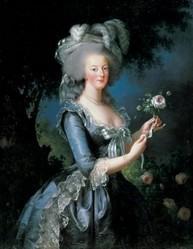
Aristotle remarked, in the text his posterity named 'Metaphysics', that the most impractical or useless endeavors are the highest or most valuable endeavors. Both pure scientists and theologians might agree. We note that no sooner does man get a few bites to eat than he turns his mind to higher things; observe for instance that even starving children in famine stricken regions make toys out of junk to play with before they grow too weak to do so, and die. Puritanical persons fear that man, if left to his own devises, is lazy, originally guilty of deadly, sinful sloth, wherefore he must be run out of paradise and regularly beaten with a stick, or nothing much will get done. They underestimated the restless, creative power of men and women when left to their own devices, even when they are well fed. Some write books while others have their hairdressers adorn their heads with ships sailing the seas or with revolutionary scenes replete with castles and canons.
"I am terrified of being bored," Marie Antoinette said. In these words Marie Antoinette summed up the whole attitude of her generation and of the society in which she moved. Methinks our generation knows how she felt.
# #