I. Forgiveness Leads to Tennessee
When one thing leads oneself to another, one hardly knows where one might wind up. My study of the concept of forgiveness in the stacks of Hamilton Library led me by means of various winding roads to the correspondence of Andrew Jackson. I had gone from therapeutic, or feel-good forgiveness, to forgiveness that requires reconciliation with the forgiven before he is executed, to the forgiveness of presidential pardons. I noted a report stating that President Bush, Sr. based his pardon of certain persons involved in the Iran-Contra affair on a tradition hailing back to the pardon of the notorious pirate Jean Lafitte by President Madison upon petition of General Jackson. Once Jackson became president, he was accused of selling presidential pardons. And thus I found myself sitting on the cold library floor thumbing through Jackson's correspondence for a reference to pardons.
I was enjoying myself immensely while sitting in the stacks, for Andrew Jackson is one of my favorite historical notables. And there is something that draws me to the history of Tennessee. Perhaps some of my ancestors from the Campbell clan were there in the early days. However that may be, the collected correspondence of Andrew Jackson that I was perusing during my research on the various meanings of forgiveness had no index, hence I had to resort to eyeballing the pages for the word "pardon." I was soon distracted by a letter written by General Jackson's wife Rachel while he was marching south with his Volunteers to save the young nation during the war of 1812.
"My blessed Redeemer is making intercession with the Father for us to meet again, to restore you to my bosom, which every vein, every pulse beats high for your health, your safety, and all your wishes crowned. Do not, my beloved husband, let the love of country, fame and honor, make you forget you have one. Without you, I would think them all empty shadows. You will say this is not the language of a patriot, but it is the language of a faithful wife." (January 1813 Letter to Mr. General Jackson from Mrs. General Jackson)
II. Country, Fame and Honor
"Do not, my beloved husband, let the love of country, fame and honor, make you forget you have one."
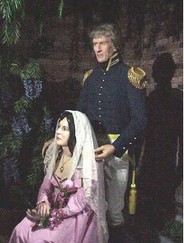
That single statement spoke so eloquently to my heart and mind that I wanted to know more about Rachel Donelson Jackson. I had heard of her before, as the wife behind the great man, but I had neglected the greatness of the very woman whom Jackson said was the "stay and solace" of his life; after her death, he called her a "sainted woman", cherished her Bible, and prayed to her before her portrait. As my study progressed, I realized I had neglected her because her greatness is common to many ordinary women who have been taken for granted and virtually ignored. That is something "Mr." Jackson did not do, take "Mrs." Jackson for granted - they were old-fashioned: they did not call each other by their first names, but used the respectful titles.
Mr. Jackson honored Mrs. Jackson. We notice the word "honor" in her letter. It was much more than an old-fashioned word then: it was a high standard under which men had been sacrificing their lives for centuries, an expression of man's ultimate dignity. Yes, we are familiar with the history of chivalry and its noble precepts including those regarding the fair sex. We know the romantic knight honors his damsel and shields her from distress after rescuing her from the evil prince's clutches. We also know how terribly short man has fallen below his romantic ideals: the damsel might have been better off with the evil prince. Nevertheless, without ideals to modify the means, the human race shall not fare well.
Chivalry and its code of honor were very much alive in the South. Along the Cumberland where the Jacksons lived, it was the initial civilizing influence. Lives and fortunes depended on close-knit, loyal relationships, all the more so when the structure was hierarchical and there were not many positions at the top. True gentlemen, mostly lawyers in Jackson's neighborhood, settled their differences over points of honor with duels; a man is more disposed to gentlemanly conduct when he might be challenged to a duel.
One point of honor was a woman's honor, and that issue was often raised as part of a provocative formula, sometimes merely to create a vacancy in an important office which a loyal friend would be glad to fill. Mr. Jackson, a notorious dueler, kept his pistols ready to defend Mrs. Jackson accordingly. Yet defending Mrs. Jackson's honor by dueling and by otherwise honoring her was not a merely chivalric formality: honoring Rachel was his pleasure because she was in fact his glory, his pride and joy.
"Do not, my beloved husband, let the love of country, fame and honor, make you forget you have one."
Of course there were the competing glories, of fame and fortune in reference to his country, that often took Mr. Jackson away from home for long periods of time while Mrs. Jackson managed the Hermitage, the plantation they called their "farm." That was no easy task; it was a considerable enterprise for a lonely woman to run and she ran it well. She was the faithful "oeconomicus' or housekeeper we see revered on ancient Roman tombstones: Mr. Jackson said her economy saved him from ruin; he recommended that wifely virtue to young men seeking wives. She had plenty of company at home--her adopted children, the neighborhood children she loved to have around, and the servants--but she wanted her husband most of all. She was lonely.
Of course, Rachel traveled with Mr. Jackson occasionally--she visited New Orleans with him, lived with him in Florida when he was governor there, and so on--but she was most often at home without his company, knowing his life was frequently at risk, and yearning for the day her husband would come home to stay for the golden years. She turned to God with those prayers in the little church Mr. Jackson built for her on their property--he promised he would join her Presbyterian faith when he retired from politics. She also prayed that God would forgive her detractors, for as her husband rose to the presidency she became the subject of one of the most dishonorable campaigns of vilification in United States history, one that Mr. Jackson could not resolve with his pistols given the circumstances: he had to resort instead to the "Whitewashing Committee."
III. Backdrop to Slander
Why was Mrs. Jackson villified and hated?
First of all, she was villified by the Adamsite propagandists in the 1828 campaign and hated by those who wanted to believe the propaganda simply because she was married to Mr. Jackson, just as the first or political cause for villyfying and hating Mrs. Roosevelt and Mrs. Clinton was their guilt by intimate association with their respective husbands.
The Adamsite party's candidate, John Quincy Adams, had an impeccable personal reputation, but he was unpopular: he seemed as cold as a frozen aristocratic codfish. And, although Adams had supported the war of 1812 and was considered a "democrat" by the Federalists for doing so, expansionists feared he was going to give away the Northwest to the British. As for his party, he was considered as one of the few reputable people in that faction, which was named after him--the term "Whig" was not considered applicable to his party at the time, a term then more aptly associated with those who opposed the Tories in the Revolution.
On the other hand, General Jackson was a very popular national hero with a reputation for saving the expanding nation from invading aliens and un-American occupants. His democratic credentials were outstanding; in fact, his plan to extend the franchise was fueling the democratic scare that caused the vested interests to rage in their northeastern offices. The broadened franchise would not include blacks; however, General Jackson's enemies played the race card only once, pointing out that Jackson was a slaveholder, and never again for they feared that the democratic stampede might be aggravated rather than impeded.
Therefore, lacking the prerequisite political support to win the election, the Adamsites attacked General Jackson personally. We know about the charges; many of them are still repeated today regardless of his guilt or innocence and of the extenuating circumstances of time and place. We hear about his duels, quarrels, and fights; his friendship with Aaron Burr; his military execution of deserters; his killings and his religious bigotry in Florida; and so on. As for killing competing Anglo-Saxons and Indigenous Americans to save and expand the Promised Land, most red-blooded Anglo-Americans applauded him for that.
One Mr. Isaac Hill made this amusing remark in response to the charges of murder: "On the 8th of January, 1815, he murdered in the coldest kind of cold blood above of fifteen hundred British soldiers for merely trying to get into New Orleans in search of Bounty and Booty." Even more amusing was the story bandied about that the British simply wanted to come into town for supper, so General Jackson murdered them.
Then the Adamsites started punching below the belt. They attacked General Jackson's dear mother, a heroine who had died caring for American soldiers wounded in the Revolutionary War. Adding insult to insult, they attacked that "sainted woman", his beloved wife Rachel. She was charged with bigamy and adultery for a timing discrepancy, between her official divorce from her first husband, and her official marriage to Mr. Jackson. And that charge came after over thirty-five years of faithful devotion to Mr. Jackson, during which they were often honored by their local community--and we know how unforgiving local communites can be regarding untoward behavior.
In response to the attack on Mrs, Jackson, Members of General Jackson's 'Whitewashing Committee' with all due diligence in their search for the truth disposed of the allegations against the slandered couple: the discrepancy in dates was due to an honest mistake; besides, her previous husband had.... But never mind! It was vicious and absurd scandal that helped to break Mrs. Jackson's heart, a heart already weakened by fatty degenerative heart disease. Rather, let us proceed to another personal vulnerability, one that was at once her greatest strength, the very strength that was her husband's saving grace.
IV. Rachel's Personal Characteristics
Rachel was an ordinary woman, a plain country woman. Yes, she was Andrew's true damsel inasmuch as she was of elevated origins - she married beneath her - but she was a backwoods damsel. She was ordinary in the sense that there lived many like her on the frontiers. She was a good housewife, or rather, a good farm-wife. She was extraordinary because of her fateful circumstances.
Rachel was born in Virginia in 1767. At age 13, she accompanied her father Capt. John Donelson, a wealthy VIrginia surveyer, on an exciting four-month, 2,000-mile river journey on the "good boat Adventure" to the banks of the Cumberland near Nashville. Because of a food shortage, Capt. Donelson sent his family to Kentucky in 1785, where at age 17 Rachel married Jason Robards. He sent her back to Tennessee, where her father was ambushed and killed. Mr. Robards rejoined Rachel in Tennessee, where they lived with the widowed Mrs. Donelson. Young Andrew Jackson showed up as a boarder in 1788. Mr. Robards and Rachel were separated in 1790. She reportedly married Mr. Jackson in 1791, then again in 1794 after it was discovered Mr. Robards had not obtained the divorce they thought he had secured from the Virginia legislature in 1790.
The historians inform us that the young Rachel loved to dance, ride horses, and tell stories; she certainly had wonderful stories to tell about her own adventures in the wilderness and about the adventures related to her by her father's friends, for instance the illustrious Daniel Boone. People who knew her said she was a good, energetic young woman. She wound up in the chivalrous arms of "fun-loving, rollicking, girl-chasing" (Remini) young lawyer, Andrew Jackson.
We know that Mrs. Jackson smoked a pipe that Mr. Jackson liked to light with a coal from the fireplace. She had a great memory for names. She loved to fill her house with children. The Jacksons had two adopted children: Rachel's neice, little Andrew; and Lincoyer, a Creek boy found in his dead mother's arms on a battle field. We know Rachel treasured the spring behind the house; Mr. Jackson eventually enclosed it for her dairy. She was noted for her exemplary relations and her quiet administration of the farm. The slaves loved her, thought of her as a mother. As previously said, she was lonely and pious.
We have set forth above a quote from one of her edited letters. Several of her letters have been preserved, therefore we know she was not illiterate. Although her spelling and grammar leaves something to be desired before edited, the presence of a fine mind behind her grammar is obvious: here is an excerpt from another letter dated April 12, 1814 at Nashville:
"My Dear, once more you have been Led from The feild of battle in safety and one of the most Daingerous interprizes of aney History Ever recorded merciful God how he has Smileed on us and Crownd your patriotic Zeale with unequealed successes with Glory and Honour for yourself and Country."
A witness who was about nine-years old when Rachel died of a heart attack on December 22, 1828 (shortly after Mr. Jackson won the presidency) recalled that "Her eyes are bright, and express great kindness of heart; her face is rather broad, her features plain; her complexion so dark as almost to suggest a mingling of races in that climate where such things sometimes occur." She was, we would say, overweight; in the witnesses words, her figure was "rather full." She dressed "loosely and carelessly." Her posture was "neither graceful nor elegant." That same witness, reminiscing about a scene at the Nashville Inn shortly before Rachel's death writes:
"I well recollect to what disadvantages Mrs. Jackson appeared, with her dowdyfied figure, her inelegant conversation, and her total want of refinement, in the midst of this highly cultivated group, and I recall very distinctly how the ladies of the Jackson party hovered near her at all times, apparently to save her from saying or doing any thing which might do discredit to their idol. With all her disadvantages in externals, I know she was really beloved. She was a truly good woman, the very soul of benevolence and kindness, and one almost overlooked her deficiencies in the knowledge of her intrinsic worth, and her real goodness of heart." (Parton)
A similar impression was had of Rachel when she appeared with Mr. Jackson in New Orleans. Was he ashamed of her? Quite to the contrary. He honored her everywhere, and eventually the sophisticated ladies gathered around her for teas--she turned down the invitations to parties and shows. She was pleased to note that the Sabbath was observed in New Orleans; that was contrary to the abominable practice she observed in Florida when Mr. Jackson was governor there, at least until she said something and something was done about it--hence Mr. Jackson was later called a bigot. It does seem that her main concern in life was the Redeemer. Therefore I do not believe that ladies necessarily congregated around her to shield her husband, but assembled to admire her virtue. In fact, Parton reports that Rachel eventually had about her person a reverent circle of religious ladies who considered her their chief, and therefore the slanderous campaign to dishonor her was a stab in the heart.
As for her heart attack, local lore distorted the facts to condense the truth. Rumor relates that Mr. Jackson had shielded Rachel from the scandal at along. When Rachel came into town to be fitted for her inauguration gown, she grew exhausted and retired to the Nashville Inn where her eyes fell upon a paper defaming her, and/or, she overheard two gossips declaring her unfit to be First Lady. It is said that poor Rachel was found crouching and weeping hysterically in a corner.
No, General Jackson's enemies did not "almost overlook" Rachel's alleged deficiencies: they declared, far and wide in their amply funded press, that the nation must not have such an ignorant backwards woman in the White House as a model for American women, and they called her a convicted adulteress (the formal grounds upon which Mr. Robard's suit for divorce was granted). There is no doubt that the political degenerates who defamed her shortened her life considerably.
Rachel Donelson Jackson was buried in her rose garden on Christmas Eve. The tablet above her reads:
"Here lie the remains of Mrs. Rachel Jackson, wife of President Jackson, who died the 22nd of December, 1828, aged 61. Her face was fair; her person pleasing; her temper amiable, her heart kind; she delighted in relieving the wants of her fellow-creatures, and cultivated that divine pleasure by the most liberal and unpretending methods; to the poor she was a benefactor; to the rich an example; to the wretched a comforter; to the prosperous an ornament; her piety went hand in hand with her benevolence, and she thanked her Creator for being permitted to do good. A being so gentle and so virtuous, slander might wound but could not dishonor. Even death, when he tore her from the arms of her husband, could but transport her to the bosom of God."
T
Sources:
CORRESPONDENCE OF ANDREW JACKSON, Ed. John Spencer Basset, Washington, D.C.: Carnegie Institution, 1926. Indispensable to the understanding of Andrew Jackson.
James Parton, THE LIFE OF ANDREW JACKSON, New York: Mason Brothers, 1860. This is in my humble opinion the best life of Andrew Jackson. It presents a wealth of information based on massive research, most of it original. Mr. Parton had access to unedited documents and to eye witnesses. Mr. Parton was one of the most industrious, popular and well-paid authors of his time, known as a master of the reconstructionist method; he had a genius for bringing order to great masses of fact. He worked fast, but was seldom misleading. Critics have called him fair, thorough, elaborate, honest, charitable in judgment; they applauded his ability to portray his subjects in their habits of life, but criticized him for failing to understand the intellectual background of his heroes. I enjoy his work immensely. He certainly does like his heroes, but do not worry, he brings out the dirty laundry too.
Robert V. Remini, ANDREW JACKSON AND THE COURSE OF AMERICAN EMPIRE, New York: Harper & Row, 1972. I perused Mr. Remini's work subsequent to that of Mr. Parton's. I did not feel I had learned anything new, but he certainly saves the student a lot of work which could result in mistaken impressions: his presentations are fair, clear and cogent. His biographies of Jackson are considered revisionist because he portrays Jackson favorably despite Jackson's fall from grace with other historians because of their perception that Jackson and his supporters were concerned only with their own fortunes, and the perception that Jackson mistreated the Indians. However, Mr. Remini did not gloss over the negative aspects. And he demonstrated that Jackson was sympathetic to the Red man and that he had a deep reverence for women.
Augustus C. Buell, HISTORY OF ANDREW JACKSON, New York: Scribner, 1904. I believe Mr. Buell excels in the intelligent interpretation of events, especially political events: he renders a fascinating comprehensive view of the times framing his subjects. The work was severely criticized in 1905 for its "omissions", "errors", "laxities of style sufficient to arouse suspicions", for the author's alleged "personal Anglophobism", his "incapacity to judge" and his "reliance on Parton"--everyone relies on Parton! But it was praised as "amusing", "judicial", "honestly presented", "pleasing", containing the "best account of the battle of New Orleans." More recently, Milton W. Hamilton's 1956 article, entitled 'Augustus C. Buell, Fraudulent Historian', in the Pennsylvania Magazine of History and Biography, declares that A. C. Buell (1847-1904) was a popular historian prone to habitual prevarication and deliberate falsification of documents, and that many of the most persistent myths of American history are due to his lively imagination of Mr.Buell. (Mr. Buell wrote popular biographies of John Paul Jones, Sir William Johnson, William Penn, and Andrew Jackson). Of course, not everyone agrees about anything.
Marquis James, THE LIFE OF ANDREW JACKSON, New York: Bobbs-Merrill, 1938. In my opinion, this one-volume work is a highly entertaining masterpiece based on excellent research, some of it original. Mr. James won the Pulitzer Prize in 1938 for this biography. I recommend it to those who enjoy popular histories.
Irving Stone, THE PRESIDENT'S LADY, A Novel About Rachel and Andrew Jackson, New York: Doubleday, 1951. This biographical novel (a genre developed by Mr. Stone) was made into a 20th Century Fox movie starring Charles Heston and Susan Hayward. During my study of Mrs. Jackson, it occurred to me that I had come across an excellent subject for historical fiction. Since the information about her is sparse and is overshadowed by her famous husband, it was obvious to me that any extensive treatment of Mrs. Jackson would have to be fictional. But then again, I thought, historical treatment of characters is necessarily fictional because we can never know who historical personages really were; we can only use our imagination and, like an actor, put ourselves in their shoes. Anyway, the conflicts prerequisite to a good romance were certainly present in this case, I thought, and all that was lacking was a contrived plot utilizing the usual tricks of the fiction trade. Then I discovered Mr. Stone had beat me to the punch fifty years ago; alas, I had read none of his fictional biographies, for instance, THE AGONY AND THE ECSTASY, THE ORIGIN, PASSIONS OF THE MIND, LUST FOR LIFE. My opinion of THE PRESIDENT'S LADY is that it is an excellent biography based on good detailed research, with fictional dialogue added, mostly of an explanatory character. He did not employ the usual fictional devices. In other words, the work is history rather than fiction--I highly recommend it.
Mary French Caldwell, GENERAL JACKSON'S LADY, Nashville: Kingsport Press, 1936. I regret to say I was unable to obtain access to this book through the library system. It is available through Amazon; I cannot presently afford it. [I found it! at Kansas City Public Library].
November 06, 2004
Kansas City, Missouri