AuthorsDen.com  Join | Login 

 
Where Authors and Readers come together!

Authors | Books | Audiobooks | eBooks | Signed Bookstore | Stories | Articles | Poetry | Blogs | News | Events | Reviews | Videos | Success | Gold Members | Testimonials

Featured Authors:  Margaret Mullings, iFrank Ryan, iAnita Shaw, iMatt Miller, iElisabeth Barstowe, iEdie Batstone, iTerry Vinson, iJoshua Su, iMary Lynn Plaisance, iJohn Henning, i

  Home > Language > Articles
Popular: Books, Stories, Articles, Poetry      Authors: A B C D E F G H I J K L M N O P Q R S T U V W X Y Z     

Aberjhani

 Follow Me  

· 324 titles
· 3,002 Reviews
· Share with Friends!
· Save to My Library
·
Member Since: Dec, 2004

   Sitemap
   My Blog
   Success Story
   Contact Author
   Read Reviews


Books
· The American Poet Who Went Home Again (Kindle eBook)

· Songbirds and Roses (paperback edition)

· Songbirds and Roses (Kindle eBook edition)

· Greeting Flannery O’Connor at the Back Door of My Mind (Kindle edition)

· Democratic Dilemmas and Divine Inspiration (A Kindle Short)

· Savannah: Brokers, Bankers, and Bay Lane (edited by Aberjhani)

· Savannah, Immortal City (Civil War Savannah, edited by Aberjhani)

· Suzanne Jackson Five Decades

· These Black and Blue Red Zone Days

· 2nd Edition Encyclopedia of the Harlem Renaissance (eBook)


Short Stories
· Holiday Tale: A Brazilian Thanksgiving in Savannah

· Come Walk With Me

· Uncut Goodies Part 4: the Current Conclusion

· Uncut Goodies Part 3

· Uncut Goodies Part 2

· Uncut Goodies Part 1

· Introducing Bonus Story Tracks

· Astonishing Tale of the Goddess and the Skylark: Part 4 of 4

· Astonishing Tale of the Goddess and the Skylark: Part 3 of 4

· Astonishing Tale of the Goddess and the Skylark: Part 2 of 4


Articles
· Recalling the Unforgettable 25 Years Later

· Democracy and Dinosaurs down by the Riverside (part 1 of 3): Culture

· Poetry and All that America250 Thelonious Monk Jazz

· Mining The Past For Hope and Motivation in The Present

· Malcolm X in a Time Such as This

· Celebrating National Poetry Month

· Dear Friends of Humanity

· Political Maybes vs. Emerging Realities

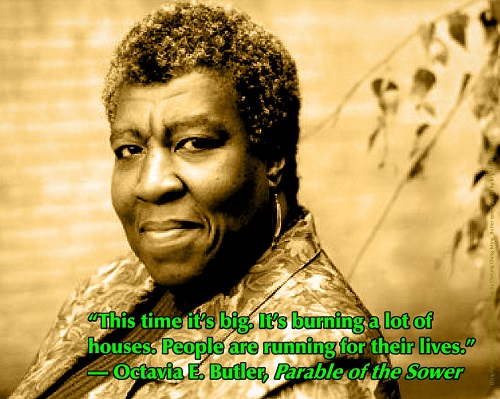
· Author Octavia E. Butler and The Fire This Time

· Conversations with the World 111: Speaking Truth to Power


Poetry
· Sunday Afternoon and the Jazz-Angel Cometh 2025

· Rainbow-Song 2025 (Part 3)

· A Fever-Cooked Dream

· Her Woman's-Body Aesthetics

· A Song of Toni Morrison My Soul Now Sings

· Seasons of Compassion Mindfully Considered

· Reflections on Ode to the Good Black Boots that Served My Soul So Well

· How Poets and Words Burn Truth into Love

· Valentine Winter: A Mink-Warm Distance Between Decades

· The Poetess Inside Her Years

         More poetry...
News
· Author Pens Tribute to Legendary Savannah Educator and Advocate

· Author-Artist Launches New American Angels Series

· Savannah Author Explores Mysteries of Creative Metaphysics in New Release

· Observing Local Author Day in Savannah-GA

· New Media Interview in Bold Journey Magazine

· New Interview in CanvasRebel Magazine

· In Honor of 500K US Citizens Killed by COVID-19 Pandemic

Aberjhani, click here to update your web pages on AuthorsDen.

Books by
Aberjhani


See all Books
by Aberjhani


The Day the Word Nigger Entered My Life
by Aberjhani
Last edited: Wednesday, June 25, 2008
Posted: Friday, September 7, 2007


Some parents used more than soap to wash bad language of children's mouths.


Dear Readers,


Please enjoy the following excerpt for this title. To obtain a copy of The American Poet Who Went Home Again  and read the full text of this creative nonfiction title, plus more than a dozen others please click here .


Until I was twelve, I grew up in Robert M. Hitch Village, a government project in Savannah, Georgia, populated by African Americans. Next to Hitch Village was another government project, populated by White Americans, called Fred Wessels. The first time, however, someone felt it necessary to call me “nigger” was when I made the mistake of journeying beyond both Hitch Village and Fred Wessels to get a haircut.


I was about eight years old and my mother had sent me with my nephew Kenneth, who could not have been more than four, to the barber shop.  For some reason, the shop on Wheaton Street, on the southern border of Hitch Village, was closed that day. Why we were not with one of my older brothers I don’t recall, but black children of that time and place rarely stayed children for very long and it may be that this was one of my first outings to indicate that I was growing into a “big boy” whose turn it now was to look after others rather than expect others to look after me. It was something I would do throughout my adolescence and again, later, as an adult offspring.


Once we discovered the barber shop on Wheaton Street was closed, I recalled seeing another one up on East Broad Street with a huge shiny red and white striped barber pole that had made me think of a giant peppermint stick when I saw it. East Broad Street was on the opposite side of Fred Wessels, the white project, but we could reach the barber shop by staying on Wheaton Street and traveling west on up to East Broad, then turn left and go a few more blocks toward Jones Street.


We arrived at the barber shop with its unmistakable gleaming peppermint candy pole right outside the door, walked inside to the buzzing sound of clippers, and took two empty seats against the wall.  How I got it in my head that red-striped barber poles nullified any issues regarding skin color is a major mystery but the fact is I failed to recognize that my nephew Kenneth and I had the only black faces in the place. What did make an impression on me was that one of the barbers had red hair with eyes that I now think must have been hazel. The other’s was a smooth dark brown with thick waves that shined and a pair of black-framed glasses sitting on his face.


It did not dawn on me that something might be wrong until I noticed that neither of the barbers would look our way and say “Next,” or, “You ready?” and nod for us to get in one of the chairs. They signaled the one or two customers who had been waiting before us and a couple more who came in afterwards. But not us. Then we became the only two customers left in the shop, so I told Kenneth to get in one of the barber chairs while I got in the other. Happy that it was finally our turn, I smiled and asked, “Can we get a junior Caesar please?” describing not the salad but the style of haircut we always got.


The barber behind my chair sat down and unfolded a newspaper. Then, for the first time, one of them spoke to us:


“We don’t cut no nigger hair in this barber shop boy!” said the red-headed man behind the chair where my nephew sat, completely oblivious to anything except the fact that he was sitting in a barber shop with his uncle.


Having no idea what the red-headed barber meant, I looked up and said, “Huhn?!”


“I said we don’t cut no nigger people hair in this barber shop!”


At that moment I thought I understood what he was saying. He apparently thought we were part of a family whose last name was “Nigger.” I could understand that because I had heard both relatives and neighbors talk about the negative collective character of entire families. It wasn’t uncommon to hear someone say something like, “Don’t be bringing none of those Wilsons to my house, they always drunk.” Or: “Stay away from those Fletchers, they’ll steal anything and everything plus your drawers.” So, the barber obviously thought we were members of the Nigger family, whom I guessed must have done something to his family at some point. To clear the confusion, I smiled again and said, “Ohhh yes sir, we don’t know the Niggers, but if we meet any we’ll tell them you don’t want them coming here.”


The dark-haired barber who had sat down to read suddenly lowered his newspaper. His face had turned as red as the other barber’s hair and he yelled as if I had said something unforgivable about his mother. His voice exploded like a cannonball out of his head.


“Boy get the hell out’a my goddamned barber shop! Who the fuck you think you is nigger?! Get your black ass out’a here!”


My nephew jumped out of the chair and did exactly what I, his eight-year-old uncle, told him to do:


“RUN!!!”


We flew through that door so fast we could have had rockets strapped to our ankles and our shoulders. That was the day we learned the difference between racing for fun and running for survival. We cut across traffic, zipped past pedestrians, and ignored friends who called out as we re-entered Hitch Village and kept on moving until finally collapsing on the porch of our apartment. The feeling that I had done something amazingly stupid made me keep my mouth shut about what had happened and a peanut butter cookie or two convinced my nephew to do the same. 


For a long time, it was the barbers’ anger and not their language that left the deeper more painful impression on me. The significance, however, of the language became more apparent not long afterwards when one of my best friends angrily said to his brother, in front of their grandmother, “Nigger you make me sick!”  His grandmother flinched and snorted as if the smell of a demon had burned her nose. A woman of at least 200 pounds, she must have been using all of them when the back of her hand knocked him so hard he swallowed a tooth then coughed it back up with a mouth full of blood. The back hand was followed by a leather belt that made me cry just looking at it. At the same time that she held my friend by the collar and beat his howling behind, she lectured everybody within hearing distance on why she “better never hear y’all cussing like that again! Y’all hear me?!”


“Yes Ma’am!”


From her lecture, and others that would be delivered under more calm circumstances, I learned that the “cuss” word “nigger” had nothing do with a particular family at all. When used by Whites, it was understood as three things: 1) a denial of African Americans’ humanity; 2) an assertion that Blacks were inferior to Whites politically, socially, spiritually, and every other way; and 3) as a curse upon the person called this word. For a black individual to ape the behavior of a racist white was the disgusting epitome of ignorance, a betrayal of one’s own people, and an act of self condemnation prompted by self hatred. 

The proposed explanation of the term as one of endearment between Blacks would have held no water in that place and time––the mid-1960s. Nor would the rationale that it was viable for use as creative expressiveness or as a means toward any kind of positive end. It was, simply put, a specifically racist expression of profanity intended to justify the annihilation of a people’s worth, and most of the adults of our concrete village would have no part of it.


This expanded understanding of the word that had been introduced to me by the barber brought a strange kind of sadness into my soul. What was worse? That I had been hated and cursed simply for having been born black? Or that I had been born black and so was hated and cursed? Or did either perspective really have anything to do with me at all?


The world, I would decide as years accumulated beneath my traveling heels, often chose to assign definitions and interpretations to my presence that had more to do with its own confusions than with the peace or validity of my actual being. I could be forced to address those confusions but I could not be forced to become them. So I began to think of my flight from the angry barber as a flight from confusion that caused him an excruciating pain––summed up by the word “nigger”––that I chose not to bear and I wondered, sometimes, how he managed to live with that.


By Aberjhani


From THE AMERICAN POET WHO WENT HOME AGAIN 


Web Site: The Black Skylark Z-Ped Music Player


Want to review or comment on this article?


Need a FREE Reader Membership?

Reviewed by Alley Cat Slick
Reviewed on November 14, 2007
I love this article. Growing up in Houston, Texas as a young black male. I must admit that we, referring to myself and my peers, used this word in every other sentence. The grown folks would always scold us for talking in such a manner. So I do understand that it offends many people. But I have to admit that you have given one of the most convincing explanations for me to cease from using that word. I always rationalized it by saying that it is a term of endearment, but as you eloquently stated; there's more to that word than meets the ear

Reviewed by Art Hernandez
Reviewed on October 31, 2007
Aberjhani, it is with great respect that one must see your thoughts and look beyond the depth of your work, there is more that learning and the reading....there is understanding and acceptance. It is a sad state when society has been programmed to live in a certain way, one finds that the reality is a vivid nightmare at times, your experience proves it. The denial of rights as a human being, is intollerable, this is a process that is embedded within the World. The unfortunate reality is that we still live within the dark ages, even though we physicly see changes and acceptance at eye point view....we are still within a society that changes and yet still stays the same. I have written of this within a few works of mine...No Color, Rutgers, Chasing a Dream, and The Tragedy of it All...

I muast say that you are a Spirit that flows among us and brings more than words and thoughts, you bring us reality and understanding of life....

Respectfully,
Art Sun Hernandez

Reviewed by David Hightower
Reviewed on October 9, 2007
Brother Aberjhani - Excellent and enlightening article about the end of innocence and the revelation of racism's effect on both you and the white barbers. Look at what it turned them into, and the sad realization it added to a child's life. Hope they finally rose above it, as you certainly did. - Can't wait to read the book. - David

Reviewed by Adriane Thompson (Reader)
Reviewed on September 10, 2007
"a specifically racist expression of profanity intended to justify the annihilation of a people’s worth" is perhaps the most powerful line of literature that I have read in decades. Bless you for sharing your pain and insight on a time when it was dangerous to even consider doing what you did in true innocence. That word is used so much throughout my family until I am guilty of the fact that it has taken residence in a place within me that bears no pain or thought of shame when hearing or using it. The eye-opener of this piece is far more revealing and demanding of action than most are willing to admit. Thank you for unwrapping a delicate piece of history while enlightening us to make the choice to change the language we embrace and realize that all words are worthy of use. Again, blessings.

Reviewed by Regis Auffray
Reviewed on September 8, 2007
You write very well and what you express is very valid. Thank you, Aberjhani. Love and peace to you,

Regis

Reviewed by Jerry Bolton (Reader)
Reviewed on September 8, 2007
I grew up saying nigger. It was a nasty word. I knew it was a nasty word, because I was convinced the people who lived outside of my little south Arkansas town in a settlement called "Rankin Town" were bad because they were black. My education concerning the "nigger's" was not steeped in Civil War rhetoric as so many others in the south was. The people in my town didn't re-fight that war, but did harbor a lot of hate toward the result of it, the freeing of the slaves. We had an old woman who worked two days a week for us (we weren't rich by a long shot, but it was just something done in those days) who was black and I called her Auntie. I could never relate her with the nigger word, and it was many years later that I understood why. It was because I knew her on a personal and intimate basis, she could never be spoken to with such a word of hate, because I didn't hate her. I understand the NAACP held a funeral a few weeks ago and buried nigger. What a crock. I like this piece and I like most of the responses I've read . . . Write on . . .

Reviewed on September 7, 2007
Aberjhani,

God, I hate that word. My best friend growing up was Black; my gramma would tell me to stop playing with that little "N-er" girl. I told her, "Gramma, her skin color don't come off." She was my friend; who cared if she were Black, white, green, PURPLE???

The doc who did my back surgery in '83 was Black: the Air Force's top neurosurgeon at that time. A-number ONE. My roomie: 'I wouldn't let that N-er operate on me if he were the last guy on Earth.' I blew up: 'Don't matter if he's green with purple stripes and pink polka-dots: it's the knowledge in his brain and the skill in his hands that matters most.' Did great. :) AWESOME man, he was. ('course, re-injured my back a year later, but that wasn't HIS fault.) Happens!!

My oldest sister was married to a Black man. That did not go over well with the family: Karen and I always felt: as long as he treated her right, didn't matter what color he was. He wound up being a jerk, but not because of his color: he was a jerk. There's white jerks, Hispanic jerks, Asian jerks, Arabian jerks and yes, Black jerks. Jerks come in ALL colors. Not exclusive to one race! *My ex was a jerk, and HE'S white!!*

Got me stirred up: that word needs to be banned. BURIED. Forever and ever, AMEN. That word is the razor's edge of prejudice. I'm sorry you had to hear it.

My people did the Blacks grave injustices; I can break that mould by treating others the way I want to be treated. Ya know?

Heartbreaking article, powerfully penned.

(((HUGS))) and love, Karla. :(

Reviewed on September 7, 2007
Aberjhani~

I hate that word: n-----; it's nasty, and I think it ought to be abolished from the English language. How people can treat others by calling them horrid names is beyond me; how people can judge others solely by the color of their skin is something I'll never understand. I try to treat people of ALL races/colors equally, but at times it's hard, especially if they do terrible things to hurt others. (Like the terrorists who struck our country on 9/11/01: I don't hate them, per se, but I don't trust people who do things like that; all I can do is pray for them, ask that God changes their hearts/minds. It's the only way. I also have problems with people when they don't bother to speak English; that reallllly chaps my hide!)

Excellent article, Aberjhani! Very well done!

(((HUGS))) and much love, your friend in Tx., Karen Lynn. :(

Reviewed by Karen Vanderlaan
Reviewed on September 7, 2007
you write with such intelligence and wisdom but in this write, with so much dignity and character as well-in admiration, karen

Reviewed by E T Waldron
Reviewed on September 7, 2007
When I was seven my family (father Italian) moved to a town that had perhaps half a dozen names in the dictionary that weren't Anglo Saxon. My first day in school, being called a wop was a new experience for me.Not that it was anything compared to yours, just that it did give me an insight into what it means to be treated with such indignity,for no reason. To this day I can't understand humanity that chooses to degrade others,when all they accomplish is to show themselves to be uncivilized. Thanks for sharing Aberjhani, and I'm glad you overcame the ignorance of fools.

Eileen

Reviewed by Randall Barfield
Reviewed on September 7, 2007
Only 8? But it had to happen sooner or later. I was of the 'racist whites' you mention. The worst thing, I think I've mentioned elsewhere, we could call a playmate of ours was either titty-baby or nigger! Then you had to run like hell or, as you say, with those rockets strapped to your ankles. Kept us in good shape!

Reviewed by Sage Sweetwater
Reviewed on September 7, 2007
This is a mind-scarring "brand" that has been embedded in flesh, heart, and soul with such flaming damn ignorance that this pain I even feel...this is precisely why I wrote a Truth of my own on the subject of prejudice and hatred that I recall happening in my young girlhood at a pharmacy I used to frequent for cherry cokes, and the memory sticks with me like a leper's bubblegum on the tip of a wooden leg...The Day the Word Nigger Entered My Life and The Brand, one from a black man of extreme good manners and talent, poet/author Aberjhani, and one from a half-breed lesbian poet/storyteller Sage Sweetwater whose kindness is an honest attempt to aright these types of societal ills...these two works need to be published side by side...there is such power in your words, Aberjhani...more power than when a stand-up comedian utters "nigger" through an ignorant microphone for money that will burn in Hell with his brother, the Devil and Jerry Lewis slinging a I-don't-support-his-Labor-Day-Telethon-anymore for spitting an anti-gay slur...you speak the Truth, Aberjhani...Blessed Be.

The Brand by Sage Sweetwater
http://www.authorsden.com/visit/viewpoetry.asp?id=147772


Reviewed by - - - - - TRASK
Reviewed on September 7, 2007
You Oughta Come Live I Los Angelese Sleazy Mexi-Fornia,i.e. I Was 1 Of 10 Whites Work In Anti-Poverty Agency Start 1974--60% Black,25% Mexicanos,Rest 15% Us Indians And Or Others!

5 Years Later FEDS Dump Agency-Blacks Used Word Among Themselves Day In Day Out!

ETAL: Give Yourself Credit For Having Survived It All! Most Do Not!

Credit For Write!

TRASK


New Articles by Aberjhani
article Image
What have we learned from 9/11 up to this point and what is it that we still need to learn?
Recalling the Unforgettable 25 Years Later
article Image
<br> <br> <br> <br> <br> <br> <br> <br> <br>You might not think dinosaurs would be particularly
Democracy and Dinosaurs down by the Riverside (part 1 of 3): Culture
article Image
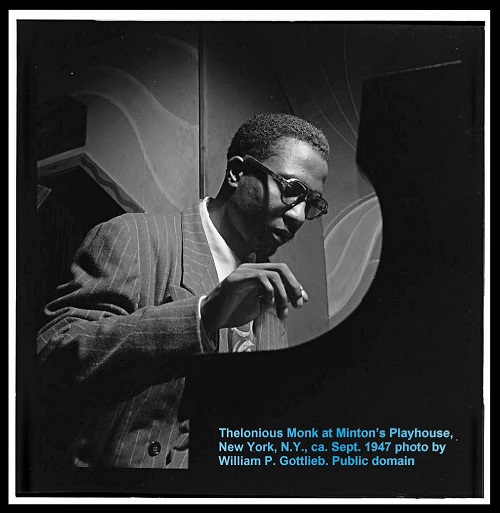
<br> <br>What do freedom, poetry, and jazz, and jazz mean to you in 2026? It’s worth thinking about as observations of National Poetry Mo
Poetry and All that America250 Thelonious Monk Jazz
article Image
Towards an Appreciation of Poets at Work.
VISIONS OF THE POETS, Part 1: Andre Emmanuel Bendavi ben-YEHU
article Image
<br>Few things are as valuable in our modern times as the recovery of a digital archive containing almost a decade of an author’s work that exi
Mining The Past For Hope and Motivation in The Present
article Image
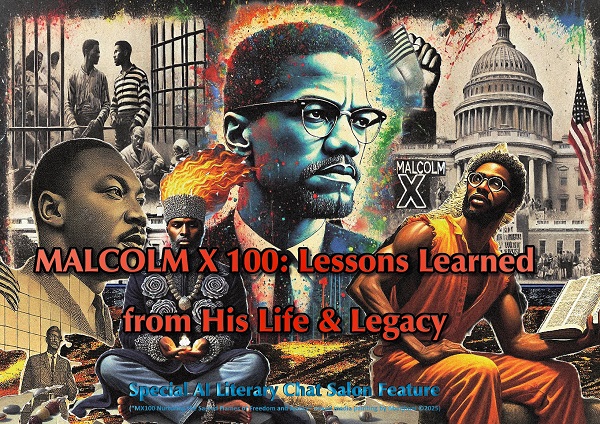
On lessons learned from the life and legacy of Malcolm X.
Malcolm X in a Time Such as This
article Image
Is it ever too early to start planning for a really great Harlem Renaissance party? (stamp featuring James Weldon Johnson) <br> <br>
The 100th Anniversary of the Harlem Renaissance (part 1 of 2)
article Image
American original James Baldwin hard at work. (UPI photo)
The Quotable James Baldwin
article Image
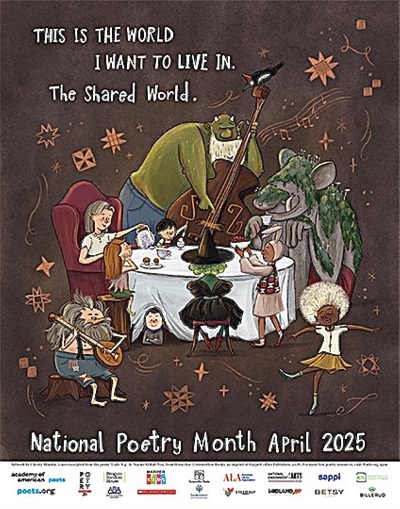
In acknowledgement of poetry’s enduring, and increasing, legacy of inspiration and empowerment. (2025 National Poetry Month poster featuring a quote b
Celebrating National Poetry Month
article Image
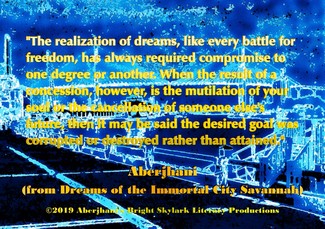
It's about the question read on the posters for the book: "What would your life mean if you were living someone else's dream of what it should be?"
Checking out Dreams of the Immortal City Savannah
article Image
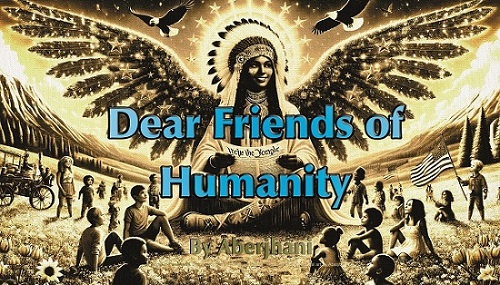
<br>On meeting the challenge of dealing with difficult times.
Dear Friends of Humanity
article Image
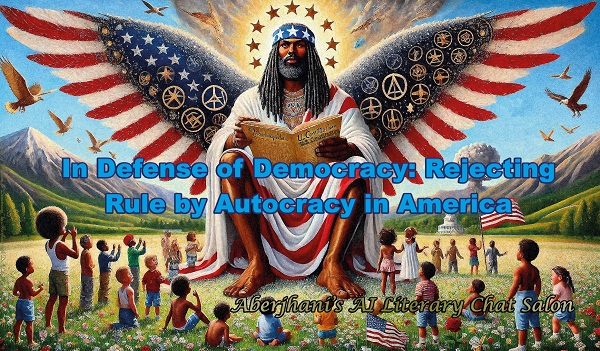
Is America’s celebrated democracy on its way to becoming a soul-crushing autocratic regime? Some say no way while others are not so sure. (Angel of Fr
Political Maybes vs. Emerging Realities
article Image
On the California wildfires of 2025 and the seemingly prophetic writings of Octavia E. Butler. (Original photograph of Octavia E. Butler by Cheung Chi
Author Octavia E. Butler and The Fire This Time
article Image
The full exact title of this essay is: Fall 2014 Update: Putting Text and Meaning to the Guerrilla Decontextualization Test. Enjoy. <br> <br
Fall 2014 Update: Texts, Meanings, and Guerrilla Decontextualization
article Image
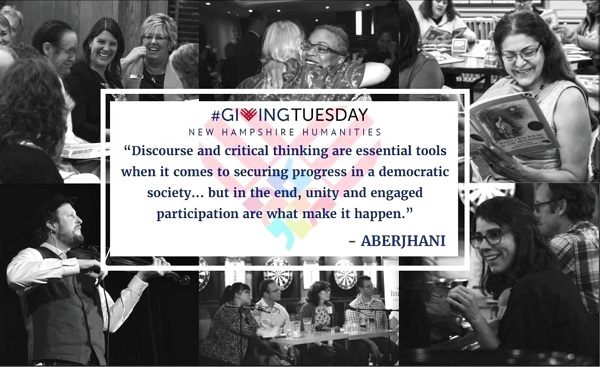
(Updated for Authors Den edition Nov 15, 2024. Giving Tuesday meme with Aberjhani quote courtesy of New Hampshire Humanities)
Conversations with the World 111: Speaking Truth to Power
article Image
(Image detail from artwork by Aberjhani titled Kaleidoscope Moons for Children Gone too Soon Number 7, Love and Acknowledgement.) <br> <br&g
Notes on Consideration for the Children of the World
article Image
The chat-bot gets flipped with an AI bot asking a human 7 questions about the different implications of artificial intelligence’s impact upon diverse
Putting the Wisdom of Artificial Intelligence to the Test
article Image
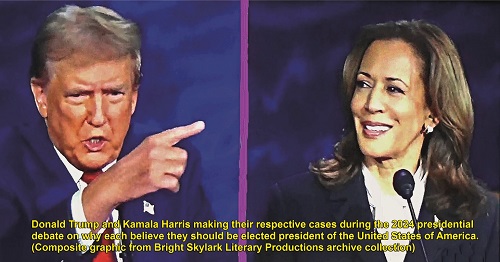
The possibility of Americans electing Kamala Harris their country’s first woman president has generated some seriously provocative essays on women in
Kamala Harris and Women Leaders around the World
article Image
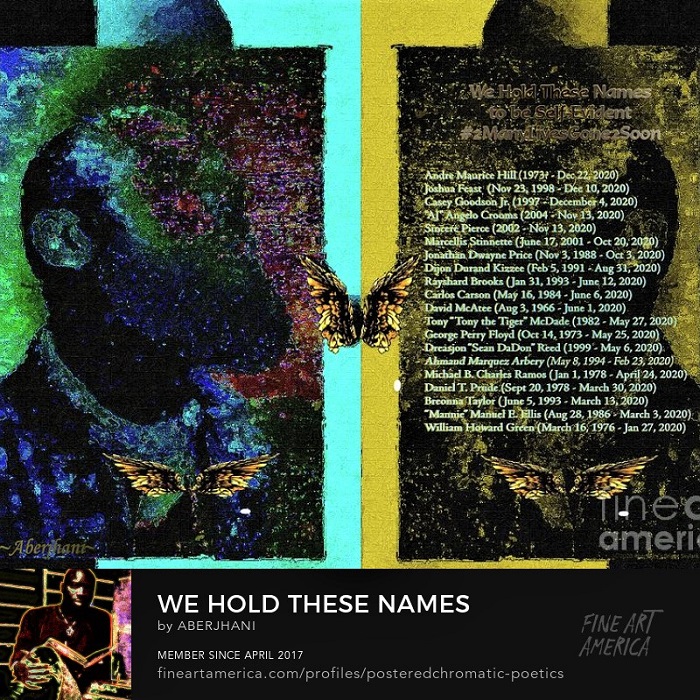
Government officials like U.S. Vice President Kamala Harris have said that in addition to a COVID-19 pandemic, the world is also suffering from a raci
Art of Antiracism: We Hold These Names to be Self-Evident
article Image
These quotations are presented in affirmation of the innate value all people’s shared humanity. (Artwork titled “Leaves of Grace & Gratitude” by Aberj
5 Quotes from Greeting Flannery O’Connor at the Back Door of My Mind