AuthorsDen.com  Join | Login 

 
Where Authors and Readers come together!

Authors | Books | Audiobooks | eBooks | Signed Bookstore | Stories | Articles | Poetry | Blogs | News | Events | Reviews | Videos | Success | Gold Members | Testimonials

Featured Authors:  Cynth'ya Reed, iRaven West, iErin Kelly-Moen, iAntoinette Kopperfield, iGlenda Bixler, iBryon Smith, iChristina Neely, iCharles Keller, iDavid Clure, iRichard Cederberg, i

  Home > Action/Thriller > Articles
Popular: Books, Stories, Articles, Poetry      Authors: A B C D E F G H I J K L M N O P Q R S T U V W X Y Z     

Aberjhani

 Follow Me  

· 324 titles
· 3,002 Reviews
· Share with Friends!
· Save to My Library
·
Member Since: Dec, 2004

   Sitemap
   My Blog
   Success Story
   Contact Author
   Read Reviews


Books
· The American Poet Who Went Home Again (Kindle eBook)

· Songbirds and Roses (paperback edition)

· Songbirds and Roses (Kindle eBook edition)

· Greeting Flannery O’Connor at the Back Door of My Mind (Kindle edition)

· Democratic Dilemmas and Divine Inspiration (A Kindle Short)

· Savannah: Brokers, Bankers, and Bay Lane (edited by Aberjhani)

· Savannah, Immortal City (Civil War Savannah, edited by Aberjhani)

· Suzanne Jackson Five Decades

· These Black and Blue Red Zone Days

· 2nd Edition Encyclopedia of the Harlem Renaissance (eBook)


Short Stories
· Holiday Tale: A Brazilian Thanksgiving in Savannah

· Come Walk With Me

· Uncut Goodies Part 4: the Current Conclusion

· Uncut Goodies Part 3

· Uncut Goodies Part 2

· Uncut Goodies Part 1

· Introducing Bonus Story Tracks

· Astonishing Tale of the Goddess and the Skylark: Part 4 of 4

· Astonishing Tale of the Goddess and the Skylark: Part 3 of 4

· Astonishing Tale of the Goddess and the Skylark: Part 2 of 4


Articles
· Recalling the Unforgettable 25 Years Later

· Democracy and Dinosaurs down by the Riverside (part 1 of 3): Culture

· Poetry and All that America250 Thelonious Monk Jazz

· Mining The Past For Hope and Motivation in The Present

· Malcolm X in a Time Such as This

· Celebrating National Poetry Month

· Dear Friends of Humanity

· Political Maybes vs. Emerging Realities

· Author Octavia E. Butler and The Fire This Time

· Conversations with the World 111: Speaking Truth to Power


Poetry
· Sunday Afternoon and the Jazz-Angel Cometh 2025

· Rainbow-Song 2025 (Part 3)

· A Fever-Cooked Dream

· Her Woman's-Body Aesthetics

· A Song of Toni Morrison My Soul Now Sings

· Seasons of Compassion Mindfully Considered

· Reflections on Ode to the Good Black Boots that Served My Soul So Well

· How Poets and Words Burn Truth into Love

· Valentine Winter: A Mink-Warm Distance Between Decades

· The Poetess Inside Her Years

         More poetry...
News
· Author Pens Tribute to Legendary Savannah Educator and Advocate

· Author-Artist Launches New American Angels Series

· Savannah Author Explores Mysteries of Creative Metaphysics in New Release

· Observing Local Author Day in Savannah-GA

· New Media Interview in Bold Journey Magazine

· New Interview in CanvasRebel Magazine

· In Honor of 500K US Citizens Killed by COVID-19 Pandemic

Aberjhani, click here to update your web pages on AuthorsDen.

Books by
Aberjhani


See all Books
by Aberjhani


Review of Toni Morrison's What Moves at the Margin
by Aberjhani
Last edited: Friday, February 20, 2009
Posted: Friday, February 20, 2009


The author as literary lioness.


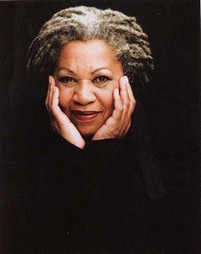
One of the most frequently uttered phrases in the United States during the month of February, Black History Month, is the United Negro Scholarship Fund’s slogan: “A mind is a terrible thing to waste.” While reading Toni Morrison’s powerful nonfiction collection, What Moves at the Margin, I found myself considering the opposite of that slogan: an exceptional mind is a beautiful thing to develop.

 
That Morrison commands one of the most remarkable creative talents of our era is a celebrated fact. Her journey to iconic literary status began in 1969 with the publication of The Bluest Eye. Each of her novels since then––currently totaling nine, the latest being A Mercy––have consistently won critical acclaim, ultimately culminating in such extraordinary honors as the National Book Circle Critics Award, the Pulitzer Prize, and the Nobel Prize in Literature.

 
With an illuminating introduction by Carolyn C. Denard, founder of the Toni Morrison Society, What Moves at the Margin stands as a self-defining commentary on Morrison’s overall cultural vision and as a singular extension of her literary output. What Moves at the Margin presents almost thirty works of short nonfiction––written from 1971 to 2002–– to bring us the Toni Morrison who lives, breathes, thinks, and acts outside the fictional boundaries established by her novels. The book is divided into three categories that include: Family and History; Writers and Writing; and Politics and Society. They may be described alternately as personal essays; tributes to fellow warrior authors in the form of eulogies, forewords, and reviews; and cultural criticism that leaves neither a political nor a literary stone unturned.

 
The African-American tradition of honoring ancestors is well represented in section one. It is particularly interesting, in light of Barack Obama’s election to the U.S. presidency, to note the dialogue on race relations between her grandparents in the opening essay: “A Slow Walk of Trees (as Grandmother Would Say), Hopeless (as Grandfather Would Say).” Equally compelling are Morrison’s writings about her classic work on African-American history: “Behind the Making of The Black Book” and “Rediscovering Black History.” The value of recognizing and claiming one’s historical roots is not just academic, she offers, but imperative because “When you kill the ancestor you kill yourself.”     

 
The writers to whom Morrison pays tribute in section two stand among the handful of late-Twentieth Century authors whose works expanded the presence and acceptance of African-American literature in the U.S. publishing industry. (It should be noted as well that Morrison herself assisted that process early in her career in her role as an editor for Random House.) They include the great Toni Cade Bambara, whom she describes as “a writer’s writer, an editor’s writer, a reader’s writer.” Also present is her moving tribute to Henry Dumas, whose work she describes as “some of the most beautiful, moving, and profound poetry and fiction that I have ever in my life read.” It is largely due to Morrison, the poet Eugene Redmond, and Dumas’ widow that the world knows anything at all of this brilliant author whose life ended at the age of thirty-three when he was killed by a transit policeman in a New York City subway station.

 
Her eulogy for James Baldwin, whose collected essays and fiction Morrison edited for The Library of America, is a deeply personal and profound one in which she observes: “Yours was the courage to live life in and from its belly as well as beyond its edges to see and say what it was, to recognize and identify evil but never fear or stand in awe of it.”


In the final section, “Politics and Society,” Morrison engages contemporary issues with clarity, compassion, and unyielding conviction. “The Dead of September 11” reveal her to have been as stunned as any by the savage events of that history-altering day. Boldly lobbying on behalf of fellow writers in “For a Heroic Writers Movement,” the author asserts “competitiveness and grief are the inevitable lot of a writer only when there is no organization or network to which he can turn.”


The book concludes with two speeches that demonstrate Morrison’s commitment to political and cultural responsibility. The first, “How Can Values Be Taught in the University,” was delivered in April 2000 at Princeton University and in it the author delivers some of her most potent social criticism: “If the university does not take seriously and rigorously its role as guardian of wider civic freedoms, as interrogator of more and more complex ethical problems, as servant and preserver of deeper democratic practices, then some other regime or ménage of regimes will do it for us, in spite of us, and without us.”  Appropriately enough, the very last text is her famous Nobel Lecture in Literature. In the lecture, she uses a parable about a blind old woman challenged by a group of young people to state her concerns for the state of language in the modern world: “Sexist language, racist language, theistic language––all are typical of the policing languages of mastery, and cannot, do not permit new knowledge or encourage the mutual exchange of ideas.”


Morrison long ago identified as one of her primary goals the production of “word-work” grounded in the African-American experience and worthy of inclusion in the greater American literary canon (as represented by books regularly studied on the high school and college levels). To entertain such a noble vision is one thing; to actually achieve it is quite another. In What Moves at the Margins, readers get a good strong sense of the family influences, literary culture, and passionate political dynamics that made Morrison’s achievements possible. It also illustrates that by striving so mightily to accomplish specific goals on behalf of one segment of humanity, she went beyond them to create literary wonders capable of enriching the lives of not just her own people, but of all people. 


By Aberjhani
Author of
Encyclopedia of the Harlem Renaissance
And The American Poet Who Went Home Again


Web Site: Review of Inaugural Poet Elizabeth Alexander


Want to review or comment on this article?


Need a FREE Reader Membership?

Reviewed on February 22, 2009
I thank You for this "Review of Toni Morrison's What Moves at the Margin".

It is a privilege to read this article, which makes the approach to Author Morrison's works a pleasant trip through the intellectual road.

I have enjoyed the article, and have learned from its contents.

In gratitude and admiration,

Andre Emmanuel Bendavi ben-YEHU

Reviewed by Karen Vanderlaan
Reviewed on February 20, 2009
a wonderful review-i have truly enjoyed toni morrison

Reviewed by Georg Mateos
Reviewed on February 20, 2009
Some years back I meet Ms. Morrison at the Four Seasons in Chicago, I will never forget that voice, like a silver echo wrapped in velvet, peaceful, profound on its words, it should had belong to a woman ten feet tall, and thinking of it...she was.

Georg


New Articles by Aberjhani
article Image
What have we learned from 9/11 up to this point and what is it that we still need to learn?
Recalling the Unforgettable 25 Years Later
article Image
<br> <br> <br> <br> <br> <br> <br> <br> <br>You might not think dinosaurs would be particularly
Democracy and Dinosaurs down by the Riverside (part 1 of 3): Culture
article Image
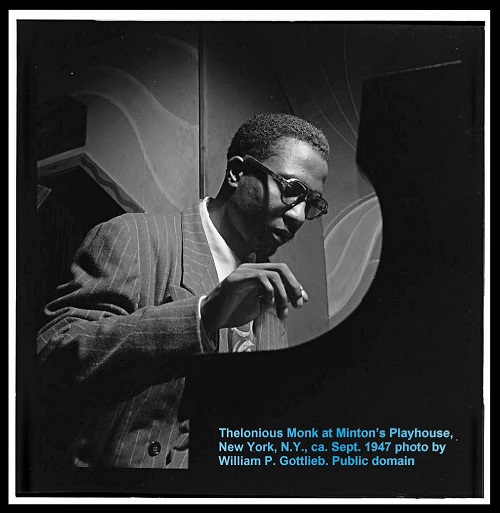
<br> <br>What do freedom, poetry, and jazz, and jazz mean to you in 2026? It’s worth thinking about as observations of National Poetry Mo
Poetry and All that America250 Thelonious Monk Jazz
article Image
Towards an Appreciation of Poets at Work.
VISIONS OF THE POETS, Part 1: Andre Emmanuel Bendavi ben-YEHU
article Image
<br>Few things are as valuable in our modern times as the recovery of a digital archive containing almost a decade of an author’s work that exi
Mining The Past For Hope and Motivation in The Present
article Image
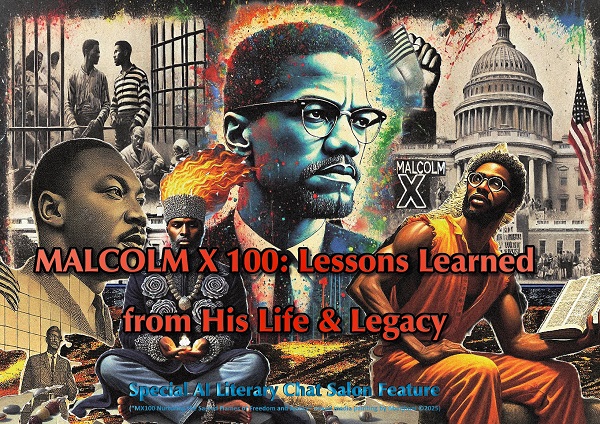
On lessons learned from the life and legacy of Malcolm X.
Malcolm X in a Time Such as This
article Image
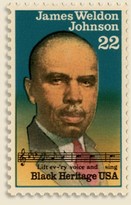
Is it ever too early to start planning for a really great Harlem Renaissance party? (stamp featuring James Weldon Johnson) <br> <br>
The 100th Anniversary of the Harlem Renaissance (part 1 of 2)
article Image
American original James Baldwin hard at work. (UPI photo)
The Quotable James Baldwin
article Image
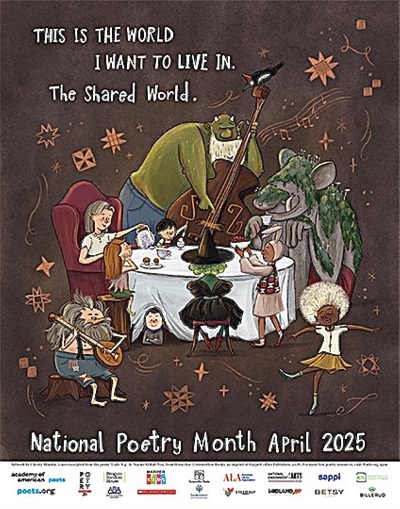
In acknowledgement of poetry’s enduring, and increasing, legacy of inspiration and empowerment. (2025 National Poetry Month poster featuring a quote b
Celebrating National Poetry Month
article Image
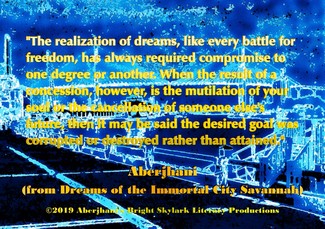
It's about the question read on the posters for the book: "What would your life mean if you were living someone else's dream of what it should be?"
Checking out Dreams of the Immortal City Savannah
article Image
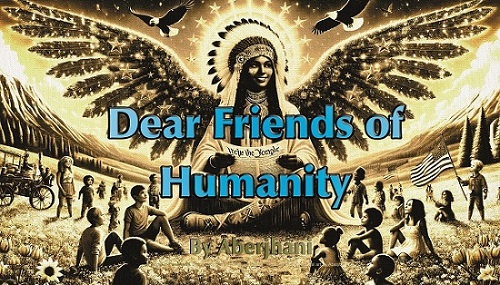
<br>On meeting the challenge of dealing with difficult times.
Dear Friends of Humanity
article Image
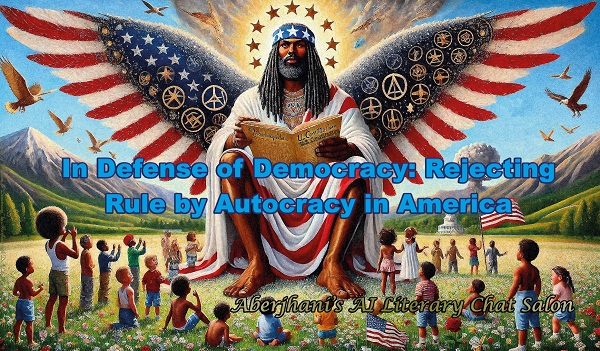
Is America’s celebrated democracy on its way to becoming a soul-crushing autocratic regime? Some say no way while others are not so sure. (Angel of Fr
Political Maybes vs. Emerging Realities
article Image
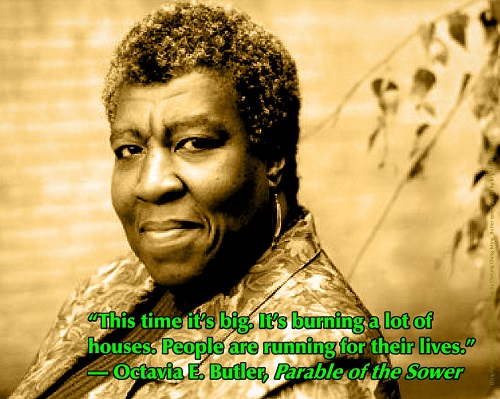
On the California wildfires of 2025 and the seemingly prophetic writings of Octavia E. Butler. (Original photograph of Octavia E. Butler by Cheung Chi
Author Octavia E. Butler and The Fire This Time
article Image
The full exact title of this essay is: Fall 2014 Update: Putting Text and Meaning to the Guerrilla Decontextualization Test. Enjoy. <br> <br
Fall 2014 Update: Texts, Meanings, and Guerrilla Decontextualization
article Image
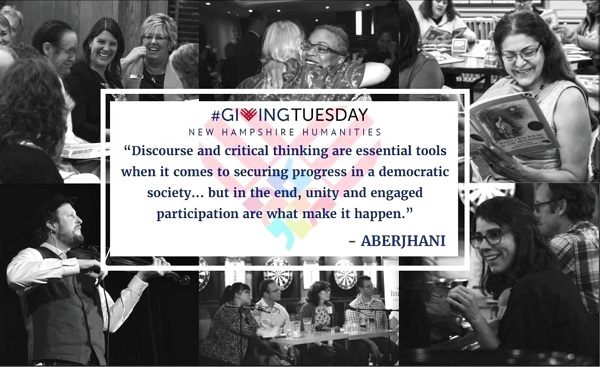
(Updated for Authors Den edition Nov 15, 2024. Giving Tuesday meme with Aberjhani quote courtesy of New Hampshire Humanities)
Conversations with the World 111: Speaking Truth to Power
article Image
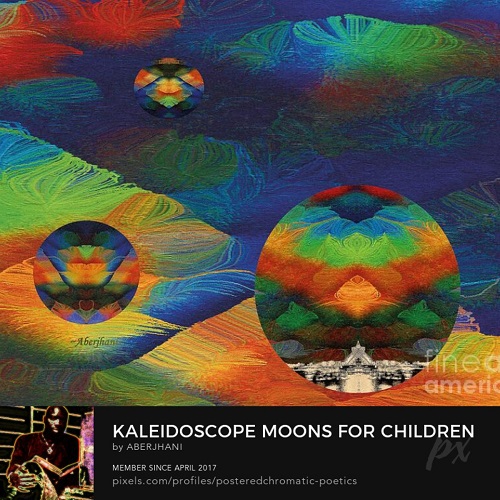
(Image detail from artwork by Aberjhani titled Kaleidoscope Moons for Children Gone too Soon Number 7, Love and Acknowledgement.) <br> <br&g
Notes on Consideration for the Children of the World
article Image
The chat-bot gets flipped with an AI bot asking a human 7 questions about the different implications of artificial intelligence’s impact upon diverse
Putting the Wisdom of Artificial Intelligence to the Test
article Image
The possibility of Americans electing Kamala Harris their country’s first woman president has generated some seriously provocative essays on women in
Kamala Harris and Women Leaders around the World
article Image
Government officials like U.S. Vice President Kamala Harris have said that in addition to a COVID-19 pandemic, the world is also suffering from a raci
Art of Antiracism: We Hold These Names to be Self-Evident
article Image
These quotations are presented in affirmation of the innate value all people’s shared humanity. (Artwork titled “Leaves of Grace & Gratitude” by Aberj
5 Quotes from Greeting Flannery O’Connor at the Back Door of My Mind