I have wanted to be a novelist since I read Great Expectations by Charles Dickens in high school. As a young person I was impressed with a story that looked forward into adult life because that was what I was about to do. The idea of sitting at home, writing novels, and earning a good living just like Charles Dickens, really appealed to me. Was I idealistic? Maybe so.
Having chosen my life’s preoccupation, I moved ahead by taking various and numerous classes on writing, creative writing, grammar, marketing, literature, social studies, anthropology, psychology, history etc. so that I could instill into my writing the greatness that I believed all great novelists should have. Somerset Maugham (another old British author who wrote Of Human Bondage) advised new writers to study the classics. So I did. I ploughed my way through heavy 500-paged novels from the 1700s, 1800s and the early 1900s with a passion to write the next War and Peace. (Tolstoy). Unfortunately, modern day best-selling novels are no longer written with this many pages, nor are they concerned with the greater issues of humanity. Bad advice? Maybe so.
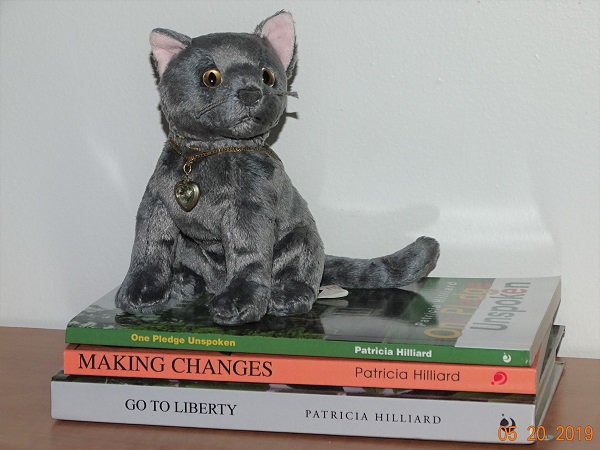
Having accomplished this mighty task of reading, I began reading smaller books that gave advice to writers, most of them published by Writers Digest. One of the books that I read (I can’t remember the title) told me that you can write a book easily if you just write dialog. Any short-cut was fine with me. I was young and my endurance was not that good. So when writing my book, One Pledge Unspoken, (about students protesting the war in Vietnam) I wrote it mostly as dialogue. Many of my friends commented that because of this, they could blitz through my first novel in just a few hours. In fact it was only about 115 pages, or 44,000 words.
Another piece of advice that I picked up was that you should “act out” your characters so that you get their point of view accurately and clearly. It was suggested that you really stand up and act out. So I began doing this and found it to be very helpful. I would pace around the living room acting out one character and then the other. Waving my hands back and forth, sitting, standing, hands on hips or arms flung in the air. Numerous times friends and family caught me in the “act.” They didn’t say anything to me about it, but I’m sure they thought I was crazy. Talking to yourself is not considered sane. But it may be the life of an artist!
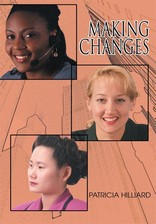
Years passed. I wrote Making Changes. This book was longer and I put more description into it. I had been reading John Steinbeck and wanted to share my experience as a union organizer. This one topped out at about 78,000 words or 194 pages.
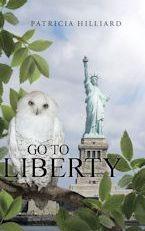
In 2014, my Go To Liberty was published. It was my environmental novel. Obviously by now you see that I like to pick socially focused themes. This novel came to 274 pages or 98,000 words. I had upped my count, but let’s not even talk about sales. Writing novels about controversial issues does not bring in the dollars. I learned that if you want to make real money as a writer you go into journalism and work for the big corporations such as CNN or MSNBC. While there, you write what they want you to write. The path I took was of the artist and rebel. On this path, you can do whatever you please.
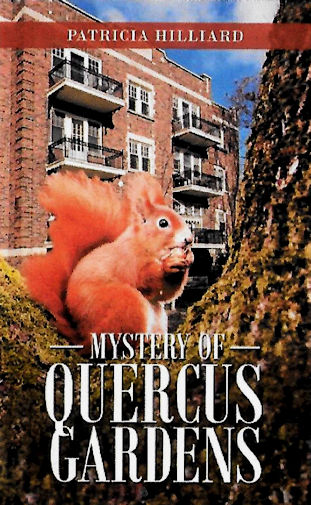
By 2021, I finished and had published my (possibly) final novel: Mystery of Quercus Gardens. This one was in the genre of Murder Mystery also known as a “cozy” because it’s not gory. It was based on my experience doing tenant organizing in New Jersey. Throughout the novel the tenants try to figure out who murdered the poor old woman gardener, Mrs. Mary Gulligan. It’s fresh on the market now if you’d like to take a look. See link below. (How’s that for marketing?)
My best advice to writers? Write from your own point of view and your own experience. As Sinclair Lewis once said, “There’s nothing that interests a human being more than what another human being does with 24-hours.” If you are lucky, some of those other humans will appreciate it.



















I always enjoy reading what you write.
Ron