 Most Americans are not known for their cultural sensitivities, even to the customs and traditions of one of their own states (Hawaii). The Hawaiian phrase 'Make beef' translates to 'having an argument or confrontation' and it is normally avoided by simple courtesy and respect. 'The Friendly Market' is the main grovery store in Kaunakakai, on the island of Molokai.
Looking for Beef
at Friendly Market
So there I am, standing in line at Kaunakakai's 'Friendly Market. It is half past 5 PM and this Ala Malama Street landmark is filling up with locals who are buying groceries for their families. I am wearing my manoakua amulet--a small oval of tiger shark skin on which a shark's tooth has been fixed--given to me by ‘Fast Eddie’ Hirogama before he disappeared on a surfari to Borneo’s Southeastern Pacific. He claimed it was a family relic containing the spiritual anima of the family's shark akua, or familiar protective spirit. He said he HOPED it would work for me when I surfed on Molokai, even though his ‘ohana is from Lanai; after all, he theorised, the two islands shared the same strait…mus’ be da same kine shocks in dos waddahs, eh bruddah? In addition to this personal aki, I am outfitted in obligatory Quicksilver boardshorts and a cut-off T-shirt; on my feet are J. C. Penny’s slippahs that are so chewed up that they'd probably fool any local who cared to challenge their provenance of authenticity.
As is the custom on this small island, locals habitually shop on a daily basis, rather than once a week (like they do on the mainland). This means that lots of very fresh vegetables, fruits, fish, and other locally grown produce constitute a typical day's fare. The Friendly Market can get to be quite a scene of jostling shoppers at about this time of day. Everyone from small groups of gnarly visiting malihini surfers, buying more Tahitian beer (no moah local Primo get bus’ on, brahs!), to legions of elderly tutus (‘aunties’) herding small nephews and nieces as they go, fill up the market's aisles and limit available maneuvering room inside the market. However, unlike the supermarkets back on the mainland, that typically American sickness of high-pressure 'hurry-up' stress is conspicuously absent in the throng, so everyone waits patiently, most chatting with neighbors about whatever gossip is circulating, as the lines wind their way languidly around stacks of bottled water, palettes of veggies, and baskets of pineapples (imported from elsewhere, believe it or not) to the check-out area.
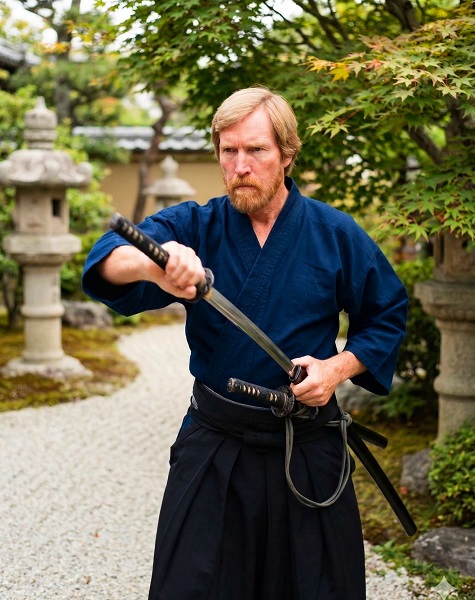
Directly ahead of me is a young Japanese couple, clearly and quite obviously FOJ (Fresh Off Jet) from Nippon. The young woman is a delicious piece of eye candy, clad in green shorts worn over a skin-tight black tank suit, with each protuberant prominence of her unusually well-endowed chest (Ho! Mus’ be da kine silicone, tink?) pushing deliciously through the flimsy fabric. Her long black hair is gathered together in a pony-tail and her dark eyes are well hidden behind completely opaque shades that are obviously expensive Italian jobies. Her atypically long and graceful legs appear to begin somewhere just below her chin; unusual for a Japanese woman, who more frequently look as if they have daikon (a popular Japanese radish) legs! Standing close-by, her skinny, protective male companion is hovering nervously near her, as if uncertain exactly when to unsheath his Katana (dis a long, bad Katonk toothpick, brah!) to defend his claim to the lushly evident charms of her chi-chi Shangri-La. Although I manage to catch only a few words of their exchange in Japanese, her body language speaks most clearly to me that she is upset about something. Boyfriend-san is plainly flustered for some undecipherable reason as he draws himself up to tower over her in that unique way only a flummoxed male can when confronted by the verbal barbs of a pissed-off wahine. Women! No matter what culture, they all seem to share the same deadly ability to penetrate and deflate the most thorn-proof male ego, when required by circumstance. Still, she is unquestionably a veritable Asian goddess and I can scarcely contain the inherently lustful feelings the sight of such attractive Asian wahines provoke within me. I also can’t help but envy her flustered young companion, for skinny and nervous or not, their momentary disagreement will soon be utterly forgotten and he will shortly be enjoying the pleasures denied to me…regardless of her heated air of disapprobation.
Trying hard to divert my attention from the beautiful young woman ahead of me, I scan the crowd. It’s quite a visual menagerie, with big brown kanaka locals in over-large tank-tops, gaggles of excited keiki (kids) happy to be out of school, elderly manangs (Flipinos) with long suffering looks on their faces, obvious haole mainlanders here in vacation (the men with pasty white legs, beer paunches, broad backsides, and their wives attired in overflowing floral mu’umu’us), and here and there a beautiful, slender island wahine (most of them clearly in custody of big brown kanaka boyfriends) with those exotic Heinz-57 cross-cultural looks only Hawaii seems able to produce. Despite the noisy confusion and distractions, however, my attention always seems to return to settle on the lovely Japanese woman’s curvilinear form. I recall, to my sudden dismay, everything I have heard about the lack of Japanese sexual inhibitions and regret the sudden focus on her obvious charms. No need for more self-torture, eh!
Despite my resolve, I find I am hard-pressed to remain cool, detached, and non-aroused as I continue to take in the full measure of her stunningly upholstered backside, but fortunately, ahead of us something is happening close to the check-out counter that derails this frustrating thought-track for me and perhaps spares me some unintentially damp shorts. Unbeknownst to me, at the check-out counter ahead a small but dramatic insight into local culture is about to unfold.
Just ahead, a shrill, tall and skinny blonde haole woman is glaring at a small, sun-browned mother in line behind her who holds a little keiki in her arms. The kid is just a toddler, but he is grasping a small apple in his hands that he evidently had grabbed from the haole’s cart. Although he can’t yet talk, his body language clearly says “What’s this, Mama?”
The ectomorphic haole woman has just screamed “Why don’t you try to teach your children proper manners? Don’t they know it’s impolite to touch other people’s things?” The local mother, painfully embarrassed by the attention the other woman is drawing to them, stares at her in stupefied silence, as if disbelieving the gratuitous display of vehement rudeness that has just been directed towards her.
As the young mother continues to stare at the animated tourist as she continues shouting, the look of disbelief on her faces changes to one of deadly blankness. She finally manages to say, in a quiet voice not any louder than the slight but ominous creaking of the Grand Coolee dam’s face before it gives way to a deluge, “He is only a small child; he is too young to understand such things.”
Unmollified, the shrill haole woman continues to rant and sputter until finally her items have all been checked and she has paid the total due (with a fresh hundred dollar bill). Turning on her heel, she grabs her groceries and makes a hasty retreat, as if threatened by a pack of rabid dogs.
As I stand there, my mind observes in pidgin to itself, “Ho! Big huhu, dat. Plenny stink-eye foh dat haloe wahine, who wen mak beef!”, but I am aware of the small brown mother in front of me who appears to be still torn between tears and an act of homicidal rage. Then, tears successfully suppressed, she takes her things and leaves quietly after accepting the murmured feelings of embarrassment from the check-out girl.
Finally my turn comes to check out and I take my few groceries home to Limone’s house in nearby Ranch Camp (a residential section of Kaunakakai). That evening (as on many others) my suppah is again rice and sliced SPAM, with slabs of SPAM laid on the warmed rice to heat up, after the cooker has shut off. It’s not Ahi (Tuna), but it’s dinner. Aftahs is a big chunk of Kanemitusu’s onolicious fruit flavored bread and a ripe Guava Limone has brought to me off the tree outside. Reflecting on the whole scene that has played out just a short while ago, I try hard to place the vitriolic angst and rancor I have witnessed in the greater context of local customs and island etiquette. The irony of such an ungraciously unnecessary act taking place in the ‘Friendly Market’ on the ‘Friendly Island’ seems inexplicable and yet at the same time an unmistakable signal that things are changing on that old-timey, friendly little time-warp of Hawaii that is Molokai.
Later in the week, as I sat reading the latest issue of The Molokai Dispatch out at the pier (trying hard to keep my balance, perched on the slanted foredeck of Carlo’s listing old sloop), I came across a letter to the editor that was clearly from the local woman who had received such fiercely inappropriate treatment from the haole tourist. In it, with restrained but still palpable indignation, the writer remarked that she had learned that the haole woman who had displayed such rudeness at the Friendly Market was a new teacher that had been recruited from the mainland and brought over to teach in Molokai’s grammar school. “If this is any indication of the abilities she brings with her to relate to our children and their parents”, this wahine makua (parent) stated, “I don’t want this person teaching my family!”
Thinking this all over in retrospect, I can’t help but reflect on the fact that the old ways on Molokai are indeed changing. Mainlanders are continuing to come to this virtual Hawaiian island paradise with an unceasing lack of cultural awareness, not to mention sensitivity to the locals and their community ways, and it is likely going to become simply more often the case as time passes. Although I am about as far from being a Christian myself as the Earth is from the Sun, I was still raised as a youth in the Anglican Church (until I was old enough to realise that religion is all a bunch of projected crap stemming from unmanageable collective human anxieties), and I can’t help but think that the Christian ‘Golden Rule’ is ever correct: “Treat others as you would wish to be treated yourself.” That bit of advice, whatever its religious derivations, is certainly profound enough to be applied universally, and even us card-carrying, hide-bound, and certified believers in nothing can appreciate that evident truth every now and then.
On Molokai, due to the increasing incidence of circumstances such as the one just cited, the old-timey atmosphere characterised by the PR motto ‘The Friendly Island’ appears in jeopardy of having to be re-characterised as “The Give-as-good-as-you-get Island” at some point in the near future, since the locals are getting tired of catering to these culturally insensitive malihini idiots (like the FOB haole malihini, screaming at the child in Friendly Market). Haole visitors would be well advised to recall that peaceful Molokai nui a Hina (‘Molokai beloved to Hina’, but actually more well-known in ancient times as ‘the Place of the Powerful Prayers’) has a cultural heritage of being a very sacred place of great Mana (spirituality). It is well to recall that at one time in the not-too-distant past, Molokaiian kahunas were reputed to be able to pray their enemies to death, and under the old kapu system social miscreants like the haole woman would have probably been stoned or simply thrown in a nearby lava tube! Thus, there is undoubtedly latent vestigial power in the Molokaiian ‘stink-eye’ that would not be readily apparent to any shrill ferschluginner (for translation, see a copy of ‘Little Orphan Annie’) haole malihini, FOB! Aloha spirit or not, the bottom line should always be considered as ‘Peace to all peace-filled people’.
At any rate, getting back to this same mainlander woman who felt she had to shriek at the local kid for touching her groceries, I came to learn, somewhat later, that this new teacher lasted as an employee of the Molokai Unified School District about as long as a chunk of raw bloody chum remains untouched by tiger sharks floating in the local waters, and as a result, she departed for the mainland a few months after the incident described above took place. Molokaiians have a reputation for being some of the most good-natured, friendly people on any of the islands, but good luck to the insensitive, thoughtless visitor who fails to learn the local customs and attitudes before getting into a beef over something as unnecessary as was the precipitating cause of that unhappy clash of cultural norms!
[PS: All of my philosophic reflections aside, I’m still thinking about that gorgeous Japanese woman with the lovely Buddha-nature backside! Yum! Are all men this utterly predictable?]
Mahalo for listening and always try to remember that we kane are the helpless captives of our gender hormones. To da wahines: try be some forgiving next time dis kane say he want poke squid wid you, at first sight. (It’s just the way we are, LoL.)
Malama pono, Kalikiano
|