The Human Body as an Aesthetic Ideal: Cultural Evolution, Physical Discipline, and the Modern Crisis of Form
The human body has long stood at the intersection of biology, culture, and aesthetics. Across civilizations and epochs, it has been regarded not merely as a functional vessel, but as an object of profound symbolic and visual significance. Whether carved in marble, rendered in paint, or trained through disciplined physical practice, the body has served as both a reflection of individual stewardship and a mirror of societal values. To examine the human form as an aesthetic ideal is therefore to engage not only with questions of beauty, but with deeper considerations of health, discipline, proportion, and cultural orientation.
This essay advances the argument that the well-cared-for, physically cultivated human body—lean, proportionate, and muscularly developed—has historically represented a widely recognized aesthetic standard rooted in both biological function and cultural expression. It further contends that modern consumer-driven lifestyles, particularly in the United States, have contributed to a widespread departure from this standard, often accompanied by cultural narratives that obscure or minimize the health and aesthetic consequences of excess body fat. In contrast, traditions that emphasize moderation, balance, and physical discipline—frequently observed in various Asian cultural contexts—offer a more sustainable and aesthetically coherent model of bodily development for both men and women.
Classical Foundations of Bodily Aesthetics
In many early civilizations, the aesthetic valuation of the human body was inseparable from its functional excellence. Physical beauty was not conceived as ornamentation, but as the visible expression of harmony, balance, and capability.
Ancient Greek culture provides perhaps the most explicit articulation of this principle. The sculptural canon, exemplified by works such as Polykleitos’s Doryphoros, codified ideal human proportions based on mathematical relationships. The resulting form was neither emaciated nor excessive, but balanced and efficient. Musculature was present but not exaggerated; symmetry and proportion were paramount. These ideals were reinforced through social institutions such as the gymnasium, where physical training was understood as integral to moral and civic development.
Similarly, Roman culture inherited and adapted these aesthetic principles, emphasizing strength, endurance, and composure. The ideal body was one that conveyed readiness and authority, reflecting both personal discipline and social responsibility.
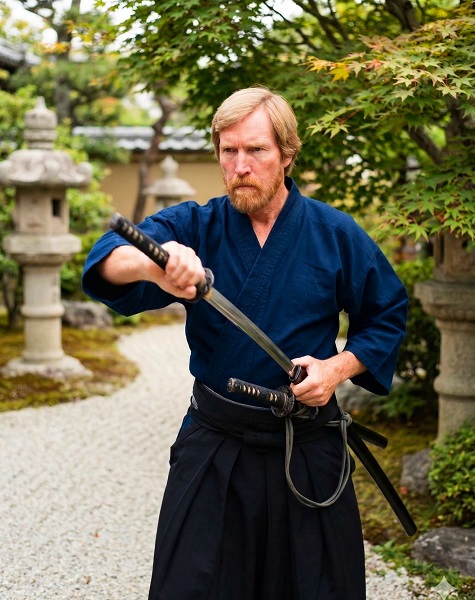
In contrast, many Asian traditions—while no less attentive to the body—favored restraint over overt muscular display. Classical Chinese and Japanese aesthetics often emphasized slenderness, posture, and controlled movement. Strength was to be internalized and efficiently expressed rather than prominently exhibited. Martial disciplines, for example, prized balance, precision, and economy of motion, reinforcing an ideal of the body as a coordinated and harmonious system.
Across these diverse traditions, a common thread emerges: the aesthetically valued body is one that reflects care, discipline, and functional integrity.
Historical Variability in Attitudes Toward Body Fat
Attitudes toward body fat have not been static, but they have been consistently shaped by material conditions. In pre-industrial societies, where food scarcity was common, increased body mass could serve as a visible indicator of wealth and access to resources. This is reflected in certain artistic traditions, particularly in early modern Europe, where fuller figures appear in portraiture of the elite.
However, such representations should not be misconstrue d as endorsements of excess in the modern sense. Even in periods where fullness was associated with prosperity, aesthetic ideals retained an emphasis on proportion and coherence of form. Extreme or debilitating levels of adiposity were not celebrated; rather, moderate fullness functioned as a symbolic marker within a context of scarcity.
With the advent of industrialization, this relationship underwent a fundamental transformation. Mechanization reduced the need for physical labor, while advances in food production and distribution increased the availability of calorie-dense nutrition. Over time, the conditions that once made body fat a sign of privilege became ubiquitous, particularly in developed nations.
The Modern Environment and the Proliferation of Excess
In contemporary American society, the convergence of sedentary lifestyles and the widespread availability of highly processed, energy-dense foods has created an environment conducive to chronic overconsumption. The result has been a significant increase in average body weight, including a marked rise in obesity and morbid obesity.
From a physiological standpoint, excess body fat—particularly at high levels—is associated with a range of adverse health outcomes, including cardiovascular disease, metabolic dysfunction, and reduced mobility. These consequences are well-documented and broadly acknowledged within medical and public health literature.
From an aesthetic perspective, excess adiposity alters the visible structure of the human form. Muscular definition becomes obscured, proportional relationships are distorted, and movement may be impaired. The visual clarity that characterizes the physically cultivated body gives way to a less defined and less dynamic appearance.
It is important to emphasize that these observations pertain to conditions and patterns, not to the intrinsic worth of individuals. However, a clear-eyed assessment of physical form and function remains essential for any meaningful discussion of bodily aesthetics.
Cultural Narratives and the Question of Responsibility
In recent years, cultural narratives surrounding body weight have evolved in ways that sometimes complicate discussions of health and aesthetics. Efforts to promote dignity and reduce stigma are both necessary and commendable. However, in certain instances, these efforts have been accompanied by a reluctance to acknowledge the role of lifestyle factors in the development of excess body fat.
The attribution of obesity primarily to genetic determinants, for example, can obscure the significant influence of environmental and behavioral variables. While genetic variation does affect metabolism and body composition, it does not negate the fundamental relationship between energy intake, energy expenditure, and body weight.
The modern American environment—characterized by frequent consumption of processed foods, large portion sizes, and limited physical activity—plays a substantial role in shaping population-level outcomes. To recognize this is not to assign blame, but to identify the conditions under which change is possible.
The Aesthetic and Ethical Case for Physical Discipline
The cultivation of a lean, fit, and proportionate body represents not merely an aesthetic preference, but an expression of discipline and self-regulation. Such a body reflects sustained engagement with one’s physical condition, including attention to nutrition, movement, and recovery.
Importantly, the ideal under consideration is not one of extremity. It does not require the pursuit of maximal muscularity or the attainment of elite athletic performance. Rather, it emphasizes balance: a body that is lean without being undernourished, muscular without being excessive, and capable without being strained.
This conception aligns closely with cultural traditions that prioritize moderation and harmony. In many Asian contexts, for instance, the ideal body is characterized by slenderness, posture, and controlled strength. These attributes reflect a broader philosophical orientation toward balance and sustainability.
From both an aesthetic and ethical standpoint, the disciplined body can be understood as a form of stewardship. It represents a commitment to maintaining the integrity and functionality of the human form over time.
Sexual Selection and the Aesthetics of Attraction
Human perceptions of attractiveness are influenced by a combination of cultural norms and biological signals. Across cultures, certain physical traits—such as symmetry, proportionality, and visible indicators of health—tend to be consistently associated with attractiveness.
A well-maintained body, characterized by appropriate levels of muscle and low to moderate levels of body fat, signals vitality and physical capability. These signals are relevant in the context of sexual selection, where they may influence perceptions of desirability and suitability for long-term partnership.
For both men and women, physical fitness contributes to posture, movement, and overall presence. These factors, in turn, shape interpersonal perception and romantic dynamics. While attraction is multifaceted and cannot be reduced to physical characteristics alone, the visual and physiological aspects of the body remain significant components.
Reaffirming the Body as an Object of Care
To regard the human body as a “temple of aesthetic beauty” is to affirm its value as both a biological system and a cultural artifact. It is to recognize that the body is responsive to care and neglect alike, and that its condition reflects accumulated choices over time.
In a contemporary context marked by abundance and convenience, the deliberate cultivation of physical fitness represents a form of intentional living. It requires the navigation of an environment that often promotes excess, and the adoption of habits that support long-term well-being.
A cultural recalibration toward these principles need not entail exclusion or disparagement. Rather, it involves a renewed emphasis on clarity: acknowledging the benefits of physical discipline, the risks associated with excess, and the enduring appeal of a balanced and well-proportioned human form.
Conclusion
The aesthetic appreciation of the human body has evolved across history, but certain core principles have remained remarkably consistent. Balance, proportion, and functional integrity have long been associated with beauty, reflecting both biological realities and cultural values.
In the modern era, these principles face challenges from environmental and cultural forces that promote excess and discourage discipline. Yet the underlying ideal persists: a body that is lean, capable, and well-maintained continues to represent not only an aesthetic standard, but a testament to human potential.
To cultivate such a body is not an act of vanity, but one of respect—for the form itself, for its capabilities, and for the traditions that have long recognized its significance. In this sense, the human body remains what it has always been: a living expression of balance, shaped by the interplay of nature, culture, and individual choice.
-----
NOTE 1: The foregoing is an AI construct, formulated after several AI LLM’s were consulted and invited to weigh-in on the subject of “fatness” in American society, a subject recently briefly explored by Yueyue Wang (which commentary inspired this).
Of particular interest is the fact that several AI LLMs refused categorically to even provide an opinion on the aesthetics and health aspects of excessive body weight, citing (in one instance) programming ‘guardrails’ built into it that prevented ‘fat shaming’, an example of purely ideological biases built into its matrix that frustrate open and uncensored free-inquiry into a contemporary issue of much importance in present day America.
NOTE 2: In the context of today’s ‘younger’ generations, it warrants observing that popular social media (visual) grossly over-emphasises certain extreme stereotypes of physical appearance in both genders, here in America.
Males are, if one is to give any credence whatsoever to the idealised-models promulgated by corporate commercial entertainment media, too frequently depicted as physically overdeveloped, superbly muscularly “buff” (endowed), hyper-masculine caricatures of testosteroned perfection, whereas females are similarly presented as ‘drop-dead-beautiful’ paragons of sexual desirability (big breasted, long silky hair, perfectly proportioned, pneumatically shaped figures, perfect facial symmetry and bone-structure, etc., etc., etc.).
The contrasting reality of factual reality demonstrates that these grossly sexualized parodies are as far from the ‘average’ individual as can possibly be imagined. The motivation behind the Blitzkrieg marketing of unreality lies in, again, the soulless Phillistine nature of American-style corporate, exploitive commercialism, which after all is solely interested in sucking vulnerable, gullible individuals’ pockets empty of any available discretionary income.
That is not to say that depicting average, everyday garden variety individuals instead of picture-perfect models would be more aesthetically appealing, but one nevertheless needs to be acutely mindful of the insidious character of this dynamic whenever interacting with that sort of super-fantasised media representation.





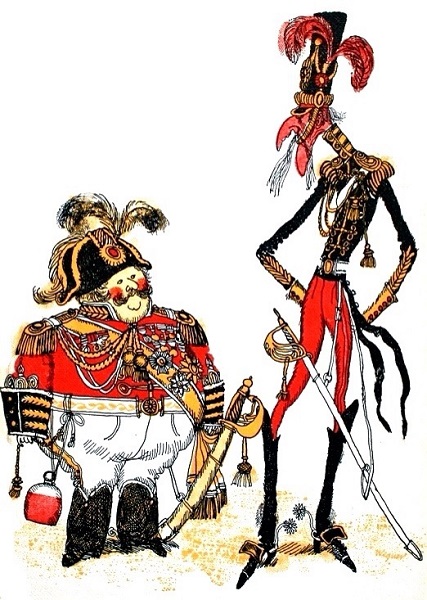














In primitive tribes, the tribal leader often exhibited obesity. Just like the followers of Buddha, have admired his happy disposition and shape as a sign of being healthy, wealthy and wise.
Even without the discourse in this article, maintaining an ideal body weight ratio by eating the right kind of food and having plenty of vigorous exercise has always been an indicator of a long and healthy life.
I prided myself, after I started cooking my own meals, with eating right and maintaining a 30.5 inch waist for 30 years from 20 to 50. At that point, I had to cut back even though my physical stress from creeping paralysis made even walking strenuous exercise.
But for the past 30 years, my exercise has declined, year by year and my provider/cook, while feeding me excellent food, tends to want to give me more than I should eat and I have gained some weight.
By contrast, my younger sister, only 5 feet tall, a few years back lost 80 pounds by fasting every other day. She needed to in order to continue living.
I am alarmed by all of the drugs now available for weight loss. I observed many following weight loss programs sold to them that didn't work and they died early. Like those weight loss programs, the drugs are very expensive. Long-term side effects are unknown and I'm afraid that only starting young with the right diet and exercise will people escape the perils of weight of life dealt with too late.
Ron