The Restoration of Rationalism: A Comprehensive Evaluation of the Germanic Two-Track Educational Model as a Corrective to the American Credentialing Crisis
Abstract and Premise:
The American educational experiment of the late 20th and early 21st centuries—defined by a singular, universalist mandate that "all children need to go to college"—has reached a terminal point of failure. Driven by highly idealistic progressive philosophies and enforced by a sprawling federal bureaucracy, this monolithic approach has paradoxically resulted in the erosion of academic standards, the explosion of student debt, and a workforce critically misaligned with the economic realities of the modern world. The pursuit of "equity" through the lens of Critical Theory and Neo-Marxist ideology has necessitated a systematic "dumbing down" of proficiency requirements, sacrificing competence on the altar of statistical parity.
As of 2025 and 2026, under the leadership of Secretary of Education Linda McMahon, the United States stands poised for a historic pivot. The current administration’s campaign to "return education to the states" and dismantle the federal administrative bloat signals an openness to alternative models that prioritize reality over rhetoric. This report argues that the most effective alternative lies in the rational, meritocratic traditions of Germanic Europe. The "two-track" (or multi-track) systems of Germany, Austria, and Switzerland—which assay student capability early and provide distinct, rigorous pathways for academic and vocational excellence—offer a proven blueprint for restoring integrity to American schooling.
By exhaustively analyzing the failures of the U.S. "college for all" paradigm—from the remedial education epidemic to the ideological subversion of math and reading standards—and contrasting them with the empirical success of the German Dual System, this paper advocates for a decisive shift toward the European model. The evidence suggests that a system grounded in the rational acknowledgment of differing human aptitudes is not only more economically efficient but fundamentally more humane, offering dignity and prosperity to the scholar and the craftsman alike.
Part I: The Crisis of the American Monolith
The "College for All" Fallacy and the Economics of Delusion
For decades, the guiding ethos of American education policy has been the belief that a four-year university degree is the sole legitimate pathway to the middle class. This narrative, propagated by guidance counselors, politicians, and the Department of Education, has transformed from an aspirational goal into a coercive societal norm. The result is a "credential bubble" that has distorted the labor market and devastated the financial futures of millions of young Americans.
The Debt Trap and the Erosion of ROI
The financial implications of the "college for all" mandate are catastrophic. By 2025, the cumulative U.S. student loan debt had ballooned beyond $1.7 trillion, a figure that acts as a massive drag on the macroeconomy. This debt burden forces delays in household formation, home ownership, and small business creation. The cost of attending college has risen by 749% since 1963, vastly outpacing inflation and wage growth.
Crucially, the "Return on Investment" (ROI) for this expenditure is increasingly questionable. While elite degrees in STEM fields continue to offer a wage premium, the average ROI for generic liberal arts degrees at non-selective institutions has plummeted. Conversely, the ROI for vocational and trade education has surged. Data from 2025 indicates that trade schools—specifically those offering certificate and associate degrees in fields like HVAC, plumbing, and electrical work—consistently outperform four-year colleges in short-term ROI. Institutions such as Unitek College and Brownson Technical School demonstrate 10-year ROIs exceeding $540,000, figures that rival or surpass the earnings of many bachelor's degree holders. Yet, the cultural stigma against "trade school" persists, driven by a K-12 system that views vocational education as a failure rather than a strategic choice.
The Remediation Epidemic: The Hidden Cost of False Proficiency
The push to matriculate every student has forced colleges to essentially function as expensive high schools. The statistics on remedial education—non-credit courses designed to teach basic math and reading to entering college freshmen—expose the hollowness of the American high school diploma. In 2024, the total enrollment in remedial education remained staggeringly high at 66.1% across all institutions, with community colleges seeing rates of 25.5% and universities 40.6%.
This phenomenon represents a fraudulent transfer of wealth. Students, often financed by federally subsidized loans, pay tuition for courses that do not count toward graduation. The efficacy of these programs is abysmal: research indicates that only about 25% of students placed in remedial education earn a degree within eight years. Students placed in remedial math have only a 10% chance of ever passing a college-level math course. The system accepts academically unqualified students, collects their tuition, and discharges them with debt but no degree. This is the direct result of a primary and secondary education system that prioritizes graduation rates over actual competency, a metric-gaming strategy that Secretary McMahon has rightly criticized as "disillusioning" and "misleading".
The Ideological Roots of "Dumbing Down": The Frankfurt School Legacy
To understand why American schools have retreated from rigorous standards, one must examine the philosophical currents that have reshaped the curriculum. The shift is not merely a result of bureaucratic incompetence but a deliberate ideological project rooted in the application of Critical Theory to pedagogy.
The intellectual genealogy of the current educational malaise can be traced to the "Frankfurt School" of social theory, and specifically to the work of neo-Marxist philosopher Herbert Marcuse. Marcuse’s theories, particularly his 1965 essay "Repressive Tolerance," argue that the neutrality and objectivity of liberal institutions are shams that serve to reinforce oppressive power structures. In this worldview, "tolerance" of traditional standards and meritocratic sorting is actually "repressive" because it perpetuates the dominance of established groups. True liberation, for Marcuse, requires "intolerance" toward prevailing policies and attitudes. This ideology has thoroughly colonized American Colleges of Education, where teachers are trained. It manifests as "Critical Social Justice" (CSJ) pedagogy, which views academic disparities not as problems of instruction or effort, but as evidence of systemic injustice. Consequently, rigorous grading, standardized testing, and advanced tracking are attacked as tools of exclusion. If a standard produces unequal outcomes across racial or socioeconomic lines, the Critical Theorist argues that the standard itself is racist or classist and must be dismantled.
The War on Standards: Grading for Equity and Detracking
The practical application of these theories has led to policies that explicitly remove incentives for excellence. The "Grading for Equity" movement, championed by consultants like Joe Feldman, advocates for the elimination of zeros for missing work, the removal of penalties for late assignments, and the decoupling of behavior (like attendance and participation) from academic grades. Proponents argue this makes grading more "accurate" and "equitable," but in practice, it removes the feedback loops necessary for student growth. Teachers report that these policies "encourage students to do the minimum," creating a culture of mediocrity.
Furthermore, the push for "detracking"—placing students of all ability levels in the same classroom—has led to the elimination of honors and advanced courses in the name of equity. In districts like Culver City and formerly in San Francisco, honors classes were scrapped to avoid "racial sorting". This does not lift struggling students up; it drags high-performing students down, denying them the challenge they need to reach their potential. It is a "leveling" operation consistent with the socialist impulse to prioritize equality of condition over individual achievement.
Case Studies in Academic Retreat: Oregon and California
The consequences of this ideological capture are visible in state-level policy disasters that have essentially legalized illiteracy and innumeracy.
Oregon: The Optional Diploma
In a stunning abdication of educational responsibility, the Oregon Department of Education suspended the "Assessment of Essential Skills" requirement for high school graduation. Previously, students were required to demonstrate proficiency in reading, writing, and mathematics to receive a diploma. Senate Bill 744, passed in 2021 and extended through the 2027-2028 school year, removed this requirement.
The justification for this suspension was explicitly rooted in "equity" arguments. Supporters claimed that the standardized assessments harmed "marginalized students" and "students of color". The implicit, bigotry-of-low-expectations logic here is devastating: it presumes that minority students are incapable of meeting basic academic standards. By removing the requirement, Oregon has devalued its high school diploma, turning it into a participation trophy rather than a credential of competence. It validates the critique that "woke" educational policies prioritize feelings over facts, leaving students ill-equipped for the realities of the workforce.
California: The Math Wars and the Algebra Ban
California has been the epicenter of the battle against rigorous mathematics. The 2023 California Math Framework, heavily influenced by progressive pedagogues like Jo Boaler, discourages "tracking" and emphasizes "inquiry-based learning" over procedural fluency. The framework has been criticized by STEM professionals as a "dumbing down" of the curriculum that delays access to Algebra I and, consequently, Calculus.
The failure of this approach was most dramatically illustrated in the San Francisco Unified School District (SFUSD). In 2014, the district eliminated Algebra I for 8th graders, forcing all students into a uniform, slower track. The stated goal was to reduce racial disparities in advanced math participation. A decade later, the data revealed the policy was a catastrophe: it failed to close the achievement gap and instead drove families to private schools or expensive tutoring, widening the divide it sought to close. In March 2024, San Francisco voters overwhelmingly passed Proposition G to urge the return of 8th-grade Algebra, a stinging rebuke to the educational establishment. This episode demonstrates that when "equity" is pursued by suppressing excellence, the result is mediocrity for all.
Part II: The Germanic Alternative — Rationalism, Rigor, and Reality
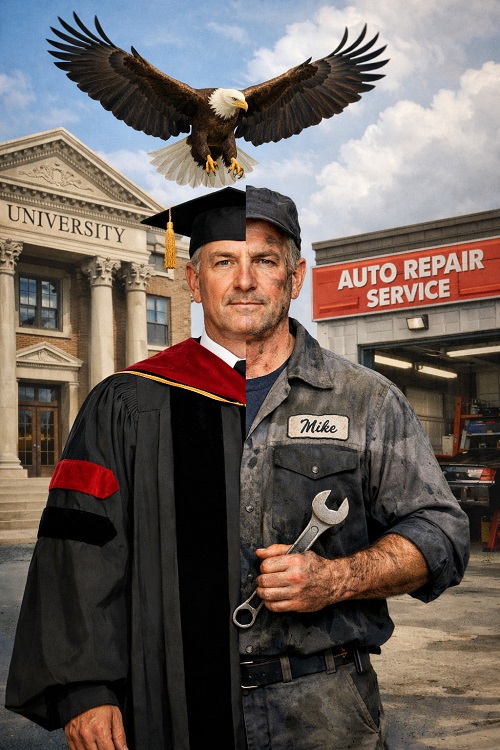
In stark contrast to the confused egalitarianism of the U.S. system, the education systems of Germanic Europe (Germany, Austria, Switzerland) are built on a foundation of Rationalism (Rationalismus) and Realism (Realismus). The German model does not pretend that every child is destined for the professoriate; instead, it respects the diversity of human talent by providing distinct, high-quality pathways for different aptitudes. It is a system that values the "intelligence of the hand" as much as the "intelligence of the head."
The Tripartite Structure: A Place for Every Talent
The German system assesses students after primary school (Grundschule, usually around age 10) and tracks them into one of three secondary school types. While this early separation is often criticized by American progressives as "elitist," it is defended in Europe as the most efficient way to tailor instruction to student needs and maximize potential.
Gymnasium: The Path of the Scholar
The Gymnasium is the academic track, designed for the top 30-40% of students who demonstrate high intellectual aptitude. The curriculum is demanding and theoretical, focusing on multiple languages (often including Latin), higher mathematics, and the sciences. The goal is the Abitur, the rigorous qualification required for university entrance. Unlike a U.S. high school diploma, which varies wildly in quality, the Abitur guarantees a baseline of high-level academic competence.
Realschule: The Path of Commerce and Administration
The Realschule targets the middle tier of students and leads to the Mittlere Reife diploma. It combines robust academic education with practical skills, preparing students for high-level apprenticeships in administration, healthcare, IT, and technical fields. It is the backbone of the German white-collar and technical workforce.
Hauptschule: The Path of the Trades
Historically the track for manual trades, the Hauptschule focuses on practical skills and readiness for the Dual System. While enrollment has declined in favor of the other two tracks, it remains a vital pathway for students with strong practical intelligence who struggle with abstract theory.
The Mechanism of Tracking: Meritocracy in Action
The process of tracking varies by state (Bundesland), reflecting the federalist nature of German education—a parallel to the "states' rights" approach advocated by Secretary McMahon. In Bavaria (Bayern), widely considered the gold standard for educational rigor in Germany, admission to the Gymnasium is strictly performance-based. A student must achieve a specific grade point average (typically 2.33 or better in German, Math, and Social Studies/Science) to gain direct entry. This reliance on objective metrics prevents the system from being gamed by wealthy parents or diluted by social promotion.
However, the system is not ruthless; it is rigorous. If a student misses the grade cutoff, they can attempt the Probeunterricht (trial lesson), a three-day battery of oral and written exams. If they pass this independent assessment, they are admitted regardless of their primary school grades. This mechanism ensures that "late bloomers" or students with difficult teachers have a path, but that the path requires demonstrated competence. Studies have shown that these binding recommendations significantly improve student achievement by ensuring students are placed in environments that match their current capabilities.
The Dual System (Duale Ausbildung): The Crown Jewel
The defining feature of the German model, and the one most relevant to the U.S. crisis, is the "Dual System" of vocational training. Approximately 50% of German school leavers enter this system, which combines classroom instruction at a state-funded vocational school (Berufsschule) with on-the-job training at a private company.
Economic Integration and "Corporatism"
Unlike U.S. "trade schools," which are often disconnected from the labor market, German apprenticeships are market-driven. The Chambers of Commerce and Industry (IHK) and Chambers of Crafts (HWK) set rigorous national standards for over 320 recognized occupations. An apprentice Mechatronics engineer in Munich takes the same final exam as one in Hamburg, ensuring the credential has universal currency.
This system requires deep cooperation between the state (which funds the schools) and the private sector (which pays the apprentices). Employers view training not as a cost, but as an investment. They pay apprentices a monthly stipend, often rising to over €1,000 in later years, effectively paying students to learn. This eliminates the "student debt" problem for half the population.
The Master Craftsman (Meister) vs. The Bachelor
The cultural genius of the German system lies in the prestige and economic value accorded to vocational mastery. The qualification of Meister (Master Craftsman) allows one to run a business and train apprentices. In the European Qualifications Framework (EQF), a Meisterbrief is classified at Level 6, the exact same level as a Bachelor's degree.
This parity is not just symbolic; it is economic. Research by the Ifo Institute shows that over a lifetime, a Master Craftsman earns approximately €129,000 more than a standard apprenticeship graduate, and often rivals or exceeds university graduates in fields like social work or the humanities. In many technical trades, a Meister can out-earn university-educated professionals, challenging the U.S. narrative that a degree is the only path to wealth.
Part III: Comparative Efficacy — Ideals vs. Outcomes
When we move from the realm of theory to the hard data of economic and social outcomes, the superiority of the two-track system becomes irrefutable. The U.S. system, obsessed with "equity," produces inequitable economic outcomes and social fragmentation. The German system, obsessed with "competence," produces broad-based economic security and social cohesion.
Youth Unemployment and the NEET Crisis
|
Region/Country
|
Youth unemployment rate
|
NEET Rate
|
|
Germany
|
6.7%
|
Low
|
|
USA
|
8-9%
|
Gap widening
|
|
Spain
|
27%
|
25%
|
|
Italy
|
22%
|
21%
|
The most damning metric for the U.S. and Southern European "college for all" systems is youth unemployment. In countries where vocational training is stigmatized and university is the default (e.g., Spain, Italy, and increasingly the U.S.), youth unemployment rates remain stubbornly high.
Comparative Youth Unemployment & NEET Rates (2024-2025 Data)
In Germany, the transition from school to work is seamless because the work begins during school. German youth are integrated into the labor force as apprentices at age 16 or 17. In the U.S., college often functions as a "waiting room" for the unemployed, delaying entry into the workforce until age 22 or 23, often with no marketable skills. The data clearly shows that the "dual" approach insulates youth from economic downturns.
The Skills Gap and Industrial Competitiveness
The U.S. faces a chronic "skills gap." There are millions of unfilled jobs in manufacturing, construction, and technical services because the workforce lacks the specific competencies required. A 2025 survey indicated that 91% of Americans view skilled trades as essential, yet 86% feel these careers are overlooked in schools. The U.S. construction industry alone projects a need for 660,000 new workers annually, positions that cannot be filled by Liberal Arts graduates.
Germany does not face this structural mismatch to the same degree. The Dual System ensures that the supply of skills automatically adjusts to the demand of the economy. If the automotive sector needs fewer mechanics and more software-savvy mechatronics engineers, the apprenticeship curricula and slot availability adjust accordingly. This responsiveness is why Germany remains an industrial powerhouse, exporting high-value manufactured goods, while the U.S. has seen its industrial base erode.
Societal Stability and the "Dignity of Labor"
Critics of tracking argue it calcifies class structures. However, the U.S. system of "credentialism" has created a far more pernicious class divide: the "diploma divide." Those without a college degree in the U.S. are often treated as second-class citizens, culturally and economically, leading to the "deaths of despair" phenomenon in the working class.
In Germanic countries, the Berufsstolz (professional pride) of a tradesperson is palpable. A Meister is addressed with respect; their qualification is a mark of excellence. By validating practical intelligence, the German system integrates a broader segment of the population into the middle class. The "woke" critique that standards are oppressive ignores the reality that competence is liberating. A student who masters a trade has agency, economic power, and self-respect—outcomes that vaguely defined "social justice" curricula fail to deliver. Furthermore, job satisfaction surveys often show that skilled tradespeople report higher levels of happiness and meaningful work compared to lower-tier white-collar office workers, whose jobs are increasingly threatened by AI.
Part IV: The McMahon Shift — A Return to Realism
The initiatives launched by Secretary of Education Linda McMahon in 2025 and 2026 represent a pivotal moment—a recognition that the American experiment with universal academic college preparation has failed. Her policies align remarkably well with the principles of the German model, presaging a shift toward a neo-dual system adapted for the United States.
"Schoolcraft" vs. "Statecraft": Redefining Institutional Mission
In a landmark address at Hillsdale College in September 2025, Secretary McMahon distinguished between "statecraft" and "schoolcraft." She praised Hillsdale as an archetype for "swimming against the current" and called for institutions to stop being "disillusioned and misled." Instead, they must focus on forming students who are "equipped for career success".
McMahon outlined four recommendations for educational leaders:
1. Prioritize Personal Growth: Admissions should be rigorous and merit-based, not manipulated by diversity quotas.
2. Seek and Serve the Truth: A rejection of the "repressive tolerance" that silences dissent.
3. Preserve and Defend Civilization: A return to teaching the foundations of the West, rather than deconstructing them.
4. Model Intellectual Leadership: Producing thinkers, not bureaucrats.
This rhetoric mirrors the German emphasis on Bildung (character formation) and Ausbildung (skills training). Her critique of the "many administrators, few leaders" problem touches on the inefficiency of the U.S. model, where resources are diverted to non-academic bureaucracy (often DEI-related) rather than instruction.
The "Returning Education to the States" Tour
Secretary McMahon's 50-state "Returning Education to the States" tour is not merely a public relations exercise; it is a structural realignment strategy. By visiting facilities that embody the "dual" approach, she is explicitly validating vocational tracking.
-Newnan, Georgia: McMahon visited the Central Education Center, a charter school that blends high school academics with technical training in aviation and dental assistance. She praised it as a model of "locally driven solutions" that prepare students for "jobs of tomorrow".
-Rhode Island: At Exeter-West Greenwich Regional Junior High, she highlighted the importance of state autonomy and the failure of federal "one-size-fits-all" mandates.
-Kentucky: Her visit to Bluegrass Community and Technical College underscored the vital role of post-secondary trade education.
These visits signal a federal blessing for states to deviate from the "college prep" norm and experiment with German-style vocational integration.
Strategic Alignment with the Department of Labor
Perhaps the most significant structural change is the new partnership between the Department of Education and the Department of Labor. At the 2025 ALEC Annual Meeting, McMahon announced a memorandum of understanding (MOU) to move workforce-related education programs out of the Department of Education and align them with the Department of Labor.
This move is a tacit admission that vocational training is an economic imperative, not just an educational option. It mirrors the German governance structure, where the Federal Ministry of Education works hand-in-glove with economic ministries and industry associations to regulate the Dual System. By treating vocational education as workforce development rather than "second-tier schooling," the McMahon administration is elevating its status and ensuring it meets market needs.
The "Final Mission": Dismantling the Bureaucracy
In her "Final Mission" letter to Department employees, McMahon articulated a vision of "elimination of bureaucracy" to free schools to pursue "meaningful learning" rather than compliance with "divisive DEI programs". This deregulation is essential for a two-track system to flourish. The current federal regulatory regime, with its heavy emphasis on standardized testing for all students in academic subjects, makes it difficult for schools to offer robust vocational tracks that might not align with federal testing mandates. Shrinking the Department allows states the freedom to innovate.
Part V: The Case for the Two-Track System in America
The argument for adopting a German-style two-track system in the U.S. is not an argument against the liberal arts; it is an argument against the counterfeit liberal arts. It is a plea to stop lying to students about their prospects and their aptitudes.
The Moral Case: Honesty vs. "Equity"
The "progressive" approach, which insists on keeping all children in the same academic track regardless of aptitude or interest, is fundamentally dishonest. It relies on grade inflation, the removal of objective standards (like the Oregon graduation requirements), and the demonization of merit to maintain the illusion of equality. This does not help the struggling student; it sets them up for failure in the real world, where competence matters.
A two-track system is more ethical. It tells a student: "Your talents lie in the mechanical, the practical, the spatial. Let us honor that talent by giving you the best possible training in it, rather than forcing you to sit through a diluted calculus class that serves neither your interests nor your future." It respects the student enough to tell them the truth.
The Economic Case: Restoring the Middle Class
The "College for All" model has hollowed out the American middle class, creating a bifurcation between a credentialed elite (many of whom are actually underemployed) and a low-wage service sector. A robust vocational track restores the "missing middle." It provides a pathway to six-figure incomes for plumbers, electricians, machinists, and technicians without the crushing burden of student loans.
Data from 2024-2025 confirms that the "Bachelor's premium" is shrinking, while the "skills premium" is rising. The U.S. economy is desperate for the very skills the German system produces in abundance. By shifting to a dual model, the U.S. can reduce income inequality not by redistribution, but by increasing the earning power of the non-college-educated workforce.
The Intellectual Case: Saving the University
Paradoxically, the best way to save the American university is to send fewer people to it. By funneling students with non-academic interests into universities, we have forced these institutions to lower their standards, turning them into remedial centers and incubators for grievance studies.
If the U.S. adopted a Gymnasium-style track for the top 30-40% of academic performers, universities could return to their true mission: the pursuit of higher knowledge and research. This aligns with McMahon’s call for universities to be "think tanks of American civic life" and to "seek and serve the truth" rather than functioning as glorified job training centers for reluctant students.
Addressing the "Classism" Critique
Critics will inevitably argue that tracking is classist and that it segregates low-income students. However, the current U.S. system is far more effectively segregationist. Wealthy families can buy their way out of failing public schools or hire tutors to navigate the "dumbing down," while poor families are stuck in schools that have abandoned standards in the name of equity.
The German system is meritocratic. A poor student with high aptitude can attend the Gymnasium for free. A wealthy student with low aptitude is steered toward vocational training (or must pay for private schooling, which carries less prestige in Germany). Furthermore, the permeability of the German system—where a Meister can enter university—ensures that tracking is not a life sentence but an initial orientation.
Summary & Conclusion
The Courage to be Rational
The United States stands at a crossroads. One path—the path of "College for All," Critical Theory, and equity-driven grading—leads to a less capable, more indebted, and more socially divided citizenry. It is a path of "idealistic" decline, where the pursuit of a utopia of equal outcomes results in a dystopia of equal incompetence.
The other path—the path of the German Two-Track system—leads to competence, economic security, and mutual respect. It is a path of "rational" prosperity. It acknowledges the reality of human difference and builds a system that maximizes the potential of every citizen, whether their genius lies in the library or the laboratory, the boardroom or the building site.
Secretary Linda McMahon’s campaign to "return education to the states," her embrace of vocational training, and her willingness to dismantle the bureaucratic structures of the "woke" consensus represent the first serious attempt in generations to choose the second path. By breaking the monopoly of the university, restoring rigor to the curriculum, and honoring the dignity of the trades, the U.S. can build an education system that is not just "freer and stronger," but one that actually works. The era of the "diploma mill" is over; the era of the "Master Craftsman" must begin.
----------------------------------------
Citations used in report: (are available upon request)
Note: This is a collaborative paper prepared by K. Kalei with LLM synthesis and augmentation.