The Fatherland may be in grave danger…
by Robert A. Odorfer (2015)
Very early historical background
Germany's favorite patriotic song of a century ago, 'The Watch on the Rhine', comforted German Emperor Wilhelm II and his devoted subjects with its inspiring chorus: "Dear Fatherland, no danger thine, firm stand thy sons to guard the Rhine" Today a real possibility exists of a danger lurking for the German people far greater than it did in 1648, again in 1919 and again in Hour Zero 1945.
Why did these three catastrophic events happen to Germany? Let us return to the early 17th century - a time when the Reich's neighbors were developing empires by confiscating lands from native people all around the world. Holland was the only Germanic state then active in the colonial enterprise, but suffered a great loss when in 1664 England grabbed Holland's valuable New Amsterdam possession: the N.Y.C. Greater Metropolitan Area. This future metropolis prospered into greatness due to the Germanic work ethic and culture the German Hollanders taught their new British masters. England and France later colluded to agree on each other's colonial properties, with the aim of forging an alliance against any German interest in colonialism.
London had become concerned already in the early 1600s of a prevailing threat to her economy from the Reich's annually expanding trade networks: '...German rivers and highways bustled with activity, as sugar processed in Hamburg refineries made its way throughout the continent, and English wool woven in Germany competed with English cloth on the world market. Russian furs came out of Leipzig, salt fish from Luebeck, oriental silk via Augsburg, and wood to build the Spanish Armada was shipped from Danzig.'
In 1618, the German Empire descended into a civil war mostly over ownership of properties belonging to the church that totaled 50% of Germany's land area. What would be called the Thirty Years War naturally stifled the Reich's foreign trade. Envious neighbors then took advantage of the situation. Through deception and hypocrisy, the foreign schemers fueled German disunity by supporting the weaker Protestant troops to keep the war going. Catholic France supported the Protestant cause, as did Denmark, Sweden and England, while a Czech Protestant Generalissimo led the Catholic armies against the Protestants.
After fighting each other for seventeen years, the Protestant German princes finally realized that the true aim of the foreigner was the complete destruction of Germany. The Reich's civil war then ended with a reconciliation between the Protestants and Catholics at the 1635 Peace of Prague. However, the foreign armies wouldn't leave the Reich once the religious peace was made. The foreigners went on to battle the united German armies until 1648.
Following 30 years of pillaging Germany, the hostilities finally ended - but not before the Fatherland's 1618 population had been reduced from 22 million souls to about eight million in 1648. Most German cities were in ruins, their factories burned down and the working class had vanished. A popular saying among the foreign mercenaries/contractors was that they each needed three Germans, one to take his home, two to take his wife and the third for a German to take his place in hell.
"We are now wholly, yea more than wholly devastated," wrote poet Andreas Gryphius. "The band of presumptuous nations, the raving trumpets; the sword oily with blood, the thundering cannon-royal, have consumed the fruits of all our sweat and travail. The towers stand in flames, the church is overturned, the town hall lies in ruins, the stalwart are hacked to bits, the maidens are deflowered, and everywhere we look: fire, plague and death oppress the heart and soul." A popular German song then ended with the line: “There is no hope here."
The Treaty of Westphalia
In 1648, foreign representatives met with the Reich's leaders in the Westphalian towns of Muenster and Osnabruck. The evil strangers treated Germany as the aggressor when the complete opposite was the truth. Among the numerous penalties and reparations Germany was obliged to pay for peace and an end to the foreign occupation included:
1) Five strategic fortifications along the Franco-German border had to be razed - giving France an open invitation to seize the German provinces of Alsace and Lorraine. 2) Sweden demanded an immense financial indemnity from Germany, plus the state of Pomerania, Mecklenburg and some other northern German territories. 3) The treaty prohibited the ancient German states of Holland, Luxemburg and Switzerland from ever becoming a part of Germany again. 4) Germany itself was cut up into 1800 provinces, and 300 of them were given full sovereignty. Henceforth, the emperor was reduced to a mere figurehead, just a shadow of his once glorious past. 5) The most damaging punishment dealt the Reich at Westphalia was the crippling of German commerce and trade. The enemy accomplished this by cunningly depriving the Germans of access to the open sea from the mouths of their rivers, giving sole control of the German port cities to the Swedes, Danes, Dutch and the Poles. Once the mightiest naval power on the northern ocean, Germany was made landlocked, and just at the time when her trading competitors were building colonial empires around the world.
So it was in August 11, 1650, that the last contingent of foreign soldiery departed German soil. '...celebrations of the peace, and an end to the occupation took place across the Reich. Boys and girls who hitherto had known only war, marched solemnly to the parish churches where they sang hymns of Thanksgiving before the cities' and villages' surviving assembled adults.'
The Recovery from The Thirty Years War and Westphalia Treaty
The Holy Roman Empire of the German Nation that for more than eight centuries had protected the Church, and oftentimes saved European civilization from Asiatic and African intruders, laid prostate in 1648, almost totally destroyed by its neighbors. Once the behemoth nation on the continent, very capable for centuries to annex lands from the weaker states bordering its frontier, never succumbed to acts of illegal expansion. But once the Reich plunged into civil war over religious issues, her enemies weren't so peaceful. They invaded, while exhorting to champion religious freedom, but soon revealed their true intentions: the destruction of the Empire - its wealth, economy and population.
The Germans commenced their reconstruction by first taking advantage of the forced decentralization of the empire into 1800 independent provinces, something her enemies thought would be crippling, thus making the emperor's ability to rule almost impossible. Ironically, the smaller areas made it easier for the numerous governments to administer, and moreover, the aristocracy often enlisted the aid of the recovering middle class to help operate the government, so as creating a new bureaucracy. This new policy strengthened the state and improved education for all. In regions where depopulation reached a critical point, men were permitted to take two wives, and Catholic priests married, ignoring the Vatican.
Before the war, the average German city had a budget surplus, but in 1650, decades of financial demands made on them by the foreign mercenaries had placed the cities in great debt. High interest costs to pay off the loans added to the heavy burden German cities faced in those trying times. As Emperor Ferdinand III went about Germany trying to heal the wounds of war, the princes respectfully followed his instructions, even though they were no longer sworn to do so. As decades passed, Germany slowly recovered from the ashes, although it took more than a century for the most damaged states to return to some point of normalcy.
Impeding the recovery were periodic invasions of Germany. In 1667, Louis XIV of France sent his army into Germany to annex Alsace-Lorraine. France continued invading German lands until a peace was signed in 1714. Sweden invaded Brandenburg in 1675 while its Duke Friedrich Wilhelm was fighting the French alongside the emperor on the western front. The duke returned home immediately with his army and defeated the Swedes at the Battle of Fehrleben. The Swedish surrender enabled Germany to recover lands ceded to Stockholm by the Westphalian treaty. In 1683, the Reich was invaded by a huge Turkish army supported by France. At the historic Battle of Vienna, the Turks were defeated with the help of Polish cavalry and never threatened Europe again. Wars with the French aggressors began again in the 1790s, and continued until 1815, when the French emperor Napoleon 'met his Waterloo.' A Continental Congress was held in Vienna that year to heal the damage France had perpetrated on Europe from Spain to Russia during the Napoleonic Wars. But Germany once more was treated unfairly, even though German soldiery was critical in the battles to defeat Napoleon:
1) France was allowed to keep the German provinces of Alsace and Lorraine. 2) Holland, Switzerland and Luxemburg were again, as they were at Westphalia, forbidden to be recognized as a part of Germany. 3) The re-establishment of a German emperor was denied, thus thwarting unity and a strong central government. (The last German emperor, Franz II, gave up the thousand year German imperial crown of Charlemagne in 1806. In addressing the Diet and nation in a letter, Franz II explained that because of Napoleon's control of so many German states, "...it is impossible for us to exercise our imperial right any longer, so we deem it our duty to renounce the crown." 4) Germanophobes were in the majority at the Vienna Congress and heavily influenced the Reich's delegates in preparing a constitution for Germany, now called the German Confederation - officially dissolving the former Holy Roman Empire of the German Nation. The Congress illegally prohibited the German leaders to ever change their constitution themselves at a later date. German Field Marshal Bluecher, the hero of the Battle of Waterloo that defeated Napoleon, "...grimly compared this congress to the annual cattle fair. No disgrace was spared the German people."
The Second Reich
In 1862, Otto von Bismarck was appointed chancellor of Prussia, at that time the largest German state. Since the early 1800s, Germany's population had gradually increased due to a higher birthrate and better sanitation in the towns, along with decades of peace following Napoleon's demise. German cities boasted a grand building boom, and modern factories fueled the industrial revolution sweeping the world. Germany's 1800 state conglomerate created at Westphalia in 1648 had been reduced by Napoleon at the dawn of the 19th century to 38 sovereign states. The French despot dominated most of Europe at that time, and decided he could tax and control the Germans better with larger but fewer satellite states. Napoleon's greed made it easier for the Germans to reunite seventy years later.
After a fast chain of historic events with Chancellor Bismarck at the helm, and supported by his monarch, King William of Prussia, Bismarck first eliminated rival Austria as a leader of the other smaller German states of the Confederation. Then in 1870, with Napoleon's nephew on the throne of France, Paris declared war on Berlin over a trivial diplomatic insult, but France was roundly defeated in battle by Prussia and several allied German states. Princes and dukes of the German Confederation assembled at the Palace of Versailles outside Paris in 1871, and voted to proclaim King William of Prussia the emperor of a united Germany, ignoring the spiteful Westphalian Treaty and the unfair Congress of Vienna. Alsace and Lorraine rejoined the Fatherland after suffering two centuries French occupation.
Prelude to World War
Between the years 1870 and 1914, the German Empire became once more the economic power house of Europe. Germany gained respect around the world for its honest trading practices and fine quality of manufactured goods. Medicine, science and engineering made enormous progress in 19th century Germany, giving the world: X-Rays, Aspirin and the modern university system, among other outstanding gifts too numerous to list, such as the automobile. In the 1880s, Chancellor Bismarck embarked on a plan to acquire overseas colonies, ignoring England's resentful attitude toward German international expansion. Through mostly diplomacy and purchase, the Reich took possession of important, treasure filled lands in Asia and Africa. With few exceptions, the German colonial administrators were respectful to the native populations. 'In world trade, German steel outran the British, and in a hundred new fields of production and commerce, where intelligence and system were more account than mere trader's cunning, in the manufacture of optical glass, of dyes and chemical products, and in endless novel processes, Germany led the world. By 1908, emigration from Germany to America had practically ceased, for the Reich's mines and factories had so far developed as to give employment to all. By 1910, Germany had almost as many large cities as the rest of Europe combined. By 1913, The Reich's population had climbed from an 1880 figure of 49.2 million to 69.9 million Volk, and in the relative share of world manufacturing output, Germany's rose 74%, while Britain lost 41%'.
In England and France at that time, unlike peaceful and prosperous Germany, labor discontent had bred waves of strikes resulting in turmoil. Scotland was seeking independence from England and planning to leave the British Empire. Unemployment, poverty and squalidness forced London to take corrective measures; Paris then resorted to ruthless suppression to put down its workers. There seemed no end in sight, so the two wretched nations deviously diverted their citizens attention towards a foreign scapegoat to blame - Germany - and secretly planned her demise.
The seed to start war with Berlin was sown when a Serbian activist, directed by the pan-Slavic Serbian Black Hand, on June 28, 1914 assassinated Prince Francis-Ferdinand, the popular heir to the Austrian throne. 'The occasion for the war was planned by the Serbian Free Masons, and the assassin-team was financed by the Russian military attache in Belgrade with the Czar's blessings. Vienna suspected Serbian government involvement, so requested permission for Austrian agents to carry the investigation of the assassination into Serbia, but Belgrade refused. The Serbs were then given an ultimatum to comply or face war. Emperor Wilhelm II of Germany sided with Austria in the matter, but advised Emperor Franz Josef to limit the Austrian invasion to a short occupation of Belgrade then close the investigation. It was at this unsafe time that France's top leaders left for Moscow to meet with the Czar, to very probably plot war against Germany and Austria, well aware that England would be eager to join in with them.
The Great War 1914-1918
Russia began mobilizing its huge army in July of 1914, which was an official act of war. Greatly worried, Emperor Wilhelm II sent an ultimatum to his cousin, Czar Nicholas, demanding he stop the mobilization. Paris also received a ultimatum from Berlin, directing France to remain neutral if a war erupts between Germany and Russia. Both German ultimatums were ignored, forcing Wilhelm II to declare war on Russia, August 1, 1914, and then commence his own mobilization. The Czar's army, once mobilized would be three times bigger the Germany's. What the Kaiser didn't know at that time was that Russian troops were already marching to the German frontier. Two days later, the Reich declared war on France. Wilhelm II then asked for permission from Belgium to allow his army to pass through its country to get at France, but Belgium refused. The Germans invaded Belgium anyway. The Kaiser pleaded to the neutral nations to understand that his illegal action against Belgium was for the purpose of ending the war as soon as possible, and therefore saving thousands of lives. England was unimpressed, and asserted its 1839 treaty with Belgium had been violated. London declared war on Germany on the 4th of August, 1914, commencing the First World War.
The German people were shocked to hear that England had declared war on them, especially so for such a trivial cause: '...a scrap of paper,' as described by their emperor. But unknown to Berlin was that London futurists in the foreign office had been secretly planning for war with the Reich for decades, scheming in political circles with Russia and France, even landing troops and war supplies in Belgium, and just waiting for the right moment.
Germany's enemies were the British and French empires, Serbia, Italy and Russia - first called the Entente - later, with America aboard called the Allies; the Reich's partners in war were: Austria-Hungary, the Ottoman Empire (Turkey), Romania and Bulgaria. They were called the Central Powers.
Germany's General Staff anticipated a slow Russian response, so dispatched the bulk of its army into France, expecting to encircle Paris, thus forcing a French surrender before the English crossed the Channel in large numbers - then deal with the Czar's army. But Russia had long been covertly preparing for war, and in a surprise offensive, unique in her history, Russian armies were able to overwhelm Germany's eastern defenses. German soldiers then had to be diverted from the Western Front to stop the Moscow's invading force.
Thus began four years of trench warfare that bled the young men of Europe. Millions on both sides fell running back and forth from one trench to the other - never really conquering any strategic location. Snipers, Machine-gunners, incompetent officers and poison gas made the war a hell for all.
Emperor Wilhelm II early in the fighting requested US President Woodrow Wilson mediate a fair end to the war. Tragically, Wilson talked peace with a forked tongue while his deceitful emissary, Colonel House, was sent to London to find ways to get America involved in the war on England's side. The American people were subjected to unscrupulous anti-German propaganda by the English government, accusing the Germans of bayoneting Belgian babies, and similar lies. Ten thousand small town newspapers were bought by Englishmen and Anglophiles to subject Americans to their untruthful slandering of Germans as a race. The British Navy had broken the Atlantic cable connecting the USA and Germany, resulting in Americans hearing only London's reports and commentaries on the war.
Native born Americans in the thousands wanted to believe British tales of German atrocities, and so menaced ethnic German citizens across the nation. Wild mobs broke into homes to assault their prey. The victims were often horse whipped, some hung on trees to die. Even German dogs weren't safe as hundreds of German Shepherds and Dachshunds seized from residences were dragged to a park in St. Louis to be burned in a 'patriotic pyre.' Among other countless anti-German crimes perpetrated by the evil hypocrites was banning the teaching of German in public schools and prohibiting music of German composers in concert halls. Yet, it was a German-American General Pershing who led the American Army to victory in Europe.
Ironically, only a few decades earlier, prominent English writers wrote how great it was that menacing and arrogant France had been "...replaced as leader of Europe by the 'peace loving, brave, industrious, firm and noble race of Germans." (T. Carlyle). And, "Germany's power in our day is one of the safest guarantees of European peace." (S. Whitman).
Russia surrendered to Germany in 1917. A great offensive was then planned by Berlin utilizing soldiers freed from the Russian front, and the war appeared won for Germany. But then tragedy struck. President Wilson's conniving and anti-German rhetoric finally bore fruit: America declared war on Germany, April 4,1917. U.S. Banks had been violating the Neutrality Act for years by loaning Germany's enemies billions of dollars, and if London and Paris lost the war a serious financial crisis would have occurred in America. Wall Street 'banksters' yearned for war against Germany.
By 1918, US armed forces were settled in on the western front, fully equipped and fresh -unlike the German soldiers, who were underfed, lacking supplies and worn out from five years of total war. On October 30, 1918, Turkey surrendered to the Allies, and five days later Austria-Hungary collapsed, leaving Germany alone to fight the greatest powers on earth.
Kaiser Wilhelm II, facing the reality of certain defeat abdicated the imperial throne. All across Germany and Austria the royal kingdoms, duchies and principalities toppled. German lands became republican for the first time in their long history going back to ancient Roman times. The emperor fled to neutral Holland, and his successor, Prince Max of Baden, handed over the German monarchy to Friedrich Ebert, the leader of the Social Democratic Party. On November 11, Ebert's provisional government signed an armistice with the Allies. The Great War was over.
The Treaty of Versailles
Six months after the guns were silenced, on May 17,1919, a German delegation led by Foreign Minister von Brockdorff-Rantzu was taken to Versailles' Trinian Palace Hotel to meet the Allied leaders. The German dignitaries had been humiliated by the Allies in various ways since their arrival in April, yet, they still hoped there would be negotiations such as France was given in 1815. However, all the uncertainty vanished when Premier Clemenceau of France gruffly proclaimed: "The hour has struck for the weighty settlement of our account." The Frenchman must have forgotten how fair Germany treated France in 1871, when Napoleon III invaded the Reich, lost the war and was captured. The French emperor wept because of the kind treatment afforded him by the Prussian king and Bismarck. Defeated France had only to pay an indemnity for the cost of the war and return Alsace-Lorraine to Germany. The French colonial empire was left intact.
The Germans were shocked upon reading the terms of the treaty, especially, since there would be no oral negotiations. Von Brockdorf outraged his enemies with the words: "We know the intensity of the hatred which meets us...that as vanquished we shall be made to pay. The demand is made that we shall acknowledge that we alone are guilty of starting the war. Such a confession from my mouth would be a lie. When you speak of guilt, and demand reparations, think of the hundreds of thousands of German noncombatants who have perished since November 11th by reason of the blockade. They were killed with cold deliberation after our adversaries had conquered and victory had been assured them." Having thought they were going to hear pleas begging for mercy - instead, the war victors heard the plain truth. Angry growling among the shocked Allied leaders to the German's statement led to ugly insults. President Wilson called the Germans 'a stupid people' and, the British foreign minister reacted with the words: "Beasts they were and beasts they are." A reply from Berlin was ordered within 15 days.
A heated debate among the German leaders over what ought to be done raged on until almost the last day of the Allied ultimatum. The most respected German leader then was Field Marshal Von Hindenburg, and he was asked for his opinion. After spending the night pacing back and forth in his bedroom, deliberating on Germany's fate, his answer was to accept the treaty: "Because of their numerical superiority, we cannot count on successfully repelling a determined attack of our enemies....But as a soldier, I would rather perish in honor than sign a humiliating peace."
The Allies stripped Austria-Hungary and Turkey of their empires, they condemned ethnic people who had been natural enemies to live in the same country: Hungarians to Romania; Poles to Czechoslovakia; Croats to Serbia; Germans to Poland. The French and English did the same thing in Africa years later, when they created new nations. Tribes that were enemies for centuries were thrown together into the same country, which gave the fledgling nations little chance for a peaceful existence.
Germany, however, was singled out by the war victors for an extremely cruel punishment:
1) Berlin must accept full responsibility for starting the war. 2) Germany must cede 70,000 square miles of territory and 6.5 million citizens to neighboring countries. This included 1/6 of the Reich's best farmland, 10% of her factories, and numerous mines. 3) Germany's rivers were internationalized, and German sovereignty over the Rhineland was to be restricted. 4) German Navy and Merchant Marine ships must be turned over to the Allies, including ships flying a foreign flag but owned by a German citizen. Also, Germany must build new ships for the Allies for five years, thus destroying German commerce and overseas trade. 5) All Germany's overseas colonies must be ceded to the Allies, including private property and possessions located within the German colonies. 6) German armed forces must be reduced to 100,000 men. 7) Germany cannot possess an air force or submarines. 8) An Allied commission would be established having the right to go anywhere in Germany, at any time, to inspect any place, to make certain that the terms of the treaty were being obeyed.
The war indemnity a reparations commission later assessed Germany was fixed at the horrendous amount of 132 billion gold marks, plus 26% of the proceeds of her exports and some other goods, to reimburse the costs of the war for all Allied participants - totaling three times the value of all the property in Germany. This was an impossible demand, reeking of slavery and genocide.
Felix Fechenbach, President of the National Assembly governing Germany then stated: "The inconceivable has happened; the enemy has given us a treaty that far exceeds the most pessimistic predictions. It means the destruction of the German people. It's incredible that President Wilson who promised the world a just peace became an accessory to this work of hate." "Thereafter, the war victors planned to live off Germany." (HG Wells)
The Weimar Republic
In 1919, members of the provisional government assembled in the city of Weimar to write Germany's new constitution. Civil disorder and revolution in Berlin at that time made the capital unsafe to conduct serious business. The document was completed in September 1919, and presented Germany's sixty million people with a republican form of government for the first time in their history. A new office called the president was created which was given sweeping powers, and to be elected for a seven year term by all German citizens 20 years of age in the Reich's seventeen states. A chancellor would be chosen by the president to carry out his wishes. Deputies were elected to the Reichstag (parliament) on a representative basis according to population. When the new government returned to Berlin, the ancient German Black-Red-Gold flag waved again as the national colors atop the Reichstag, replacing the Black-White-Red of the Second Reich. Friedrich Ebert was elected to be Germany's first president.
Germans were a shattered people in the early 1920s, composed of millions of war widows, orphans, crippled soldiers and armies of homeless and starving unemployed men. 'The Germans had 40% less butter than in 1914, 42% less meat, and 50% less milk. The loss of factories, railroads, and shipping produced economic dislocation on such a scale as to be excruciating. More than a million Germans died from lack of nutrition in 1918 and 1919 alone, and thousands more perished in the years to follow from the same cause. Famine was Lord in Germany. People lost their resistance to disease and infections, and it induced hunger madness in children to the sobbing of their mothers.'
The social fabric of the German nation seemed to be coming apart then, as divorces and illegitimate births soared. Moral degradation in the cities spread from block to block. Violence and gunfire erupted frequently in the streets between rival groups. Mostly Jewish led communist revolutionaries tried to enforce Soviet republics in Berlin, Hamburg, Bremen, and Baden. In Munich, the unrest claimed 1,000 dead and injured. German quasi- military units were formed and broke the communist rebellion.
In 1921, the war victors demanded Germany start paying them 132 billion gold marks over 30 years, plus 26% of the proceeds from her exports. In U.S. 2014 dollars that totaled $442,000,000.00. Chancellor Fehrenbach explained to the Allies that Germany could not finance such a debt, but sadly, no mercy was shown the new republic. London sent an ultimatum to Berlin threatening that if Germany did not comply within six days, the Allies would invade Germany and implement another naval blockade. Fehrenbach resigned rather than accept the ultimatum, but his successor, Karl Wirth, cajoled the Reichstag into voting to begin the Allied payments by trying to borrow the funds somehow, somewhere.
In 1923, France invaded Germany under the pretext that Berlin technically defaulted in her reparations payments. Paris ignored London's admonition that its invasion was not authorized by the Versailles Treaty. Chancellor Wilhelm Cuno, who succeeded Wirth, called for a passive resistance. France responded by imposing martial law in the Ruhr district, Germany's industrial heartland. The French confiscated private property, made 10,000 mass arrests, 100 were shot, and instituted a brutal expulsion of 147,000 residents of the area. France then implemented a blockade of the Ruhr and Rhineland from the rest of Germany - devastating the already weak economy. Food riots broke out across Germany, and shortly after that, Germany was hit by the greatest inflation in world history, caused by the greedy Allies skimming off Germany's gold, foreign currency and products of the work force. On November 20, 1923, one American dollar was worth 4,200,000,000,000 marks. A German worker's wages bought nothing, and shoppers had to use carts full of paper money to try and buy emergency food that only kind grocers would sell them. President Ebert acted during this dire emergency by replacing Chancellor Cuno with Gustav Stressemann.
The new chancellor quickly gathered a grand coalition government of several political parties to cope with the chaotic state of affairs. Germany's massive inflation was finally corrected when Stresemann issued a new currency, the Rentenmark, backed by mortgages on the nation's industrial resources, and from a substantial loan from the United States.
In 1924, Russia revealed to the world some of the former Czar's secret treaties, which proved conspiratorial Allied involvement in starting the Great War. This revelation embarrassed the war victors, causing them to ease Germany's reparation payments. In 1925, Berlin accepted the Dawes Plan, an American influenced document assessing Germany one billion gold marks annually for three years, then in 1928, to pay the Allies 2.5 billion gold marks a year. Although the Dawes Plan was an improvement on the previous impossible demand on Germany's economy, it was an unreasonable punishment to bear in light of the defeated nation's broken condition.
Upon Germany's acceptance of the Dawes Plan, France ended its occupation of the Ruhr, and gradually, the Allies reduced the number of its soldiers occupying several cities on the Rhine River. President Ebert died in!925. Former Field Marshal Paul von Hindenburg, age 78, was elected president to succeed Ebert. By 1929, under the moral guidance of Hindenburg, and the economic genius of Hjalmar Schacht, the head of the Reichsbank, a soft recovery returned to Germany after an absence of a generation. Then a world-wide calamity occurred: the 1929 collapse of the N.Y. Stock Exchange - a catastrophe that resulted in bankruptcies across the globe, causing the greatest economic disaster in world history.
The Great Depression
Germany's fragile economy suffered the severest blow of any other industrial nation. As the scope of the depression deepened, the German government watched helplessly, unable to stop factories from closing, farmers losing their lands, people their life savings - and then, a monumental unemployment problem arose '...affecting one-third of the population. Wages dropped 25% for those still working. Manufacturing was in poor shape lacking an export market due to levies on goods seized by the Allies. Nine out of 10 families were destitute or close to it; 225,000 Germans had committed suicide in the past few years.'
The desperate people began to elect radical political candidates to the Reichstag who promised quick fixes to every problem. Two years into the Great Depression, undemocratic delegates to the Reichstag: the National Socialists (Nazis) and communists, challenged the once powerful Social Democrats and Center Party delegates. In June 1931, U.S. President Herbert Hoover showed compassion towards Germany by putting a moratorium on the war reparations. However, that mercy arrived too late to save the collapse of two of Germany's largest banks.
Blood filled the German streets during 1931, as battles between Nazis and communists intensified. A casualty report released by the National Socialists for that year listed 2,400 Nazis killed or severely wounded. Depression year 1932 proved to be the toughest for the German people. Violence kept worsening on the street; skyrocketing unemployment went unabated, and with no prospect for improvement - only more chaos laid ahead. So, with a Reichstag deadlocked, un-capable to govern, Germany's democratic regime was reeling and ready to collapse. President Hindenburg felt he had no choice then but to appoint the controversial leader of the National Socialist Party, Adolf Hitler, chancellor.
The Rise of Adolf Hitler
Thirteen years of bondage under the dictates of Versailles found Germany in the miserable state her adversaries had desired: a weak central government, overseas trading devastated, birthrates plummeting, a military too weak to even defend itself against a smaller state, and a depleted treasury -not to forget a future renewal of war reparations. For the Germanophobes, the Treaty of Westphalia had been too easy on the German people, because they were eventually able to recover.
"What manner of man is this grim figure" who became German chancellor in January 1933”, stated Winston Churchill "...Those who have met Hitler have found a highly competent, cool, well-informed functionary with an agreeable manner, a discerning smile, and few have been unaffected by a subtle personal magnetism."
Chancellor Hitler acted with dispatch to save Germany, and violating the constitution and civil rights did not get in his way. In February 1933, his second month in office, a Dutch communist allegedly set fire to the Reichstag. Hitler accused the Reds of planning revolution, and arrested 3,000 communist party members, 81 of them Reichstag deputies. In March, the new chancellor received permission from President Hindenburg for the Reichstag to give him dictatorial powers by passing legislation called the Enabling Act. Hitler promised the special powers would be only temporary. In April, Jewish activists around the world protested against Hitler's anti-Semitic rhetoric, and called for an international economic war against Germany. Hitler reacted by removing Jews, most of them loyal German citizens, from civil service posts, and restricting Jews from the legal profession, among other unlawful rulings. President Hindenburg complained to Hitler about not respecting Jewish war veterans. But the chancellor only gave a vague promise to the old president that he would give them consideration.
In May, laws were passed by the National Socialist controlled Reichstag banning all anti-Nazi activity. With that, Germans lost their freedom of speech, the press and assembly. Trade unions were abolished and replaced by a government run agency called the Labor Front. The next month, the Social Democratic Party was disbanded, and many of its leaders were imprisoned. In July, Hitler filled his cabinet with Nazi Party members, violating his vow to Hindenburg to protect the constitution. That same month a Concordat was signed in the Vatican whereby the Nazi government promised to grant complete freedom to Catholic confessional schools in Germany, and Pope Pius XI reciprocated by ordering the bishops of Germany to swear allegiance to the Nazi regime.
In the autumn of 1933, living conditions had improved so greatly since Hitler had taken office in January that most Germans hardly noticed that they were no longer a free people. Hitler assured the Volk that once the grave problems of the nation had been dealt with, all things would return to normal. Hitler's popularity soared along with his many accomplishments.
1) He ended the political street fighting. 2) Removed the beggars off the streets, and gave the homeless lodgings. 3) He cleaned up the degenerate "Red Light" districts. 4) He tackled unemployment by creating work projects, and even got credit for ending the war reparations.
President Hindenburg died on August 2, 1934. Hitler's cabinet met at once to pass a law combining the offices of president and chancellor. About two weeks later, a plebiscite was held resulting in 90% of the German voters approving of Hitler succeeding Hindenburg as president. The German Republic then quietly passed into history. Adolf Hitler became the absolute ruler, the dictator, possessing more power than any of the German emperors of former times. Henceforth, he would be called the Fuehrer (leader). Every German soldier was then obliged to take an oath swearing "...before God, to give unconditional obedience to Adolf Hitler, Fuehrer of the Reich and its people, Supreme Commander of the Armed Forces." Germany's new government would be called The Third Reich. (Charlemagne's 9th century Holy Roman Empire was the First Reich, that lasted until 1806, and the 1871-1918 imperial government was the Second Reich.) The black-red-gold national colors of the republic were changed back to black-white-red, and the National Socialist logo, the Swastika, became the national emblem of Hitler's Third Reich.
The Third Reich
On January 30, 1937, Adolf Hitler addressed the nation commemorating his four years in office. In the words of Winston Churchill, Hitler stood "...in the full sunlight of worldly triumph, at the head of a great nation he has raised from the dust." To the German people, the Fuehrer's achievements since 1933 were seemingly nothing short of the miraculous:
1) Germany, the first industrial nation to emerge from the Great Depression was enjoying a moderate prosperity, zero unemployment, and a peaceful crime free quality of life. 2) German farmers were guaranteed federal protection, and an income even if there was a bad harvest. 3) The Reichsmark was taken off the international exchange by Hitler, infuriating the money changers. Germany's trade was then frequently conducted through bartering, and the Reich prospered.
In 1935, Hitler violated the Versailles Treaty by tripling the size of the armed forces, and unveiled Germany's new air force, the Luftwaffe, designed and built by Germans working covertly in Russia. In 1936, a German army division marched into the Rhineland, which had been declared a demilitarized zone at Versailles. Hitler's excuse for violating the Versailles Treaty was not only that he didn't sign it, but that he would rather have died than sign it. On April 10, 1938, 99% of Austrians and Germans voted that Austria rejoin the Reich - another Versailles violation. On Hitler's visit to Vienna that year, Cardinal Innitzer promised the Fuehrer that Austrian Catholics would be "true sons of the Reich."
On September 29, 1938, England and France agreed to revise the Versailles Treaty, allowing Germany to annex from Czechoslovakia the ethnic German populated Sudetenland. What Hitler didn't perceive was that he was just being given more rope to hang himself. Six months later, with the Prague government in turmoil, Hitler personally convinced the Czech and Slovak leaders that only under German suzerainty could their people be united in peace. With that done, Hitler rushed next door to his office in the chancellery, kissed his two secretaries on the cheek, and exulted: "This is the greatest triumph of my life! I shall go down in history as the Great German." And he would have - had he then retired, and returned Germany to a democratic republic such as he promised.
Berlin's enemies displayed a pretense of surprise and anger at the chain of events that propelled the Reich to the top again without bloodshed. History chronicles how it took more than a century for Germans to recover from the shackles her neighbors placed on her at Westphalia in 1648, then tightened at the 1815 Congress of Vienna. But here was this "grim figure" Adolf Hitler, who lifted his nation from the extreme cruelty of the Versailles Treaty to a world power in only six years. 1939 Germany was a close recreation of The Holy Roman Empire of the German Nation, with Austria and Bohemia aboard, and Hungary and Italy as comrades in arms.
Hitler went on to build an efficient aviation service that circled the globe, and his highway project, the Autobahn, was the most magnificent system of thoroughfares of that time. The new German armed forces, the Wehrmacht, was respected as one of Europe's best equipped and trained militaries. And then there was Adolf Hitler, the Fuehrer, whose leadership skills were admired even by his enemies.
How exactly the Germans recovered from the Westphalian and Versailles treaties must have been studied and noted by Germany's adversaries, and it didn't take long for these politicians and their sinister agents to contrive another opportunity to try and destroy Germany - but this time, they'd plan to make sure it was permanent. Now who are these political inbred creatures who crawl out of hellish caves and plan to kill and destroy "the Hun," his wife and children whenever his hard work and skill forges a strong nation? What's in the evil minds of these unquenchable haters of Germans? Is it pride, envy, jealousy, sadism, and perhaps even insanity, or "all the above." Some theologians believe that war criminals who mock God by killing his children in masses are possessed by the devil. Then there are those theologians and thinkers whom are convinced there exists a secret Luciferian cabal called the Brotherhood of Death, that fears a reawakening of the Germanic Holy Roman Empire that will thwart their plans for a new world order.
The Second World War
In 1938, a Polish dictatorship which had replaced the previous German friendly government encouraged attacks on ethnic Germans living in the lands Versailles had ceded to Poland. Hate crimes perpetrated by Polish militia and civilians against German civilians soared in the spring of 1939 and "totaled 58,000 claimed dead or missing by early 1940." A furious Hitler demanded Poland protect its German citizens and "protested to the League of Nations dozens of time, yet the problem had not been solved." Berlin had previously requested permission from Warsaw to build a German controlled highway and railroad through the Polish Corridor, a strip of territory ceded by Versailles to Poland separating the Reich from East Prussia, a German province located on the eastern Polish border. Warsaw refused to even discuss the matter. The Allies in 1919 had deviously placed a German state beyond Poland, expecting fully well that it would pose a future hot spot. WWI French military chief, Marshal Foch opined: "The Corridor sows the seeds for another war."
Meanwhile, the Polish media at that time spewed out anti-German diatribes continuously, agitating its citizens for war. England, speaking for France, guaranteed Warsaw an unconditional offer of assistance in any case of German aggression. Anticipating that a war would gain Poland more German lands ceded to them , "...on August 6th' 1939, Polish Marshal Smigly was quoted by the British Daily Mail saying: "Poland wants war with Germany and Germany will not be able to avoid it even if she wants to."
On September 1,1939, Hitler attacked, defeating the Polish army within a month. Soviet Russia had also invaded Poland, and then, the Red army invaded its three Baltic nation neighbors and also Finland. England and France broke their promise to assist Poland reacting only to the invasions of their ally by declaring war on Germany, but ignoring Russia's Polish aggression and its annexation of five independent nations - not to mention Stalin's bloody history of killing tens of millions of his own people, including nuns, priests and bishops, his destructions of churches, and his satanic regime that sponsored the spread of international atheistic communism.
For months after Poland's demise, a period called the Phony War because there was little military activity, Hitler pleaded for peace with the Allies - but in vain. Hitler then, realizing his enemies were mobilizing their empires for war, struck first. In spring 1940, Germany invaded France and the Low Countries in a lightening attack, a Blitzkrieg. The Wehrmacht defeated the Anglo-French armies within only a few months, compelling Paris to capitulate. England, however, continued the war, in spite of Hitler's generous peace offerings and his allowing hundreds of thousands of British and French soldiers to escape to England after being trapped at Dunkirk.
In 1941, Hitler invaded Russia with the intention of destroying communism. He was blessed in that crusade by Pope Pius XII. However, when the United States entered the European war in December 1941, after the Japanese bombed Pearl Harbor, Germany's fate was sealed.
The war year period of 1942 thru Germany's surrender in May of 1945 was a terrible time to be alive in Germany. Thousands of Allied aircraft, almost every night and day dropped all types of deadly bombs on German cities filled with women, children, and the elderly, for the men were fighting at the Fronts. Innocent civilians were the Allied target, supposedly to break German morale - a serious war crime according to the Geneva Convention. In February 1945, between 350,000 and 400,000 innocent people were killed in just one city, Dresden - only weeks before the war's end. A British Member of Parliament lamented that destroying Dresden was the worst massacre in European history.
Allied bombs burned its victims alive. Bodies melted in air raid shelters and cellars, and firestorms were created by the carpet bombings, the first occurring in Hamburg, that formed fiery winds so intense they overturned railway cars and incinerated human beings into dust. In Dresden, sadistic fighter pilots flew low along the banks of the Elbe River, machine-gunning sick and wounded patients being treated by medical personnel who earlier escaped from burning hospitals.
That the plague or some sort of pestilence did not break out in the bombed out German cities perplexed British war leaders. Three years of around the clock bombing had returned almost every German city's architecture back to the Stone Age. Then there were "sinister arguments behind the scenes for use of anthrax bombs (300,000 times as deadly as poison gas) against Berlin and other great German cities, with Churchill urging germ and gas warfare to be begun, if appropriate..."
As the Eastern Front collapsed, the Red Army entering German towns were instructed "...to kill, nothing is guiltless, neither the living, nor the yet unborn. Break the racial pride of the German woman. Take her as your legitimate booty." Soviet-Mongolian soldiers mostly went on to commit the most brutally insane criminal acts upon innocent women and girls as young as eight, such as crucifying them on the altar crosses of churches. American statesman George F. Kennan wrote: "What the Soviet Army did in eastern Germany had no parallel since the days of the Asiatic hordes." Millions were raped.
On May 7, 1945, the German nation was informed over the radio that Grand Admiral Karl Doenitz, Adolf Hitler's chosen successor upon the tatter's suicide on April 30, had ordered unconditional surrender of the German armed forces, and had abolished the Nazi government. The Volk were praised for their heroic six-year fight against enemies with overwhelming superiority. Then the radio audience was asked to bow in solemn reverence before those who died in the war "in this gravest hour of the German nation."
The voice of the Doenitz government warned the people that the war victors were set to impose severe terms on them, and the future will be filled with difficult sacrifices for everyone. "But we must accept this burden and not despair....0nce again we must set ourselves to stride along the path through the dark future....During the war years, unity was expressed at the Front with a spirit of comradeship, and in the tortured homeland by a readiness among the people to help each other. Let us now devote to our nation the best forces of the German spirit, which has given the world such lasting achievements and values....May God not leave us in our efforts. May He bless our difficult task."
What the people did not know then living in Hamburg, was that they were listening to the last words of a German government. Suddenly, the radio announcer said hoarsely, "At this moment the English are forcing their way into the studio, we will not be able to broadcast anymore. Farewell, and long live Germany. The national anthem was played one more time, and soon after, all of Germany was cut off from the outside world for years, and lived in a vacuum."
Hour Zero 1945
A horrifying war had ended in defeat for Germany, but the "peace" that followed became even more horrible in many ways than the war had ever been. Pope Pius XII worried greatly for the German people, for he had been told by American bishops of the evils the Allies had in store for Germans, even innocent ones not involved with the war effort. Bishop Clemens Galen of Munster was created a cardinal by the Pope in February 1946, and chosen to mediate with the war victors in the pope's name to spare innocent Germans from retaliation. Galen was highly respected throughout Europe as an anti-Nazi who had the courage to publicly criticize many of Hitler's programs. Honest historians believe that Cardinal Galen was assassinated by the British in March of 1946, less than a month of his elevation. With his tragic death, Germany lost its only credible and esteemed voice to publicly criticize the Allied criminal excesses against the defeated.
Pope Pious XII in 1940 had acted at great danger to himself and the Church to volunteer as an intermediary between anti-Hitler generals and England, to overthrow the Fuehrer and end the war. But London refused the offer of peace in its eagerness to continue the hostilities. A leader of the German Underground, a group whose members risked their lives daily to help the Allies defeat Hitler Germany, and suffered thousands killed by the Gestapo for treason, stated after the war: "What we in the Resistance did not know then but realize today, was that the war was not against Hitler or the Nazis, it was against the German people. Hitler was of second importance to the Allies, it was the German people as the main target to be exterminated." For the aim of the approaching Allies trespassing into Germany at war's end was "nothing else than the utter extinction of the German nation, including every man, woman and child."
The defeated Reich was divided into four zones: British, American, French and Russian. For the first time in German history, the Fatherland was totally occupied with enemy soldiers - millions of them. Stalin, Churchill and Roosevelt had agreed at a sinister meeting held in Yalta 1945, not to give Germany a peace treaty this time. The spoils of war would be satisfied by the war victors by seizing without any limit or exception, people and property located in their own zone of occupation, regardless of international law. Stalin's Russian interpreter was shot dead afterwards to ensure secrecy. Slavery was then re-introduced to Europe after an absence of centuries.
In the Russian zone, 900,000 civilians were abducted off the street randomly and shipped to Russia as slave labor, where 45% perished. The savagery visited upon women and girls by Russian and Polish communist militia continued for months after the war ended. The US Congressional Record 12/4/1945, reported that due to the conduct of the Soviet army in eastern Germany, conditions there “...are horrible beyond human comprehension....pillage, rape, wholesale murder and human suffering form one of the most terrible chapters in human history. Words are incapable of adequately picturing conditions there." It's not an exaggeration to report that everything in the Soviet Zone, from factories to kitchen sinks was looted by the Russians.
American army officers occupying Germany committed some of the greatest thefts in history. From German castles they stole precious gems torn from royal crowns along with quarts of diamonds estimated at 16 million dollars; they helped plunder the Reichsbank of more than a billion dollars; even the Reich's valuable stamp collection was stolen. Priceless ninth century religious books and chalices were taken home by a U.S. army officer assigned to guard them. Upon his death in the 1990s, Germany had to pay the thief s family a million dollars to retrieve the stolen property. The Americans seized German patents and scientific documents that were so numerous, that instead of counting them, they were weighed in at 3000 tons, and worth billions of dollars. In certain technical developments and sciences the Americans discovered they were 100 years behind the Germans.
Senior British officers routinely flew back to England with antique treasures they stole from requisitioned German palaces and mansions. The English also seized so many German technical documents, they boasted what they took was a "bigger blow" to the Reich than the loss of East Prussia. France made a two billion dollar profit stealing items from Germany, ranging from fine art to livestock. Australia became an industrial nation in the 1950s due to the German documents they looted along with the German scientists they brought home to their island continent. Such thievery of another nation's intelligence by the WWII Allies had no precedent in the entire history of Western Christian Civilization.
Hour Zero 1946-1947
While the Allies were murdering, raping, starving and looting Germany of what was left in the ruins of the Reich, the war victors conducted a kangaroo court called the Nuremburg Trials. Nazi politicians and German military leaders, along with judges, police and industrialists, were charged with war crimes by the Allies, who themselves committed war crimes against the Germans that were more brutal and verifiable than the allegations they accused Germans of. Actually, the war crimes Germans were convicted of and then "condemned at Nuremburg to death or life imprisonment appeared as minor in extent or if not in degree" when compared to those of the Allies. Pope Pius XII suggested that the trials should be held in a neutral country, but the war victors refused, knowing full well they would then be also charged with war crimes.
The war victors convicted the German people - and age was not mentioned, of sole responsibility for World War II. Why wasn't age mentioned; because it implied that children were also guilty, as well as generations yet unborn. So, henceforth, Germany would in official Allied establishment history be considered a rogue nation, unable to be fully trusted. Dr. Victor Frankl, a world famous Jewish psychiatrist stated in 1988: "There is no such thing as collective guilt...anyone who assigns collective guilt to every citizen as opposed to personal guilt is committing a reprehensible and insane act."
At the Nuremburg Trials, the Germans were falsely convicted of war crimes and grossly exaggerated acts against civilians, described by the war victors of being "... so evil, so repugnant, and as notorious as possible, as to make denying the crimes as odious and unreasonable and as malicious as possible." The Allies commanded all future German governments to prosecute anyone who on German soil publicly denies or questions the Allied version of WWII, or the Nuremburg Trials. Those convicted to be doomed to suffer years of imprisonment, loss of academic awards, of employment, and substantial fines. Freedom of speech and the press was lost once again in the land where democracy originated in the deep Germanic forests, "The best defense against the fabrication of history is the multiplication of sources." The war victors and their collaborating establishment media to this day condemn any WWII research that would revise the Allied version of German war crimes and their own false innocence.
There was little left of old Germany in 1945, for all the Reich's beautiful metropolises had become cities of the dead. Future German chancellor Willy Brandt described the typical Germany city: "...as a chaos of craters, caves, mountains of rubble, debris covered fields, ruins that hardly allowed one to imagine that they had once been houses...no fuel, no light, every garden a graveyard....In this no-man's land live human beings. Their life was a daily struggle for a handful of potatoes, a loaf of bread, a few lumps of coal." Few stores were left, so many children faced the coming winters without shoes. The people who discovered the Aspirin were then without pharmacies and medical care. Ration cards were issued to the people by the occupiers, but were called "death cards" because they were so low in calories that death would result in four months. Only by flouting Allied laws were people allowed to raise their nutritional level to delay starvation. Germans froze in the post war winters in their cellar "homes" because the Allies gave their coal to other countries. Weeping children huddled against their shivering mothers laying on the cold dampness. The high percentage of new born babies dying before reaching their first year was heart rending. Mass graves were dug before the ground froze in order to prepare for Germany's new post-war affliction, the 'Battle of Winter.' The Allied military rulers prohibited Germans from manufacturing any of 500 items, many of which were basic to life. Germans who were lucky enough to find employment then were often so weak, they could only work for short periods - some fainted on the job. Germans of all ages began to walk slower, as if in pain, and appeared to grow old at a dramatic rate. Children didn't have the energy to play.
Ireland, Sweden, and Switzerland had emergency food ready to ship to Germany, but the Allies refused to allow outside offers of assistance to the Germans. The war victors turned the Reich into a prison camp, prohibiting the Germans use of the mail, of the telephone, to travel outside their village, and execution was threatened for numerous violations of the occupation laws. Even the German Red Cross was outlawed. A young British officer wrote home in 1946: "Mile after mile of absolute ruin and destruction...most people still look dazed....You can see that they are a broken race, but there's no doubt they have guts." A Swiss citizen visiting Germany then lamented: "...such is life in Germany today, he goes hungry, he freezes, he sees his children die, he has become a hunted animal."
German POWs instead of being released were held captive for years after the war to be used for slave labor in violation of international law. Soviet Russia sent almost two million German POWs to slave under savage conditions in Siberia and uranium mines - only a few thousand survived. Britain hired out its German POWs to any employer needing workers. London made over $250 million in profits annually from the slave trade. The British civilians abhorred London's treatment of the POWs, and after each incident when a few escaped, they were cheered on. The French media exposed brutal beatings and shootings of its 680,000 Germans at POW camps, often slaving at heavy reconstruction jobs that resulted in 300,000 POW deaths.
The U.S. Army changed the designation of its four million German POWs in 1945 to Disarmed Enemy Forces. This new title denied the German soldier International Red Cross inspections, food parcels, and any communication with the outside world. "Starting in April 1945, the US army and French army casually annihilated about one million men, most of them in American camps," stated Dr. Ernest Fisher Jr., Colonel and senior U.S. Army historian. "There were 200 camps, all in open fields without shelter, and the prisoners were kept on a starvation diet. Thousands of men were crowded together, wet and cold, sleeping in the mud, eating grass because they were fed so little. A cruel heaven pelted them month after month with streams of cold rain. There were men with bandaged heads or arms standing in shirt sleeves shivering in the cold nights. Amputees slithered like amphibians through the mud, soaking and freezing. Some of the captives were as young as nine and as old as eighty. It wasn't until 1989 that this American war crime was finally exposed. In sharp contrast, "99% of American POWs in Germany survived the war and were on the way home in 1945....The Germans even in their greatest moments of despair obeyed the Geneva Convention in most respects."
The "Big Three" also agreed at the Yalta Conference to draw a new eastern border for Germany along the Oder-Neisse line, ceding away another 23% of the Reich's ancient territory. Fifteen million ethnic Germans inhabiting those lands were to be uprooted. When Churchill was asked how could such a massive expulsion be carried out, he answered: "Don't mind the five or more million Germans. Stalin will see to them: they will cease to exist." Twelve million mostly women, children and the elderly were brutally deported within months by the new owners: Poland, Czechoslovakia and Russia. Oftentimes families were given only 15 minutes to dress the children and fill one suitcase then vacate their ancestral home or farm. Jewelry and other valuables, livestock and machinery were confiscated. Upon being ousted from their homes, Czech and Polish civilians swooped into the abandoned buildings like vultures to ransack and loot what property the owners weren't permitted to carry with them. The gypsies committed the looting of ethnic German residences in Hungary, as the noble Magyars just sadly watched from behind shaded windows. Cardinal Muench of North Dakota wrote then, that "...this forced migration is the greatest crime of this age." It was like all the people living in the American New England states were forced to relocate to 9/11 New York. The Germans called it the Flucht. On the roads leading back to the new German border the deportees were constantly attacked by gangs of Czechs and Poles, who often tortured and assaulted women and girls. Thousands died each day and were buried in makeshift graves. Crosses soon dotted the entire way. In the winter the dead were buried in snow mounds. The smaller mounds indicated a baby's grave - they were reverently called "sleeping angels."
NY Times correspondent Anne McCormick reported from Germany in 1946: "The scale of this resettlement and the conditions in which it takes place are without precedent in history. No one seeing its horrors first-hand can doubt it is a crime against humanity for which history will exact a terrible retribution." Germany's train stations were pathetic sights. Berlin social workers, with no help from the occupation leaders, each day collected between fifty and 100 lost children from the train stations and cared for hundreds of dying people that were off-loaded from packed cattle cars arriving from the east. The Poles emptied a seized German children's hospital caring for ages 2-14, and herded 300 into a boat: destination Berlin. Upon arrival at the German capital, nurses found the children who survived near death at the bottom of the boat, their little bodies swollen and eaten up by vermin. More than two million expellees died on the trek. The Allied rulers not only ignored this awful crime against humanity, but tried to suppress news of it to the public, such as it did with introducing slave labor to Europe, and purposely starving and mistreating POWs, women and children.
Nine million Germans died between 1945 and 1948 of Allied starvation, brutality and expulsion policies while the criminal occupiers looted Germany like sharks at a feeding frenzy.
Hour Zero 1948 - The First Ray of Hope
Germany's enemies were almost certain in 1948 that their plan to destroy the Reich for good as a world power and industrial competitor was successful. Millions of Allied soldiers were still occupying Germany, and had no intention of ever leaving. There was no German government. Tyrannical military governors ruled showing little mercy to their captives in the four zones. Thirty years earlier, London's Weekly Dispatch, dated 9/8/1918 carried an article: 'The Huns of 1940', stating "Not only tens of thousands of Germans yet unborn will be physically inferior, but also thousands of Germans that are not yet conceived....The German race is moving towards extinction, there can be no doubt about it." At year's end 1947, it appeared that dire prediction for the Reich might come about, for 80% of the Volk suffered from malnutrition, 50% were suffering from outright starvation, and 40% were in danger of getting tuberculosis. German churches flew black flags to venerate the dead and dying.
However, during this dreadful era, ancient instincts had been awakened in the German spirit to survive the Allied death warrant: the fatal food ration cards, and the prohibition of foreign aid. "Denied firearms, they hunted again with bows and arrows home made from local trees; flour was made out of acorns, and herbs growing in the ruins were used to treat typhus and dysentery. They learned to eat raven, and concoct dyes from wild flowers to recolor old army uniforms, while wool was unraveled from discarded sweaters to knit children's clothes". Former President Herbert Hoover visited Germany in 1947 and was appalled at the sight. He reported "...that in food, warmth and shelter, Germans have sunk to the lowest level known in centuries. Our flag flies over these people. That flag means more than military power." Hoover's plea for righteousness was respected in America and other circles. At last, Germans who had survived so far were soon allowed to receive the first life-saving shipments of food, medicines and warm clothing from caring countries. Hoover himself instituted a school lunch program which rescued a generation of German children from the crippling effects of starvation. Had Hoover not interceded for the German people, the Allies would have allowed the German race to be permanently mutated to a sick and helpless people - as per their evil goal.
That same year, the Germans in the three western zones were united into a joint military government called Bizonia, and permitted some control over their pitiful lives. Then in 1948, in fear of Soviet Russia's aggressive policy to communize Europe, the United States allocated a financial aid package for Europe called the Marshal Plan. The Allies stopped dismantling German factories that had weathered the war's fury, and along with a 1.3 billion dollar loan, German industry began a recovery. However, before the war victors had allowed the Germans carte blanche to rebuild, Allied engineers were assigned to inspect conditions in post-war Germany. Their detailed findings assured London, Paris and others that "... the ruined German cities are beyond rebuilding, that it will take 150 years for the broken nation to recover even a semblance of prosperity." With that assurance of a bleak long range future for the broken Volk, the western occupiers in 1949 summoned vetted qualified Germans to draw up a constitution, and form a government. Once the Allies approved the constitution, after numerous edits limiting basic elements of democratic sovereignty for the future state, such as they did in 1815 Paris, a general election was held. Konrad Adenauer's Christian Democratic Party won. The Weimar Republic's office of German president became only a figurehead in the new government called the Federal Republic of Germany. The chancellor ruled the new government, elected by members of the parliament.
"Then with a will and energy never before witnessed in the modern world, Germans set to work at a furious pace. While old men, cripples and children [willingly labored as hard as they could,] it was upon females that much of the burden fell. Rubble magically disappeared in the cities and buildings rose from the ruins."
The Economic Miracle - A Giant Awakens
Eastern Germany's depressive economy remained stagnant during the first decade after the war. The East Germans were constantly tormented by the Russian communists. Those unable to escape to the west were condemned to a wretched existence of despair in their rubble abodes. In 1953, living conditions became so unbearable in the Soviet Zone that 250 East German towns revolted - the first popular uprising against Soviet communist rule. The Red army went on a rampage, massacring gallant youths armed only with bricks and stones to fight back at Russian armor and machine guns. Hundreds were shot dead; thousands wounded; and tens of thousands were arrested afterwards. Forty years later, unsealed East German archives revealed that 41 Russian soldiers had been executed for refusing the order to fire into the crowds. In 1993 a united Germany memorialized those brave, humane soldiers with the epitaph: They Would Not Fire into the Crowd.
Meanwhile, in 1949, Chancellor Konrad Adenauer had begun his limited rule over the new West German government out of the city of Bonn. Housing for the millions of homeless refugees was his first task. In addition to paying heavy taxes, Germans who were not destitute themselves gave 10% of their savings or property to the expellees, an act of charity by a broken people unprecedented in history. Employment soared as factories finally were allowed to open. Heroic women called Truemmerfrauen (rubble ladies), had cleared away the debris from the streets after the Allied bombings, often when the ruins were still smoking. Then as the POWs were gradually released, engineers and master masons among them using ancient charts, and the original stones the rubble ladies had piled neatly to the side, commenced the technical marvel of reassembling the broken cathedrals and ancient city buildings back to their once beautiful state.
Stalin's former allies, fearing Moscow's sabre rattling and attempts to stir communist revolution around the world, in 1952 approved West Germany's right to bear arms and become a sovereign state, but with numerous restrictions. This decision required approval by all the western allied nations. One parliament after the next voted affirmative until finally, the French Assembly voted against the issue 319-264. It took Britain's foreign minister, Anthony Eden, to calm French fears of a rearmed Germany by reminding Paris that Germany will be occupied by Britain, France and the United States for at least the next fifty years.
On May 5,1955, at the stroke of noon, the Franco-Anglo-American occupation government was abolished and the German Black-Red-Gold tricolor flag was hoisted on all government buildings across western Germany to the strains of Josef Hadyn's anthem, an updated version of the traditional 'The Deutschland Lied; The Song of Germany'. So, ten years after the collapse of the Third Reich, a west German Republic, had emerged. Chancellor Adenauer in his address to the nation on that historic day did not forget his brother countrymen who were still forced to live in "slavery and lawlessness" in the Soviet Zone. And at that hour the Chancellor also reminded the nation of the many German soldiers of WWII who still had to "endure the hard fate of prisoner of war."
The year before, Life Magazine, America's most popular weekly publication, had devoted an entire issue to Germany's economic miracle, with the headline: 'A Giant Awakens'. It documented how most aspects of German life improved miraculously out of the ashes of total war - accomplished by hard work, skill and with all classes coming together. Yalta's plan to forcefully expel fifteen million eastern German refugees into a destroyed Reich to surely cripple or delay any German reconstruction backfired, just as some of the unlawful restrictions placed on Germany at Westphalia and Versailles failed. These expellees were a talented group, for among them were scientists, engineers and medical professionals. They all contributed to the German economic miracle, a ten year event foreign engineers assured their masters would take 150 years.
In the 1970s, Germany amazed the world upon replacing the United States as the largest exporter of automobiles, machinery and metal products. In the 1980s, an American theologian visiting Germany reported: "What a nation it is! The great cities have been rebuilt, and today are linked with magnificent highways and some of the best railroads in the world. Great bridges span the mighty rivers crammed with barges and ships carrying the fruit of the German industrial machine to the world. Never in their history have the German people been so prosperous, well fed, well housed - or one suspects content. The new Germany holds no grudges. It seeks no lost territories. The Germany of today shows the greatness and potential of her people." The Volkswagen, or 'people's car' that Adolf Hitler helped design in the 1930s, became the most beloved automobile in the world - and history's best-selling vehicle.
In 1989, the Berlin Wall, built in 1961 to keep the East Germans from escaping to the west, was opened once Hungary allowed East Germans to escape from her nation. This event eventually led to the dismantling of Russia's Soviet Union, and the apparent defeat of European communism.
East and West German unification then became the topic of the day. Germanophobes around the world, especially those in America and Britain, dug up all the old untruthful or exaggerated allegations of WWII German war crimes. They accused Germans of possessing a dark character, that Germans are an evil race and must never be united. But U.S. President George Bush and Soviet leader Mikhail Gorbachev accepted German unity. Justice prevailed in the end, the virulent anti-German campaign failed to corrupt world opinion.
October 3, 1990, at midnight, was the date and time chosen for East and West Germany to come together as one nation after 45 years of separation. Hundreds of thousands crowded around Reichstag Square that glorious night. The Reichstag was "...enveloped in a glistening floodlit shroud....The music of Beethoven resounded from loudspeakers. Fourteen boys and girls shortly before midnight carried a huge German flag down the stairs of the Reichstag towards the flag pole as the Liberty Bell, donated by American citizens to show solidarity with the once divided city, rings out. It took only minutes for the flag of the united Germany to be hoisted."
At midnight, amid church bells chiming in the distance, the first president of united Germany addressed his countrymen and the world stating: "We are aware of the responsibility before God and mankind. We want to serve the peace of the world in a united Europe." The choir and musicians then started playing the German national anthem. With that, hundreds of thousands joined in the singing, as the west wind blowing that autumn night made the huge German flag flutter. People are overcome by emotion and start to cry. Others embrace one another, or shout out the name of Chancellor Helmut Kohl, who spearheaded the unification process by seizing the moment of this fragile window of opportunity for the possibility to allow the great event to come to pass.
The Fatherland is in Danger
Predictably, there were those who were furious at this glorious time for Germans, begrudging them of their joy and the new freedom bestowed on those of the old Soviet Zone - now safe in a united Germany. These repugnant political and media creatures in 1990 tried in vain to coerce Germany into a war in Kuwait, thus violating its constitution that restricted the German army to Europe. This was a devious attempt to torpedo the Soviet Parliament into not agreeing to German unity. The Germans were called cowards and disloyal allies. However, they helped finance the war by donating thirteen billion dollars, thus enabling the U.S.A. to make a profit from the war. Germany also built housing in Russia for the hundreds of thousands of Russian soldiers occupying the former East Germany. Then the West German economy went on to rebuild the former East Germany.
Yet, her old enemies have never let up on their campaign to discredit Germany. But because the modern Berlin government and its citizens set such a fine example to the world over the years, through its devotion to democracy and civil rights, its generosity, acceptance of asylum seekers, and its voluntary WWII reparations, and even paying off its WWI debt and the Marshal Plan loan, the haters can now only contrive hostility towards Germany by constantly bringing up the twelve year nightmare of Germany's Nazi past - hoping with that repetition, the German character could eventually be considered dangerous.
Since 1990 (and decades before), books, newspaper articles, TV documentaries, and movies pop-out monthly in film and print media to try and make the 1933-1945 period of German history appear as if it's happening today.
Who are these creatures who in 1648, 1919 and 1945 committed genocide on the German people, and would do so again? Possession by the devil cannot be ruled out as earlier speculated, for Germany is the heir to the Holy Roman Empire, and has not been replaced in that historic role of defender of Christianity. Gifted religionists believe Satan is more active today than ever. The serpent fears the soul of a resurgent Christian Germany as its worst enemy, and despises both German patriots Orthodox Christians and Roman Catholics - as do communists and illuminati.
What danger now haunts Germany? Her enemies have realized that each time she was brutalized after defeat in war, great numbers of her population perished, and ancient provinces of the Fatherland were ceded away. Those surviving were blessed with super human strength and never lost their faith in God. The recovery after WWII that experts predicted would take 150 years, but took just ten, incited the evil ones in power to explore other concepts to obliterate Germany off the map.
As the 15th anniversary year (2015) of German unification approaches, Germany continues to be the only European economic powerhouse. In an international poll taken recently by a British company, Germany was voted the world's most popular country. Among the safest countries in the world to live, Germany is among the safest. It's the same in health, education, sports, science, contentment, and leisure time - Germans rank among the highest. On the other hand, her close neighbors' economies are bankrupt, or close to it along with unemployment and ethnic unrest - think: 1648, 1919, and 1945. Wretched leaders of these troubled nations are looking for a scapegoat to take the heat off their failing regimes, and voila, again there is Germany. "Lies and propaganda, fed to a gullible nation by corrupt leaders and a biased media makes native populations yearn for the destruction of other human beings."
How it will all end can be scary, because this time, if Germany is involved in a war - even just by being deceived into being a minor collaborator - her supposed allies, some of whom secretly are still her sworn enemies, will scheme again to destroy the Reich, tricking other nations to do the dirty work. But this time, there may not be enough German people left to rebuild whatever is left in central Europe. German leaders must face that fact, and not be part of any dangerous military moves against Russia, China or whoever proposed by other powers. In the case of Russia, Germans and Russians are "natural allies having in common the sharing of almost all major variables", they have a great history of cooperation enhanced by a mutual respect for each other's culture. Berlin would be smart to look to Moscow for close friendship and solidarity. Germans must obey their constitution, and heed the words of 'The Unifier," Chancellor Helmut Kohl: "That only peace will emanate from German soil."
Conclusion
A former Israeli Ambassador to Germany, Avi Primor observed: "Where in the world has one ever seen a nation that erects memorials to immortalize its own shame....0nly the Germans have the bravery and humility." Yes, Germany deserves praise for honoring in so many ways, and in so many places the blameless people one of her previous governments mistreated so cruelly. But Germans must also not forget how they were mistreated over the centuries. China, who may soon be the greatest superpower, celebrates a unique holiday called, 'Humiliation Day.' Its purpose is to keep alive all the suffering and degradation the Chinese people had to endure over the centuries at the hands of invading Asian and European colonists.
Germans should consider such a remembrance day to remind themselves how brutally they were treated in the past, and to honor all the German victims who suffered such sadistic deaths -especially the German children. That her former enemies frown on any display of sympathy for Germans as WWII victims, and moreover, by so often trying to revise history to underestimate their own war crimes perpetrated on German military and civilians, this all makes it logical and necessary for Germans to commemorate a 'Humiliation Day.'
Henceforth, German leaders must plan decades ahead, such as her enemies have been doing for centuries, so as not to fall into long range traps that would result in a final Goetterdammerung. Destruction and hate is the daily bread of those possessed. The German people been the Evil One's most deadly enemy ever since Charlemagne's Holy Roman Empire of the German Nation. The viper is on the side of those who want war, whispering in their soul evil thoughts of greed, envy, wrath and vengeance. How else can it be explained that in different centuries with different leaders, often elected democratically, they so often deliberately massacred innocent German women and children - not only the ones living - but even the yet unborn?
Germans must once again pray at the altars of their great cathedrals and churches. They must sing the old songs to God, for didn't Martin Luther preach that the devil doesn't stay where there is good music. Germans must honor St. Michael the Archangel, patron saint of Germany more than they ever did, not only for their sake - but for the sake of all humanity. St. Michael has already destroyed Satan in the spiritual world, and he can help do the same here on earth. May God be with us all.
(Copyright, Richard A. Odorfer April 20, 2015)
----------------------------------------------




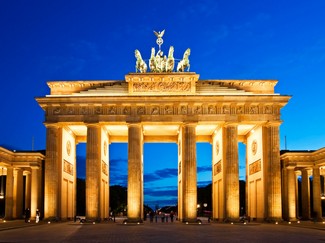

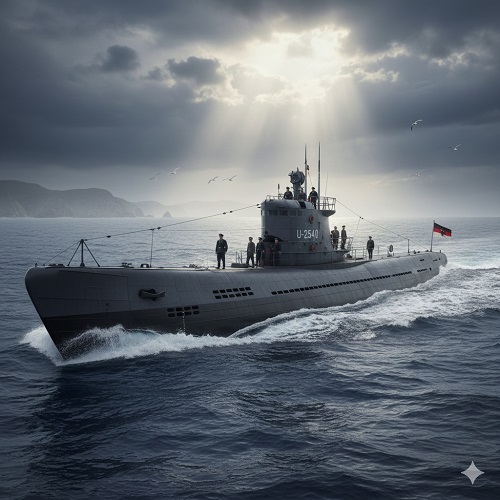

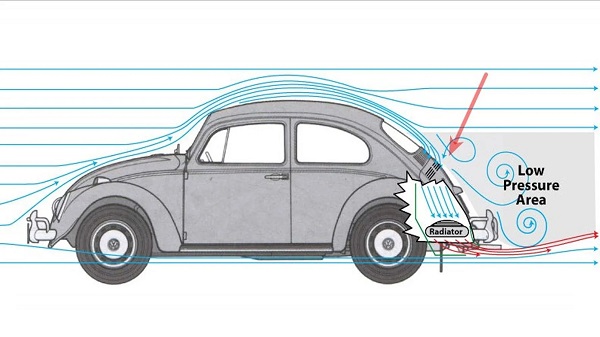


After I received my Masters degree, I was fortunate to be hired by a German in a California firm and worked closely with him for three years. He had risen rapidly in the German Navy to officer status when he was blown out of the ship and strafed while in the water off Sicily.
Later, while traveling with his father in a car that ran from a firebox mounted on the carburetor fueled by grass and sticks because they had no gasoline, they were strafed on the highway traveling between German cities.
Shortly after the war, Wilhelm (Bill) immigrated to Canada because there was no work, and then to the United States working first for Honeywell in Minneapolis and then for our company GTE LenKurt in California. He was very proud of his heritage and what the German army and navy had done against tremendous armies and navies. He still seemed to have some great prejudice towards Jews and Blacks, but he did not express it outwardly.
Odorfer seems to be quite selective about his history and his interpretation. I agree that the German people have been very resourceful. But their first defeat was in the hands of the Romans. Later I believe, it was Germanic tribes that became the barbarians that brought the downfall of Rome. Still, they were Christianized by Rome.
Also, Odorfer sanitizes what Hitler did to his own people, the Jews, Intellectuals and former aristocrats. I have read that in addition to killing 6 million Jews, he killed at least 10 million of those who opposed him. The Brownshirts were ruthless in their beatings and killing. Later the SS were even worse. If there was a Satan amidst the German people, it was Hitler. A real lesson for those who tend to follow populist people who cater to the worst that is in of us--our misunderstandings and prejudices.
Like you, I disagree with the strange conclusion. I read recently that Germany plans to be totally free of fossil fuels by 2050, well ahead of everyone else except maybe Iceland and a couple of other countries. That is interesting because Germany probably was one of the greatest users of fossil fuels… Mostly coal because it has always lacked petroleum and natural gas.
Although the history given is quite good. I would caution the reader not to believe everything that Odorfer has written to pitch his concern about the rise of Satan. There is a strong element of the return of Nazism among a small minority of Germans.
Ron