Hell Bent for Leather: A Short History of the Leather Jacket
By Kalikiano Kalei
I’d like to start off by caveating that the rumors (that I am a major share-holder in the little-known and questionably successful company in India that manufactures cowhide garments named Wholly Hides LLG) are entirely false. Thus, you may rest assured that any remarks I shall be making in the following paragraphs derive from no commercial motivations of any sort but rather stem entirely from my life-long enthusiasms for that ubiquitous outer garment our species knows and loves as ‘the leather jacket’.
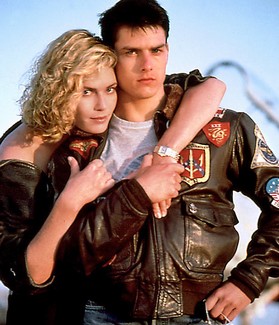
As the premier of that ‘Top Gun’ movie sequel (starring the no longer young but remarkably preserved, original 1986 ‘Maverick’, Tom Cruise) portends a massively renewed commercial marketing obsession with leather aviator flight jackets for 2nd gen Sierra Hotel (military slang for ‘sh*t-hot’) Naval Aviator wannabees, a few short months from now, it would likely be prudent as well as informative to prepare for this predictably tsunami-like wave of pop-faddish fixation by taking a brief look at the backstory on an icon of modern apparel, leather jackets (whether for pure fashion, military ‘right-stuffing’, cowboying or motorcycle protection).
I have been for most of my own life, a huge fan of leather wear (note: although I was born in San Francisco, I was never and am not a frequenter of the Polk Gulch establishments where the word ‘leather’ has a far more erotic connotation, er, ahem…) and as both a motorcyclist and aviator (as well as fan of the ‘Old West Frontier’ era in America’s historic past), outer protective garments made from the skin of the lowly bovinae (and horses, goats, etc.) have long figured significantly in my sartorial concerns.
Accordingly, my closet contains a number of leather jackets, ranging from several military aviation models through an equal number of motorcycle counterparts and probably as many western types that I have collected over the years. Of course, there are also many pairs of leather boots in there as well, but in this brief article I am limiting my focus solely to wearable outer garments used to clad the human torso.
Origins
The use of tanned animal hides for clothing has a history almost as long as that of our own, stretching forward from that moment when anxieties over evolving self-awareness overtook Adam & Eve, after snacking upon a forbidden apple. Regardless of whether one subscribes to biblical explanations or evolutionary theories, it quickly became apparent to our primeval ancestors (however they came about) that since animal skins did a nifty job of helping protect all those snarling, dangerous wild beasties from extremes of temperature, it might also do the same for us hairless primates. Thus, the eternal stereotypical image of Oog the caveman and Oogette (his voluptuous live-in personal affairs manager), clad in the skins of a Sabertooth Tiger, emerged, depicting him (or her) as a bipedal creature attired in the epidermal armor of an unfortunate feline whose reflexes weren’t quite fast enough to enable it to dodge a skillfully hurled spear or two. [I should note here that contrary to almost a century of Hollywood ‘B’ grade movies about cavemen (many of them starring busty Raquel Welch), the bikini-style article of female attire we now consider suggestively titillating did not originate on tigers in the year 1,000,000 BCE.]
Therefore, it wasn’t long after the development of both more sophisticated throwing weapons and the commiserate human hurling skills required to toss them accurately that human beings began rather indiscreetly stripping the skin off of wild critters and, after figuring out how to tan and process them so as to eliminate the bloody, odoriferous stink, fashioning clothing from them.
When humans were finally able to domesticate certain types of animals (such as cows, that evolved from primitive ox-like creatures), that fortuous circumstance quickly made it apparent that cowhides, that outer layer of skin hiding all those yummy beefsteaks, also made jim-dandy coverings that were as protective as they were potentially stylish.
The ‘Old American West’
It follows then, that back in the very early days of pioneer settlements in North America the new American immigrants quickly took note of North America’s indigenous inhabitants’ (whom they were madly trying to steal tribal lands from) customs, and adopted the use of tanned animal skin as a primary material from which to fabricate clothes. Textiles were still quite costly in the New World and very hard to access, so hides (principally from deer) constituted a very convenient (and plentiful) self-renewing resource.
Thus, began several centuries of tradition that equated tanned animal skins with the wild & wooly pioneers who steamrolled over the open landscape, collectively pursuing their perceived birthright of ‘manifest destiny’. Even today, thanks to the proliferation of Hollywood’s revisionistic movie-making myths about the ‘Old West’, even millennials (who are noted for knowing and caring little about anything that they can’t immediately access on their smartphones) know vaguely who Daniel Boone was, and visualize him as always clad in deerskin pants.
When the ‘Old West’ settlement era was officially pronounced to be at an end in 1890, textiles had become the preferred material for clothes of the upper classes, while the uses of animal hides (notably those from horses, cows, goats and sheep) became more refined and sophisticated, and were no longer the sole source of attire for many individuals.
It is interesting and worthwhile to pause here briefly to note that in any number of carefully researched references on the American ‘Old West’, it is stated repeatedly that despite the ubiquitousness of the leather apparel (principally in the form of leather vests and jackets) that Hollywood has popularized in its thousands of cinematic cowboy adventures, leather was actually not used as often or as frequently as other traditional (animal derived) materials (notably wool, which holds heat when wet, while leather, on the other hand, does not interact favorably with leather) after about 1860.
To watch any 1940s/50s vintage Hollywood cowboy film, you’d almost be forgiven if you thought every single cowboy under the hot southwestern sun had a closet full of leather vests, so ubiquitous do they seem to be in those vintage 6-gun shoot’em-up cinema serials. But then, other outrageous liberties taken by Hollywood included the ‘two-gun cowboy’ (this was almost purely a Hollywood myth; no cowboy worth his snoose ever carried two six-shooters on his hip out on the range, let alone learn how to fire both left and right-handedly with equal dexterity!). And those tightly fitted, butt-hugging, crotch-bulging pants that the stars of Laramie and Cheyenne were always depicted wearing? Sorry! Most men’s clothing fitted back in those days like droopy gunny-sacks. Further, as we viewers of modern cowboy movies all know, ALL native American women were jaw-droppingly beautiful visions of buckskin comeliness in those epic cowboy flicks, so what’s the greater harm in creating a few more harmless ‘myths’ about a superfluity of leather garments for television viewers to absorb and accept as historical ‘gospel’?
Granted, leather was certainly used for certain important western items like saddles boots and chaps, but leather vests and jackets? Naw. Again, 99% pure Hollywood fantasy. Cowboys in particular usually didn’t bathe at all more than once or twice a year and the townsfolks were hardly more conscientious about their personal natural ‘fragrance’.
Interestingly, we can largely thank the popular ‘dime novel’ pulp fiction of the late 1800s that adulated such prominent entertainment figures as William F. (‘Buffalo Bill’) Cody for popularizing and spreading the mythic public misconceptions about late ‘Wild West’ preferences for leather men’s apparel. It must always be remembered that Cody was principally a showman, despite his ‘authentic’ origins, and popular concepts of how the late western frontier developed between 1970 and 1890 are to a large measure attributable to his ‘larger than life’ tendencies towards indulging in historical revisionism. This distortion of reality was later picked up and greatly amplified in the films cranked out by Hollywood, depicting the late (1870s through 1890s) frontier era. It should also be noted that Hollywood’s portrayal of the ‘Old West’ period was considerably affected to an even further extent by turn-of-the-century notions derived from photographs of that period. Thus, to them, the ‘Old West’ was more of a reflection of 1890s conditions.
Between the dime-novel pulp fiction writers who glorified Wild Bill and his contemporaries beyond the slightest vestige of reality, and the mistaken tendency to project 1890s society’s culture back into the mid-1800s, Hollywood managed to completely mangle any vestige of true historicity in most of its cheaper western films.
At any rate, thanks to Hollywood’s perspicacious distortions of truth about the American frontier on the silver screen, popular American mass consciousness now firmly accepts the fact that leather (which was often far too hot to wear while engaged in hard work and not ventilated enough to be tolerable under the sere western sun) was a standard and referred cowboy apparel standby. And so be it, since in a nation where truth is typically a matter of extreme subjective interpretation and where Hollywood has tacitly been permitted to act as the ‘keeper of the flame of truth’ anyway, who really cares?
The advent of late-19th-Century technology
With the dawn of the Industrial Age and all of its technological advances (notably in the early 1900s when internal combustion engine technology began to evolve) came several distinctively new applications of leather as protective outer garments that transcended the traditional ‘Old West’ utilisations.
Both of these involved human transportation concerns. One of them was the development of the motorized bicycle (that was quickly to become the ‘motorcycle’) and the other was the airplane. Both areas of new transportation technology would soon have considerable interactive ‘impact’ on each other, as we shall see.
Whereas it was possible to fall from and survive a mishap on a human powered bicycle with only a few bruises, once some likely lad figured out how to squeeze an internal combustion engine onto a bicycle frame, the game changed remarkably and notably. As motorcycle speeds advanced, thanks to more powerful engines, it soon became apparent that a fall from or accident on a motorcycle could (and often did) result in rather serious injury from sudden adverse contact with the roadway (or other equally immovable objects).
It didn’t take a degree in physics to quickly figure out that while beyond a certain speed such incidents were likely to not be survivable, below a certain speed/impact threshold, the most likely cause of serious injury was extreme (and very painful) skin-abrasion from paving surfaces. From that point, it was quickly determined that leather would be the perfect protective material for motorcycle riders in that it was both highly resistant to abrasion and easily tailored to fabricate protective apparel. Thus, the first examples of the classic motorcyclist’s jacket were soon developed.
These typically consisted of a single layer of cowhide (or horsehide), worn as an outer garment (along with protective leather boots), into which some sort of internal insulating layer could be easily inserted (for thermal protection or even for use as possible crash-padding) allowing it to be removed as required. Early examples of the 1920s typically featured jackets with patch pockets in a conventional ‘two-above, two-below’ man’s coat style, along with a belt to secure around the waist and a securely fastening (buttoned) collar. Sleeves also terminated in cuffs that could be buttoned securely, with gauntleted leather gloves added to protect hands. By and large, there was little variation in this pattern for a number of years, until someone determined that a somewhat more ‘shortened’ jacket, fitted to the upper torso and ending at the hips, was perhaps better suited to the ergonometric needs of a seated person than a longer jacket with a frock-like ‘tail’.
Once that idea took hold, more and more motorcyclists favored these short-waisted jackets for motorcycle use, although the longer original styles persisted for decades among certain riders. It was thought by many that a longer jacket would provide more all-weather protection in certain conditions, although efforts to make leather more resistant to rain were largely unsuccessful until modern materials technology further evolved (silicone coatings, etc.). For racing the shorter jacket was definitely favored, due to its being less all-encumbering and therefore more flexible.
From the earliest motorcycle jacket designs that featured conventional button collars and external, buttoned pockets, it wasn’t long before improvements to the original basic motorcycle jacket came into being. These consisted of zippered pockets and cuffs and ‘lapelless’ collars (sometimes called a ‘Mandarin’ collar), but a further ergonometric addition of great value was the articulated rear-shoulder feature, often called a ‘bi-swing’ back. This allowed the arms to reach forward (to grasp the motorcycle’s handlebars) without unduly encroaching upon the shoulders’ freedom of forward movement. Other improvements of almost equal value consisted of buckled straps permitting sizing adjustments on each side of the waistband and a snap-secured short strap at the bottom front of the jacket, which allowed a zippered fastener to be subjected to less separation stress in moments of extra effort/movement. Even today and despite more recent improvements that include elasticized arm joints and flexing side sections, the side-strap and bottom-front zipper strap are superior adjustment features (along with the articulated or ‘bi-swing back) that one should always look for on any truly thought-through, quality motorcycle jacket.
As the decades passed, motorcycle performance increased considerably, but the short style motorcycle jacket has remained largely as it was in earlier times (if one excludes the fact that overall materials technology has also progressed, but on an order of magnitude beyond that of leather design fabrication). Today, there are many fabric jackets (using advanced fabrics such as abrasion-resistant polymers incorporating Kevlar) that accomplish largely the same function in terms of protection as leather constructed jackets, but regardless of their sophistication, there’s still an undeniable aura of nostalgic appeal and basic style about a leather jacket that nothing shall ever change.
Aviation borrows a page from the motorcyclista’s handbook
The second focus of technological development (aviation) is perhaps the more important of the two transportation concerns and it is almost natural, viewed in retrospect, that early aviation clothing also benefitted from basic use of cow/horse skins in protective gear design. Since the earliest iterations of aeronautical machines were relatively primitive in design, barely able to get up into the air and even then traveling fairly close to the ground and at very low speeds (many motorcycles were in fact much faster than early flying machines in terms of performance), a simple leather jacket was all that was needed in the typical open cockpit flight decks of airplanes. In many cases, ‘off-the-shelf’ motorcycle clothing (i.e. leather jackets) was pressed into service as aviator gear, although in a cockpit, as performance (speed and altitude capabilities) increased, the longer leather coat styles were often found to be slightly better suited to their needs at first than shorter, upper-torso types.
Collars were important principally in terms of their ability to protect the wearer from the chill air of lower altitudes (below 10,000 feet), although advancements in aeronautical technology soon raised the requirement for added protective warmth as altitude ceilings increased. Open cockpits can be and typically are very exposed and what little heat was provided by the typical radial engine of that day quickly dissipated, providing little additional warmth for the machine’s occupant, huddled just behind it. Further, the unprotected neck is, along with the highly vascularized human head, a major source of heat loss due to exposure.
Wind in open aircraft cockpits was therefore quite often the principal thermal factor necessitating warmer attire and in an overall sense that same dynamic was at work on ground-hugging motorcycle riders, due to the advective temperature-lowering effect of exposure to rushing air. However, whereas motorcycle jackets were conceptually intended solely (or chiefly) as wind cheaters, in aircraft a much higher level of thermal insulation was often a necessity. Thus, heavy external leather jackets lined with sheepskin were predominantly favored by early aviators in open cockpits.
Soon, the development of supercharging systems augmented engine power and encouraged the introduction of closed cockpits on aircraft, as performance ceilings increased dramatically. By the mid-1930s, supercharging advances lagely permitted development of fully pressurized (sealed) cockpits that were not affected either by the rush of cold external air over the airplane or the effects of lowered oxygen levels. They were, however, still subject to the effects of severely reduced temperatures that higher altitudes (above 10,000 feet) bring, thus the need for protective clothing in even a pressurized cockpit continued largely unabated.
Since aircraft heating systems remained somewhat behind the advances in engine performance capabilities, warm jackets were greatly favored by aircrews, regardless of whatever rudimentary cockpit heating was available. In the large, multi-engined bomber aircraft that were being introduced in the mid-1930s (such as the Boeing B-17), fully pressurized cockpits and crew spaces were still impracticable and aircrew had to work in sparsely heated, drafty open fuselage spaces, often directly exposed to both severe cold and chill winds. This resulted in the development of insulated, heated leather jacket designs (and entire leather suits) that were connected to electrical systems much in the manner of consumer electric blankets of the 40s & 50s used in homes.
Despite many refinements in aircrew comfort accommodations, the basic leather jacket remained standard attire in most single-engined aircraft with enclosed cockpits and this took shape (in America and the UK) in several standard types of jacket. The US Navy introduced a leather-shelled aircrew jacket in the early 1930s that over the years was continually refined into its final configuration, known to us as the US Navy G-1 Flight Jacket. This jacket continues in use as a US Navy standard issue item for aircrews to this day and features a dark-colored shearling collar fitted to a short-torso brown leather jacket shell with embroidered wrist cuffs and elasticized wool waist, a heavy-duty frontal zipper, and a bi-swing back. It is prized by pilots everywhere, but particularly by Naval Aviators as a distinctive badge of their calling.
The US Air Force, for its part, also developed a standard leather protective jacket (without insulation, but with a thin Rayon lining) that became known as the US Army Air Force A-2 jacket. Also featuring knit wool cuffs and waistband, the brown Air Force’s A-2 jacket lacked an articulated shoulder (no bi-swing back feature), but was cut somewhat loose in overall fit so that forward-reaching motion remained unimpeded. Both the US Navy and the USAAF jackets featured two external ‘pouch’ type pockets placed on the lower left & right front, but lacked hand-warmer slits due to the fact that the command authorities felt that sticking hands in pockets presented an ‘unmilitary’ (and therefore undesirable) appearance (this was later changed and today most G-1s and A-2 jackets have such conveniences incorporated into them, in addition to their standard exterior and interior pockets).
Other, non-leather aircrew jackets quickly appeared on the scene during the late stages of the Second World War when a shortage of available cowhides forced this development and all-Nylon jackets such as the USAAF B-15 were substituted for the all-leather original designs on a by-need basis. Most were fabricated from Nylon. As a radically new synthetic fabric, Nylon was (in the 40s and early 50s) looked upon as somewhat of a miracle material, but almost completely overlooked by materiel development designers was the fact that whereas leather provides a certain degree of not insubstantial protection against fire injuries (always a huge concern in highly flammable aircraft, with their high-test, 107 octane aviation fueled engines), Nylon by contrast had a disastrous tendency to melt at relatively lower temperatures when exposed to flames, resulting in severe injuries when the Nylon melted onto a crewman’s skin! Thus, until the advent of fire-resisting Nomex/Polyamide fabrics in the 60s, the ubiquitous leather aviator flight jacket remained the gold standard in protective aircrew attire for a number of reasons. Today, these leather jackets thus remain almost in perpetuity not just a highly-prized item of functional apparel, but as a status symbol that demonstrates the fact that the wearer is a card-carrying member of the righteous brotherhood of aviators (a status no longer true , subsequent to the appearance of the ‘Top Gun’ movie in 1986).
On the German side of the 2nd World War fighting, the leather jacket also reigned supreme over all other type of protective flight apparel for aircrews and it is quite interesting to note that, due to the fact that Germany occupied France for so many years during that war, German Luftwaffe pilots frequently turned to French motorcycle jacket fabricators for their flight jackets. These usually featured collared, short-torso shells that appeared almost identical to those used by French motorcyclists and could be made from either black or brown leather, depending upon the individual Luftwaffe staffel’s (squadron’s) preference.
There was no standard Luftwaffe leather jacket design (until very late in the war), hence a fairly wide range of styles were worn by Luftwaffe aces (some had belts, some had knit cuffs and waistbands with various pocket arrangements, but most came only with a Rayon or thin fabric liner). Heavily insulated leather jackets were also used in certain German aircraft types, depending upon operational ceiling and performance capability, but during the Battle of Britain, most Luftwaffe pilots preferred these motorcycle style short torso jackets that were ‘borrowed’ directly from their two-wheeled motorcycle rider counterparts.
For their part, US Army Air Force and Royal Air Force leather jackets, whether of the simple A-2 type or the heavy, RAF ‘bomber-command’ Irvin-style insulated sheepskin type, were all finished in medium-dark shade brown leather. It is interesting to note here that the jackets used by both sides in the aerial conflict of the 2nd World War were equally valued by aircrews, and more than a few instances occurred wherein an enemy aviator who had forced an opposing aircraft down ‘commandeered’ his antagonist’s jacket and took great pride wearing it (both as a symbol of victorious air combat and out of respect for its pure functionality). It was bilaterally felt that if the enemy’s gear was as good as or superior to one’s own, so be it! Such are the practical, pragmatic ways of warfare!
Thus, the glamourous, battle-forged aviator’s leather jacket emerged from the Second World War (and the subsequent Korean Conflict) as a highly regarded and much sought-after item of clothing that set its wearer apart from all the more pedestrian ground-pounders…at least as pilots saw things!
Finally, by the early 80s the flight jacket’s sex-appeal had peaked somewhat and was starting to wane a bit when Tom Cruise came along with the immortal ‘Top Gun’ epic (1986) film that reignited an obsessive public pop-fixation on this aviator symbol of Sierra Hotel ‘right-stuffism’. The appearance of the film version of author Tom Wolfe’s film ‘The Right Stuff’ simply boosted that appeal into earth orbit, where it has remained ever since. And speaking of Hollywood again, who could ever forget the epic film ‘Space Cowboys’ (2000), with its four aging jet-jock protagonists swaggering along behind their cool aviator Ray-Ban shades and wearing leather flight jackets?
As previously remarked, it remains to be seen whether or not a somewhat long-in-the-tooth but still potent Tom Cruise can reignite the consumer’s desire to emulate the military pilot’s high-status, exclusive elan, flooding the streets again with commercial flight jacket knock-offs, but it will be fun to speculate at any rate!
[Note: Leather jackets (and pants) were also used at sea, somewhat surprisingly, given leather’s unhappy susceptibility to water damage (especially salt water!), by German Kriegsmarine crews on their submarines. Distinctively gray in color (some were also black), the leather was intended to protect against saltwater spray and did in fact provide some measure of warmth inside the ever-frigid submarine hulls as well, but leather was generally not otherwise worn by other seamen on the surface, who preferred naturally heat-retaining fabric such as wool for its superior warmth.]
Fashion raises its ugly (consumeristic) head
Since ‘Naval Aviators’ (in particular, but also pilots in general) all seem to have enough ego to spare in Spades, there’s always been a hint of strong, thinly-masked, macho sexuality lurking behind the flight jacket image that is not lost on young people (whose hormones are generally in a continuous state of chaotic metabolic uproar).
That, plus the visually distinctive and exclusive cachet of belonging to an elite group of individualistic testosterone-fueled men, was one major impetus that inspired the so-called ‘black leather jacket’ fetish among members of outlaw motorcycle gangs in the immediate post-war period. Never very far behind the crest of any popular wave of social sentiment, Hollywood wasted no time at all in radically fetishizing both the outlaw motorcycle gangs (many of whom were traumatized war veterans seeking an outlet for their still-unsettled aggressive tendencies, left over from that war) and the black leather ‘biker jacket’ style they all affected. A whole series of ‘B’ grade biker gang movies quickly appeared, with the result that in the public’s eyes, anyone who affected a black leather jacket was a potentially dangerous, antisocial deviant of the sort one fervently wished to keep their nubile young daughters as far away from as possible!
There were at that point only two readily different and identifiable groups of leather jacket wearers (if we exclude cowboy fashions): those who flew (or had formerly flown) for the military and those who belonged to ‘criminal’ biker gangs. Ordinary motorcyclistas who just enjoyed the aesthetic attractions of motorized two-wheel travel strove mightily to dissociate themselves from the latter, but in the mainstream public’s eyes back in those days just about anyone on two wheels (bicycles excluded) was a possible social deviant!
This remained the unhappy status quo until the Honda Company in Japan began its incredibly successful public relations campaign in the mid-60s to help remove the ‘bad-boy’ image from motorcycles (“You meet the nicest people on a Honda!”, etc.). Still, it was relatively easy to separate the two groups at a glance, since military people wore brown leather jackets and biker types favored black leather (psychologists have published whole doctoral theses on the psychodynamics of this slight, but important distinction, needless to relate).
Given that it has been fairly well demonstrated (also by psychologists and sociologists) that young women tend to prefer ‘bad boys’ (i.e. rebellious, delinquent and surly) to ‘good boys’ (i.e. well behaved, mild mannered generally respectful of elders) during adolescence, it was also not long before the fashion industry began to sense a powerful and relatively unexploited consumer market in the making amongst young women who wished to emulate the ‘bad boy’ image through wear of popular adolescent ‘protest’ apparel (i.e. black leather). [Note: although young women in recent past generations tended in numerous studies to favor ‘bad boys’ over ‘good boys’ in adolescence, once they reached their fertile, child-bearing mid-20s their interest predictably switched from rebellious, deviant types to the reliable, stable, employed and parenthood-ready type of young man who would make a good father and wage-earner.]
Given the fact that during the 50s, 60s, 70s and 80s the disposable personal income of these sexually vulnerable and somewhat role-confused young women was at an all-time high, they represented a potentially lucrative commercial market for popular culture inspired consumer goods (such as sexy leather attire, boots, pants, tight-fitting leather fashions, etc.). It wasn’t long before hoity-toity fashionista columnists were offering advice to young women on what sort of black leather attire they ‘needed’ to put forth the right image of desirable, sexiness without overstating things or overstepping that fine aesthetic line that separates the cheap tart from the chic, sophisticated princess.
I recall reading one such column written very recently on this subject and I really found myself flabbergasted to think the writer took herself so seriously as to hold forth as authoritatively as she did on this subject (or that her equally young readers actually might actually take such utter hogwash to heart!).
And yet that is the essential nature of American capitalism’s marketing philosophy towards consumer youths: whatever they’re gullible enough to swallow, hook, line & sinker, in order to draw them in and make money at the expense of vain, youthful credulity!
I’ll admirably refrain from any further pontificating of my own upon this admittedly favorite subject among many I nurture, but suffice it to say that, given all these complexities, it’s almost anyone’s guess as to what the future of the leather jacket holds in store for us in the months and years ahead.
In summary
There seem to be some basic truths about leather jacket design that are worth reconsideration here, whether of the two-wheeled or aeronautical type. No amount of embroidering or ‘improving’ upon these basics over the past decades has ever seemed to constitute much of an advancement over the archetypal designs that were established fairly early-on, after the turn of the century.
To begin with, a good leather jacket should always be functional, first and foremost. Fanciful exercises in pure style fantasy are fine for the impressionable young, but for anyone serious about substance and form, aviator jackets don’t get much better than the standard US Navy G-1 or the US Air Force A-2 designs, which have stood the test of time. While a few hybrid commercial military jackets that combine leather material with design engineering enhancements found on military CWU-36/P and CWU-45/P (Nomex) jackets present an intriguing ‘best-of-both’ approach, they are still difficult to find and expensive when they are found. Of the two (G-1 and A-2), the Navy’s G-1 seems to comes out on top when respective features are compared side by side. The G-1 can be rather easily obtained without the thick wool collar, for those who find that much insulation around the neck (although it was extremely functional in Navy aircraft, since it helped prevent chaffing of the skin while searching the skies for an enemy) a bit too much (this hybrid is usually marketed as the ‘G-2 jacket’ by commercial manufacturers, although the G-2 has never been a standard Navy issue item); the G-2 combines the very best features of the Navy G-1, otherwise, and is usually available in either brown or black leather. With its large exterior pockets (complete with hand-warmer slit pockets) and two very handy internal map pockets (plus a standard internal chest pocket), you simply can’t get much more comfortably utilitarian than that.
As for modern motorcycle jackets, it deserves to be pointed out that the color black is a terrible choice for anyone who wishes to be readily seen on a motorcycle, despite its persistence as the favored color of most undiscerning motorcyclists who still favor the macho ‘bad boy’ image. High-viz, bright colors are far better for this purpose of motorist recognition from a safety standpoint than drab, darker colors, as numerous safety studies appear to suggest.
Given that today’s extremely powerful motorcycles (particularly Japanese sportsbike ‘crotch rockets’ that can easily go from 0-60 in only 2.5 seconds from a standing start!) are capable of insanely high speeds and rates of acceleration, the leading trend now is for truly well-designed motorcycle jackets to features approved protective (CE) ‘armor’ in the shoulders, at the elbows (and often in critical chest and spinal areas, as well). These are very wise innovations, for even if a crash occurs under adverse circumstances and in the face of extreme dynamic impact forces, armor in these crucial areas of a jacket may well make a decisive difference between survival with medically acceptable injuries or sustaining permanent, life-threatening (or even mortal) injuries.
Thus, an armored leather jacket is almost a minimal standard by today’s safety reckoning; pure style for style’s sake no longer has any place in selecting protective wear for motorcycle riding. Consider too that with today’s radically increased road traffic density and with more and more motorists exhibiting appalling ‘distracted driving’ carelessness behind the wheel, a motorcyclist cannot ignore the innate value of well-designed, highly functional and ergonometrically well-configured protective attire.
It almost seems inconceivable to me, as someone who has been concerned with both aircrew and two-wheeled protective equipment technology for most of my life, and regardless of advances made in non-natural hide materials technology, that we shall ever be beyond the need for good old fashioned animal hide as a vital component of our protective apparel.
In that spirit, please join me in never failing to offer quiet gratitude to our bovine ungulate friends who have given their lives to help adequately clothe us irascible and unpredictable human beings, as we muddle through the many misfortunes of life that are either naturally occurring or (more often predominantly) man-made!
You may accept the above advice as reliable and worthwhile common sense. Besides, I’d never knowingly or willingly give anyone a ‘bum-steer’ when it comes to leather protective clothing advice…
-----------
Selected References
1) United States Army Aviators’ Equipment 1917-1945, C.G. Sweeting (ISBN: 978-0-7864-9737-9), McFarland Publishers, softbound
2) Hell Bent for Leather: The saga of the A-2 and G-1 Flight Jackets, Derek Nelson and Dave Parsons (ISBN: 0879384387), Motorbooks, hardbound
3) American Flight Jackets, A History of US Fliers’ Jackets from from World War Two to Desert Storm (2nd Ed.), John A. McGuire and Jon P. Conway (ISBN 10: 0764310658), hardbound
4) Luftwaffe Vs. RAF: Flying Equipment of the Air War 1939-1945 (Vol. 1), Mick Prodger (ISBN 10: 0764302345), 1997, Schiffer Publishing, hardbound
5) Luftwaffe Vs. RAF: Flying Equipment of the Air War 1939-1945 (Vol. 2), Mick Prodger (ISBN 10: 0764302493), 1998, Schiffer Publishing, hardbound
6) The Encyclopedia of the Motorcycle, Hugo Wilson (ISBN: 0-7894-0150-9), 1995, Dorling Kindersley Books, hardbound
7) Discovering the Motorcycle: The History, the Culture, the Machines, since 1867, Armand Ensanian (ISBN 13: 978-0-9963919-0-0, 2016, softbound
8) Motorcycle Owner’s Manual, Hugo Wilson (ISBN: 0-7894-1615-8), 1997, Dorling Kindersley Books, softbound
9) Café Racers: Speed, Style, and Ton-Up Culture, Paul D’Orleans (ISBN 13: 978-0-7603-4582-5), Motorbooks, hardbound
10) Those Were the days: The Café Racer Phenomenon, Alastair walker (ISBN: 978-1-845842-64-2), Veloce Publishing, softbound
11) Café racers of the 60s, Mick Walker (ISBN: 978-1-87200-419-8), Crowood Press Ltd, softbound
12) Café racers of the 70s, Mick Walker (ISBN: 978-1-84797-283-5), Crowood Publishers Ltd, softbound
13) The Complete Idiot’s Guide to Motorcycles, Primedia Enterprises, 2002 (ISBN: 0-02-864258-9), softbound
14) The Illustrated Directory of the Old West, William C. Davis, 2002 (ISBN: 978-0-7603-1341-1), Voyager Press: A Salamander book, softbound
15) The Reader’s Encyclopedia of the American West, Edited by Howard R. Lamar (ISBN: 0-06-015726-7), 1977, Harper, Row Publishers
16) The Old West, by the Editors of Time-Life Books (ISBN: 0-446-51761-5), 1993, Time-Life Books, hardbound
17) Cowboys: The Trappings of the Old West, William Manns and Elizabeth Claire Flood (ISBN: 0939549-13-1), 1997, Zon International Publishing, hardbound
18) The Look of the Old West: An Illustrated Guide, William Foster Harris (ISBN 13: 978-1-60239-024-9), 2007, Skyhorse Publishing, softbound
19) Gunfighter Nation: The Myth of the Frontier in Twentieth-Century America, Richard Slotkin (ISBN: 0-689-12163—6), 1992, Atheneum, hardbound
















There's only one thing that I would question. In 1973, Levi Strauss produced the first bluejeans. They were not balloon leg flared pantaloons, but were tight-fitting and quickly adapted by hard-working people all over the West, making Strauss very rich. No leather needed when you could have the protection of denim and rivets in the right places. Cooler, too. Absorbed sweat.
I don't know if I let you know or not, but a fellow author sent me a gift after I hosted him at my house for a few days. It was an Apollo 11 commemorative flight jacket in the latest materials. No leather. Very cool but I never flew except commercial and I rarely like to wear anything with logos on it except Levi's that I wore quite a bit. The only leather I ever bought was cheap shoes (wore out quickly) just south of the border at Progreso and one day, splurged and bought my girlfriend a too short leather skirt that was probably too hot to wear on most occasions in Houston.
PS. The seats on my 13-year-old van have heated soft leather jackets. ;-)
Ron