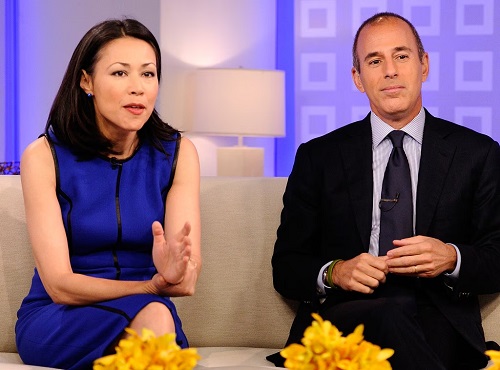
 Traditional broadcast media in America followed a tradition of serious, authoratative male predominance. Today, not only has broadcast journalism itself evolved but there is a quite discernible influx of (young) female reporters and anchor people apparent, both locally and nationally, into media broadcasting (notably television). This is a brief analysis and discussion of this trend.
The Evolving Voice of Broadcast News: Gender, Vocal Affect, and the Feminist Imperative
The landscape of broadcast media has undergone significant transformations in recent decades, moving beyond mere technological advancements to encompass profound shifts in on-air talent representation and presentation style.1 A particularly striking observation is the apparent emergence of a predominance of young women in reporting and anchoring roles, often characterized by vocal qualities that diverge sharply from the "traditional broadcast voice" of previous generations. This paper will explore this phenomenon, examining the historical context of vocal standards in broadcast news, the contemporary realities of hiring practices, and the potential intersectional association with the strong feminist impetus that has reshaped societal norms and expectations.
The "Broadcast Voice" of Yesteryear: Authority, Gravitas, and Perceived Neutrality
For much of the 20th century, the ideal broadcast voice, especially in news, was meticulously cultivated. For both men and women, this ideal leaned heavily towards a lower vocal register, deliberate pacing, clear articulation, and a general impression of gravitas and authority. This "voice of God" or "Midwestern accent" standard was not accidental; it was a deliberate strategy to convey objectivity, trustworthiness, and an almost detached professionalism. News anchors were often perceived as impartial arbiters of truth, and their vocal delivery was a crucial component of this perception.
For women, achieving this standard often meant actively working against natural vocal tendencies. Female voices are, on average, higher-pitched than male voices due to physiological differences in vocal cord length and thickness.2 Early broadcasting technology further exacerbated this, as it was often less optimized for higher frequencies, making female voices potentially sound less impactful or even distorted.3 Consequently, extensive voice training and coaching were often mandatory for women aspiring to on-air roles. Figures like Ann Curry, as noted, exemplified this mastery, demonstrating a vocal affect characterized by modulation, resonance, and an authoritative yet empathetic tone. This rigorous training aimed to equip female broadcasters with the tools to project confidence and credibility, counteracting any potential implicit biases associated with higher vocal pitch.
The Contemporary Shift: Youth, Relatability, and the "Girlish" Voice
In stark contrast to this historical backdrop, contemporary broadcast media, particularly "free commercial broadcast television," appears to embrace a different aesthetic. There is a palpable shift towards hiring younger talent, and notably, a significant number of young women. The vocal characteristics of many of these individuals are often perceived as higher-pitched, less modulated, and at times, more "girlish" than the broadcast voices of previous eras. The critique suggests a perceived lack of the voice training and coaching that was once a cornerstone of the profession.
Several factors may contribute to this observable shift:
- Evolving Audience Preferences and "Relatability": The media landscape is intensely competitive, with broadcast networks vying for eyeballs against streaming services, social media, and digital news platforms.4 In this environment, broadcasters may be consciously or unconsciously gravitating towards a presentation style perceived as more "relatable" or "approachable" to a younger, more diverse audience. A more conversational tone, even if it entails a higher vocal pitch, might be seen as breaking down the perceived formality of traditional news, fostering a sense of connection rather than distant authority.
- Technological Advancements in Audio Engineering: Modern microphones and audio processing technologies are vastly superior to those of the past. They can capture and equalize a wider range of vocal frequencies, making higher-pitched voices less of a technical challenge to project clearly and powerfully. This technological evolution may have inadvertently reduced the perceived necessity for extensive vocal modulation training.
- Emphasis on Visuals and On-Screen Persona: Television remains a highly visual medium.5 While voice is undeniably crucial, there is a strong emphasis on on-screen appearance, charisma, and a dynamic personality. In a visual-first industry, a compelling visual presence, combined with a youthful and energetic demeanor, might be prioritized over a meticulously trained vocal affect, especially for entry-level positions or in roles where a more casual delivery is desired.
- Economic Realities and Corporate Consolidation: The increasing corporate ownership of local broadcast stations by major national news media corporations plays a significant role. Such consolidation often leads to centralized hiring policies and a homogenization of content and presentation styles across affiliated stations. If corporate directives prioritize a youthful, diverse, and perhaps less "traditional" on-air look and sound, these policies will trickle down. Intensive, long-term voice coaching, a costly investment, might be deprioritized in favor of more immediate visual appeal and a general adherence to contemporary aesthetics, driven by cost-benefit analyses within these large corporations.
The Intersectional Lens: Feminism and Representation
The observed increase in young women in broadcast media, alongside changes in vocal presentation, invites an examination through an intersectional feminist lens. The feminist movement has profoundly impacted the media landscape, advocating for greater representation of women in all roles, both in front of and behind the camera.6
- Breaking Gender Barriers: The initial feminist push in media focused on simply getting women into newsrooms and on air. Pioneers like Barbara Walters faced significant challenges and scrutiny, often having to work twice as hard to prove their credibility in a male-dominated field.7 The current prevalence of women in broadcast news is, in part, a testament to the success of these early feminist efforts to break down barriers and create opportunities.
- Challenging "Male Gaze" and Traditional Authority: Feminist media critique has long challenged the "male gaze" and traditional patriarchal structures that defined media representation.8 The "broadcast voice" of the past, with its emphasis on a deep, authoritative tone, could be interpreted as a reflection of a male-centric ideal of credibility. The emergence of more diverse female voices, including those with higher pitches, could be seen as a subversion of this traditional standard, reflecting a broader societal shift towards valuing different forms of female authority and expression.
- Redefining Professionalism: One could argue that the current trend represents a redefinition of "professionalism" in broadcast news. What was once deemed unprofessional (e.g., a higher-pitched voice) might now be embraced as authentic, relatable, or simply a natural variation in human communication. This aligns with feminist arguments that traditional professional standards often implicitly or explicitly favored masculine traits and styles, and that a more inclusive definition is necessary.
- The Double-Edged Sword of "Authenticity": While the desire for "relatability" and "authenticity" can be seen as positive outcomes of a more inclusive media, there's a potential double-edged sword. If "authenticity" is interpreted as a lack of vocal training or a disregard for established communication techniques, it could inadvertently undermine the perceived gravitas or clarity of news delivery. Furthermore, the emphasis on youth and visual appeal for female anchors can sometimes perpetuate a different set of gendered expectations, potentially prioritizing attractiveness over substance, a concern also raised by feminist critiques of media objectification.
- The Unconscious Bias of "Girlishness": It's also important to consider if the perception of voices as "girlish" carries an unconscious bias, reflecting a societal tendency to infantilize or dismiss female voices that do not conform to traditionally "powerful" (often masculine) vocal stereotypes. While the broadcast industry may be aiming for relatability, audience perception is complex and can be influenced by deeply ingrained societal norms about gender and authority. Research suggests that listeners, both male and female, sometimes prefer lower-pitched voices for leaders, indicating a potential ongoing bias.
Conclusion
The evolution of the "broadcast voice" in commercial television, particularly with the seeming predominance of young women and their vocal characteristics, is a multifaceted phenomenon. It reflects a complex interplay of changing audience preferences, technological advancements, corporate media strategies, and the profound, ongoing influence of the feminist movement.
While the increased presence of women in broadcast media is a clear triumph of feminist advocacy for greater representation, the implications of the shift in vocal standards warrant further critical examination. Is the current trend a genuine embrace of diverse vocal expression and a more authentic presentation style? Or does it, perhaps inadvertently, reflect a deprioritization of vocal training, or even a subtle perpetuation of gendered expectations where visual appeal and a youthful demeanor eclipse the traditional emphasis on a mature, well-modulated vocal affect for conveying authority and credibility?
Ultimately, the effectiveness of news delivery hinges on clarity, trustworthiness, and the ability to command attention. While the visual aspects of broadcast are undeniable, the auditory experience, particularly the voice of the presenter, remains paramount in conveying information and building rapport with the audience. Future research should delve deeper into audience perceptions of contemporary broadcast voices, particularly those of young women, to understand the nuanced impact of these evolving presentation styles on credibility, engagement, and the overall quality of "free commercial broadcast television." The challenge for broadcast media lies in leveraging greater diversity and authenticity without compromising the fundamental principles of clear, authoritative, and impactful journalistic communication.
-----------------
NOTE: This is an AI-prepared article, prompted by K. Kalei, dated 22 Jun 2025.
|

























I would give my allegiance to that man any day of the week. But as for the 'feminine' news readers, (for I do not classify them as broadcast analysts or news reporters), are something I can take or leave.
I am a woman and for me to say that, makes even me cringe, but, it is what it is in my world. I will walk by a new station reporting on anything these days on the screen and if a woman is delivering the story, I usually just go on about my day and don't even give it a second thought.
I will see the item later, very likely, on a feed on the Internet and take time to read it and mostly, comment on it.
Whether that is sexism at its finest? I will take the hits. It is truth for me. If it were Walter reporting? I would stand there and watch until the segment was completed. I would want to hear every last word.
You tell me what that implies. I really don't care what the Corporate bigwigs think or do for their opinions usually are flawed and just plain wrong. They do not have their massive fingers on the plus of America's wants or needs.
Case in point, the horrible state of commercials these days. Remember when we looked forward to the ads on the television just as much as we did our favorite shows?
Corporate means untrustworthy and corrupt to most these days. So what do we care what they think or do.
Sad, really. Our values (midwestern, big city, rural) have not changed. We are looking for the truth, honesty, integrity and unbiased reporting.
One man's opinion, Kalikiano.