 At just about any point throughout the world today we encounter the omnipresent, universally popular American 'ball cap'. With its origins in the uniquely American sport of baseball in the late 1800s, the ball cap has since become almost a universal item of headgear. The wear of "billed caps" in sports is certainly not unique to the United States, but the broad proliferation of American cultural influences throughout the world have resulted in it being almost a unique manifestation of American pop-culture, and as such, a symbol of the USA to a large extent. My advice to the world? Dare to be different; leave the ball cap at home and try a different style of head cover for a while...if you're brave enough!
The American "ball cap," or baseball cap, has evolved far beyond its athletic origins to become a deeply embedded symbol in American culture, carrying a surprising array of social and political implications.
+++
Its ubiquity, particularly in the Western USA, speaks to its versatility as a form of self-expression, but the nuances of its wear can indeed suggest significant affiliations and attitudes.
Here's a breakdown of the social and political nuances associated with ball caps:
I. Bill Shape: Curved vs. Flat
- Curved Bill:
- Traditional/Classic: Historically, baseball caps featured a curved brim to shield players' eyes from the sun. This remains its most practical function.
- "Dad Cap" Aesthetic: A moderately curved bill, often on a softer, unstructured cap, is associated with a more casual, relaxed, and often older demographic. It can evoke a sense of everyday practicality, suburban life, and less overt fashion consciousness.
- Outdoor/Active: Strongly curved bills are often favored by those engaged in outdoor activities like hiking, fishing, or sports, emphasizing functionality over pure style.
- Political Connotations: While not exclusively tied to one side, a traditional curved brim can sometimes be perceived as more "conservative" or "mainstream" in its aesthetic, aligning with classic American imagery.
- Flat Bill:
- Youth Culture/Streetwear: The flat brim gained immense popularity with hip-hop culture, skateboarding, and wider streetwear fashion in the late 20th and early 21st centuries. It signifies a more modern, urban, and fashion-forward aesthetic.
- Team Allegiance (New Era Caps): Many highly structured, fitted caps, especially those from brands like New Era (often associated with sports leagues like MLB and NBA), come with flat brims. Keeping the brim flat emphasizes the cap's pristine condition and the wearer's dedication to the team or brand.
- Rebellious/Non-Conformist (Historically): In its earlier adoption, the flat brim could signify a departure from traditional norms, though it has since become more mainstream within certain age groups.
- Gang Affiliation (Historical/Regional): In some contexts, particularly historically and in specific regions, the style and color of a flat-billed cap, combined with how it's worn, could be associated with gang affiliation. However, this is highly localized and not a universal indicator.
II. Position of the Bill: Front vs. Rear vs. Tilted
- Facing Front (Standard Wear):
- Functionality: The primary purpose is sun protection.
- Conformity/Neutrality: Wearing a cap forward is the most common and generally signifies no particular extreme social or political statement. It's simply wearing the hat as intended.
- Team Support: For sports fans, wearing the cap forward with a team logo is a straightforward display of allegiance.
- Facing Rear (Backward):
- Youth Culture/Rebellion: Popularized in the 1980s and 90s by hip-hop artists and athletes like Michael Jordan, wearing a cap backward initially symbolized youth, rebellion, and a relaxed, "cool" attitude.
- Practicality: For some, it's practical when working or engaging in activities where the bill might obstruct vision (e.g., a baseball catcher wearing it under a mask, or someone working under a car).
- Age Association: While widely adopted, it's still more commonly associated with younger demographics. Older individuals wearing a cap backward might be seen as trying to appear youthful or simply prioritizing comfort over traditional appearance.
- "Mean Business" (Informal): As humorously noted in some discussions, for some, particularly older generations, flipping the cap backward might signal a shift to a more serious or focused demeanor.
- Tilted to the Side:
- Individual Style/Swagger: Tilting a cap to the side, whether front or back, is often a stylistic choice intended to convey a sense of individuality, confidence, or "swagger."
- Subcultural Ties: This style can be particularly prevalent within specific subcultures, like hip-hop or certain urban fashion scenes.
- Gang Affiliation (Historical/Regional): Similar to flat bills, a specific tilt, combined with colors or logos, could historically or regionally be a subtle indicator of gang affiliation. This is highly context-dependent and should not be generalized.
III. Recreational Proclivities and Affiliations:
- Sports Teams: This is arguably the most common and universally understood affiliation. Wearing a cap with a professional or amateur sports team logo is a direct display of fandom and loyalty.
- Brand Loyalty: Many caps feature logos of popular clothing brands, outdoor gear companies (e.g., Patagonia, The North Face), or even breweries, signifying lifestyle choices and brand preferences.
- Age Group Preferences: As mentioned, flat bills and backward wear tend to be more associated with younger generations, while curved "dad caps" might be more prevalent among older groups. However, fashion trends constantly evolve and cross over.
- Fashion/Fad: Ball caps are undeniably fashion items, subject to trends and fads. Specific styles, colors, and materials become popular for a period before evolving. This can be seen in the rise of trucker hats, dad hats, or specific graphic designs.
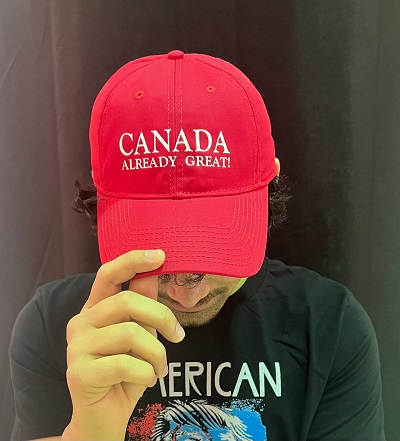
- Political Statements: The ball cap has become a powerful tool for political expression, most notably with Donald Trump's "Make America Great Again" (MAGA) red hats. These caps transcend mere merchandise, becoming potent symbols of political identity and allegiance. This exemplifies how a seemingly simple garment can be imbued with significant political meaning.
- Professional/Military: While not strictly "ball caps" in the casual sense, many uniforms incorporate cap-like headwear (e.g., police, military, delivery services), signifying profession and authority. This reinforces the cap's ability to denote group affiliation.
IV. Ethnicity and Social Stratification:
While it's crucial to avoid broad generalizations and stereotypes, certain trends and historical associations have existed:
- Hip-Hop Culture and African American/Hispanic Youth: The flat-billed, often oversized baseball cap became a quintessential element of hip-hop fashion, which originated largely within African American and Hispanic communities. This style was embraced as a form of cultural expression and identity.
- Working Class/Rural White Americans: The traditional, often slightly faded, curved-bill cap has long been associated with working-class individuals, particularly in rural or blue-collar communities, regardless of ethnicity. This often ties into practical wear for manual labor or outdoor activities.
- Gang Affiliation (Specific Contexts): In historical and very specific localized contexts, particularly within some urban areas and among certain ethnic groups, specific colors, team logos, or ways of wearing a cap were used as subtle or overt identifiers for gang membership. However, it is vital to emphasize that this is not a universal truth and should not lead to profiling or assumptions. The vast majority of people wearing ball caps have no gang affiliation.
Conclusion:
The humble American ball cap is far more than just a piece of headwear. Its variations in bill shape, wearing direction, and associated logos contribute to a complex visual language that communicates everything from personal style and recreational interests to political alignment and cultural identity. While some associations are more direct (like a sports team logo), others are more subtle and historically rooted, reflecting the diverse tapestry of American society. It serves as a reminder that even seemingly innocuous fashion choices can carry significant social and political weight.
***
How is the ubiquitous American "ball cap" perceived abroad, for instance in European countries?
The American "ball cap" has indeed made its way across the globe, and its perception in European countries, while generally positive as a casual fashion item, carries unique nuances distinct from its American context. Unlike in the US, where it's deeply tied to baseball and often carries specific social and political markers, its reception in Europe is primarily driven by global fashion trends, youth culture, and a perception of Americana.
[Following is a deeper commentary on the perception of American "ball caps" abroad, particularly in European countriesJ
The American Ball Cap Abroad: A Global Fashion Statement with Local Interpretations
The baseball cap, born from the American sport of baseball, has transcended its origins to become a globally recognized headwear item. While its ubiquitous presence in the United States is deeply intertwined with sports, political affiliation, and various subcultures, its adoption in Europe and other parts of the world often carries different meanings and is influenced by distinct cultural forces.
I. General Perception in Europe: Fashion and Americana
In most European countries, the baseball cap is generally perceived as:
- A Casual Fashion Accessory: This is its primary role. Europeans wear ball caps as a comfortable, practical, and stylish addition to casual outfits. They are commonly seen in urban settings, on vacation, and during outdoor activities.
- A Symbol of "Americana": For many Europeans, the baseball cap is an iconic piece of American popular culture. Wearing one can be a subtle nod to American style, music (especially hip-hop), and celebrity influence. This doesn't necessarily imply a deep understanding or appreciation of baseball itself.
- Youth Culture Influence: The adoption of baseball caps in Europe was heavily fueled by the rise of American hip-hop culture, skateboarding, and streetwear fashion in the late 20th and early 21st centuries. Young people, in particular, embraced the cap as a cool and modern accessory, often without much connection to its sporting roots.
- Utilitarian for Sun Protection: Especially in southern European countries or during summer months, the practical aspect of sun protection is also a key driver for wear, just as it is in the US.
II. The "Tourist" Indicator vs. Local Fashion
One interesting dynamic in Europe is the perception of the baseball cap as an indicator of being an American tourist:
- "Screams American Tourist": For some Europeans, particularly in major tourist destinations, an American wearing a baseball cap might immediately be identified as a tourist. This isn't necessarily a negative judgment, but it does differentiate them from locals who might wear caps differently or less frequently in certain contexts. The combination of a cap with other typically American attire (e.g., shorts, sneakers) reinforces this perception.
- Local Adoption and Nuance: However, this "tourist" label is increasingly outdated. Locals across Europe, especially younger generations, wear baseball caps regularly. The difference often lies in the specific style, brand, or how it's integrated into an overall outfit. For instance, a European might wear a designer baseball cap as part of a more curated, fashion-forward look, whereas an American tourist might wear a generic sports team cap.
III. Bill Shape and Position: Echoes of American Trends, but Weaker Social Signals
While the distinctions between curved and flat bills, and forward vs. backward wear, exist in Europe, their social and political implications are far less pronounced than in the US:
- Flat Bill (Urban/Streetwear): The flat bill is recognized as a staple of streetwear and hip-hop culture, just as in the US. It's embraced by those who follow these fashion trends. However, it rarely carries the same historical "gang affiliation" undertones that might be present in specific, localized American contexts.
- Curved Bill (Classic/Casual): The curved bill is the more traditional and universally accepted style for casual wear. It doesn't typically carry a "conservative" or "dad cap" connotation to the same degree as in the US. It's simply the standard form of a casual cap.
- Backward Wear (Youthful/Informal): Wearing a cap backward is understood as a sign of youthfulness, informality, or a relaxed attitude, mirroring its perception in the US. Again, the social or political "rebellious" subtext is generally muted in comparison.
- Absence of Strong Political Signaling: Crucially, the deeply partisan political signaling seen with specific caps (like the MAGA hat) in the US is largely absent in Europe. While nationalistic or political statements might appear on other clothing items, the baseball cap itself has not been widely co-opted as a direct political symbol in the same way. If a political message is present, it's usually the message itself that's understood, not the cap style.
IV. Brand and Logo Significance: Global Brands over Local Teams
- American Sports Teams as Fashion Logos: Perhaps the most striking difference is the interpretation of American sports team logos. A New York Yankees or LA Dodgers cap is immensely popular in Europe, not primarily because of an affinity for baseball or the teams themselves, but because the logos are recognized as iconic symbols of New York City or Los Angeles, and generally as "cool" American brands. Many Europeans wearing these caps may not even know they represent baseball teams.
- Global Fashion Brands: European consumers are more likely to wear caps from international fashion brands (e.g., Nike, Adidas, Gucci, Balenciaga, Stone Island) or local European brands. These caps are chosen for their design, brand status, and alignment with general fashion trends.
- Local Sports (Football/Soccer): When local sports are represented, it's overwhelmingly football (soccer) clubs. However, fan merchandise for European football teams often leans towards scarfs, jerseys, or specific club-branded apparel rather than the baseball cap as the primary headwear. While football clubs do produce baseball caps, they don't hold the same iconic status as the "Yankees cap" in global fashion.
- Lack of Deep "Gang" or Subcultural Associations (Generally): While any item of clothing can be adopted by subcultures, the baseball cap in Europe generally lacks the specific, often negative, connotations of gang affiliation that can be found in very particular urban contexts in the US. If such associations exist, they are highly localized and not a widespread perception of the cap itself.
V. Cross-Cultural Adoption and "Glocalization"
The global spread of the baseball cap exemplifies "glocalization" – the adaptation of a global product to local conditions. Europeans have adopted the baseball cap, but they've integrated it into their own fashion sensibilities and cultural contexts:
- European Designers: European fashion houses have embraced the baseball cap, incorporating it into high-fashion collections, often using luxurious materials or avant-garde designs, elevating it beyond its casual origins.
- Diverse Interpretation: The cap's meaning becomes more fluid. It can be a practical sun shield, a statement of brand loyalty, a nod to American cool, or simply a trendy accessory, depending on the individual, the context, and the country.
Conclusion
While the American "ball cap" maintains its distinctive cultural markers in the United States, its journey abroad, particularly to Europe, has transformed its meaning. It is primarily embraced as a versatile and stylish casual accessory, heavily influenced by global fashion trends and a general appreciation for Americana. The deep-seated social, political, and subcultural implications that are so prominent in the US are significantly diluted or reinterpreted in European contexts, where the cap's aesthetic appeal and brand association often outweigh its original athletic or specific social functions.
+++
NOTES AND COMMENTS:
As an AI-coproduced paper, this material, while largely assumptively correct in its citation of details, does still bear the influence of implicit leftist biases coded into contemporary Open-AI software by several major AI software providers (i.e. GOOGLE, etc.). This should always be kept in mind, since as of the present, AI is still not capable of truly independent analysis and formulation of opinion. This may well change in the near future, of course.
Speaking strictly from a personal standpoint as a ‘mature’ human male, the widespread practice of wearing ball caps a certain way reflects to a significant degree highly puerile and immature intent to achieve a certain faddishly popular look deemed socially cool among peers groups in public. Notable among these individuals are the stylized ‘flat-bill’ cap wearers (a style popular with many Hispanics and gangs), and those who wear their ball caps bill-to-the-rear (originally a style popularized by pop-culture hip-hop ‘artists’ and rappers) so as to appear ‘with-it.’
While some allowance may be made for juveniles (and the so-called ‘arrested juvenile’ adult who is trying to lose about two or more decades of aging by appearing preternaturally young and hip), an older, mature adult male generally looks ridiculous wearing a ball-cap in this manner and doesn’t realise that this marks him out as an unreflective, unthoughtful individual who is awkwardly superficial in thought, word and deed, for the most part. We often lose sight of the fact that the bill on a ball cap is functional: it exists to help keep the sun out of the eyes. Wearing a 'reversed' ball cap becomes purely a faddish and stylised affectation, consequently.
All that stated, the wear of any headgear is ultimately a matter of personal style and as such, should be properly left alone by more conservative social critics. A hat or cap is traditionally, after all, a signal of personal (or aspirational) status affiliation, from the youngest individual to the oldest among us.
----------------------------------------------------
Postscript (5 Oct 25): SCALLY CAPS
Last year I became aware of a hatwear maker located back in Boston (Mass) named (appropriately enough) 'The Boston Scally Company.'
The word 'Scally', for those who are not acquainted with the term, is closely associated with the traditional Boston Irish culture that still flourishes there, but it is also a referrent term for any Irish-style flat cap of several kinds.
The Scally Company specialises in this type of distinctive cap, most often characterised by its having the bill attached to the cap's front-most fabric in a sort of duck's bill manner. This gives the cap quite a different look from all other billed caps and confers a distinctive flair to its wearer that positively reeks Irish style; and a most attractive look that is, too.The thing is, while not all heads look good in a conventional 'ballcap' style hat, the Scally Cap DOES. Even a troglodyte would command second looks for the cap alone. The Scally Company's cap is also leading edge stylish, if that's of any importance to you.
Available in a wide range of fabrics, colors and weaves, one of their most popular models is called 'The Scrapyard', and is made from a synthetic leather material that looks remarkably like weathered genuine leather. Available in four basic colors ('Army Green', 'Black', 'Brown' and what they call 'Steel Horse'...a sort of steel-gray shade), my favorite Scrapyard model is the 'Army Green' iteration, which has a most pleasing faded greenish hue.
If you are someone (like me) who likes caps and hats (mostly because the present social style is to go either hatless or wearing a ballcap with your team insignia on it...bleagh!), the 'Scrapyard' is a style I instantly felt comfortable in. It is especially distinctive if you have a well-trimmed beard & mustache that is getting a bit gray.
The Boston Scally Company's line of Scally caps may be found here and I highly recommend them to you. The 'Scrapyard' model goes for US$52, which considering the quality of the make, seems well worth it.
One occasionally sees a few of these in circulation today, mostly worn by hipper, younger dudes, but it looks good on any cisgendered male, young or old...especially those with relatives and ancestors back in auld Eire.
And lasses, if you don't immediately think the 'Scrapyard' is a great look for your favorite 'Quiet Man' , you need to watch John Wayne's classic movie of that same name!
|