The Arctic Canids: A Comprehensive Report on the Siberian Husky and Alaskan Malamute – An Examination of History, Genetics, and the Modern-Day Ethos of Ownership
I. Prologue: The Canid and the Human
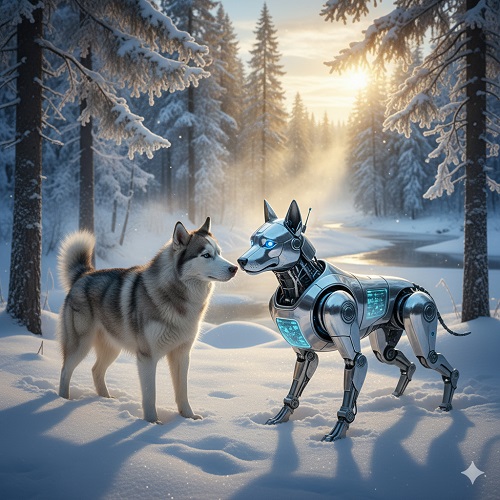
This report provides a comprehensive, expert-level analysis of two of the oldest and most distinguished canine breeds: the Siberian Husky and the Alaskan Malamute. Moving beyond a superficial breed guide, this document delves into their historical domestication, ancient genetic lineage, and the unique behavioral and psychological attributes that define them. It aims to provide a nuanced understanding of their roles not only as working animals but also as profound emotional and social companions. Ultimately, this report serves to illuminate the significant responsibilities of ownership by contrasting popular culture fantasy with the demanding but deeply rewarding reality of a lifelong commitment to these remarkable animals.
II. An Enduring Partnership: Domestication and Symbiosis
The history of the Siberian Husky and Alaskan Malamute is inextricably linked to the survival of the indigenous peoples who bred them. For millennia, the relationship between these canids and their human counterparts was a unique and profound symbiosis, built on mutual trust and a shared struggle against the harsh conditions of the Arctic.
The Chukchi and the Siberian Husky: Breeding for Purpose and Companionship
The story of the Siberian Husky begins approximately 2000 BC, with the Chukchi people who lived near the Kolyma river in Russia.1 The Chukchi's breeding methodology was both intentional and highly selective. Their approach was not merely to develop a working animal but to systematically eliminate any individual showing signs of aggression.1 This foundational act of selective breeding is the direct, historical precursor to the Siberian Husky's famously gentle and friendly disposition, which extends to people and other dogs alike.2 It is a powerful example of how a domesticated breed's temperament can be a direct result of deliberate human intervention.
The relationship between the Chukchi and their dogs was a partnership for survival. The huskies were bred for their endurance and ability to pull sleds over long distances.4 However, their role transcended utility; they were also integral companions. The depth of this bond is captured in the traditional Chukchi phrase "three dog night," which refers to a night so cold that a person needed to sleep with three dogs to stay warm.4 This anecdote illustrates that these animals were not simply tools but were intimately integrated into the family unit, their presence a necessity for both physical warmth and psychological well-being.
The Mahlemiut and the Alaskan Malamute: Strength, Survival, and Kinship
The Alaskan Malamute's lineage is even more ancient, descending from domesticated wolf-dogs that migrated alongside Paleolithic hunters who crossed the Bering Strait into North America more than 4,000 years ago.5 The breed's name is derived from the Mahlemiut, an Alaskan Inuit tribe that lived along the Kotzebue Sound in northwest Alaska.5
While the Husky was bred for speed and endurance, the Malamute was developed for immense strength and stamina, enabling them to haul heavy freight over long distances.5 Their utility extended beyond sled pulling, as they were also essential hunting companions, used to distract bears and locate seals.5 This interdependence was a daily reality. The ultimate testament to their kinship with the Mahlemiut tribe was the practice of having human babies sleep with the dogs during the winter months for warmth.6 This practice demonstrates a level of profound trust and cooperation that defined a mutually beneficial relationship. The breed's resilience was tested during the Gold Rush, when demand for speed in sled dogs led to widespread crossbreeding, nearly pushing the pure Malamute line to extinction.5 The survival of the breed is a direct result of the isolated Mahlemiut tribe, who maintained their ancient, pure lineage.8
The distinct historical roles of these two breeds are reflected in their modern-day characteristics, as summarized in the following table.
|
Category
|
Siberian Husky
|
Alaskan Malamute
|
|
Breed Origin
|
Northeast Asia (Siberia), bred by the Chukchi people
|
North America (Alaska), bred by the Mahlemiut tribe
|
|
Primary Historical Role
|
Fast, long-distance sled pulling & companionship 4
|
Heavy freight hauling, hunting, & companionship 5
|
|
Physical Build
|
Medium-sized, agile, built for speed and endurance 8
|
Large, powerful, and robust, built for strength and stamina 7
|
|
Key Behavioral Traits
|
Friendly, social, intelligent, independent, and stubborn 2
|
Affectionate, dignified, intelligent, independent, and strong-willed 10
|
|
Temperament
|
Friendly with people and other dogs; rarely barks 2
|
Playful, loyal, and loving; may howl but rarely barks 7
|
|
Energy Needs
|
Very high; bred to run and requires vigorous daily exercise 12
|
High; needs ample exercise and mental stimulation 11
|
|
Notable Instincts
|
Strong prey drive, pack-oriented, and a notorious escape artist 3
|
Intense digging, strong prey drive, and pack-oriented 11
|
III. The Genetic Echo: Unraveling the Wolf Lineage
A common fascination with these breeds stems from their "wolf-like" appearance, but their genetic connection to wolves is far more complex and ancient than popular belief suggests. Scientific inquiry has revealed a deep, millennia-old shared ancestry, which distinguishes them as a unique and exceptionally old lineage within the domestic dog family.
From Ancient Canids to Modern Sled Dogs
Genetic research has confirmed that the Siberian Husky and Alaskan Malamute share a deep common ancestor with ancient, now-extinct canid populations. One groundbreaking study analyzed a 35,000-year-old Taimyr wolf bone from Siberia, revealing that this ancient wolf represents the most recent common ancestor of modern wolves and dogs.15 The analysis demonstrated that present-day Siberian Huskies and Greenland sled dogs share an unusually large number of genes with this extinct wolf, with some retaining between 1.4% to over 27% of its DNA.16 This places their divergence from the common wolf-dog lineage much earlier than previously thought, highlighting a unique evolutionary path.
Further research has sequenced the genome of a 9,500-year-old dog from the Siberian island of Zhokhov. This dog, named Zhokhov, was found to share a common origin in Siberia with the Siberian Husky, Alaskan Malamute, and Greenland sled dog.18 The findings indicate that the traditions and key genomic adaptations that define modern sled dogs, such as their ability to thrive on high-fat diets, were established in the northeast Asian Arctic over 9,500 years ago.19 This is a significant distinction from most other domesticated dogs, which evolved to process starchy, sugar-rich diets.19 This genetic specialization is a biological testament to their ancient and unique adaptation to the Arctic environment.
Myth vs. Reality: Demystifying "Wolf DNA"
Despite these ancient connections, the concept of modern purebred Huskies and Malamutes having significant wolf DNA is a widespread misconception. While some domestic dogs have trace amounts of DNA from ancient wolf populations, this is fundamentally different from a recent wolf-dog hybrid. For example, a genetic analysis of a purebred Siberian Husky typically shows a "wolfiness" score of only 2.4% to 2.5%, an indication of their deep, shared lineage rather than recent hybridization.20 The public's perception often conflates a breed's ancient lineage with the dangerous unpredictability of a modern hybrid. The following table provides a clear distinction between these two concepts.
|
Category
|
Ancient Genetic Lineage (Purebred Husky/Malamute)
|
Wolf-Dog Hybrid
|
|
Genetic Source
|
Shared ancestry with extinct, ancient canids like the 35,000-year-old Taimyr wolf and the 9,500-year-old Zhokhov dog 15
|
Direct, recent crossbreeding between a domestic dog (e.g., Husky, Malamute) and a wild wolf 21
|
|
Typical DNA Content
|
Trace amounts, often quantified as a "wolfiness" score of 2-3% 20
|
Can have significant wolf content, often detectable up to three generations 21
|
|
Behavioral Implications
|
Behavioral traits are a result of millennia of selective breeding for a specific working role and temperament 1
|
Behavior is unpredictable and can be challenging due to a mix of domesticated and wild instincts 20
|
|
Public Perception
|
Often perceived as dangerous due to a misunderstanding of their lineage 20
|
Legally regulated and often restricted due to unpredictable and potentially hazardous behavior 21
|
This distinction is crucial. Although a small percentage of modern dogs may have trace amounts of recent wolf content due to occasional interbreeding by mushers for specific traits, this is not a defining characteristic of the modern purebred Siberian Husky or Alaskan Malamute.20 A common-sense understanding reveals that the behaviors of these breeds are not the result of a dangerous wildness, but rather the consequence of intentional selective breeding and thousands of years of adaptation.
IV. A Portrait of Purpose: Behavioral Traits and Their Origins
The unique behavioral characteristics of Siberian Huskies and Alaskan Malamutes are not random quirks; they are ingrained instincts that were once critical for survival and successful work in the Arctic. A deep understanding of these traits is fundamental to a successful partnership with these breeds.
The Independent Mind: Intelligence and Stubbornness
Both breeds possess an intelligence that is intertwined with their independence. They are highly intelligent, curious, and effective problem-solvers, capable of a unique sense of humor that leads to antics and playful mischief.3 However, this intelligence is often misinterpreted as stubbornness or a lack of desire to please their owners.2 This independence was, in fact, a crucial survival trait. As sled dogs, they were often required to make autonomous decisions in treacherous conditions, such as determining if a frozen lake was safe to cross.3 A dog that blindly obeyed commands might not have survived. Consequently, modern training methods must be rooted in patience, consistency, and a strong collaborative bond, rather than simple dominance.3 These dogs will question a command, often asking, "What's in it for me?" 23, and require a compelling reason to comply. This is not a defect in their character but a reflection of their history.
The Instinctual Drive: Howling, Digging, and Hunting
These breeds exhibit several behaviors that are direct echoes of their wild ancestors and working heritage:
- Vocalizations: Huskies and Malamutes are not known for barking but are famous for their loud, melodious howling.2 This form of vocalization is a remnant of their pack-living days, used to communicate over long distances in the Arctic.11 They will also express frustration or boredom through a variety of unique and animated sounds.7
- The Excavator: Digging is an innate and powerful instinct for both breeds.3 Historically, they would dig to create dens for shelter or to unearth prey. In a modern context, this behavior often manifests from boredom or a desire to create a cool spot to lie in, and can result in "crater-sized holes" in a yard.3
- The Hunter: Both breeds possess a strong predatory drive, which can manifest as a serious danger to small animals, including squirrels, bunnies, birds, and even cats and small dogs.2 This instinct is deeply ingrained and requires constant vigilance from the owner. It is a critical responsibility to understand that this behavior is not a fault in the dog but an inherent part of its nature that cannot be fully trained away.3
V. The Human-Canine Nexus: Companionship and Care
The relationship with these breeds can be uniquely rewarding, offering a level of companionship and emotional support that is both deep and profound. However, this partnership is a two-way street, and the emotional benefits are contingent on a serious commitment to meeting the dogs' high-maintenance needs.
More Than a Pet: Emotional and Social Support
By their very nature, these are pack animals who thrive on the company of humans or other dogs.3 This pack mentality allows them to form exceptionally deep and meaningful bonds with their human partners, making them wonderful family companions.2 The emotional comfort they provide through their presence has led to their recognized roles as emotional support animals.24
With the right individual temperament and a dedicated, patient owner, these dogs can also be trained for more demanding roles, such as therapy and service work. Huskies have served as Psychiatric Service Dogs (PSDs) for individuals with conditions like anxiety and PTSD, trained to sense emotional distress and perform tasks like providing deep pressure therapy to reduce anxiety or interrupting harmful behaviors.24
Testimonials from owners confirm their ability to be highly attentive and responsive to human emotions.26 The stories of dogs like Bellin, a Siberian Husky who became a nationally registered therapy dog, and Nanook, a Malamute who brought comfort and healing to children and adults, demonstrate their profound capacity for empathy and connection.27 This is not a contradiction to their independent nature but rather a testament to the power of a strong human-animal bond, where the dog’s intelligence and pack loyalty are channeled into a specific, purposeful role.
The High-Maintenance Reality: A Guide for Dedicated Owners
The emotional rewards of owning these breeds are inextricably linked to the owner's willingness to meet their significant needs. Failure to do so not only leads to a negative experience for the owner but can also result in profound behavioral issues for the dog.
- The Energetic Engine: Bred to run and work for hours on end, these dogs require a tremendous amount of vigorous daily exercise and mental stimulation.8 Without a sufficient outlet for their energy, they will become bored, restless, and destructive, chewing furniture and tearing up pillows.8
- The Escape Artist: The innate wanderlust of these breeds makes them notorious escape artists. They will dig under, climb over, or chew through fences to explore what is "on the other side of that hill".3 It is critical that owners provide a secure, "Husky-proof" or "Malamute-proof" enclosure, as their love of running may temporarily overcome their love for their owners.2
- Grooming and Health: Both breeds have a thick, double coat that requires consistent and dedicated grooming.30 They shed, and often during the biannual "coat blow," the amount of fur they lose can be surprising to unprepared owners.13 Additionally, prospective owners must be aware of potential health issues, including hip dysplasia, eye problems, and epilepsy.12
VI. The Direwolf Dilemma: Separating Fantasy from Commitment
The Siberian Husky and Alaskan Malamute are iconic breeds, but their surge in popularity in recent years has led to a crisis of abandonment. This phenomenon serves as a powerful cautionary tale about the disconnect between a breed's aesthetic appeal and the reality of its care requirements.
The Pop Culture Paradox: From Fictional Direwolf to Real-World Crisis
The global popularity of the television series Game of Thrones created a dramatic and harmful trend. The fictional "direwolves" on the show, which were portrayed by a mix of northern breeds, including Huskies and Malamutes 29, sparked an alarming trend: people began acquiring these dogs based on their wolf-like appearance without understanding the time, patience, and money required to care for them properly.32
The consequences of this impulse-driven trend are well-documented. Animal shelters around the world have reported a massive increase in abandoned Huskies. In Riverside County, California, for example, the number of impounded Huskies and Husky mixes jumped from 351 (1.7% of all impounded dogs) in 2013 to a staggering 1,027 (nearly 7%) just five years later.32 This sharp increase in abandonment is a direct consequence of a failure to research the breed's needs.29 As show star Peter Dinklage noted, many new owners were simply unprepared for "such a tremendous responsibility".32
The following table provides a clear illustration of this phenomenon using the documented data.
|
Metric
|
2013
|
2018
|
Change
|
|
Huskies and Husky Mixes Impounded
|
351 32
|
1,027 32
|
+676
|
|
% of All Dogs Impounded
|
1.7% 32
|
7% 32
|
+5.3%
|
This data demonstrates that the fantasy of the "direwolf" led to a real-world humanitarian and animal welfare crisis. The emotional and financial costs of caring for these dogs were too great for many, leading to a breakdown of the human-canine bond and a tragic end for many animals who had been bred for a lifetime of partnership.
An Unspoken Bond: A Call for Responsibility
The Siberian Husky and Alaskan Malamute are not fictional characters; they are ancient, intelligent, and deeply social animals whose entire existence is a testament to the symbiotic relationship between humans and canids. The true beauty of these breeds lies not in their superficial resemblance to a fictional creature but in the profound, loyal, and loving relationship that can be earned through mutual respect.
A conscientious prospective owner must understand that this partnership is a significant, lifelong commitment. It requires a lifestyle that can accommodate their immense energy, a home environment that can withstand their instinctual behaviors, and a training approach that honors their unique intelligence and independence. By conducting thorough research, engaging with reputable breeders and rescue organizations, and committing to their non-negotiable needs, an owner can continue the millennia-old partnership that has defined these breeds. The bond with these Arctic canids is not a fairytale; it is a serious and lasting partnership that, when respected, is one of the most rewarding that a human may experience.
-------------------
ENDNOTE: Husky type dogs are not for just anyone. They are suitable only for dog lovers who have a broader than usual understanding of dog lore, familiarity to some extent with the diverse range of breeds, and the fact that all domestic dogs, from the Irish Wolfhound to the tiniest "tea-cup" purse-dog, ALL descend directly from their wolfish ancestors, and ALL share approximately 99.4% of the archetypal ancestral wolfish genome wolves possess. For those of us who are also admirers of the wild wolf, the Siberian and Malamute dogs in particular are about as close to having a devoted 'wolfish' companion as it is possible to obtain, yet one that is throughly domestic, 'people-oriented', and immensely devoted to their humans.
Forget all that romantic nonsence about 'Game of Thrones' Direwolves; if you admire wild wolves and domestic dog breeds that share many characteristics of wolves, yet are thoroughly suited to domestic settings (in the right human hands), you can't find better companions than Siberian and Malamute dogs! But be advised: these breeds are VERY high maintenance and not well suited as 'apartment dogs', with owners who are not physically present for most of the day!
------------------------
PS: Our Siberian bitch ("NALA", a rescue who was obviouslty named after her original family had watched the movie, THE LION KING), had her DNA tested by a Yale University Canine DNA study, two years ago. The results were rather interesting, to say the least. They confirmed that she was 100% pure Siberian (something we had no doubts about), but they also had a category called 'Wolfiness Factor', which apparently rates the tested dog's DNA genome and compares it to that of a contemporary Gray Western Timberwolf.
Our girl has always been extremely independent, head-strong and self-assured, behaviorially speaking, but YALE notified us that her 'Wolfiness Factor' was a surprising 24th percentile of their calculated standard categorical value! Few Siberians in the study rated so high, so we were told. After living with her for over 16 years, I can affirm that it's hopeless trying to outsmart an Alpha Siberian dog...their cleverness makes a quantum computer seem facile! :))) That said, she's been an absolute delight to share leading our pack with! [Move over Balto!]