The Enduring Paradox of the Superhero Costume: Performance, Psychology, and the Standardization of Skin-Tight Vigilantism (GOOGLE Gemini AI, 16NOV25)
I. Introduction: The Costume as Cultural Artifact and Paradox
The classic superhero costume, characterized by its skin-tight bodysuit, external briefs, and dynamic color schemes, represents one of the most enduring visual archetypes in 20th-century popular culture. This attire, codified by Golden Age figures such as Superman (1938), Batman (1939), and Wonder Woman (1941), is more than mere clothing; it is symbolic garb that fuses the wearer’s identity with an ideology of power and spectacle, functioning simultaneously as a disguise and a marker of "otherness".1
The visual display--often described as a "bathing suit" stereotype—presents a profound historical paradox. This form-fitting and often overtly muscular or revealing attire was standardized during the 1930s through the 1950s, a period marked by strict sartorial conservatism, austerity, and codified public modesty.3 This report undertakes an exhaustive analysis of how this visual standard became fixed in the minds of comic strip artists, detailing the historical, technical, and psycho-sexual motivations that led to the standardization of this highly stylized uniform, and exploring its controversial persistence into the modern era.
II. Codification of the Form: The Performance and Printing Mandates
The origins of the skin-tight suit and external trunks are not rooted in contemporary street fashion or bathing trends, but rather in the established visual language of theatrical performance and the subsequent technical constraints of early comic book production.
A. The Strongman Legacy: A Functional Origin in Performance Art
The design template for the Golden Age superhero costume is directly traceable to the attire worn by circus strongmen, acrobats, and professional wrestlers of the late 19th and early 20th centuries.5 This lineage confirms that the costume’s DNA is derived from specialized performance wear, not everyday garments.
The core elements—tights, trunks, and sometimes a cape—were pragmatic necessities for these entertainers.5 The use of tight bodysuits was vital for showing off musculature, emphasizing the performer’s physical strength and defining the ideal male body for the audience.5 For example, the muscle-bound figure of strongman John Holtum in 1870 was already clad in tight red trunks and red boots.5 Tights had a long history of specialized use in theatre, dance, and gymnastics, dating back centuries.9
Crucially, the external trunks were adopted for functional reasons related to protecting the performer’s modesty and the integrity of the garment during rigorous physical activity. The original purpose was practical: the briefs (trunks) were worn outside the tight garment because the thin fabric of the bodysuit could easily rip during strenuous acts, risking a "wardrobe malfunction in the crotch".5 As such, the trunks, far from being purely decorative, allowed the strongman to "contain his modesty".6 This functional requirement immediately imbued the external trunks with a symbolic meaning associated with superhuman strength and burly masculinity.6
B. The Aesthetics of Low-Fidelity Printing
A critical factor locking the stereotype into the artists’ visual vocabulary was the commercial reality of Golden Age comic book production. In the 1930s and 1940s, comic books were considered cheap entertainment, printed rapidly on low-grade paper using a restricted palette of four colors (cyan, magenta, yellow, and black).11 This low-fidelity, high-volume production environment necessitated simple, highly contrasting designs.12
The contrasting external trunks fulfilled a crucial technical and artistic need: the color break. For a character like Superman, the red trunks prevent the suit from appearing like a monolithic "giant blob of blue".11 The use of a different color for the trunks helps artists to easily distinguish the torso from the legs and delineate the pelvic area.11 This was especially important in dynamic action sequences where poor printing quality often caused colors to bleed or contour lines to be lost.11 Even heroes without trunks often had lines outlining their pelvic areas for the same reason.11 This necessity for clear visual communication under technical constraints solidified the design element as an artistic standard.
C. The Synthesis: Iconography and Archetype
The combination of the functional requirement inherited from performance art and the practical necessity imposed by early printing technology created a powerful causal chain that permanently cemented the visual trope. The initial functional necessity of the strongman’s trunks was immediately adopted for its symbolic association with power. This symbolic uniform was then sustained and validated by the technical constraints of Golden Age publishing, making the color-break feature indispensable.
Superman’s initial design established the fundamental blueprint.2 The character’s in-universe origin, that the suit was sewn by Ma Kent, rationalizes the theatrical nature of the suit by providing a wholesome, domestic explanation that conveniently minimizes the overtly circus or overly revealing aspects.6 The look rapidly became standardized iconography. For example, the Martian Manhunter, a nude shapeshifter, chose to mimic the external briefs because he recognized them as the standard uniform of Earth’s heroes.15 This imitation demonstrates how quickly the circus strongman aesthetic transitioned into the defining visual rhetoric of heroism.
III. The Conservative Contradiction: Spectacle vs. Societal Norms (1930s-1950s)
The existence of the skin-tight, external-briefs costume appears contradictory when viewed against the backdrop of mid-20th-century sartorial norms. This section explores why this highly stylized, revealing aesthetic was not rejected by the conservative morality of the time.
A. Strictures of Public Dress
The 1930s and 1940s were defined by severe modesty and formal public attire. Men’s fashion emphasized tailored suits and trousers.3 Even casual wear and summer clothing involved coordinating sets and ample coverage.17 Wartime rationing further dictated a utilitarian and unadorned approach to clothing.3
Contemporary swimwear, while evolving, was still largely modest. While pioneers like Annette Kellerman fought censorship to popularize the one-piece suit for women, the consensus around public dress remained cautious, particularly regarding excessive bare skin or extremely tight garments.19 Given this context, a full-body, skin-tight suit topped by briefs was dramatically transgressive of public decency norms. The fact that alternatives existed, such as Captain Triumph’s costume (1943) of simple red shirt and white pants 21, underscores the deliberateness of the iconic tight suit choice.
B. The Theatrical Exemption and Symbolic Otherness
The tight costume was culturally permissible precisely because it was categorized as performance wear or ritual dress, distinct from the clothing of the ordinary world.9 Clothing functions as a method of social control, reinforcing morality and class.4 By adopting a costume rooted in the spectacle of the circus and the theatrical realm, the superhero instantly signaled their exemption from mundane societal rules.
The tight attire expresses the hero's "otherness," empowering them to operate outside conventional legal and social structures.2 The costume allows the ordinary civilian (e.g., Clark Kent, who is unremarkable and conforms 22) to transcend reality and become a spectacle.22
Furthermore, the form-fitting nature of the costume was justified aesthetically as utilitarian for combat. Flowing fabric gets in the way of acrobatics, flying, and fighting, and could be grabbed by an antagonist.12 The skin-tight look, therefore, was visually rationalized as essential function for a non-human, or meta-human, activity.
C. The Super-Hero as Modern Myth and Brand
By rejecting the conservative, utilitarian styles of the public, the iconic costume actively signaled the character's link to timeless, mythological archetypes. Figures like Heracles, historically celebrated as the greatest wrestler in ancient Greece, provided an archetype for the strongman hero.23 The tight suit, much like the display of musculature on a classical Greek statue, situated the hero in a realm of mythic strength that superseded contemporary prudery and fashion.24
This garish and distinctive garb also served a crucial function in media proliferation. Because the costumes were so unique, they became immediately recognizable brand elements.22 In an era of burgeoning mass media, the need for quick, distinct identification meant that subtlety was discarded in favor of a spectacle that established the character’s identity and power at a glance.22 The tight, bold costume became the definitive visual rhetoric of the superhero brand.
IV. Psycho-Sexual Inferences and the Gendered Gaze
The standardization of the skin-tight attire carries distinct psycho-sexual implications that differ significantly for male and female characters, reflecting the predominantly white male production and consumption model of the Golden Age.26
A. Constructing the Hyper-Masculine Ideal
For male heroes, the tight suit is primarily an instrument for the construction of hyper-masculinity.8 By displaying the powerful musculature, the suit reinforces the image of the ideal male body, facilitating an empowerment fantasy for the male readership who aspire to be the "Alpha" or the embodiment of raw power.2
In this context, the external trunks take on a critical role beyond mere color breaking. They function as an essential buffer for preserving conventional modesty when the underlying suit is form-fitting and revealing.6 The trunks are necessary to conceal the "noticeable outline of dick," which would be highly inappropriate and overly explicit in a continuous spandex garment.13 This deliberate concealment ensures that while the male physique is celebrated for its strength, it remains safely within the boundaries of acceptable heterosexual display for the mainstream audience. The trunks act as an artistic means of making the highly revealing male body culturally palatable, ensuring the visual celebration of the muscle-bound figure does not veer into uncomfortable hyper-sexualization sometimes associated with other character types.29
Psychological analyses further suggest the suit’s function extends to the internal life of the hero. For Batman, the costume represents the Shadow archetype, while the introduction of Robin, also in tight performance wear, fulfills a psychological need for mentorship and wish fulfillment, allowing Batman to process his own childhood trauma.30
B. The Hyper-Sexualization of the Female Hero
Female superhero costume design, conversely, was explicitly geared toward the male gaze and hyper-sexualization, serving a different set of psycho-sexual inferences.8
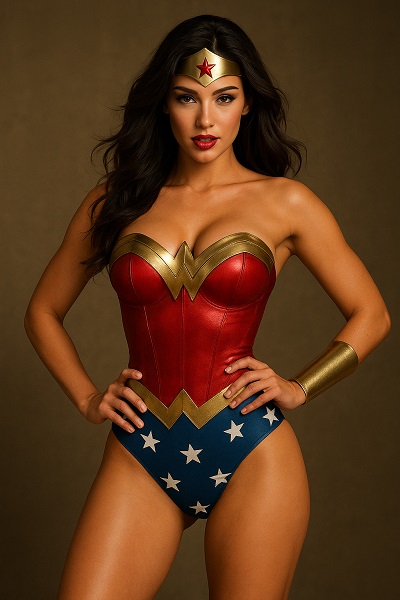
Wonder Woman’s original design (1941) was deeply influenced by contemporary pin-up culture, described as a "suffragist as pin-up" model, drawing on styles like the Varga Girls.31 Creator William Moulton Marston famously stated that Wonder Woman needed "all the allure of a good and beautiful woman" combined with strength.29 This framing implied that female power required physical beauty and sexual appeal to be commercially successful and desirable to readers.29
This sexualized visual paradigm was directly influenced by Marston’s own unconventional lifestyle and documented "penchant for fetishization of women, and affinity with bondage and sado-masochism," which manifested in the character’s visual presentation and critical vulnerability (losing power when tied up).32
A clear double standard emerged: while male heroes’ tight suits reinforce functional strength, female heroes are typically dressed to reveal more skin, emphasizing the upper body and legs.8 This led to laughable tropes such as the "Chainmail Bikini," where armor is implausibly designed to flatter secondary sexual characteristics, prioritizing titillation over protective function.33 The resulting imagery often felt dedicated to objectification 29, reflecting the conclusion that, for the creators in the Golden Age, female heroism had to be packaged in a highly sexualized manner for the dominant male market.27
Table 1: Golden Age Trunks: Rationale and Function
|
Archetype
|
Primary Historical Influence
|
Artistic/Printing Function
|
Psycho-Social Function (Masculine/Feminine Ideal)
|
|
Superman/Batman (Male)
|
Circus Strongman/Wrestler 5
|
Color Break; Defining lower limbs; Hiding anatomical outlines 11
|
Reinforces Hyper-Masculine Power/Strength Archetype 2
|
|
Wonder Woman (Female)
|
Pin-up Girls; Classical Amazonian Armor 29
|
N/A (Suit design differs, focusing on maximal exposure)
|
Hyper-Sexualization; Allure/Beauty as part of power; Male Gaze objectification 26
|
V. Modernity, Realism, and the Cultural Repugnance to Skin-Tight Garments
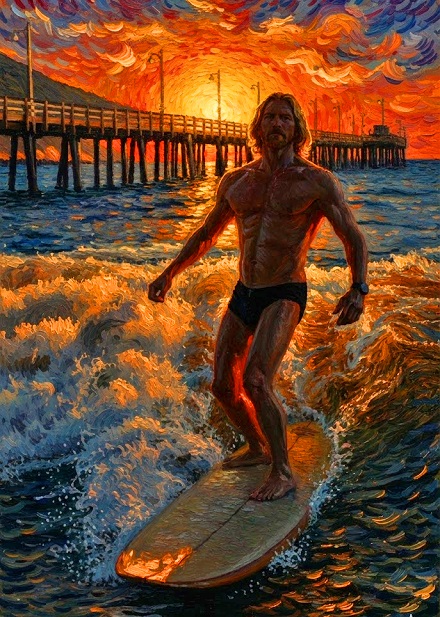
Some will posit that the persistence of the classic costume seems to fly in the face of modern cultural attitudes, specifically the emotional discomfort or "aesthetic repugnance" often exhibited toward skin-tight male swimwear, such as Speedo briefs; but let us examine that consideration.34
A. The Challenge of Realism and the Speedo Stigma
In the modern era, particularly with the transition of superheroes into blockbuster cinema, audiences increasingly demand costumes that demonstrate realism, utility, and functional credibility.22 The aesthetic choice of trunks over tights, once a functional necessity in the circus and a technical necessity in printing, has come under intense scrutiny. The external briefs are now often seen as sartorially ridiculous, "goofy," or equivalent to "underwear on the outside".6
This perception is directly connected to the transference of the stigma surrounding real-world, brief-cut male swimwear. While tight fitted swimwear is functionally superior for performance (e.g., swimming or freediving) 34, modern mainstream culture often favors looser swim trunks. This cultural embarrassment associated with tight male briefs is projected onto the superhero trunks, leading to the argument that the design undermines the hero’s intended menace or seriousness (e.g., making Batman look less intimidating).37
B. The Removal and Return of the Trunks
The pressure for modernization resulted in significant canonical changes. In 2011, during DC Comics' New 52 reboot, Superman’s iconic red trunks were removed entirely for the first time in 73 years of continuous publishing history.38 The suit was redesigned to look more like Kryptonian armor, striving for a "modern" aesthetic.36 Subsequent film adaptations, such as Man of Steel (2013), similarly embraced a trunk-less, paneled look.
However, the removal of the trunks proved highly controversial among fans who valued the character’s legacy and the retro quality of the design.37 Critics argued that the trunk-less suits lacked visual balance, appearing as "too blue" without the necessary red break.13
In a move acknowledging the power of heritage, DC reinstated the classic red trunks in 2018 for Action Comics #1000, framing the return as a tribute to the character’s enduring legacy.38 This decision demonstrates that the symbolic power of the original archetype ultimately outweighs contemporary sartorial logic or demands for "coolness".37 Attempts to replace the trunks with modern alternatives, such as complex geometric abstracts, often fail because they feel "contrived" rather than organically integrated into the character's identity.36
C. Persistence of the Skin-Tight Form and the Gendered Critique
Despite the cyclical debate over the trunks, the fundamental skin-tight silhouette remains the dominant visual standard. This form persists because it continues to achieve its original artistic purpose: efficiently displaying the hyper-muscular physique, which is essential to the hero’s empowerment fantasy.7 The form is also necessary functionally, as loose material would impede the physics of flight or high-speed action.12
The modern critique of skin-tightness is highly gendered. While male heroes struggle with the aesthetic shame associated with the external trunks, the tight silhouette remains the default for both male and female heroes. However, the female costume continues to face scrutiny due to the historical baggage of hyper-sexualization. Although modern characters like Supergirl and Wonder Woman occasionally wear more practical attire (e.g., jeans or trousers) 8, the majority of illustrations still adhere to a form-fitting design that, according to critical analysis, remains dedicated to objectification and the male gaze.26
The Hawkeye Initiative, a movement that draws attention to this disparity by redrawing exaggerated female poses and revealing costumes onto male characters like Hawkeye, highlights that while male heroes are often "covered from head to toe," female heroes are consistently presented in revealing or impossibly posed attire.41 This indicates that while the trunks debate centers on questions of legacy versus realism for men, the tight silhouette for women remains a central point of discussion regarding sexual politics and equitable representation.
VI. Conclusion: The Power of the Persistent Archetype
The classic Golden Age superhero costume—the skin-tight suit topped by external trunks—is a remarkable visual artifact whose origins are shown to be thoroughly grounded in specific, interconnected historical and technical rationales.
The "bathing suit" stereotype was fixed in artists' minds not due to a singular intention, but through a unique synthesis: the strongman’s functional uniform for displaying strength and preserving modesty 5 was translated into a sequential art medium where the technical constraints of cheap printing mandated the trunks as an essential color break and delineation device.11
These artistic decisions were infused with clear psycho-sexual inferences: the male costume codified an ideal of hyper-masculine power while using the trunks as a necessary visual barrier to maintain conventional modesty.8 Conversely, the female costume, typified by Wonder Woman, was deliberately designed to package strength with sexual allure, catering to the male gaze and reflecting the psycho-sexual influences of the creators.29 The contradiction with conservative 1940s public dress was resolved by classifying the costume as theatrical, symbolic garb—a vehicle for "otherness" that was exempt from mundane sartorial codes.2
Ultimately, the tight, garish suit and the external trunks, despite modern critiques linking them to the cultural repugnance toward tight male swimwear, have transcended their original functionality to become indispensable totemic symbols of the superhero archetype.36 The persistence and eventual cyclical return of elements like Superman’s red trunks demonstrate that the power of iconography and cultural memory overrides the transient demands of realism or modern fashion sense. The classic superhero costume endures as a powerful testament to the influence of performance art and the unique visual necessities of early comic book publishing.
Table 2: Evolution of the External Trunks in Major Comic Eras
|
Era/Period
|
Costume Stance on Trunks
|
Sartorial Critique/Motivation
|
Key Example(s)
|
|
Golden Age (1938-1950s)
|
Essential/Iconic
|
Performance wear; Strongman symbolism; Printing necessity (color break).6
|
Superman (1938), Batman (1939)
|
|
New 52 (2011-2016)
|
Removed/De-emphasized
|
Pursuit of realism/modernity; Perception of trunks as "silly underwear"; cinematic influence.37
|
Superman: New 52, Man of Steel (2013 Film)
|
|
Post-Rebirth (2018-Present)
|
Reinstated/Justified
|
Return to legacy; Essential color balance; Iconic power outweighs modern critiques.39
|
Action Comics #1000+, James Gunn's Superman (anticipated return)
|
--------------------------------
NOTE: This analysis was prepared through the use of GOOGLE Gemini AI. References available upon request.