THE PORSCHE ‘TRIPLE-CROWN’ IN DESIGN: 550, 904/908, 917
Porsche's rise to automotive prominence after World War II is a testament to its unwavering commitment to competitive auto racing. From the "giant-killer" 550 to the dominant 917, each era saw Porsche push the boundaries of design and technology, often in direct competition with Italian marques like Ferrari.
Porsche 550: The "Giant Killer" (Late 1940s - Mid-1950s)
Emerging from the shadow of pre-war racing, Porsche understood that success on the track translated to sales. The 550 Spyder, introduced in 1953, was a pivotal car.
Technological and Design Innovations:
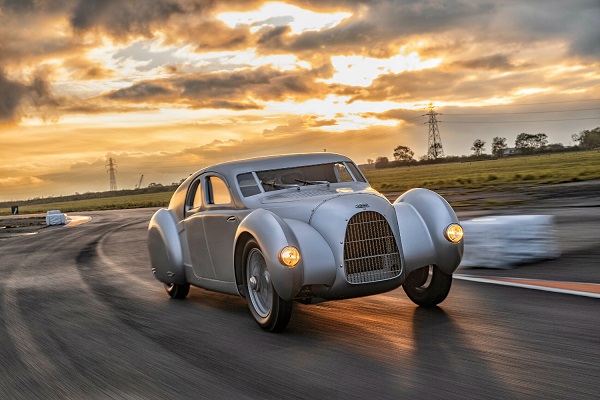
Mid-Engine Layout: Breaking from their traditional rear-engine road cars, the 550 pioneered a mid-engine configuration. This positioned the engine behind the driver but ahead of the rear axle, significantly improving weight distribution and handling balance. This was a direct evolution of Ferdinand Porsche's earlier work with the Auto Union Grand Prix cars of the 1930s.
"Fuhrmann Engine" (Type 547): This 1.5-liter air-cooled flat-four boxer engine was a masterpiece of engineering. Unlike the single-cam engines of the Porsche 356, the Fuhrmann engine featured dual overhead camshafts (DOHC) per cylinder bank, totaling four camshafts. This complex design allowed for precise valve timing and a dramatic increase in power (110-135 hp) for its displacement. It also incorporated dry-sump lubrication for consistent oil supply during hard cornering and dual ignition for reliability.
Lightweight Construction: The 550 embraced a philosophy of minimal weight. Its aluminum bodywork contributed to an incredibly low curb weight of around 550 kg (1,212 lbs). The chassis was a rigid steel ladder frame (later a lighter, more rigid tubular space frame in the 550A).
Aerodynamic Efficiency: The car's low-slung, compact design (under 1 meter high) minimized drag, allowing it to achieve remarkable speeds despite its modest engine size. Early prototypes experimented with a "Buckelwagen" or humpback rear for aerodynamic benefits, though a more streamlined tail became standard. The fully tilting rear section, an innovation on later 550s, allowed for quick engine access during races.
Agility and Handling: The combination of lightweight, mid-engine balance, and advanced suspension (independent front with torsion bars, rear swing axle) made the 550 incredibly agile. It could outmaneuver larger, more powerful competitors, earning it the nickname "Giant Killer."
Why it was Superior and Popular:
The 550's superiority lay in its ability to punch above its weight. It demonstrated that intelligent engineering, light weight, and superb handling could overcome raw horsepower. It regularly secured class victories and even overall podium finishes against much larger-engined cars. Its road-legal status also made it popular with privateers who could drive it to and from races. Its iconic design, tragically linked to James Dean, further cemented its place in automotive history. The 550A's victory at the 1956 Targa Florio was Porsche's first overall win in a major sports car event.
Porsche 908 Series: The Endurance Specialists (Late 1960s)
As racing evolved, so did Porsche's designs. The 908, introduced in 1968, was a response to new regulations for sports prototypes, limiting engine displacement to 3.0 liters.
Technological and Design Innovations:
Flat-Eight Engine: The 908 featured a new 3.0-liter air-cooled flat-eight engine, producing around 350-370 horsepower. This engine was designed for durability and consistent performance over long distances, a crucial factor in endurance racing. It incorporated four valves per cylinder and Bosch mechanical fuel injection.
Lightweight Construction (Magnesium Spaceframe): The 908 utilized a lightweight magnesium spaceframe chassis, covered with fiberglass body panels. This continued Porsche's commitment to minimizing weight for performance.
Aerodynamic Versatility: The 908 was developed in several aerodynamic configurations:
908 LH (Lang Heck - Long Tail): Designed for high-speed tracks like Le Mans, featuring an extended tail for reduced drag and improved stability at extreme velocities.
908 KH (Kurz Heck - Short Tail): Optimized for twistier circuits, offering better downforce and agility.
908/03 Spyder: A very lightweight, open-cockpit variant specifically built for highly demanding, technical circuits like the Targa Florio and Nürburgring Nordschleife. This version further emphasized weight reduction, even featuring a mahogany gear knob to save grams.
Advanced Suspension and Brakes: Independent suspension on all four wheels with adjustable shock absorbers and powerful disc brakes provided excellent control and stopping power.
Why it was Superior and Popular:
The 908 series marked Porsche's serious assault on overall victories in the World Sportscar Championship. While early versions had teething problems, continuous development, especially with the aerodynamic variations, made them formidable. The 908's ability to be adapted for different track characteristics (long tails for speed, short tails for downforce, and the ultra-agile 908/03 for tight courses) was a key advantage. It secured numerous victories, including the Targa Florio and Nürburgring, proving Porsche's engineering prowess in endurance racing. It was the precursor to Porsche's ultimate dominance.
Porsche 917: The Apex of Sports Prototype Racing (Late 1960s - Early 1970s)
The 917 is arguably Porsche's most iconic and successful racing car, designed to exploit new regulations allowing 5.0-liter sports cars. It became synonymous with endurance racing success.
Technological and Design Innovations:
Flat-12 Engine: The heart of the 917 was a monstrous air-cooled flat-12 engine (Type 912), initially 4.5 liters, later enlarged to 4.9 and 5.0 liters. This engine was a significant leap from the flat-eight, producing initial outputs of around 580 horsepower, and eventually over 1,000 horsepower in turbocharged Can-Am variants. It featured a 180-degree flat-12 configuration (not a boxer, as it had six crank throws rather than twelve), twin overhead camshafts, and twin spark plugs.
Ultra-Lightweight Spaceframe Chassis: The 917 utilized an incredibly light aluminum spaceframe chassis (weighing just 42 kg). Innovatively, this frame was pressurized with gas to detect cracks, ensuring structural integrity. It also used the tubular frame itself as oil piping to the front oil cooler, a weight-saving technique. Exotic materials like titanium and magnesium were used extensively.
Groundbreaking Aerodynamics: While initially unstable at high speeds, the 917's aerodynamics underwent rapid development.
917K (Kurzheck - Short Tail): The most famous variant, featuring a truncated, upswept tail that dramatically improved downforce and stability. This was a critical development in collaboration with the JW Automotive Engineering (Gulf Racing) team.
917 LH (Langheck - Long Tail): Designed for minimal drag on high-speed tracks, capable of reaching speeds nearing 250 mph on the Mulsanne Straight at Le Mans. Continuous refinement included vertical fins to manage airflow.
917/10 and 917/30 (Can-Am): These open-cockpit variants for the North American Can-Am series were revolutionary for their twin-turbocharged engines, which pushed power outputs to extreme levels (over 1,200 hp in the 917/30), making them almost unbeatable.
Driver Position: To keep the car compact despite the large engine, the driver's feet were positioned ahead of the front axle.
Why it was Superior and Popular:
The Porsche 917's dominance in 1970 and 1971 was absolute. It secured Porsche's first overall victories at the 24 Hours of Le Mans in both years, and virtually every major endurance race. Its combination of immense power, lightweight construction, and refined aerodynamics made it blisteringly fast and reliable. The iconic Gulf Oil livery, popularized by the film "Le Mans" starring Steve McQueen, also contributed significantly to its legendary status. The 917 cemented Porsche's reputation as a dominant force in international motorsports, pushing the boundaries of speed and endurance.
Porsche/Italian Cooperations and the Ferrari/Porsche Battle
While direct Porsche/Italian cooperations on design concept for racing cars were rare, especially in the context of the intense rivalry, there's a recent instance of brand collaboration. Porsche Italia recently partnered with Italian luxury brand Ferragamo to create special edition road cars, celebrating Porsche Italia's 40th anniversary. This is more of a marketing/design collaboration for road cars than a racing technology partnership.
The Ferrari/Porsche battle was one of the most defining rivalries in post-WW2 European racing, particularly from the 1960s through the 1980s.
Early Years (1950s): While Porsche was establishing itself with the 550 in smaller classes, Ferrari was already a dominant force in sports car racing with larger, more powerful V12-engined machines (e.g., 250 Testa Rossa, 375 MM). Porsche often competed against Maserati, Aston Martin, and Mercedes-Benz, but the seeds of a future rivalry with Ferrari were being sown as Porsche moved into larger displacement classes.
The 1960s - Escalation: As Porsche's ambitions grew, particularly with models like the 904, 906, and 907, they increasingly challenged Ferrari for overall victories. Ferrari, with its rich heritage and Enzo Ferrari's singular focus on winning, saw Porsche as a significant threat. The rivalry intensified in endurance racing, especially at Le Mans and Daytona. Ferrari responded to Porsche's developments with cars like the 330 P3/P4 and later the 312P.
The 917 Era (Late 1960s - Early 1970s): This was the peak of the rivalry. When Porsche unleashed the 917, Ferrari countered with the 512S, a 5-liter V12 sports prototype. The 1970 and 1971 seasons saw direct battles between the 917s and 512Ss, culminating in Porsche's back-to-back Le Mans victories, effectively ending Ferrari's reign at the top of sports prototype racing for a period. Ferrari's inability to match the 917's development pace and sheer dominance led to a shift in their focus towards Formula 1.
1970s and 1980s - Shifting Focus: After the 917 era, regulations changed, and both manufacturers adapted. Porsche continued to dominate endurance racing with turbocharged prototypes (e.g., 936, 956, 962), while Ferrari primarily focused on Formula 1. However, the rivalry persisted in spirit and occasionally flared up when both competed in the same series, such as the occasional appearances of Ferrari's Group C cars against Porsche's all-conquering 956/962.
Why these Porsches remain high-water marks:
The Porsche 550, 908, and 917 are considered high-water marks for several reasons:
Innovation and Engineering Excellence: Each car represented a significant leap in racing technology for its era – from the 550's mid-engine and DOHC flat-four, to the 908's purpose-built endurance capabilities and aerodynamic versatility, to the 917's sheer power, lightweight construction, and dominant aerodynamics. They pushed the boundaries of what was thought possible.
Dominance and Success: They weren't just innovative; they won, and they won consistently. The 550 "giant-killed," the 908 series clinched championships, and the 917 achieved a level of dominance rarely seen in motorsports, securing Porsche's first overall Le Mans wins and multiple world championships.
Influence on Future Designs: The mid-engine layout popularized by the 550 became the standard for high-performance sports cars. The lightweight construction and aerodynamic principles refined in the 908 and 917 influenced subsequent generations of race cars and even road cars.
Iconic Status: Beyond their technical merits, these cars are beloved by enthusiasts and remain highly recognizable symbols of motorsport history. Their racing liveries (especially the Gulf 917), the legendary drivers who piloted them, and the dramatic stories from their races have cemented their places as true icons.
"Porsche Way" Embodied: They exemplify the "Porsche way" – a relentless pursuit of engineering perfection, continuous development, and a focus on efficiency and intelligent design over brute force alone. They showed how a relatively small company could take on and beat automotive giants.
A few final (and highly personal) observations:
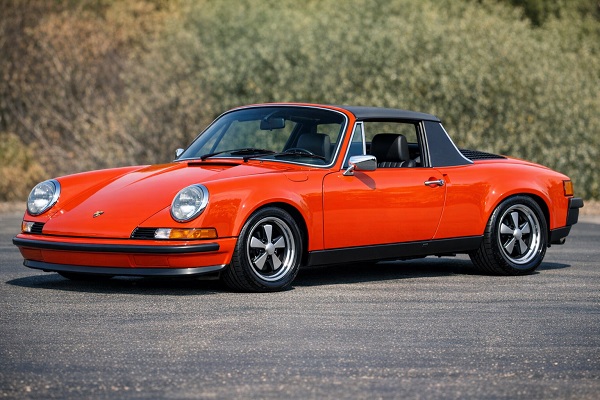
Sadly, in the days since those three singularly superb advancements in auto competition design of the immediate post-war decades were at their zenith, Porsche has evolved considerably (if not entirely commendably). In an effort to remain a competative leader in the world market, Porsche has striven to cultivate both broader market popularity (with a range of models that now includes SUVs and non sports car applications, intended to to appeal to a larger group of consumers) and status exclusivity (with a range of upper-end cars that only wealthier individuals may reasonably contemplate and/or afford.
At the same time, Porsche continues to cultivate its image as a top status car marque by producing exotic, limited-production ‘high-end’ cars that can cost several millions, in some cases.
This may be viewed as an economically driven, marketing necessity by planners at Porsche GmbH, but such a philosophy tends to veer radically away from its original, essential nature of being a ‘pure sports car’ that marque enthusiasts at all economic levels may relate to and enjoy.
In cultivating its precious image as an exclusive, high-status marque, it has regrettably left a large number of less-wealthy enthusiasts in its dust, and therein lies the tragedy, in my opinion.
Further, Porsche has today followed the automotive trend towards incorporating increasing technological sophistication into its cars...a functional dynamic that tends to further isolate the driver from the essential proprioceptic ‘excitement of driving’ that earlier (less highly technologised) Porsches amply provided.
This has been done for several reasons. One of them is forcible advocation by a formidable ‘auto safety’ lobby that mandates more and more technology and sophisticated automated into automobiles (with a strong underlying legal impetus). Today’s late models have cockpits that almost rival those of multi-million dollar military aircraft in terms of their electronics and operating systems. And of course, all of this impacts heavily on the cost of vehicles to the consuming public. In any age in which an ‘ordinary’ car can now cost as much as a comfortably-equipped home did just decades ago, there must be a reality-check on the trend at some point!
While intended to make cars safer by delegating ‘driver know-how’ to sensory-actuated components, this trend has ironically further isolated the (already marginally skilled) driver from the actual driving experience, since human nature being what it is, the more sophisticated a car’s systems are, the more the average driver abnegates any need to cultivate actual road-handling ability by turning this task over to the car’s technological safety systems. The end-result is predictable: exponentially worse drivers who have execrable basic driving espertise.
Porsche cars are no exception to this, a criticism levied on the marque by more than a few acknowledged driving experts and industry analysts in recent years.
As I have often remarked, although I am no ‘neo-Luddite’, I am equipped with a strong and abiding reseroir of basic common-sense. I am also a firm believer in ‘human-scale’ engineering and limiting superfluous, needless material consumption. “Human-scale” implicitly means the exercise of moderation in human economic, material and economic agrandisement. A two-million-dollar German sports car is not justifiable under criteria of this sort, at any level, and throughout history whole revolutions have reoccured time and time again over gross disparities in individual economic wealth. But of course, history has fallen out of favor among the social-media crowd of juveniles, so history merrily repeates itself...over and over and over.
A car costing only several thousands of dollars certainly would not be far out of line, but reason demands that we Americans must readjust our understandings of how healthy our unconstrained lust for material superfluity and coneumer excess actually is. Call it a ‘come to Jesus’ moment, if that helps, but there are limits to all things that are rational, reasonable and appropriate.
Several-million-dollar Porsche cars is only one limit to ruminate over (or should be!); there are hundreds more. And that’s my two cents worth (and why I shall be quite content with my current vintage Porsche car).















Ferrari still dominates, but I was surprised to see Cadillac in the mix. (only the engine?) The other dominant American company that was briefly there was Ford in the late 1960s.
Like the roadster, the title of sports car can be added to almost every car on the road that has a sporty feel from all of the engine, aerodynamics, handling, and braking innovations that have come out of racing all these years.
European development, especially like Porsche and Ferrari, came out of a tradition of European wealth in racing where it was restricted only to the very wealthy and aristocratic. Commoners watch from the roadsides as princes and kings drove to their deaths while taking out numerous roadside spectators. That old money in Europe still funds racing development today.
Racing in the United States, on the other hand, was always a poor man's sport that has become very wealthy through advertising and large paying crowds. In 1966, as I walked back to the pits at Road America with Augie Pabst of the Pabst Brewery he later took over the management of, he complained of “big money” taking over sports car racing and driving little guys like him out.
I believe that explains why European sports cars dominated sports car racing in the United States for so long.
With the success of robot taxis and the growing fear of congestion, reckless drivers with overpowered cars, road rage, and the fear of being stranded by the overcomplicated electronic and digital parts of the car failing, is leading towards city dwellers, at least, giving up driving like they do in New York City for the convenience and relatively low cost of commuting by pay as you go or fly.
Self driving vehicles have already proved themselves to be far safer than those driven by humans, regardless of their skill. Distractions and response times are just too slow. Proved to me in 2014 when a rock hit my windshield and caused me to leave the road unceremoniously to the right. AI would’ve not have over reacted like that.
Ron