I have garnered a reputation for being an unabashed cynic when it comes to the assumed ‘magnificence’ of our human species and its vaunted, collective intelligence. As a non-believer in any form of a ‘Supreme Deity’ yet someone who has been schooled in ancient Western Civilisation antecedents (e.g. Greece, Rome, Egypt) as well as those of China, India and Japan, my habitual reflective mode, when confronted by anyone who bubbles over with enthusiastic conviction that human beings are the ‘chosen’ creatures of a God, is one of overall disparagement and dismissal.
People who rave about the inherent brilliance of our Western science and technology generally assume that the sheer ingenuity of these disciplines is irrefutable proof of our species having achieved a state of supreme intelligence, not infrequently citing, in the same breath, the fact that we have, after all, even traveled to the earth’s moon, shot exploratory satellites off to other planets in our solar system, deciphered complex biochemical codes that are basic to biological life itself and (more recently) come disturbingly close to giving ‘life’ to truly autonomous Artificial Intelligence. We must therefore be incredibly smart critters, us humans! QED, right?
But wait a minute! Wasn't it Socrates who reminded us that the wise man is he who knows that he knows nothing?
Basking in that frame of warm and fuzzy, self-glorified thought that so often characterises extreme self-regard, one often encounters puzzlement expressed by various learned scientists over the fact that our Earth has yet to be contacted by “equally, highly-advanced” alien civilisations from other parts of the seemingly vast Universe we exist within.
It’s a common mode of reflection to fall into, of course, since we humans seem to think that our very existence as the (assumed) highest evolved life form on our planet is all the evidence that is needed to assure our importance as the world’s dominant species (not to mention a possible ‘galactic peer’ in the Universe).
I must admit that I have in the past fallen into that mind-trap myself although I eventually grew out of it, for deep within my innermost thoughts and reflections has always lurked a strong suspicion that, compared to the apparent infinity of possibilities that a vast Universe beyond our mind’s ability to fathom exists ‘out there’; we are most likely and more realistically intellectual retards, abysmally ignorant primitives with not even the slightest justification to offer in support of our supremely high, collective self-regard.
And on an earthly global scale, wherein a human lifespan of roughly 75 or so years is a fair average, is contrasted to the geophysical age of a home planet that exceeds some 4.5 billion years, our significance is assuredly less than a nanomole of spit in the face of a monstrous earthly typhoon. Perhaps much less than that.
This was all recently brought home in a profoundly impactful manner when I stumbled across a comment made by Noam Chomsky in a recent book (2024) cooperatively written by both he and co-author Nathan Robinson, titled THE MYTH OF AMERICAN IDEALISM: How US Foreign Policy Endangers the World.
Chomsky, an inarguably brilliant thinker and prolific socialist writer (note that I do not use that term 'socialist' pejoratively, here), is well known as a maverick philosophic intellectual whose writings often take pains to point out repeatedly how America’s image of itself as being a uniquely enlightened champion of democratic freedoms and rights actually suffers considerably under the harsh glare of unsullied reality.
As Chomsky and Robinson remark in the opening chapters of this fascinating new book, a superficial read-through of it unaccompanied by intense reflectivity might convey the impression that America is just as barbaric and just as depredacious as the world’s worst and most brutal dictatorships. Of course, the book delves deeply into all the not-well-publicised or publically known covert operations undertaken by the CIA (at the direction of past and present administrations) to depose foreign regimes and governments deemed not favorable to the United States over the last 100 years: a body of knowledge and awareness deliberately kept hidden from the American public at large, in most cases.
The thrust of this book (as in several others by Chomsky) is that no world power, not matter how high-flown its rhetoric or idealistic its self-conceived and stridently promoted image, truly works to exclusively and selflessly advance and preserve the collective desire of its peoples for individual freedom and democracy. Instead, the sum total of its aspirations, actions and foreign policy is almost unfailingly dedicated to advancing the economic ambitions of a small, select group of its most powerful, wealthiest and most influential citizens at the apex of its economic power structure.
In this context, Chomsky, observes, America is no different than any other powerful nation throughout history…regardless of all its high-flown rhetoric and marketing propaganda.
I for one would certainly have to agree with this pronouncement and Chomsky's book is full of well-documented and convincing evidence that supports this submission (Chomsky is a tireless researcher and precise documenter of the material he presents, of course, and always has been). Meticulous as he is, Chomsky typically leaves little maneuvering room for his opponents, within which to convincingly counter his erudite conclusions.
But the above is merely the chief thematic impetus that emerges in this particular book. In summary, and contrary to popular myth, America (the United States of) has always worked to advance the desires and aspirations of a small but immensely powerful minority within its society, regardless of its tireless, self-congratulative protests that America is the world’s premier champion of basic individual human rights and freedoms. That claim is simply not borne out by the evidence that Chomsky so assiduously lays out for us here.
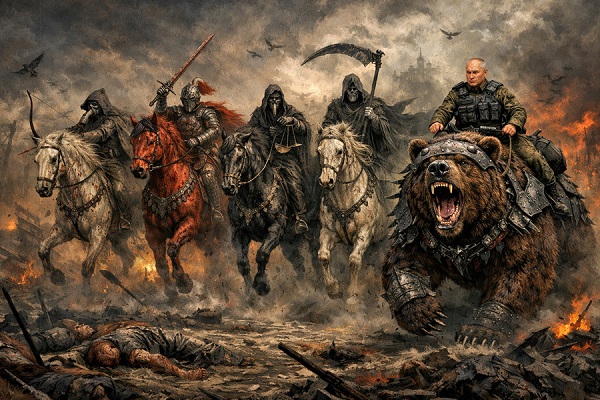
So where does that leave me? Somewhere around page 300 (the book’s very last page) or so in the book, Chomsky briefly discusses the precarious prospect of humanity’s continued existence against the sobering backdrop of the rampant international nuclear weapons proliferation that has occurred over the past 15 or so years. Given the well-documented schismatic nature of humanity (the dual-nature of human beings, that is, potential for aspiring to the highest morals and acts of ethical purity, co-abiding with a simultaneous potential for committing unspeakable acts of the most vile, most brutal and inhumane barbarity (that I have repeatedly commented upon endlessly in my own writings for the last 30 years), it makes a somber observation. That being that it is a wonder that some irrational individual has not yet pushed the Big Red Button that will guarantee the destruction of all human life on the planet, many times over.
On page 300 (the last page of this book) we find: “We are at a unique moment in our history. Decisions that must be made right now will determine the course of our species future (if there is to be one). We have a narrow window to implement the measures necessary to avert the cataclysmic destruction of the environment. Unfortunately, the ‘Masters of mankind’ (a veiled reference to major corporate interests, it is reasonable to assume) in the world’s most powerful state (the USA) have been hard at work to close that window and assure that their exorbitant short-term profit and power will remain untouched as the world goes up in flames.
“World-destroying nuclear weapons are being accumulated and the countries in possession of these weapons are unable to cooperate and talk openly of the possibility of war with one another. The Bulletin of the Atomic Scientists’ ‘Doomsday Clock,’ which provides experts’ best estimates of risk of civilization-wide disaster, has recently been reset to ninety seconds to midnight, the closest it has ever come to termination. The scientists who set the clock cited the two most salient reasons: The growing threat of nuclear war and the failure to take the required global measures to prevent climate change from reaching a point where it will be too late. In fact, ninety seconds may be too generous an appraisal, unless those who want to save the world from worse horrors act quickly, firmly and decisively.”
But let me quote his statement to that effect further for you, since it was such a facilely observable notion, yet deeply shocking in its impact: “An extraterrestrial observer looking at our species would conclude that our primary trajectory is towards (species) suicide, that we are collectively running towards the razor edge of a steep precipice. Human civilization, having started almost 10,000 years ago in the Fertile Crescent, may now be approaching its inglorious end. In fact, it may turn out that ‘higher intelligence’ was a kind of “evolutionary mistake.” One of the theories put forth as to why no intelligent life has yet been discovered anywhere in the Universe—the so called ‘Fermi Paradox’--is that intelligent life may be a kind of lethal mutation that annihilates wherever it arises. We are a new species, having been around for a mere microsecond in the evolutionary time scale, and so far we seem bent on proving the theory that intelligence leas to self-destruction.
“We are now engaged in an experiment to determine whether out humanity’s moral capacity reaches far enough to control our capacity to destroy ourselves. Unfortunately, the prospects look grim, and the observer might well conclude that the gap between moral capacity and technological capacities is too immense to prevent species suicide.”
Chomsky and Robinson conclude this somewhat shattering prospect by adding…”…but the observer could be mistaken. It is up to us to prove that this judgement is wrong.
“We don’t know that honest and dedicated effort will be enough to solve or even mitigate the problems we face. Still, we can be quite confident that the lack of such efforts will spell (species) disaster. Freedom and democracy are by now not merely values to be treasured, but are quite possibly the prerequisite to survival. We therefore have only two choices. One is to say ‘It’s hopeless. Let’s give up.’ This guarantees that the worst will happen. The other is to say, ‘We want to make things better so let’s try…’
“Given the urgency of the crises we face, there is no time to lose.”
-----------------------------
[Note: By sheer coincidence, a local television channel just yesterday aired the (original) 1951 science fiction classic, ‘The Day the Earth Stood Still’, starring Michael Rennie and Patricia Neal, in which an extraterrestrial visitor lands his spacecraft in Washington DC to warn humanity that if it doesn’t forsake its nuclear weapons, the planet Earth will be ‘forcefully terminated.’
That film is as relevant today as it originally was back in 1951, but regrettably, my bet would have to be that the worst actually shall happen at some point in the not-too-distant future, as humanity continues to prepare to plunge off the cliff of species extinction, like its far less intelligent Lemming cousins do…]
-------
[For more interesting backstory on all this, read some of Sigmund Freud's entertaining hypotheses on the human 'death wish', but meanwhile let that startling theory that what we regard as a 'blessing' (humanity's intellectual cleverness) may in fact be merely an evolutionary miscalculation by Ma Nature in her unfathomable efforts to create and sustain biological life on this rocky outpost called Earth. Stated differently: 'A potentially catastrophic accident.' Gulp!]

















As far as spirituality goes, we are still in the dark ages.