Submerged Shadows: A Comparative Psychosocial Analysis of Second World War Submarine Crews
Abstract: Since true "submarines" only came to subsurface naval operations at the extreme end of that war (and only in one Navy: that of Nazi Germany), "submersibles" are limited to the operational depths and time-limits imposed upon them by their (Electro-Diesel) propulsion systems. It was only in the immediate post-war period that true submarine warfare became possible due to the development of nuclear propulsion systems, despite late war experimental types using 'closed circuit' (non-surface dependent) systems (e.g. the German 'Walther boats."
The introduction of the submarine as a refined instrument of warfare
Given the emergence of refined 'undersea' vesels ('submersibles') after the First World War, naval strategy during the twentieth century necessitated a fundamental reconfiguration of the human experience in combat.
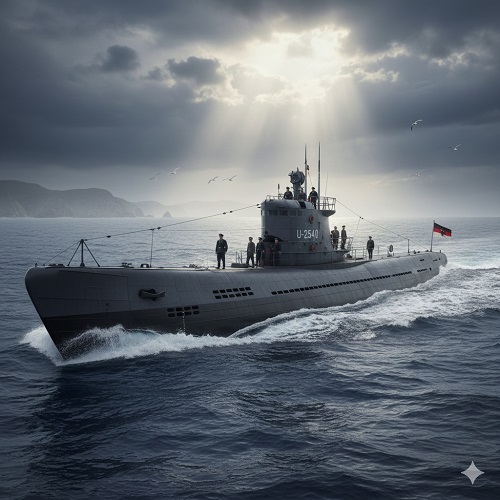
Unlike the surface sailor or the infantryman, the submariner operated within a uniquely artificial and hostile ecology: a self-contained, pressure-resistant cylinder submerged in a hyperbaric environment where the very air required to sustain life was a dwindling commodity.
This environment imposed a psychological and physiological tax on the human mechanism that military historians and psychologists have identified as a distinct area of study. During the Second World War, the crews of the German Kriegsmarine, the Imperial Japanese Navy, and the United States Navy were subjected to these pressures in varied ways, shaped by divergent cultural traditions, naval doctrines, and industrial capacities.1
In the "kill-or-be-killed" contest of the Atlantic and Pacific theaters, the psychosocial pressures placed upon these crews were immense. The submarine was not merely a weapon; it was a claustrophobic laboratory of human endurance. Men lived for months at a time in a state of sensory deprivation, punctuated by moments of extreme, high-decibel terror during depth-charge attacks. The internal social dynamics—ranging from the egalitarian Kameradschaft of the U-boats to the rigid, ritualized hierarchy of the Japanese service and the professionalized, technology-reliant resilience of the American fleet—reflect the broader national ideologies of the combatant powers.3
The Physiological and Environmental Matrix of the Submerged Combatant
To understand the social-psychology of the submariner, one must first account for the metabolic and environmental constraints of the vessel itself. Life in a submarine during the 1940s was an exercise in biological management. The primary atmospheric stressor was the accumulation of carbon dioxide (CO2), a simple asphyxiant that could reach lethal concentrations in a submerged boat. While ambient air contains approximately 400 parts per million (ppm) of CO2 (<0.042%), a Second World War submarine could see levels rise to 30,000 ppm (0.03%) or higher during prolonged submergence.2
The physiological effects of hypercapnia—elevated CO2—included headaches, tremors, visual impairment, and a significant decrement in executive functioning and cognitive speed. Research conducted during the war, such as the 68-hour submergence test on the USS Sailfish, demonstrated that "prolonged attentiveness and connected thinking were adversely affected" even in routine duties.7
This metabolic shift created a baseline of irritability and mental fatigue, which in turn influenced social interactions and command decisions. The body’s attempt to buffer the rising acidity in the blood led to cyclic changes in blood pH and bicarbonate, a process that appeared to involve the uptake and release of CO2 from the bones.8
Comparative Environmental Stressors
The physiological impact of the submarine environment was dictated by several key stressors that directly influenced crew social-psychology. Carbon dioxide accumulation was the most pervasive, leading to impaired judgment, irritability, and respiratory distress.2 While the U.S. Navy utilized chemical scrubbers and early ventilation systems to mitigate these effects, German crews relied on "potash" cartridges and restricted physical movement to conserve air, and Japanese sailors faced minimal chemical scrubbing, necessitating a high cultural tolerance for acute physical distress.
The depletion of atmospheric oxygen similarly resulted in widespread lethargy and eventual physical collapse if levels fell below 10-14%, though U.S. fleet boats offered a slight psychological advantage due to their larger internal volumes.2
Furthermore, the threat of chlorine gas—primarily a risk for German and American boats with lead-acid batteries—frequently caused extreme panic and presented an immediate lethal threat that often forced vessels to surface and face capture.
Finally, internal temperatures posed a significant burden, causing heat exhaustion and skin infections. While American boats were standard-equipped with air conditioning in the Gato and Balao classes to maintain performance, German and Japanese crews frequently endured temperatures exceeding 100°F in tropical or summer waters, leading to high friction and physical wear.
The hyperbaric conditions of the submarine were also central to the "escape psychology" of the crew. Candidates for the service were screened for their ability to equalize pressure up to 50 pounds per square inch, a necessity for using the various "lungs" or escape apparatuses.2
The knowledge that the crew was encased in a "steel tomb" that could collapse at depth created a persistent, low-level background of existential anxiety (see notes at end). This anxiety was exacerbated by the sensory experience of the boat: the smell of diesel, the humidity, and the lack of natural light, which disrupted circadian rhythms and led to widespread insomnia and psychological wear.5
The Kriegsmarine: Attrition, Ideology, and the Paternalistic Pack
The German U-boat arm (U-boot-waffe) represents the most extreme case of sustained psychosocial pressure during the war. Admiral Karl Dönitz, the Commander-in-Chief of the U-boats, cultivated a leadership style that combined high-tech tactical innovation with a deeply personal, paternalistic connection to his crews.3 Dönitz, known to his men as "the Lion," positioned himself as a father figure who understood the unique burdens of the submarine service. This "Grey Wolf" mythology was a core component of the Nazi propaganda effort, designed to elevate the submariner to the status of a Teutonic hero.3
The social-psychology of the U-boat was defined by Kameradschaft, a specific form of comradeship that transcended rank. Because German submarines (especially the ubiquitous Type VII) were incredibly cramped, with a crew of 44 to 52 men sharing space with torpedoes and provisions, the traditional barriers between officers and enlisted men were largely eroded.13 Men did not shave on patrol to save water; they shared the same foul-smelling air and ate the same food. This shared hardship created a cohesive unit that was highly resistant to the breakdown of morale, even as the attrition rate climbed toward 75 percent.14
However, this cohesion was also a necessity of the "wolf pack" (Rudeltaktik) doctrine. The German strategy relied on the coordinated attack of multiple submarines against a single convoy. This required a high degree of discipline and trust, as individual commanders had to navigate at night on the surface—where they were most vulnerable—to prosecute their attacks.16 The psychological strain of these surface attacks, followed by the inevitable "crash dive" and subsequent hunting by Allied sonar, led to a phenomenon known as "depth-charge neurosis".18 During an attack, the crew could only sit in silence, listening to the "ping" of the ASDIC (sonar) and the terrifying "click-BOOM" of exploding charges. The sensation of the hull compressing and lights flickering created a traumatic environment that few could endure for long without psychological scarring.18
The German experience was also marked by a stark decline in conditions as the war progressed. Early in the war, during the "Happy Time," U-boat crews enjoyed high morale and significant victories. By 1943, the emergence of Allied Leigh Lights and centimetric radar made the surface of the Atlantic a death trap.16
The introduction of the Schnorchel (snorkel, a Dutch invention) allowed U-boats to remain submerged longer, but it also increased the physiological strain on the crew by forcing them to stay in high-CO2 environments for weeks on end.9
One of the most revealing incidents regarding the psychological pressure of technical complexity was the loss of the U-1206 in April 1945. The vessel was equipped with a "high-tech" deep-sea toilet system that required specialized training to operate. A mistake by the commander and an engineer led to seawater flooding the battery compartment, creating chlorine gas and forcing the boat to surface in enemy waters.21 This incident underscores the precariousness of life in the "pressure cylinder," where even a routine bodily function could lead to a catastrophic failure of the entire system.
The Imperial Japanese Navy: The Samurai Ethos and the Suicide of Strategy
The psychosocial profile of the Imperial Japanese Navy (IJN) submariner was shaped by a radically different set of cultural imperatives. While the German and American forces eventually adopted a strategy of unrestricted warfare against commerce, the Japanese remained wedded to the Mahanian concept of the "decisive battle" between fleets.13 The Japanese submarine was viewed as a scout and an adjunct to the main battle line. This doctrine was reinforced by the code of Bushido, which dictated that a warrior should seek out a "worthy" foe—an enemy warship—rather than an unarmed merchantman.4
This warrior ethos created a rigid social hierarchy characterized by harsh discipline. Physical punishment, such as slapping or "the stick," was standard practice for maintaining order and "toughening" the spirit of junior sailors.24 The relationship between officers and enlisted men was one of absolute deference, rooted in the semi-divine status of the Emperor.25 This rigidity made the Japanese submarine service highly disciplined but also brittle; it lacked the horizontal, egalitarian bond of the German Kameradschaft or the decentralized expert decision-making of the American force.1
As the war turned against Japan, the psychological state of the submarine arm devolved into the cult of sacrifice. The emergence of the Kaiten (suicide torpedo) program was the ultimate expression of this desperation. Kaiten pilots, often as young as 17, were recruited from naval air bases and trained to steer a modified torpedo directly into an enemy hull.24 The psychology of the Kaiten volunteer was one of "relentless determination," symbolized by the hachimaki (headband) and the short sword carried into the cockpit.4
These men were presented as elite heroes, yet their reality was one of isolation and certain death. The commanders of the "mother" submarines faced their own psychological burden—the "executioner's dilemma"—as they were responsible for launching these young men into oblivion.24
Logistical failure further degraded the Japanese experience. Unlike the Americans, who prioritized crew nutrition, the Japanese suffered from chronic food shortages and poor preservation methods.29 The reliance on polished white rice led to widespread beriberi, a thiamine deficiency that causes cardiovascular and neurological issues.30 The Japanese military viewed these hardships as tests of the "Yamato spirit," but in reality, they significantly impaired the combat effectiveness of the crews.32
Cultural Comparison of Command and Social Structure
National approaches to command and social cohesion varied significantly across the three major powers. Germany's submarine arm was characterized by the paternalistic leadership of Admiral Dönitz and a sense of Kameradschaft born from shared hardship, leading to a culture of fatalistic resignation and the "Grey Wolf" archetype.3
In contrast, the Imperial Japanese Navy adhered to a philosophy of Bushido and empirical authority, maintaining a rigid hierarchy often enforced through physical discipline and moving toward ritualized sacrifice as seen in the Kaiten missions.4
The United States Navy prioritized professional and technical expertise, fostering a social structure based on individual initiative and systematic resilience supported by dedicated rest and recuperation cycles.1
The United States Navy: Technology, Habitability, and Professionalized Resilience
The social-psychology of the United States Navy’s "Silent Service" was defined by a transition from pre-war conservatism to a highly successful system of professionalized, industrialized warfare.16 Early in the war, American submarine commanders were hampered by a "pandemic of excessive cautiousness" developed during peacetime exercises where the sighting of a periscope was treated as a failure.16 However, the force eventually adapted, moving toward a doctrine of "calculated recklessness" that prioritized tonnage sunk and aggressive night surface attacks.16
A hallmark of the American submarine experience was the emphasis on "habitability" as a strategic asset. US fleet boats (the Gato, Balao, and Tench classes) were significantly larger and more comfortable than their German or Japanese counterparts. They were equipped with air conditioning, refrigeration for fresh food, and even ice cream machines.5 This focus on comfort was not merely a luxury; it was a psychological intervention designed to preserve the mental acuity of the crew during long patrols in the sweltering Pacific. Air conditioning also served the technical function of reducing humidity, which protected the sensitive electronic and electrical systems that gave American boats an edge.1
The American service also implemented a unique system of "Rest and Recuperation" (R&R) that had no equivalent in the Axis navies. Upon returning from a 60-day war patrol, a crew would be sent to a dedicated R&R camp (such as the Royal Hawaiian Hotel or camps in Australia) for two weeks of total relaxation, with no official duties.35 During this time, a specialized "relief crew" would take over the submarine for maintenance and refitting.35 This systematic "unburdening" of the mind was a critical component of American resilience, ensuring that crews went back to sea mentally sharp and physically recovered.35
The social structure of the American boat was one of "decentralized expertise." While rank was strictly maintained, the technical demands of the submarine required every sailor to be an expert in multiple systems. The process of earning one's "Dolphins" (the submarine qualification insignia) was a rite of passage that created a shared sense of professional identity and mutual dependence.1 However, this "brotherhood" was not universal; racial prejudices meant that African American sailors were largely relegated to the role of stewards, although the small size of the submarine crew sometimes necessitated more fluid roles during combat.37
Psychological Warfare and the Target of the Submerged Mind
Because of the high-stress nature of the submarine environment, morale became a primary target for psychological warfare operations. The Allied "German desk" employed experts like Ladislas Farago to develop radio scripts and leaflets designed to erode the confidence of U-boat crews.38 These "Norden broadcasts" used actual casualty lists and reports of scuttled boats to convince German sailors that their mission was futile and their leaders were incompetent.38
Conversely, American and Japanese propaganda focused on the dehumanization of the enemy. American posters often portrayed the Japanese as sub-human or "super-human" monsters to explain away early defeats and justify the brutality of the Pacific war.39 In Japan, the war was presented as a "War of Thought" and a spiritual struggle against Western materialism.25 The psychological climate on a submarine was thus a microcosm of the global conflict, where external propaganda filtered into a claustrophobic, high-pressure social environment.41
The Trauma of the Deep: Depth-Charge Stress and Post-War Outcomes
The psychological toll of submarine service did not end with the patrol. The experience of "depth-charge neurosis"—modernly recognized as a form of Post-Traumatic Stress Disorder (PTSD)—had long-term effects on survivors. Symptoms included a pathological sensitivity to sharp noises, insomnia, tremors, and a "head-long desire to live" that manifested in panic attacks.42 American psychiatrists noted that while the submarine service had a remarkably low rate of immediate "psychiatric casualties" (only 56 reported in 1,500 patrols), the long-term strain was immense.5
The differences in how the three nations managed this trauma reflect their cultural values. The US Navy’s proactive R&R system sought to prevent breakdown before it occurred. The Germans relied on the emotional "pastures" of the French coast and the paternalistic support of Dönitz.3 The Japanese, however, largely ignored the psychological cost, viewing mental breakdown as a failure of the spirit.24 For Japanese survivors, the post-war period was often one of profound shock and betrayal, as the Emperor's surrender order conflicted with centuries of indoctrination towards a "beautiful death".24
Synthesis: The Cultural Habitats of the Undersea War
The Second World War submarine was a unique intersection of high technology and human instinct. The social-psychology of the men who fought in these vessels was not a monolith but a set of distinct cultural habitats. The German U-boat was a place of fatalistic camaraderie and paternalistic devotion. The Japanese submarine was a site of ritualized hierarchy and sacrificial determination. The American boat was a professionalized industrial workspace that prioritized technical skill and psychological maintenance.
In each case, the submariner was forced to navigate the same physiological stressors—the rising CO2, the crushing pressure, the sensory deprivation—within the framework provided by their national ideology. The "iron coffin" was thus a crucible where the human mind was pressed to its absolute limit, revealing the profound ways in which culture and tradition shape the human response to the "kill-or-be-killed" environment of the deep sea.1
The success of the American "Silent Service" suggests that a system prioritizing the psychological and physical well-being of the crew through habitability and rotation was more resilient in a long war of attrition than systems based on ideological fanaticism or unrelenting sacrifice. While the German and Japanese crews fought with undeniable courage and skill, the psychological "friction" of their environments—hunger, lack of rest, and rigid hierarchies—ultimately contributed to the erosion of their combat effectiveness as the industrial and psychological weight of the United States Navy was brought to bear upon the oceans of the world.16
Through this comparative lens, the Second World War submarine emerges not just as a marvel of maritime engineering, but as a defining study in the psychosocial limits of the human war-fighter. The lessons of the "pressure-resistant cylinder" continue to inform the training and selection of personnel for extreme environments today, from nuclear submarines to the future of long-duration spaceflight, where the balance of technical skill, social cohesion, and metabolic stability remains the thin line between survival and catastrophe.1
--------------------------------
NOTES:
Test Depth versus Crush Depth.
There are two crucial operational depth specifications that every submariner must know. The first is known as "Test Depth" and the second is referred to as "Crush Depth".
Test Depth is the depth in an ocean, between the surface and the deepest limit at which a submarine may operate safely, per the manufacturer's specifications for that specific submarine.
Crush Depth is that point in the ocean depths whereat a hull will collapse and "implode", collapsing the bulkheads virtually instantaneously.
At crush depth, an implosion may and likely will occur so fast that the human brain is incapable of registering the event, meaning that, strictly speaking, no physical pain or suffering will be felt by crew. It simply happens too rapidly, or roughly in 1/1000ths of a second.
The human brain is only capable of neurological reaction times of about 1/100th of a second. An implosion occurs about 50 to 100 times faster than a person may feel pain. Thus, death at 'crush depth' is essentially a "painless process", despite the terrifying psychological fear and extreme anxiety that may preceed it. Small comfort, to say the least.
When an implosion occurs at extreme depth, the human body is essentially liquified into atoms at the speed indicated above (approximately 5,000 mph!). This is known as 'the dieseling effect' and the vaporised human remains will merge into the seawater, leaving no readily-identifiable traces.
------------------------
This article was prepared in January 2026, with the assistance of a LLM system. No androids, robotic devices or humanoid simulacra were harmed or hurt in the process.






















The psychological pressures on the crews of these crapped underwater tin cans cannot be understated. And I wonder if any after service studies were done of submarine crews after the war. I'm sure that PTSD prevailed for many. Especially those subject depth charges bringing high anxiety with every quick and explosion.
In 1967–69 I became a friend of Jack Swanson, a man in his 40s, my father's age at the time. He briefly told me that he was on the crew of a intelligence submarine in the Pacific during the war. Told me only one war story. They were in port in a Southeast Asian country when a Japanese destroyer came into the harbor. They were tied with ropes to the pier. He told me that he cut one of the ropes while another guy on the other end cut the other so they could leave the pier and submerge in the bay. They were depth charged, but survived.
I told his story here…
https://www.authorsden.com/visit/viewshortstory.asp?id=41960&authorid=3918
Unfortunately, shortly after Jack retired, at 66, he developed an arthritic back and died within a very short time with many fractures in his spine. Your article would be to believe that perhaps, his time in the tin can had led to some kind of deprivation like the loss of CO2 (?) in his bones that eventually lead to early death. He was a heavy smoker and had bad teeth as a result. I could also send that he was psychologically disturbed, primarily by his hyperactivity. Trying to live up to his father's reputation.